High-Precision Insert & CNC Hardware Components
Explore our latest precision engineered metal inserts, connectors, and custom housing sub-assemblies built for global enterprise programs.
The Architecture of Precision Custom Insert Molding
A comprehensive technical overview of metal-polymer interfacial bonding, micro-molding physics, and industrial system integration.
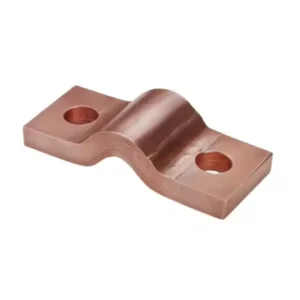
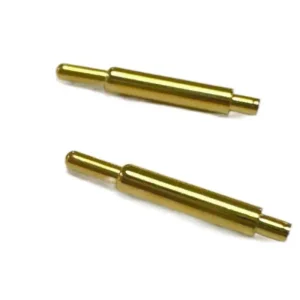
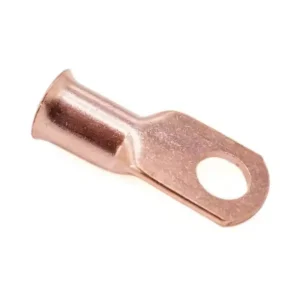
In modern high-performance manufacturing, the demand for compact, lightweight, and structurally resilient components has driven the adoption of Custom Insert Molding. As a premier custom insert molding manufacturer, our production engineering relies on encapsulating pre-formed metal inserts—such as CNC turned brass pins, stamped copper busbars, stainless steel threaded fasteners, or flexible printed circuits—within engineering-grade thermoplastics or liquid silicone rubber (LSR). Unlike traditional mechanical fasteners or post-molded assembly steps, insert molding creates an integrated, single-piece hybrid structure with exceptional mechanical integrity and electrical isolation.
The engineering complexity of insert molding lies in managing the differential Coefficient of Thermal Expansion (CTE) between metallic substrates (e.g., Copper: ~16.5 × 10⁻⁶/K; Aluminum: ~23.1 × 10⁻⁶/K) and polymer matrices (e.g., PBT, PEEK, PA66-GF30: ~30–80 × 10⁻⁶/K). Failure to account for thermal mismatch results in micro-cracking at the interface, resin flash, insert displacement, or internal stress concentration. Through predictive Moldflow® simulation, precise vertical injection press hydraulics, and robotic automated loading, we eliminate structural voids and achieve positioning tolerances down to ±0.002 mm.
Automotive & EV Powertrain
Heavy-duty copper busbars overmolded with high-temperature flame-retardant polymers (PA66-GF30, PPA) for electric vehicle battery management systems (BMS) and inverter modules.
- High dielectric breakdown resistance (>30 kV/mm)
- Vibration-proof mechanical interlocks
- In-mold current sensor encapsulation
Medical Devices & Life Sciences
Micro-insert molding of surgical-grade stainless steel needles, fluidic connectors, and electronic sensors within ISO Class 8 cleanroom environments using biocompatible resins.
- ISO 10993 & USP Class VI resin compliance
- Zero-flash seal faces for sterile fluids
- LSR micro-overmolding capability
Aerospace & Defense Avionics
Lightweighting structural housings through custom turned titanium inserts overmolded with PEEK and PEI matrices to replace dense metallic block assemblies.
- Extreme operational temperatures (-65°C to +200°C)
- MIL-STD-810H environmental qualification
- Integrated EMI shielding & conductivity
Insert Molding Technology Roadmap & Interfacial Mechanics
Systematic optimization of mechanical anchoring, resin flow mechanics, and thermal stress distribution.
Achieving superior bond strength between plastic matrices and metal inserts requires a combination of mechanical interlocking and chemical adhesion strategies. Metallic inserts undergo secondary surface engineering prior to molding—including knurling, undercutting, laser texturing, or chemical etching—to maximize shear wall area and mechanical torque resistance.
| Polymer Category | Resin Examples | Tensile Strength (MPa) | Shrinkage Rate (%) | Target Insert Molding Application |
|---|---|---|---|---|
| High-Temp Engineering | PEEK, PEI (Ultem), PPS | 100 - 170 | 0.2% - 0.5% | Avionics connectors, downhole oil sensors, ECU housings |
| Automotive Structural | PA66-GF30, PPA, PBT-GF20 | 80 - 150 | 0.3% - 0.8% | EV Busbars, actuator gears, sensor housings |
| Medical Grade | LSR, PC, LCP, PEEK | 50 - 110 | 0.1% - 0.4% | Surgical handles, catheter hubs, diagnostic arrays |
| Commodity / Consumer | ABS, PC/ABS, POM, PP | 40 - 70 | 0.5% - 1.5% | Threaded brass boss housings, handheld devices |
1. Automated Rotary Vertical Molding
Our facility utilizes 50 to 350-ton vertical clamping, rotary-table injection molding machines equipped with 6-axis articulated robots for precision placement of metal pins.
- Double-station index tables for 0-second loading downtime
- Infrared pre-heating of metal inserts to reduce thermal shock
- Closed-loop pressure feedback control
2. Micro-Molding & Pitch Precision
With pin pitch dimensions shrinking to 0.4mm in high-density electronic connectors, our tooling micro-cavitation maintains pin location alignment across multi-cavity tools.
- Optical pin alignment sensors inside mold core
- Tooling EDM accuracy within ±0.001mm
- Zero pin-sway shut-off design
3. In-Mold Cavity Sensor Analytics
Piezoelectric pressure and temperature sensors embedded within the mold cavity monitor the viscosity transition of the polymer melt in real time during the packing phase.
- 100% dynamic part rejection for pressure anomalies
- Automatic adjustment of injection stroke profile
- Traceable production telemetry logging
China Supply Chain Resilience & Manufacturing Ecosystem
Seamlessly integrating precision CNC turning, metal stamping, custom tooling, and high-speed molding under one audited roof.
A critical challenge for global procurement managers is supply chain fragmentation—sourcing metal inserts from one turned-parts vendor, plating from another, and sending components to a third-party injection molder. This fragmented workflow increases lead times, accumulates shipping overhead, and creates accountability voids when tolerance stacking failures occur.
As a vertically integrated custom insert molding manufacturer in Shenzhen, China, we provide an end-to-end industrial ecosystem. By managing high-speed Swiss CNC turning lathes, precision metal stamping presses, mold design shops, surface plating lines, and automated cleanroom molding bays within a unified quality management system, we guarantee zero-defect transition from raw metal coil to finished hybrid assembly.
In-House Tooling & EDM
Equipped with Makino CNC milling machines, Sodick Wire EDM, and mirror-finish sinker EDMs, our toolroom builds S-7 and H13 hardened steel molds rated for 1,000,000+ cycles.
Automated Quality Control
Every lot undergoes 3D CMM inspection, Keyence optical measurement, and X-ray non-destructive testing (NDT) to inspect internal insert seating and detect micro-porosity.
Cost Optimization (TCO)
By leveraging local material compounding partnerships and automated robotics, we compress total cost of ownership (TCO) by 30% to 45% compared to Western European or North American molders.
Strategic OEM Sourcing & Risk Mitigation Matrix
How global enterprises evaluate custom insert molding manufacturers to guarantee project yield and schedule adherence.
When selecting an overseas manufacturing partner for mission-critical custom insert molding projects, global enterprise procurement teams must look beyond unit price. Technical capability, quality control documentation, intellectual property protections, and engineering responsiveness form the foundation of long-term contract manufacturing partnerships.
Design for Manufacturability (DFM)
Our engineering team performs exhaustive DFM analysis before cutting steel. We analyze mold fill patterns, draft angles, gate locations, ejector pin marks, and insert retention forces to catch errors during design.
- Moldflow injection pressure and thermal cooling simulation
- Warpage and shrinkage prediction reporting
- Insert pre-form tolerance stacking validation
IP Protection & Confidentiality
We enforce strict non-disclosure protocols (NDAs) and operate isolated internal networks for customer CAD data. Design files (STEP, IGES, DXF) are restricted strictly to authorized project engineers.
- Bilingual legal NDA agreements executed upfront
- Encrypted cloud data storage and restricted shop floor access
- Direct factory contact without third-party broker exposure
Scalability & Prototyping Options
Whether you require a 50-piece prototype batch via CNC machined inserts overmolded in aluminum rapid tooling, or a multi-million unit production run using multi-cavity hardened tooling, we scale with your product lifecycle.
- T1 sample delivery in 12–15 business days
- Low-volume quick-turn production bridging
- High-volume automation cell integration
International Regulatory Compliance & Delivery Assurance
Full documentation, environmental compliance, and flexible international trade terms (DDP, DAP, FCA).
System Certifications
Our operations comply with stringent global quality standards to service automotive tier-1s, medical OEMs, and industrial automation clients.
- ISO 9001:2015 Quality Management Systems
- IATF 16949 Automotive Production Qualification
- ISO 13485 Medical Device Component Manufacturing
Material Traceability
Every production batch includes full material lot traceability, certificate of analysis (CoA), and regulatory declarations upon dispatch.
- RoHS 3 & REACH SVHC Compliance Statements
- UL94 V-0 Flammability Class Verification
- First Article Inspection (FAI) Report per AS9102
Global Logistics & DDP
We provide seamless door-to-door delivery with customs clearance handled by our global logistics partners, simplifying cross-border procurement.
- DDP (Delivered Duty Paid) to USA, EU, UK, and Asia
- Customized protective ESD and vacuum packaging
- VMI (Vendor Managed Inventory) safety stock support
Frequently Asked Questions (FAQ)
In-depth engineering answers addressing critical insert molding technical inquiries.
What is the difference between insert molding and overmolding?
Overmolding, by contrast, involves injecting a secondary plastic polymer (usually a flexible elastomer like TPE/TPU/LSR) over a previously molded rigid plastic substrate (like ABS or PC) in a multi-shot injection molding process to add grips, soft-touch handles, or environmental seals.
How do you prevent metal inserts from shifting during resin injection?
- Mechanical Core Pin Location: Tool design incorporates tight-tolerance location pins, magnets, or vacuum suction channels inside the mold core to lock the metal insert in position.
- Pre-Heat Optimization: Heating the metal insert to near-tool temperature prevents local resin freezing and stabilizes flow distribution.
- Balanced Gating & Low Initial Pressure: Flow simulation is used to place gates symmetrically, distributing hydraulic pressure evenly around the insert during the filling phase.
Which metals and surface finishes work best for custom insert molding?
For maximum bond performance, metals should feature mechanical undercuts, diamond knurling, or laser texturing. Plating options like tin, gold, nickel, or silver must be selected to resist the processing temperature of the chosen resin without blistering or flaking.
What is your typical lead time for custom insert molding tooling and T1 samples?
How do you handle differential thermal expansion (CTE mismatch)?
Precision Turned, Cast & Fabricated Solutions
Discover our extended portfolio of custom manufactured metal components, housings, heat sinks, and silicone assemblies.