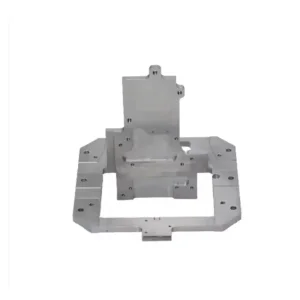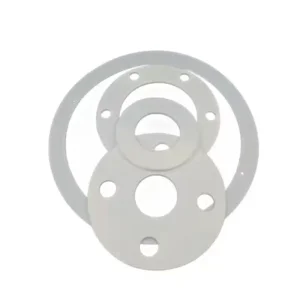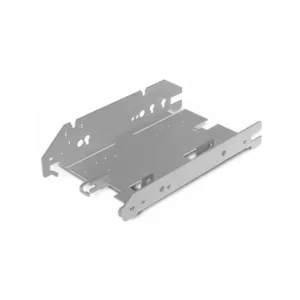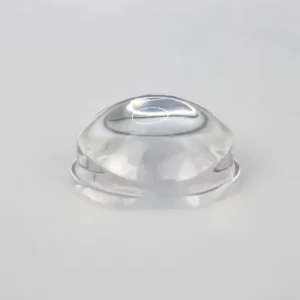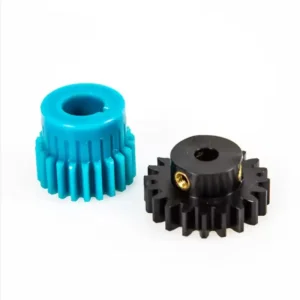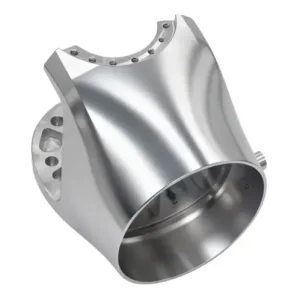
High-Precision Machined Hardware Products
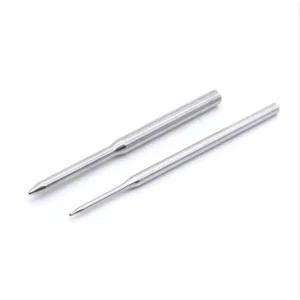
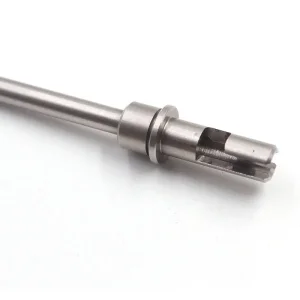
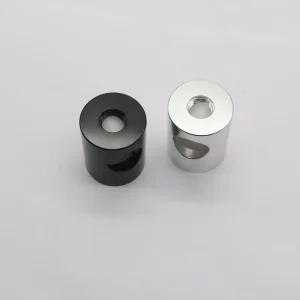
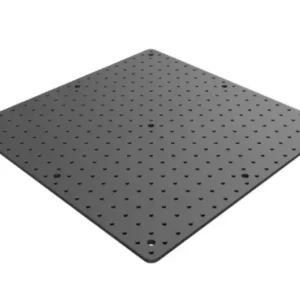
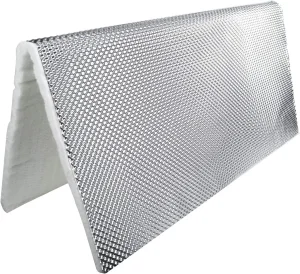
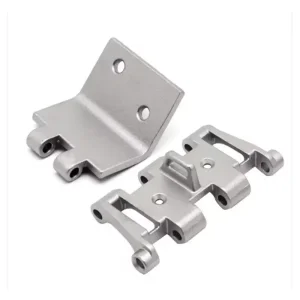
Explore our certified precision CNC turned components, custom waterproof sensor housings, specialized heat shields, and solid aluminum optical breadboards manufactured for global export.
The Global Commercial Reality of Advanced Aluminum Heat Sink Machining
Navigating Thermal Density Bottlenecks in High-Performance Computing, Automotive Electrification, and Telecommunications.
In the modern industrial landscape, thermal management has shifted from a peripheral mechanical consideration to a core bottleneck in electronics design. As semiconductor architectures shrink to 3nm processes and power dissipation densities surpass 100 Watts per square centimeter ($W/cm^2$), legacy manufacturing methods such as standard aluminum extrusion or die-casting fail to meet the strict thermal dissipation and volumetric efficiency requirements of high-reliability systems.
Precision aluminum heat sink machining—utilizing high-speed CNC milling, micro-skiving, friction stir welding (FSW), and EDM—represents the state-of-the-art solution for high-value applications. Aluminum alloys (primarily 6063-T6, 6061-T6, and 1050/1060 pure aluminum) offer an ideal balance of thermal conductivity ($166 - 229 \, W/m\cdot K$), low specific mass density ($2.7 \, g/cm^3$), mechanical structural integrity, and exceptional machinability. Global OEM procurement teams are increasingly relying on specialized machining exporters capable of achieving micron-level tolerances while maintaining cost efficiency at scale.
Hyperscale AI & Data Centers
Next-generation GPU clusters and AI accelerators generate Thermal Design Power (TDP) exceeding 700W to 1200W per socket. Machined aluminum heat sinks with embedded vapor chambers (VC) and micro-channel cold plates are essential to prevent thermal throttling and server downtime.
EV Powertrain & Energy Storage
800V silicon carbide (SiC) traction inverters and fast-charging battery management systems require high-strength structural heat sink enclosures. CNC-machined aluminum cold plates ensure uniform thermal dissipation under heavy thermal cycling and physical vibration.
5G / 6G Telecom Infrastructure
Outdoor Remote Radio Units (RRUs) and Active Antenna Units (AAUs) require weather-proof, highly complex finned aluminum enclosures. Precision machining enables high aspect-ratio pin-fin geometries that maximize natural convection without adding excess weight.
China's Manufacturing Efficiency Advantage in Heat Sink Machining
How Integrated Industrial Ecosystems, Multi-Axis Tooling Automation, and Cost-Optimized Engineering Drive Global Competitiveness.
China has established an unshakeable ecosystem advantage in high-precision aluminum heat sink manufacturing. Combining direct proximity to primary aluminum smelters, automated raw material extrusion mills, and cutting-edge 5-axis CNC machining hubs in Guangdong and Eastern China, Chinese manufacturers deliver unparalleled lead-time compression and cost efficiency.
Integrated Tooling & Skiving
Equipped with specialized high-speed skiving machines capable of shaving continuous, high-density fins directly from solid aluminum blocks, eliminating thermal interface resistance inherent in bonded fins.
5-Axis Simultaneous Milling
Complex 3D geometries, compound-angle mounting faces, and contoured liquid cooling channels are machined in single-setup operations, ensuring tight spatial tolerances down to ±0.005mm.
In-House Surface Finishing
Direct integration of hard-coat anodizing, chromate conversion coating (MIL-DTL-5541), nickel plating, and laser engraving guarantees complete process traceability and salt-spray corrosion resistance.
Rapid Prototype to Mass Production
Accelerated DFM (Design for Manufacturability) cycles convert 3D CAD models (STEP/IGES) into physical working prototypes within 48 to 72 hours, scaling smoothly into million-unit volume production.
Localized Application Scenarios & Engineering Selection Matrix
Matching Alloy Properties, Machining Processes, and Surface Treatments to Specific Industrial Operational Environments.
| Application Scenario | Recommended Alloy | Machining Technology | Critical Tolerance & Surface Spec | Primary Thermal/Mechanical Objective |
|---|---|---|---|---|
| AI Supercomputer Cold Plates | Al 6063-T6 / Pure Al 1050 | 5-Axis CNC Milling + Skiving | Flatness < 0.01mm, Ra 0.4 µm contact pad | Maximum thermal dissipation rate for >800W TDP processors. |
| Automotive EV SiC Inverters | Al 6061-T6 (Forged) | CNC Machining + Friction Stir Welding | Helical liquid channels, Pressure tested to 6 Bar | Zero-leakage internal fluid circulation under road vibration. |
| Solar Inverters (Photovoltaics) | Al 6063-T5 (Extruded & Machined) | High-Speed Milling + Cross-Cutting | Black Anodized 25µm, UV & Salt Spray 1000h | Heavy-duty outdoor weather durability and passive convection. |
| Commercial Avionics & Radar | Al 7075-T6 / Al 6061-T6 | High-Precision Billet CNC Machining | Wall thickness 0.8mm ±0.01mm, MIL-C-5541 Chromate | Extreme weight reduction with high structural rigidity. |
| Medical Laser Imaging Devices | Al 6063-T6 | Diamond Machining / CNC Turning | Mirror Finish Base, Thermal Resistance <0.05°C/W | Ultra-stable thermal equilibrium to prevent laser wavelength drift. |
Key Industry Development Trends Shaping Thermal Management
Next-Generation Innovations in Hybrid Manufacturing, Liquid Cooling Integration, and Material Science.
1. Vapor Chamber Integration
Transitioning from pure monolithic aluminum blocks to hybrid heat sinks featuring CNC-machining recessed cavities designed for embedded copper or aluminum Vapor Chambers (VC), improving heat spreading efficiency by over 300% across concentrated hot spots.
2. Additive-Machining Hybrids
Combining Selective Laser Melting (SLM) 3D printing for internal biomimetic flow paths with post-process 5-axis CNC machining on mating surfaces to achieve optimal fluid dynamics and perfect surface sealing.
3. Automated CMM & AI Quality Inspection
Implementation of fully automated Coordinate Measuring Machines (CMM) integrated into CNC production cells, performing real-time 100% dimensional verification of complex fin profiles and flatness tolerances.
Global Enterprise Sourcing Criteria & DFM Guidelines
Essential Technical Checklists for Sourcing Directors, Component Quality Engineers (CQE), and Systems Hardware Designers.
Design for Manufacturability (DFM) Essentials
- Fin Corner Radii: Specify internal radii of at least 0.5mm to 1.0mm in CNC milled pockets to allow standard carbide end-mills to run at optimal high speeds ($>18,000 \, RPM$), drastically lowering machining unit costs.
- Base Plate Uniformity: Maintain a minimum base plate thickness of 3.0mm to prevent structural warping during high-speed fly-cutting operations and post-anodizing thermal stress relief.
- Thermal Interface Surface Finish: Require $R_a 0.8 \, \mu m$ or better for CPU/GPU contact areas to eliminate air voids when thermal grease or Phase Change Materials (PCM) are applied.
- Aspect Ratio Constraints: For standard milling, maintain fin height to gap ratios below 10:1. If ratios exceed 20:1, specify **skived fin technology** or **stacked fin assembly** in engineering notes.
Supplier Qualification & Audit Matrix
- Raw Material Verification: Supplier must provide Spectrometer Chemical Analysis and Mill Test Certificates (MTC) verifying alloy composition (e.g., Si, Fe, Cu, Mn content in Al 6063).
- Process Inspection Protocol: Mandatory First Article Inspection (FAI) report adhering to AS9102 standards, coupled with CMM dimensional logs for critical mounting hole patterns.
- Environmental Compliance: Full compliance with EU RoHS 3 (Directive 2015/863) and REACH regulations, ensuring zero lead, hexavalent chromium, or cadmium in plating baths.
- Leakage Testing Capability: For liquid cold plates, suppliers must demonstrate 100% helium mass spectrometer or hydrostatic pressure testing capabilities.
Frequently Asked Questions (FAQ) for Heat Sink Procurement
In-Depth Answers on Thermal Engineering, Machining Tolerances, Material Selection, and Global Logistics.
What is the thermal conductivity difference between Al 6061, Al 6063, and Pure Aluminum 1050 for machined heat sinks?
Aluminum 1050 offers the highest thermal conductivity at approximately 229 W/m·K, but has low structural strength. Aluminum 6063 is optimized for thermal dissipation (~200 W/m·K) with excellent surface anodizing characteristics. Aluminum 6061 provides superior mechanical strength (~166 W/m·K) and high tensile yield strength, making it ideal for structural heat sink enclosures that undergo heavy mechanical stresses.
When should an engineer specify CNC Machining over Aluminum Die-Casting or Extrusion?
CNC Machining should be specified when: 1) Prototyping or low-to-medium batch sizes (1 to 5,000 pieces) do not justify expensive die-casting tooling costs ($10,000–$50,000); 2) Ultra-tight dimensional tolerances (<±0.02mm) or extreme base flatness (<0.01mm) are required; 3) The geometry requires complex 3D internal channels or ultra-thin fin aspect ratios impossible to extrude without tooling breakage.
How does surface anodizing impact the thermal performance of aluminum heat sinks?
Anodizing increases the surface emissivity ($\epsilon$) of raw aluminum from approximately 0.05 to over 0.85-0.90. In natural convection environments (where radiation plays a significant role in heat transfer), a black anodized surface can improve overall heat dissipation by 10% to 15%. However, for forced-convection liquid cold plates, conductive resistance of the anodized layer is minimized by masking off primary contact areas.
What quality documentation and testing reports are included with international shipments?
Standard export orders include complete quality documentation packages: Full Material Test Reports (MTR / Mill Certs), Certificate of Conformance (CoC), CMM Inspection Reports, First Article Inspection (FAI) reports, Surface Roughness Test logs, and RoHS/REACH compliance certifications. Salt spray test reports (ASTM B117) can be provided upon request.
What is the standard lead time for custom prototype samples versus mass production exports?
Custom CNC machined prototypes are typically completed and dispatched via express air freight (DHL/FedEx) within 5 to 7 business days following CAD drawing approval. Mass production lead times generally range between 2 to 4 weeks depending on batch volume, secondary operations (e.g., anodizing, assembly), and packaging requirements.
Explore Additional Custom Metal & Molded Components
Complete precision OEM manufacturing solutions including 5-axis robotics housings, injection molded optical components, PTFE gaskets, and industrial power distribution units.