
Precision Engineered Component Portfolio
Explore our validated product manufacturing capabilities across metal alloys, engineering thermoplastics, multi-material overmolding, and advanced CNC-AM hybrid workflows.
-
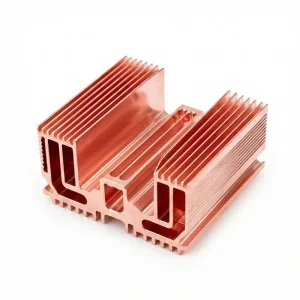 High-Quality High-Performance Copper Heatsink from China Factory | Top Suppliers for Thermal Solutions in Electronics Manufacturer, SuppliersView Product Details
 -
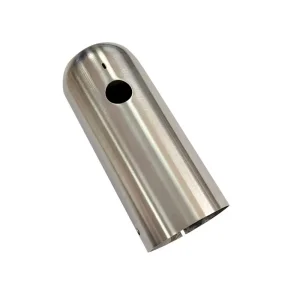 China Custom Precision CNC Turned Medical Sleeve Bushing Service, ExportersView Product Details
 -
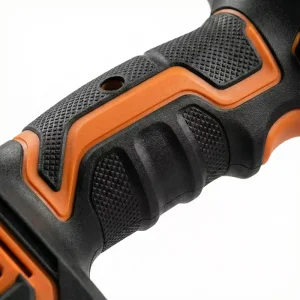 High-Quality Dual-Material Power Tool Handle - China Suppliers & Factory Offering High-Quality Two-Shot Injection Molding Solutions Manufacturer, ExportersView Product Details
 -
 China Custom TPE and ABS Double Color Injection Molding & Overmolding Supplier, ManufacturersView Product Details
 -
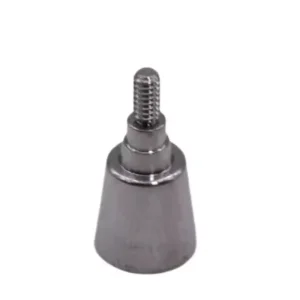 ODM Custom CNC Turned Titanium Abutment Implant Driver & Prosthetic Connector Suppliers, ExporterView Product Details
 -
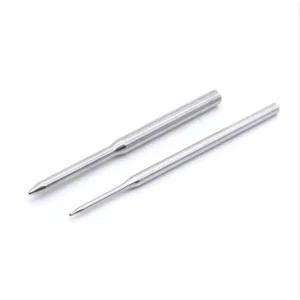 ODM Custom Stainless Steel Waterproof Sensor Probe Housing / Thermowell (OEM Support) Manufacturers, ProductView Product Details
 -
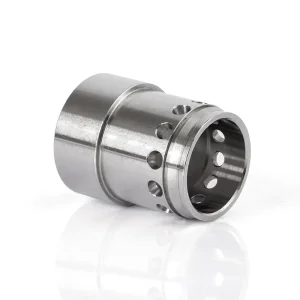 OEM Custom CNC Stainless Steel Drilled Filter Sleeve & Flow Control Valve Component Product, QuotesView Product Details
 -
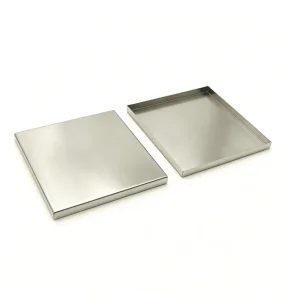 OEM Custom Stamped PCB EMI / RFI Shielding Covers Exporters, FactoryView Product Details
Global Commercial & Industrial Additive Manufacturing Paradigm
Transitioning from Rapid Prototyping to Direct Digital Manufacturing (DDM) across Global Supply Chains
The global additive manufacturing (AM) sector has undergone a fundamental structural pivot. Once restricted to aesthetic prototyping and fit-check iterations, custom 3D printing technology is now firmly anchored in the global industrial supply chain as a viable alternative and complement to subtractive CNC machining, die casting, and investment casting. Advanced OEMs across aerospace, medical devices, robotics, automotive, and high-performance electronics increasingly leverage contract additive manufacturing suppliers to achieve structural consolidation, mass customization, and accelerated time-to-market.
As global procurement strategies shift toward resilience, enterprise buyers demand strictly validated, repeatable additive manufacturing processes. Modern industrial 3D printing spans complex direct metal laser sintering (DMLS/SLM), selective laser sintering (SLS) of engineering polyamides, high-resolution stereolithography (SLA), and Multi Jet Fusion (MJF). By eliminating fixed tooling investments (hard tooling costs for injection molds or die-cast dies), custom 3D printing suppliers lower the Total Cost of Ownership (TCO) for low-to-medium volume production runs (1 to 10,000 units), while offering unprecedented freedom in generative design and topology optimization.
| Technology | Primary Materials | Dimensional Accuracy | Surface Roughness (Ra) | Ideal Industrial Application |
|---|---|---|---|---|
| DMLS / SLM (Metal Fusion) | 316L SS, Ti6Al4V, AlSi10Mg, Inconel 718 | ±0.05 mm to ±0.1 mm | 6.3 – 12.5 µm (As-printed) | Conformal cooling inserts, aerospace manifolds, medical implants |
| SLS (Selective Laser Sintering) | PA12, PA11, Glass-Filled Nylon, TPU | ±0.15 mm or ±0.002 mm/mm | 8.0 – 15.0 µm | Functional ducting, durable housings, robotics end-effectors |
| MJF (Multi Jet Fusion) | PA12, PA11, Polypropylene (PP) | ±0.20 mm | 7.0 – 12.0 µm | Isotropic structural parts, complex thin-wall electronics enclosures |
| SLA (Stereolithography) | Tough ABS-like Resins, High-Temp Resins | ±0.05 mm | 0.4 – 1.6 µm | Master patterns, high-clarity fluidic chambers, micro-mechanisms |
Additive Manufacturing Technology Roadmap & Material Science
Next-Generation Alloys, High-Performance Polymers, and Multi-Physics Simulation Integration
High-Density Metal Powders
Utilizing spherical metal powders (15-45 µm grain size distribution) produced via gas atomization. Selective Laser Melting achieves relative density exceeding 99.7%, delivering mechanical yield and tensile properties fully comparable to wrought alloys after Hot Isostatic Pressing (HIP).
Advanced Topology Optimization
Algorithm-driven generative engineering redistributes material exclusively along structural stress vectors. This reduces component mass by up to 60% while maintaining equivalent structural stiffness, ideal for aerospace and robotic payload optimization.
High-Temp Thermoplastics
FDM and SLS platforms engineered for PEEK, PEKK, and ULTEM 1010. These materials deliver flame-retardant (UL94 V-0), chemical-resistant performance capable of continuous operation in thermal environments exceeding 180°C.
China Supply Chain Resilience & High-Efficiency Manufacturing
Combining Advanced Additive Capacity with Integrated Secondary CNC Machining, Surface Finishing, and Metallurgical Verification
China’s industrial hardware ecosystem—centered in the Greater Bay Area manufacturing hub—provides unmatched structural advantages for international OEM procurement teams. By integrating high-tier industrial 3D printing equipment (such as multi-laser 500mmx500mm SLM systems and large-format MJF banks) alongside precision 5-axis CNC machining, Chinese suppliers compress engineering lead times from months to days.
Crucially, additive manufacturing in China is not an isolated service. It forms part of a fully realized hybrid production chain. Raw AM blanks undergo immediate secondary processing—including wire EDM, CNC thread chasing, surface anodizing, bead blasting, PVD coating, and electro-polishing—all managed under a unified Quality Management System. This turnkey ecosystem ensures strict material traceability (RoHS/REACH compliance, material test reports) and rapid scalability from single-digit functional prototypes to thousands of serialized production parts.
Micro-Localized Application Scenarios & Case Deployments
Real-World Industry Engineering Implementations
1. Medical & Orthopedic Devices
Deployment: Titanium (Ti6Al4V ELI) patient-specific cranial plates, spinal cages, and surgical guides.
Technical Value: Direct printing of trabecular porous lattice structures (porosity 60-70%, pore size 300-500 µm) encourages rapid osseointegration while maintaining ISO 13485 biocompatibility compliance.
2. High-Performance Electronics
Deployment: Conformal cooling copper heatsinks and RF shielding enclosures for 5G telecommunication base stations.
Technical Value: Pure copper 3D printing enables 3D internal fluid channels unmachinable via conventional CNC, lowering thermal resistance by up to 35% under high-wattage chip loads.
3. Robotics & Industrial Automation
Deployment: End-of-Arm Tooling (EOAT), pneumatic gripper housings, and articulated joint shells.
Technical Value: SLS printed glass-filled nylon reduces robot arm inertia, allowing faster cycle speeds, lower motor strain, and integrated internal air passageways to eliminate external tubing.
Rigorous Quality Assurance & Compliance Workflow
Ensuring Defect-Free Production via Multistage Metrology and Secure IP Protection
DFM & Printability Audit
Comprehensive CAD review evaluating wall thickness, overhang angles, support placement, and thermal stress distortion prior to build approval.
Material Certification
Powder/resin batch verification via ICP-OES and sieve analysis. Every shipment includes virgin-to-recycled ratio tracking and chemical mill sheets.
In-Process Monitoring
Real-time optical layer inspection and melt-pool monitoring during laser fusion to prevent voids, keyholing, and delamination defects.
Post-Processing & CNC
Stress-relief heat treatment, HIP, precision CNC machining of critical mating faces, thread tapping, and surface finish application.
CMM & FAI Release
Full 3D CMM dimensional report, surface roughness testing, CT scanning for internal voids, and First Article Inspection approval.
Frequently Asked Questions (FAQ)
Critical Engineering and Commercial Guidance for Additive Manufacturing Sourcing
What tolerances can be achieved with industrial custom 3D printing?
As-printed metal parts (DMLS/SLM) typically achieve tolerances of ±0.1 mm for features under 100 mm. Polymer processes like SLS and MJF yield ±0.15 mm to ±0.20 mm. For critical bearing surfaces, seal grooves, or threaded features, we perform post-print CNC precision milling/turning to achieve tight tolerances down to ±0.005 mm.
How does 3D printing compare to CNC machining for medium-volume production?
3D printing excels when part geometries feature internal voids, complex organic curves, or lightweight lattice structures that would require expensive multi-axis CNC setups or create excessive material waste. For low-to-medium volumes (1 to 2,000 units), 3D printing avoids non-recurring engineering (NRE) tooling fees. CNC machining remains more economical for simple geometries in solid metals at higher volumes.
How do you safeguard client Intellectual Property (IP) and 3D CAD data?
We enforce strict corporate IP protection protocols. Prior to receiving any CAD files (STEP, IGES, STL), we sign legally binding Non-Disclosure Agreements (NDAs). Data is transferred over encrypted connections and accessed exclusively by authorized engineering personnel on isolated internal networks.
What post-processing and surface finishing options are available?
Our complete surface-treatment line includes media blasting, vibratory polishing, electro-polishing, chemical vapor smoothing (for polymers), anodizing (Type II & Type III Hardcoat), powder coating, plating (nickel, gold, silver), and heat treatments including T6 tempering and Hot Isostatic Pressing (HIP).
Which inspection documentation is provided with finished shipments?
Every production batch can be delivered with a comprehensive Quality Inspection Package, including Material Test Certificates (MTRs), CMM dimensional inspection reports, First Article Inspection (FAI) reports per AS9102 standards, surface roughness measurement logs, and RoHS/REACH compliance statements.
Expanded Engineering Components & Assembly Supply
Explore further precision products fabricated with custom 5-axis machining, investment casting, specialized turning, and injection molding.
-
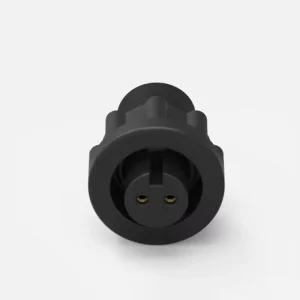 Custom China IP67 2-Pin Waterproof Circular Connector - Durable Nylon Series from Reliable Suppliers and Factory Suppliers, ProductView Product Details
 -
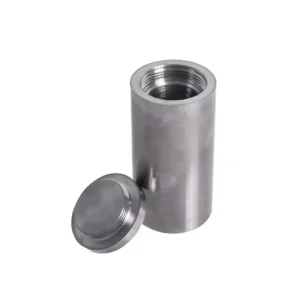 ODM Customized Tungsten Carbide Shielded Canister with Lid - Top China Suppliers & Factory for Quality Products Supplier, ExporterView Product Details
 -
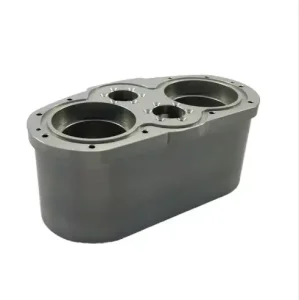 China Factory Custom 5-Axis CNC Machined Steel & Aluminum Universal Joint Base and Gearbox Shell for Robotics & Drone Industry Suppliers, FactoriesView Product Details
 -
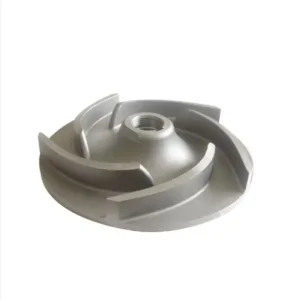 Custom High-Quality Centrifugal Slurry Pump Stainless Steel Investment Casting Open Impeller Manufacturer, ProductsView Product Details
 -
OEM Custom CNC Precision Turned Stainless Steel Filter Sleeve (OEM/ODM Industrial Grade) Manufacturers, QuotesView Product Details
-
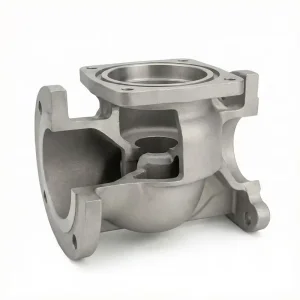 Custom China Stainless Steel Valve Body - Investment Casting Suppliers | Reliable Factory Solutions Supplier, QuotesView Product Details
 -
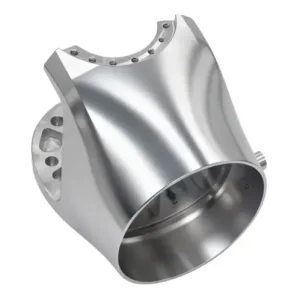 China High-Precision 5-Axis CNC Machined Robot Joint & Housing Parts - China Factory & Suppliers Product, ExporterView Product Details
 -
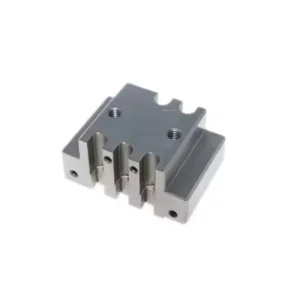 Custom OEM Precision CNC Machining Aluminum Parts - Custom Industrial Components from China Suppliers & Factory Service, FactoryView Product Details