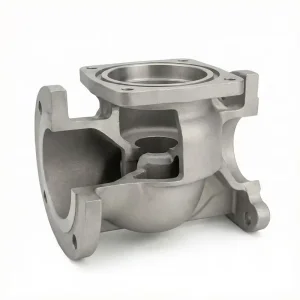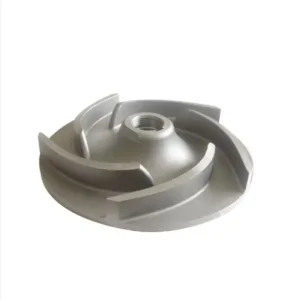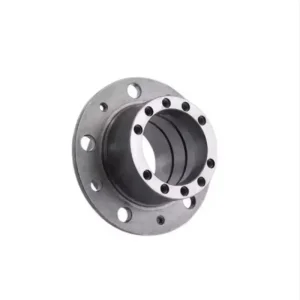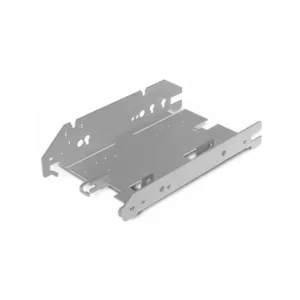
Featured Foundry & Precision Machined Parts
Engineered metal components manufactured to exacting global standards. Browse initial product quotes and custom casting capabilities.


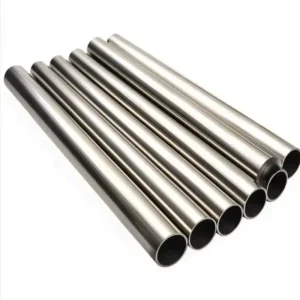
1. Global Industrial Landscape of Metal Foundries & China's Supply Chain
Evaluating macroeconomic shifts, capacity distribution, and technological dominance in modern metal casting and precision forging.
The global metal casting and foundry market is undergoing a seismic structural shift. Driven by rapid advancements in industrial automation, electric vehicle (EV) architectures, aerospace hardware, and high-density semiconductor thermal management, the demand for high-integrity cast components has never been higher. According to metallurgical market intelligence, China maintains its undisputed position as the global center for metal casting, manufacturing approximately half of the world's total tonnage of cast iron, cast steel, aluminum die-casting, and specialty copper alloys.
Historically viewed primarily as a low-cost production hub, modern Chinese metal foundries have transitioned into high-technology innovation ecosystems. Incorporating Industry 4.0 digitizations—such as real-time molten metal spectrographic tracking, automated robotic pouring cells, vacuum-assisted die casting, and 3D sand printing for rapid prototyping—these facilities now routinely compete with and surpass Western Tier-1 suppliers in structural reliability, grain structure uniformity, and dimensional repeatabilities.
Information Gain Note: Beyond Simple Casting Quotes
When evaluating foundry quotations from Chinese suppliers, procurement executives must look beyond unit price metrics. Total Cost of Ownership (TCO) in metal procurement incorporates metallurgical chemical verification (via Optical Emission Spectroscopy), non-destructive porosity testing (X-ray CT scanning), mold lifecycle amortizations, and secondary CNC machining precision. Modern Chinese foundries offer integrated "Foundry-to-Assembly" solutions that collapse traditional supply chain delays.
2. Technical Metallurgy & Precision Manufacturing Processes
Comparing casting methodologies, structural capabilities, tolerances, and typical industrial engineering applications.
High-Pressure Die Casting (HPDC)
Ideal for high-volume aluminum (A380, ADC12) and zinc alloys. Molten metal is injected into steel molds under extreme pressure (10 to 175 MPa). Produces exceptional surface finishes, thin-wall structures (down to 1.5mm), and cycle times under 45 seconds.
Investment Casting (Lost-Wax)
The gold standard for complex geometries in stainless steel (304, 316L, 17-4PH) and carbon steel. Utilizes ceramic shells built around expandable wax patterns. Delivers near-net shapes with tight linear tolerances (CT4-CT6) and eliminates heavy post-machining.
Low-Pressure & Gravity Casting
Optimal for structural automotive components, transmission retarder bodies, and heavy-duty oil pans. Slower solidification yields minimal gas inclusion and superior mechanical strength, suitable for heat-treated aluminum (T6 temper condition).
| Casting Method | Primary Alloys Used | Dimensional Tolerance | Surface Roughness (Ra) | Optimal Order Volume |
|---|---|---|---|---|
| High-Pressure Die Casting | Aluminum (ADC12, A380), Zinc (Zamak 3) | ±0.05 mm – ±0.15 mm | 1.6 – 3.2 µm | 5,000 – 500,000+ pcs |
| Investment Casting | Stainless Steel (316L, 304), Alloy Steel | ±0.10 mm – ±0.30 mm | 3.2 – 6.3 µm | 500 – 50,000 pcs |
| Sand Casting (Automated) | Ductile Iron (QT450-10), Gray Iron | ±0.50 mm – ±1.50 mm | 12.5 – 25 µm | 100 – 10,000 pcs |
| Low-Pressure Die Casting | Aluminum (A356, AlSi7Mg) | ±0.20 mm – ±0.40 mm | 6.3 – 12.5 µm | 1,000 – 20,000 pcs |
| Precision CNC Machining | All Metals (Al, SS, Brass, Cu, Titanium) | ±0.005 mm – ±0.01 mm | 0.4 – 1.6 µm | 1 – 10,000+ pcs |
3. Foundry Quotation (Quotes) Architecture & Cost Engineering
Deconstructing the mathematical elements of custom metal casting and machining quotations from China.
Direct Component Cost Drivers
A granular quotation from a reputable Chinese metal foundry decomposes the unit price into six transparent cost centers:
- Raw Material Indexing: Calculated per kilogram based on daily spot prices on the Shanghai Metal Exchange (SMM). Includes scrap rate allowances (typically 5%-12%).
- Molding & Melting Energy Surcharge: Electric arc furnace or induction melting power consumption adjusted by alloy casting temperature.
- Tooling & Die Amortization: Hardened steel mold costs (H13, NAK80) amortized over expected shot life (e.g., 100,000 shots for aluminum die casting).
- Secondary CNC Machining: Calculated by machine hourly rates (3-axis vs 5-axis indexing) and cycle times for critical face milling, tapping, and boring.
- Surface Finishing: Electroplating, anodizing (Type II/III), powder coating, or e-coating cost per surface area.
- Quality Assurance & Packaging: CMM dimensional reporting, spectrographic analysis, vacuum sealing, and export-ready wooden crating.
Should-Cost Formula for OEM Buyers
Formula Breakdown
Unit Quote = [ (Part Weight + Runner Scrap Weight) × Material Rate ] + (Melting Energy) + (Machine Cycle Time × Hourly Rate) + (Surface Treatment Area Rate) + Tooling Amortization Share + Packaging/FOB Logistics.
By utilizing this standardized should-cost framework, international procurement managers can evaluate factory quotes objectively, avoiding artificially inflated margins while ensuring the factory maintains sustainable operating profitability for long-term supply stability.
4. Technical Roadmap & Future Trends in Metal Casting (2026-2030)
How Chinese foundries are pioneering green metallurgy, AI defect prediction, and ultra-large gigacasting technology.
Integrated Gigacasting
Replacing hundreds of individual stamped sheet metal components with single, massive die-cast structural parts. Utilizing 6,000T to 12,000T locking force presses to cast entire automotive underbodies in seconds.
AI-Driven Defect Simulation
Deploying Magmasoft and AnyCasting simulation software coupled with real-time AI computer vision. Predicting shrinkage porosity, cold shuts, and thermal stress distributions prior to cutting steel tooling.
Decarbonized Metallurgy
Adopting green hydrogen-based reduction processes and solar-powered electric induction furnaces to meet stringent European Carbon Border Adjustment Mechanism (CBAM) requirements for sustainable manufacturing.
5. High-Precision Localized Applications & Micro-Sector Case Studies
How specialized foundry capabilities solve engineering bottlenecks across mission-critical industries.
Electronics Thermal Management & EMI Shielding
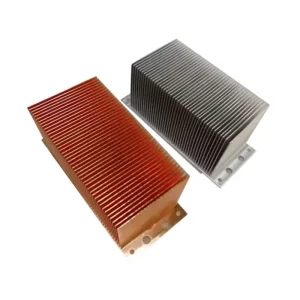
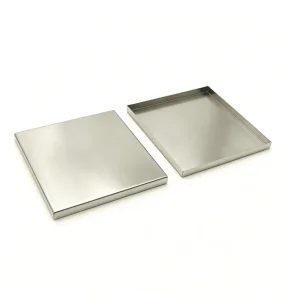
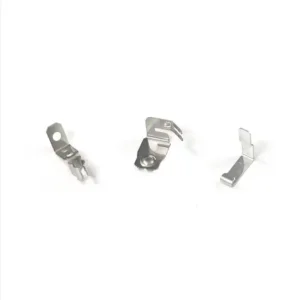
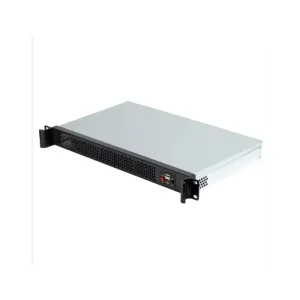
Modern server architectures (1U/2U rackmount chassis) and AI edge computing modules generate intense thermal flux densities. Foundries deploy specialized skived-fin copper heatsinks and complex stamped EMI/RFI shielding covers. Copper cold plates with internal micro-channels offer thermal conductivity exceeding 390 W/m·K, preserving semiconductor junction life under heavy workload spikes.
Automotive Powertrain & Fluid Control
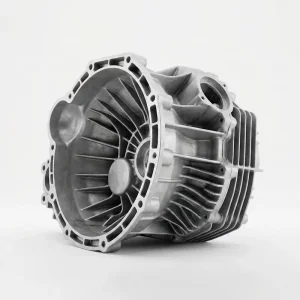
Low-pressure cast aluminum alloy engine clutch oil pans, retarder housings, and stainless steel slurry pump impellers operate under harsh chemical and high-vibration stress environments. By using dense A356-T6 aluminum alloys and vacuum-sealed investment cast 316L stainless steel, engineers eliminate leakage pathways and micro-cracking during extended service lifetimes.
6. Quality Assurance, E-E-A-T Compliance & Inspection Standards
Rigorous engineering verification protocols ensuring ZERO-defect deliveries for global OEMs.
Top-tier Chinese metal foundries operate under stringent international quality control regimes. Establishing operational Trustworthiness and Expertise requires multi-stage inspection gates from raw ingot receipt to final surface treatment validation.
1. Raw Material OES
Optical Emission Spectrometry verifies elemental chemistry matching ASTM/DIN standards before charging furnaces.
2. X-Ray NDT Scanning
Non-Destructive Testing scans structural interiors to ensure internal gas porosity meets ASTM E155 Class 1 levels.
3. CMM Dimensional QC
Automated Coordinate Measuring Machines (Zeiss CMM) verify geometric tolerances down to ±0.005mm.
4. PPAP Level 3
Full Production Part Approval Process including FAI (First Article Inspection), Control Plans, and Gage R&R analysis.
7. Strategic Sourcing FAQ (Frequently Asked Questions)
Direct answers to common technical and commercial queries when procuring custom cast metal parts from China.
Additional Specialized Metal Component Solutions
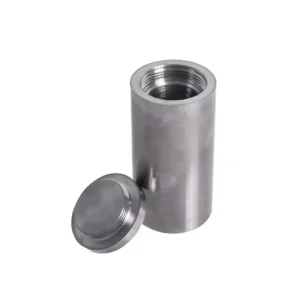
Explore our full line of custom valve bodies, pump impellers, heat sinks, and shielding canisters.