
Featured Precision Cast & CNC Engineered Components
Explore our top-tier custom manufactured thermal, mechanical, and electronic enclosure products exported worldwide.
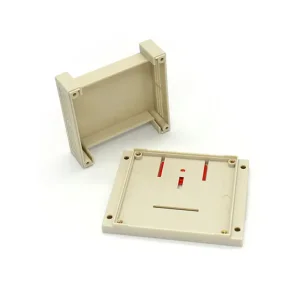
China Custom Modular DIN Rail PLC Enclosure Supplier, Exporter
View Product Details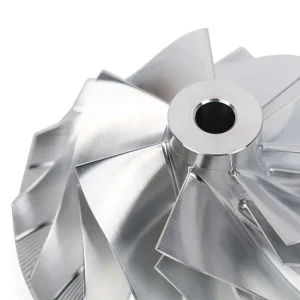
OEM Custom 5-Axis CNC Machined Billet Aluminum Impeller Compressor Wheel Supplier
View Product Details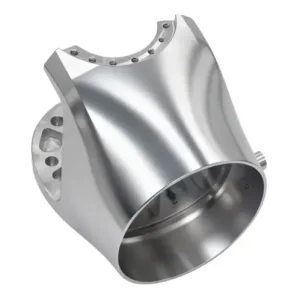
ODM High-Precision Custom 5-Axis CNC Machined Robot Joint & Housing Parts Service
View Product Details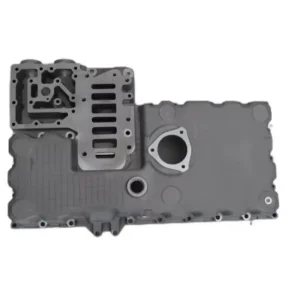
OEM Premium Automotive Transmission Retarder Engine Low-Pressure Cast Aluminum Alloy Clutch Oil Pan
View Product Details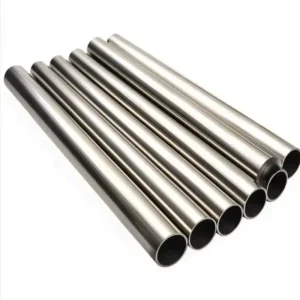
China Custom Precision Capillary Stainless Steel Pipe/Tube (OD 1mm-8mm)
View Product Details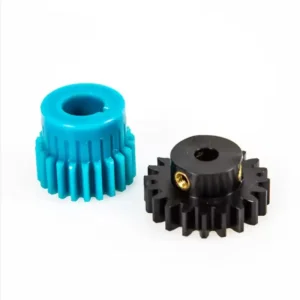
China Custom Precision Injection Molded POM Plastic Gears Manufacturers
View Product Details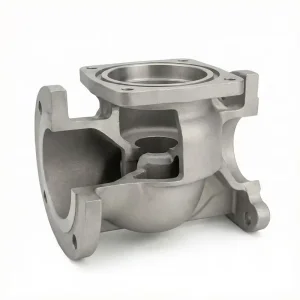
Custom China Stainless Steel Valve Body - Investment Casting Suppliers
View Product Details
China Premium Custom Stainless Steel Casting Factory
View Product DetailsThe Evolution of Thermal Management: Why Die-Cast Heat Sinks Lead Global Markets
In an era dominated by high-density electronics, electric vehicle powertrains, 5G/6G wireless infrastructure, and artificial intelligence server clusters, heat dissipation has shifted from an auxiliary design consideration to a central bottleneck governing system reliability, power efficiency, and product lifespan.
Thermal Challenges in Next-Gen Electronics
Modern semiconductor devices generate unprecedented power densities—exceeding 100 W/cm² at the chip die interface in advanced IGBT modules and AI accelerators. Operating junction temperatures ($T_j$) must be strictly constrained below $125^\circ\text{C}$ to prevent thermal runaway, electromigration, and premature gate dielectric breakdown.
Traditional passive cooling methods, such as simple extruded aluminum profiles, are fundamentally constrained by 2D uniform cross-sectional geometries. They lack the volumetric efficiency and complex 3D surface area enhancements (pin-fins, flared fin arrays, integrated liquid flow channels) required to handle multi-kilowatt dynamic thermal loads.
The Commercial Dominance of China Heat Sink Casting
Global procurement directors and thermal design engineers are increasingly standardizing on China heat sink casting factories due to the unique combination of advanced metallurgy, high-pressure die casting (HPDC) technology, precision CNC post-machining, and unrivaled cost-per-watt efficiency.
By transitioning from multi-piece assemblies (machined bases welded or glued to stamped fins) to single-piece die-cast aluminum structures, global OEMs eliminate contact thermal resistance ($R_{c}$), reduce Total Cost of Ownership (TCO) by 30% to 55%, and achieve structural enclosure integration (IP67/IP68 ingress protection) in a unified casting step.
Manufacturing Technology Matrix: Heat Sink Production Comparison
| Manufacturing Process | 3D Design Freedom | Thermal Conductivity (W/m·K) | Unit Cost (High Volume) | Structural Integration | Typical Lead Time (Tooling) |
|---|---|---|---|---|---|
| High-Pressure Die Casting (HPDC) | Ultra-High (Complex 3D Fin Arrays) | 100 – 180 (Custom Alloys) | Lowest ($$$ Optimization) | Full (Integrated Enclosure & Mounting) | 15 – 25 Days (China Fast-Track) |
| Aluminum Extrusion | Low (2D Uniform Cross-Section Only) | 200 – 220 (6063-T5) | Moderate | Minimal (Requires Secondary CNC) | 7 – 14 Days |
| CNC Billet Machining | High (Constrained by Tool Access) | 160 – 230 (6061/7075) | Extremely High | Moderate | Immediate (No Tooling) |
| Skived Fin Technology | Medium (High Fin Density, 1D) | 200 – 240 (Pure Aluminum/Copper) | High | None (Fin Plate Only) | 10 – 15 Days |
Technical Deep Dive: Materials, Fluidity & Die-Casting Physics
Designing an optimized die-cast heat sink requires balancing heat transfer physics, molten alloy fluidity, solidification shrinkage, and mechanical strength requirements.
Alloy Selection Chemistry
Choice of casting alloy directly impacts bulk thermal conductivity ($k$) and castability. Standard die-casting alloys like ADC12 (Al-Si-Cu) and A380 offer exceptional fluidity (due to 9.5–11.5% Si content) but yield conductivity around 96–100 W/m·K.
For high-flux applications, Sunmy Hardware utilizes specialized high-conductivity alloys such as AlSi10Mg (110–130 W/m·K) and proprietary high-purified thermal alloys achieving up to 180 W/m·K while maintaining defect-free mold filling.
Vacuum HPDC Technology
Gas micro-porosity is the primary enemy of heat transfer efficiency and structural integrity in die castings. Entrapped air acts as a thermal insulator ($k_{\text{air}} \approx 0.026\text{ W/m}\cdot\text{K}$).
By pulling cavity pressure down below 30 mbar prior to molten metal shot injection, our sub-atmosphere vacuum die casting process eliminates micro-voids, enabling heat-treatable parts (T5/T6) and blister-free anodizing and powder coating surface finishes.
Fin Draft & Geometric Rules
To prevent casting ejection tearing while maximizing convective surface area, fin design must follow precise draft angles ($\theta$).
Sunmy's DFM rules mandate a minimum fin tip thickness of $1.0\text{ mm}$, fin base thickness of $1.5–2.5\text{ mm}$, draft angle of $1.0^\circ–2.0^\circ$, and fin height-to-gap aspect ratios up to 15:1 utilizing thermal-shock resistant H13 steel mold inserts.
Why Partnering with a China Heat Sink Casting Factory Delivers Strategic Margin Advantages
Shenzhen Sunmy Hardware Co., Ltd. leverages the Greater Bay Area’s unmatched hardware ecosystem to deliver unprecedented speed, flexibility, and supply resilience.
1. Fully Integrated Vertical Ecosystem
From 3D Moldflow simulation and tool fabrication to cold-chamber HPDC (ranging from 280-ton to 2,500-ton clamping force), 5-axis CNC machining, surface treatment, and thermal testing—every phase operates under one unified quality management umbrella in Shenzhen.
2. Rapid Prototyping to Volume Scaling
We bridge the gap between initial prototype verification and full mass production. Utilize quick-turn CNC billet prototypes for thermal validation within 5 days, transition to rapid soft-tooling die casting in 15 days, and ramp up to 100,000+ monthly units effortlessly.
3. Comprehensive In-House Finishing
Heat sinks require specialized surface treatments to resist oxidation and optimize emissivity. We offer chromate conversion coating (RoHS compliant Chem Film), black anodizing, conductive electrophoretic painting (E-coating), and high-durability outdoor polyester powder coating.
Localized Application Scenarios & Industrial Implementation Cases
How our precision cast heat sinks empower mission-critical engineering systems across global industries.
EV Traction Inverters & On-Board Chargers (OBC)
Electric vehicle power electronics demand lightweight, liquid-to-air or liquid-to-liquid cast aluminum cooling plates capable of handling Silicon Carbide (SiC) MOSFET switching losses. Sunmy produces pressure-tight die-cast housings featuring friction-stir-welded (FSW) or gasketted liquid channels withstand 6 bar static hydraulic pressure without leakage.
5G/6G Massive MIMO Outdoor Base Station Housings
Mounted on remote telecom towers exposed to extreme solar radiation, salt spray, and monsoon rain, base station heat sinks require IP68 sealing combined with high natural convection fin arrays. Our die-cast aluminum enclosures incorporate multi-directional flared fins that increase convective heat dissipation by 35% compared to linear extrusions.
High-Density AI Accelerator & PSU Thermal Plates
1U/2U server chassis present tight vertical envelope constraints ($< 44\text{ mm}$). We manufacture ultra-flat, high-density pin-fin cast plates post-machined to $\pm0.005\text{ mm}$ surface flatness, allowing direct contact with thermal interface materials (TIM) and heat-pipe vapor chamber assemblies for GPU cluster nodes.
Solar Inverters & High-Power LED Luminaires
Solar string inverters and 1000W industrial stadium LED lights require high structural rigidity combined with high thermal capacity. Our die-cast housings integrate mounting bosses, grounding studs, cable gland entry ports, and thermal cooling fins into a single shot casting, eliminating assembly labor.
Rigorous Metrology, Inspection & International Compliance
We uphold strict quality gate enforcement at every stage of production to ensure full compliance with aerospace, automotive, and industrial electronics standards.
Coordinate Measuring (CMM)
In-house Zeiss CMM equipment inspects GD&T planarities, hole positionings, and fin true positions to within micron-level tolerances down to $\pm0.005\text{ mm}$.
X-Ray Radiography NDT
Industrial X-ray non-destructive testing inspects internal casting structure, detecting sub-surface gas porosity, shrinkage voids, or inclusion defects prior to machining.
FAI & Material Certs
Every batch ships with First Article Inspection (FAI) reports, spectrometer chemical analysis certificates, and RoHS / REACH chemical safety compliance documentation.
Helium Leak Testing
For sealed liquid-cooling cold plates and IP67/IP68 enclosures, automated pressure decay and helium mass spectrometer leak testing ensure zero fluid ingress or bypass.
Technology Roadmap: Future of Advanced Thermal Casting (2025–2030)
Sunmy Hardware's R&D team continuously pushes the boundaries of thermal die casting science to meet next-generation power densities.
Hybrid Cast-Sintered Vapor Chambers
Integration of die-cast aluminum structural bodies directly co-molded with internal copper vapor chambers or heat pipe networks, achieving effective thermal conductivity exceeding $1,000\text{ W/m}\cdot\text{K}$.
Ultra-High Conductivity Alloys
Development of low-silicon, rare-earth modified aluminum die-casting alloys capable of achieving $190–210\text{ W/m}\cdot\text{K}$ conductivity without sacrificing mold-filling fluidity or die life expectancy.
AI-Optimized Topology Fin Layouts
Moving beyond linear fins toward generative AI-designed bio-mimetic pin arrays that minimize pressure drop in forced air systems while increasing turbulent heat exchange efficiency by 45%.
Frequently Asked Questions by Global Procurement & Engineering Teams
Get authoritative answers to critical technical questions regarding China heat sink casting manufacturing, DFM guidelines, tolerances, and logistics.
How does die casting compare to aluminum extrusion for high-power thermal management?
What draft angles and minimum fin thicknesses are required for die-cast heat sinks?
How does Sunmy Hardware eliminate internal gas porosity in cast aluminum heat sinks?
What surface treatments are recommended for outdoor or corrosive environment heat sinks?
What is the typical tooling lead time and lifespan for custom die-casting molds?
How are Intellectual Property (IP) and proprietary engineering drawings protected?
Specialized Hardware, Connectors & Enclosure Solutions
Browse our full range of custom die-cast housings, precision turned fittings, and stamped hardware components.
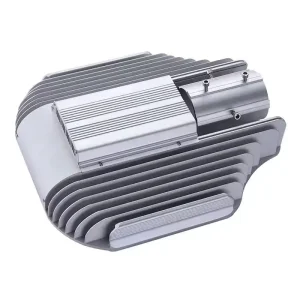
ODM Custom Die-Cast Aluminum LED Luminaire Housing Manufacturers, Exporter
View Product Details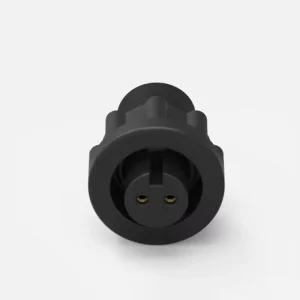
Custom China IP67 2-Pin Waterproof Circular Connector - Durable Nylon Series
View Product Details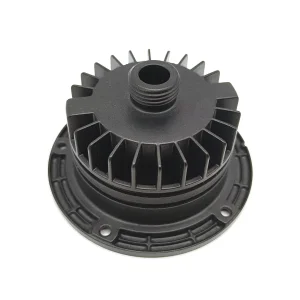
High-Quality Custom Die Cast Aluminum Finned Housings & End Caps
View Product Details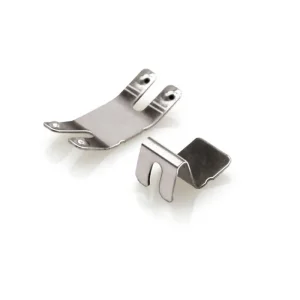
ODM Custom Precision Sheet Metal Stamping Clips & Electronic Hardware Components
View Product Details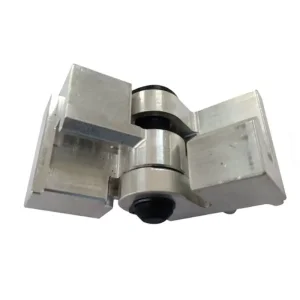
ODM Custom Precision CNC Machined Aluminum Hinge Assembly | Structural Connectors
View Product Details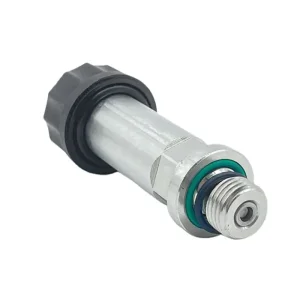
China High-Performance Hydraulic Solenoid Valve Core - Precision CNC Parts
View Product Details
ODM Custom Precision Capillary Stainless Steel Pipe / Tube (OD 1mm - 8mm)
View Product Details
Custom Stainless Steel Valve Body Suppliers, Factory
View Product DetailsReady to Optimize Your Thermal Management Project?
Send us your 3D CAD files (STEP, IGES, X_T) or engineering drawings today. Our senior metallurgical and manufacturing engineers reply within 24 hours with complete DFM thermal feedback and a competitive factory-direct quotation.