
Featured Precision Components & OEM Manufacturing Capabilities
Explore our audited production capabilities spanning 5-axis CNC machining, custom die casting, and high-precision metal stamping tailored for global industrial buyers.
Engineering Next-Generation Electrical Contacts for Global Industry
In modern electrical engineering, battery contacts are no longer treated as simple stamped metal components. They represent critical electrical interfaces that determine thermal dissipation, contact resistance, system reliability, and cycle life in devices ranging from medical devices to electric vehicles (EVs).
Low Contact Resistance (<10 mΩ)
By optimizing micro-topography, substrate selection (such as C17200 Beryllium Copper), and precious metal plating layers, custom contacts reduce electrical resistance, minimizing energy loss and thermal degradation.
High Fatigue Life (>10,000 Cycles)
Advanced strain hardening, stress-relief heat treatments, and spring temper grain alignment prevent mechanical failure and permanent deformation over extended service lifetimes.
Harsh Environment Protection
Multi-layer electroplating processes (such as Nickel underplating combined with Selective Gold or Silver flash) protect against galvanic corrosion, oxidation, fretting failure, and salt fog exposure.
Tailored Battery Contact Solutions Across High-Growth Sectors
As a leading China battery contacts manufacturer and exporter, our engineering teams customize stamped contacts, leaf springs, wire forms, and SMT battery clips for demanding operating environments.
Electric Vehicles (EV) & Mobility
Automotive-grade Battery Management Systems (BMS), high-current busbar contacts, and prismatic/cylindrical cell interconnections engineered to withstand continuous high vibration, thermal cycling, and high-amp discharge loads under IATF 16949 quality controls.
Medical Electronics & Implants
Ultra-miniature SMT battery contacts for hearing aids, cardiac monitors, and insulin pumps. Manufactured in cleanroom environments utilizing bio-compatible plating materials with 100% automated optical inspection (AOI) for zero-defect compliance.
Industrial IoT & Smart Meters
Long-service-life spring contacts designed for primary lithium thionyl chloride (LiSOCl2) batteries in remote smart gas/water meters, environmental sensors, and asset trackers requiring 15+ year operational stability without contact stress relaxation.
Consumer Electronics & Handhelds
Mass-produced standard AA, AAA, 18650, 21700, and CR2032 coin cell battery contact clips. Optimized for high-speed automated pick-and-place assembly (Tape & Reel packaging) with co-planarity tolerances held within ±0.05 mm.
Energy Storage Systems (ESS)
Heavy-duty copper alloy battery interconnects, spring-loaded high-current blades, and flexible laminated busbars for commercial grid energy storage, residential battery banks, and uninterruptible power supplies (UPS).
Aerospace & Defense
Mil-spec compliant custom battery contacts manufactured from special heat-treated alloys, offering immunity to extreme temperatures (-55°C to +150°C), atmospheric oxidation, and intense mechanical shock forces.
Metallurgy, Material Science & Plating Technology Roadmap
Selecting the proper base alloy and plating specification is crucial to balancing raw material cost, mechanical deflection force, electrical conductivity, and environmental resistance.
| Substrate Material | UNS Grade | Electrical Cond. (%IACS) | Tensile Strength (MPa) | Stress Relaxation Resistance | Primary Industrial Use Case |
|---|---|---|---|---|---|
| Beryllium Copper | C17200 (TD04) | 22 - 28% | 1100 - 1350 | Exceptional (up to 200°C) | High-reliability military, medical, high-cycle springs |
| Phosphor Bronze | C5191 / C5210 | 13 - 15% | 600 - 750 | Very Good (up to 105°C) | Standard electronic spring contacts, AA/AAA clips |
| High-Conductivity Copper | C11000 / C10200 | 100 - 101% | 200 - 350 | Moderate (Requires heavy section) | EV high-current busbars, fast-charging terminals |
| Stainless Steel | SUS301 / SUS304 | 2.5 - 3% | 900 - 1500 | Excellent structural spring | Low-cost structural clips requiring nickel cladding |
| Titanium Copper | C19900 | 13 - 17% | 900 - 1100 | Superior lead-free replacement | Ultra-thin SMT contacts for smartphones/wearables |
Electroplating & Surface Engineering
Surface treatment directly governs contact resistance and fretting corrosion. We engineer multi-tier plating stacks:
- Underplating Layer: 1.27µm - 2.54µm (50-100µin) Ductile Sulfamate Nickel barrier to prevent base metal intermetallic diffusion.
- Selective Hard Gold Finish: 0.25µm - 1.27µm (10-50µin) Gold over contact points to achieve minimal mating wear and ultralow oxidation.
- Pure Bright / Matte Tin Plating: 2.54µm - 5.08µm (100-200µin) Lead-Free Tin with reflow baking to eliminate tin whisker growth risks.
- Silver Electroplating: High-amperage EV battery connections utilizing 3.0µm - 8.0µm Silver with anti-tarnish organic passivation.
Contact Force & Deflection Optimization
Using finite element analysis (FEA) strain modeling, our tooling engineers calculate the precise normal force ($F_n$) required to break through surface oxide films without exceeding the yield point ($\sigma_y$) of the spring arm:
Fn = (E * w * t^3 * δ) / (4 * L^3)
Where E is Young's Modulus, w is spring width, t is stock thickness, δ is deflection distance, and L is cantilever arm length. This ensures uniform force over nominal tolerance variations.
Precision Stamping Engineering & Smart Quality Control
Operating high-speed Swiss and Japanese progressive die presses (15 to 200 tons), we produce over 50 million custom battery contacts monthly with zero-defect quality controls.
In-House Progressive Tooling
Designing and wire-EDM cutting tungsten carbide die inserts in-house ensures die longevity surpassing 50 million strokes, suppressing burrs below 0.02 mm.
100% Inline Optical Sorting
High-speed vision inspection sensors measure critical dimple heights, leg positions, and pitch spacing in real time during continuous strip stamping.
XRF Plating Verification
X-Ray Fluorescence thickness gages systematically verify precious metal deposit thickness across batch samples to prevent sub-spec plating deliveries.
Why International OEM Buyers Partner with China Exporters
Navigating global hardware procurement requires balancing unit cost, design speed, metallurgical consistency, and international logistics reliability.
Rapid DFM & Tooling Execution
Our engineering team delivers Design for Manufacturability (DFM) feedback within 24 hours of receiving 3D CAD step files, accelerating prototype tooling cycles down to 10-15 business days.
End-to-End Supply Chain Integration
From raw material slit-coiling to precision stamping, heat treatment, reel-to-reel continuous electroplating, and custom packaging—all processes are monitored under unified ERP tracing.
Total Landed Cost Optimization
Leveraging specialized industrial clusters in China provides procurement teams with a 30-45% cost reduction over domestic European or North American stampers without compromising on quality standards.
International Quality Certifications & Environmental Directives
We ensure fully traceable documentation, raw material mill certificates, and third-party laboratory test reports with every exported consignment.
ISO 9001:2015 & IATF 16949
Certified Quality Management Systems governing rigorous APQP, PPAP Level 3 documentation, FMEA analyses, and statistical process control (SPC).
RoHS 3 & REACH Compliant
Strict compliance with EU Directive 2015/863 (RoHS 3) and SVHC REACH regulations guaranteeing heavy-metal-free, hazardous-substance-free plating chemistries.
Conflict-Free Minerals
Full audit trail compliance guaranteeing that Gold, Tin, Tantalum, and Tungsten metals are sourced exclusively from Responsible Minerals Initiative (RMI) certified smelters.
Frequently Asked Questions by Battery Contact Procurement Teams
In-depth answers from our engineering department regarding custom tooling, mechanical degradation, plating options, and sample prototyping.
How do you prevent stress relaxation in battery contacts over long-term usage?
Stress relaxation occurs when a metallic spring operates under sustained mechanical strain, causing plastic deformation and loss of contact force over time—especially at elevated temperatures. We mitigate stress relaxation through careful alloy selection (such as Beryllium Copper C17200 or Titanium Copper C19900 instead of standard brass), specifying mill-hardened or age-hardened tempers, and applying post-stamping thermal stress-relief heat treatments to lock in elastic grain structures.
What is the main advantage of Beryllium Copper over Phosphor Bronze for battery clips?
While Phosphor Bronze (C5191/C5210) offers excellent cost-to-performance for standard consumer clips, Beryllium Copper (C17200) delivers substantially higher yield strength (up to 1350 MPa vs 750 MPa) and nearly double the electrical conductivity (22-28% IACS vs 13% IACS). BeCu allows engineers to design smaller cantilever arms that exert higher contact force without taking permanent set, maintaining spring energy up to 200°C.
Which plating option is recommended for high-humidity or outdoor battery housings?
For high-humidity or outdoor environments, we recommend a dual-layer plating system consisting of a ductile Sulfamate Nickel underplate (1.27µm - 2.54µm) followed by Selective Gold plating (0.38µm - 0.76µm) on contact mating points, with Lead-Free Matte Tin on SMT solder tails. Gold exhibits zero atmospheric oxidation and resists galvanic corrosion when mating against nickel-plated battery cells, enduring 96+ hour salt fog exposure tests (ASTM B117).
What packaging formats are available for automated SMT assembly lines?
We provide Tape & Reel (EIA-481 compliant carrier tape) with heat-sealed cover tape for high-speed automated pick-and-place SMT assembly lines. We also offer anti-static tray packaging, bulk polybag packing with desiccant packs, and custom tape pitches engineered specifically to your feeder nozzles.
What lead time is required for prototype tooling versus mass production progressive dies?
Rapid soft tooling (laser cutting + single-hit stage tooling) for engineering prototypes takes 5 to 7 working days. High-speed multi-station tungsten carbide progressive stamping dies for mass production typically require 15 to 25 business days, including First Article Inspection (FAI) reports, CMM dimensional layouts, and PPAP Level 3 sample submissions.
How do you ensure coplanarity control on surface-mount (SMT) battery contacts?
Coplanarity is held within ±0.05 mm across production batches. This is achieved using high-precision die stops, carrier strip stabilizing ribs during progressive stamping, and inline 3D laser-profile scanning before reel packaging to guarantee flawless solder paste wetting during reflow soldering.
Explore Additional Machined & Molded Industrial Components
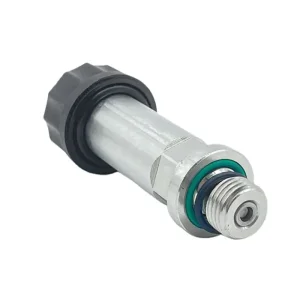
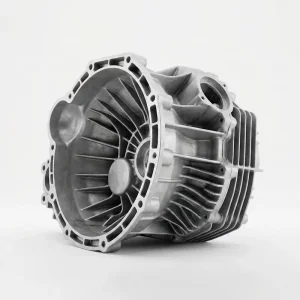
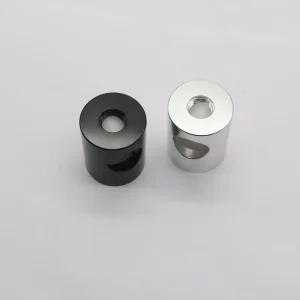
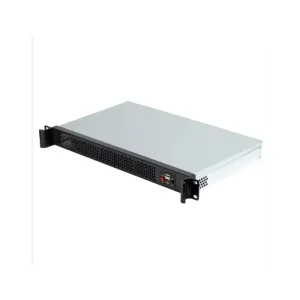
From precision hydraulic cores to die-cast transmission housings and server chassis, discover our full spectrum of export-grade custom manufacturing services.
Request Your Custom Battery Contacts Quote & DFM Review
Upload your STEP/CAD drawings or contact our metallurgical engineering team. Receive detailed DFM analysis, material selection support, and competitive factory-direct quotes within 24 hours.