
Engineered Injection Molded Components for Nagoya OEMs
Explore high-demand molded components engineered for extreme mechanical strength, tight tolerances, and flawless surface finishes across Aichi’s manufacturing ecosystem.
The Greater Nagoya Industrial Landscape: Precision Demand & Economic Context
Empowering Aichi Prefecture’s Automotive Hegemony, Mechatronics Innovation, and Aerospace Engineering with High-Throughput Plastic Injection Tooling.
Automotive OEM (xEV Transition)
As Toyota, Denso, Aisin, and Toyota Boshoku drive the shift toward next-generation Battery Electric Vehicles (BEVs), Hybrid Electric Vehicles (HEVs), and Fuel Cell Systems (FCEVs) across Toyota City and Kariya, the demand for lightweight, thermally stable engineering polymers has surged. We supply precision PA66+30%GF sensor housings, battery management system (BMS) covers, and high-voltage busbar isolators engineered to survive harsh under-hood environments.
Industrial Robotics & Automation
The Chubu region represents the heartland of Japanese industrial robotics (FANUC, Yaskawa, Mitsubishi Electric ecosystems). Modern robotic end-effectors, articulated arm joint covers, and automated guided vehicle (AGV) sensor enclosures require low-weight, wear-resistant polymers like POM-C, PEEK, and Ultra-High-Molecular-Weight Polyethylene (UHMW-PE) with micro-tolerances down to ±0.008 mm.
Aerospace & High-End Optics
Centering around Komaki and Nagoya Airport industrial parks, aerospace OEMs connected to Mitsubishi Heavy Industries (MHI) and Subaru Aerospace require flame-retardant (UL94-V0), high-dielectric structural components. We mold specialized PEEK, PEI (Ultem), and high-transparency Polycarbonate (PC) optical diffusers to strict JIS W and ISO 9001:2015 criteria.
Technical Roadmap: Precision Mold Engineering & Material Science
From Moldflow volumetric shrinkage modeling to multi-cavity hot-runner tooling, we bridge design intent with scalable mass manufacturing.
Advanced Mold Design & Tooling Architecture
For Nagoya automotive buyers accustomed to the uncompromising quality of Japanese master toolmakers, our mold design methodology incorporates identical steel grades and precision machining workflows. Every mold program undergoes rigorous 3D DFM (Design for Manufacturability) analysis to eliminate structural weaknesses prior to steel cutting.
Engineering Resins & Polymer Matrix Selection
Selecting the optimal polymer is critical to surviving environmental stress cracking (ESC), thermal cycling (-40°C to +150°C), and chemical exposure in automotive and industrial environments:
| Resin Grade | Key Properties | Typical Nagoya OEM Applications |
|---|---|---|
| PA66 + 30% GF | High tensile strength, heat deflection temperature (250°C), creep resistance. | Under-hood engine covers, electronic solenoid valves, intake manifolds. |
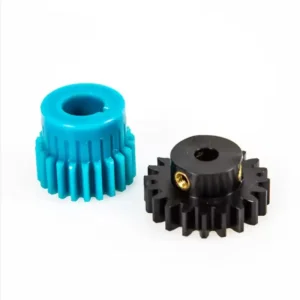
| POM-C (Polyacetal) | Self-lubricating, dimensional stability, ultra-low wear coefficient. | Precision gears, internal wiper mechanisms, actuator cams, bushings. |
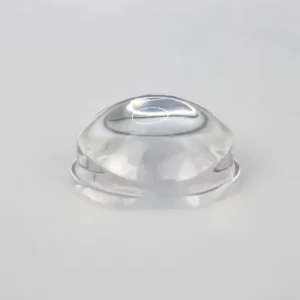
| Optical PC | 92% light transmittance, impact resistance, UV stabilization. | Automotive light guides, display screens, medical instrument windows. |
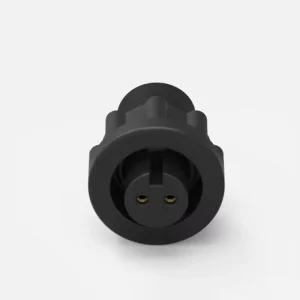
| PBT + 15% GF | High dielectric strength, low moisture absorption, chemical resistance. | IP67 electrical connectors, relay housings, ECU enclosures. |
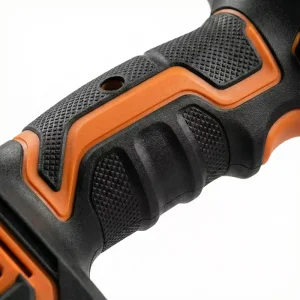
| 2K TPU + ABS / PC | Dual-injection overmolding, soft-touch ergonomic grip, chemical bond. | Power tool handles, industrial control pendants, handheld devices. |
China Industry 4.0: Supply Chain Resilience & Efficiency Advantages
How our smart manufacturing hub in Shenzhen delivers unmatched speed, cost control, and quality stability directly to Aichi Prefecture’s industrial corridors.
Fully Electric Injection Machines
Our production floor operates Japanese Sumitomo and Toyo fully-electric injection molding machines ranging from 30 to 850 metric tons. Electric servo clamping ensures zero hydraulic fluid contamination, precise shot volume repeatability within ±0.01g, and 40% lower energy consumption for sustainable procurement goals.
Rapid Prototype-to-Mass Scale Velocity
While traditional domestic moldmaking in Chubu can take 8 to 12 weeks for tooling turnaround, our 24/7 high-speed CNC electrode machining and automated wire-EDM cells deliver T1 sample parts in as little as 15 business days—accelerating your time-to-market (TTM) by over 50%.
Mitigating Supply Chain Bottlenecks
By offering dual-sourcing tooling security, buffer inventory management in Shenzhen, and direct freight shipping straight into the Port of Nagoya or Chubu Centrair International Airport, we buffer Japanese manufacturers against regional disruptions and labor capacity constraints.
Local Support, Regulatory Compliance & Quality Verification
Committed to Japanese Industrial Standards (JIS), rigorous PPAP documentation, and absolute transparency from raw resin to door step delivery.
Strict Quality Control Workflow (JIS & IATF 16949)
We treat quality control as an engineering discipline rather than a final gate. Every production batch follows a strict 6-stage verification process tailored to Japanese buyer expectations:
- Incoming Material Certification: Full spectroscopic polymer analysis and moisture testing to verify virgin resin purity (RoHS 3, REACH, and UL94 certified).
- First Article Inspection (FAI): 100% full-dimensional inspection using Zeiss Coordinate Measuring Machines (CMM) and optical micro-projectors.
- In-Process SPC Control: Real-time statistical process control tracking cavity pressure, barrel temperature, and cycle time stability.
- PPAP Level 3 Documentation: Submission of Process Flow Diagrams, PFMEA, Control Plans, Dimensional Results, and Material Certifications for automotive engineering approval.
Nagoya Procurement Comparison Matrix
See how our global factory direct model compares to traditional domestic Japanese suppliers:
| Parameter | Traditional Local Factory | Sunmy Direct Factory Solution |
|---|---|---|
| T1 Tooling Lead Time | 8 – 12 Weeks | 2 – 3 Weeks (Express) |
| Tooling Initial Cost | High Baseline Overhead | 35% - 50% Savings |
| 2K / Overmolding | Requires Specialized Vendor | Integrated In-House Cell |
| Data & IP Protection | Standard Corporate NDA | Bilingual NDA + Encrypted Vault |
| Delivery to Aichi | Domestic Trucking | Direct Sea/Air to Nagoya Port |
Frequently Asked Questions for Nagoya Procurement & Engineering Teams
Clear answers regarding logistics, intellectual property, tooling ownership, and technical standards.
We offer multiple streamlined shipping channels directly to the Nagoya region. Sea freight from Shenzhen to the Port of Nagoya takes approximately 5 to 7 days port-to-port. Express air freight to Chubu Centrair International Airport (NGO) takes 2 to 3 days. We handle all customs documentation, Japanese tariff clearances, and local door-to-door delivery through trusted logistics partners.
We adhere to strict confidentiality protocols. Prior to receiving any STEP, IGES, or 2D CAD files, we execute a legally binding Non-Disclosure Agreement (NDA). All engineering data is stored on secure, encrypted internal servers with restricted access. Because you work directly with our factory engineers—eliminating brokers—your proprietary IP remains completely protected within our company.
You maintain 100% ownership of the injection mold tool. Upon payment completion, the mold belongs entirely to your company. We provide free lifetime mold maintenance, cleaning, and insured climate-controlled storage in our factory for your production runs. If desired, we can also carefully package and ship the mold tool directly to your facility in Japan.
Yes. Every shipment includes comprehensive documentation: Original Material Mill Certificates (verifying resin grade, lot number, and flame retardancy ratings), RoHS 3 & REACH compliance declarations, and full FAI (First Article Inspection) reports generated by our CMM inspection systems using JIS/ISO drawing tolerances.
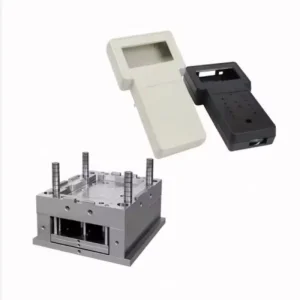
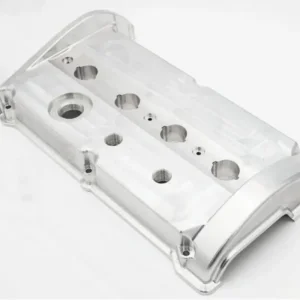
Complete Custom Molding & Precision Part Manufacturing Portfolio
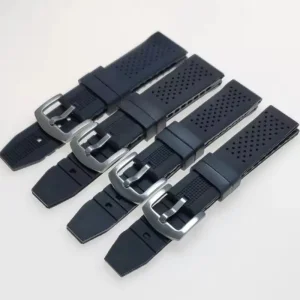
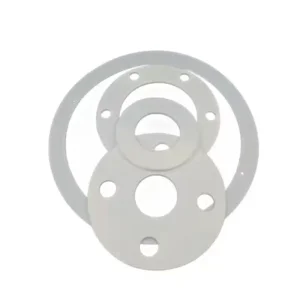
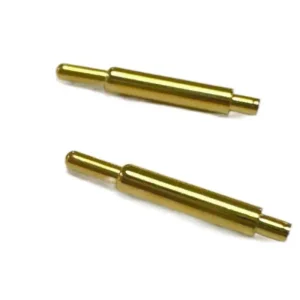
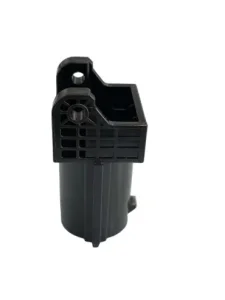
Explore our full line of custom molded shells, optical components, high-precision turned parts, and heavy-duty hardware assemblies engineered for global OEM applications.
Accelerate Your Plastic Injection Molding Project in Nagoya
Send us your 3D CAD files (STEP, IGES, STL) or 2D technical drawings today. Our engineering team will return a complete DFM manufacturability analysis and itemized quote within 24 hours.