
Engineered Thermoplastic Assemblies for Russian Industrial Sectors
Navigating Russia’s Industrial Polymer Landscape: Import Substitution & Supply Chain Resilience
The Russian manufacturing ecosystem is undergoing an unprecedented structural transition. Driven by aggressive import substitution policies (Импортозамещение) across key sectors—including automotive (Togliatti, Kaluga hubs), heavy machinery (Ural region), energy extraction (Tatarstan, Tyumen), and industrial automation—Russian OEMs are shifting away from traditional European component sourcing toward high-precision direct-manufacturing partnerships in China.
Plastic injection molding for the Russian market requires strict adherence to extreme environmental conditions. Thermoplastic components must withstand severe thermal cycling from -50°C during Siberian winters to +40°C in industrial summer operations without suffering brittle fracture, micro-cracking, or dimensional creep.
Financial Settlement Stability
Full support for non-SWIFT direct financial clearing in RMB/RUB via Russian VTB Shanghai branch, agricultural banking networks, and transparent cross-border trade accounting compliance.
Seamless Overland Logistics
Streamlined block-train railway transit through Manzhouli / Zabaykalsk and Suifenhe customs corridors direct to Moscow, Yekaterinburg, and Novosibirsk with customs clearance support.
GOST & EAC Regulatory Compliance
Moldmaking and plastic injection molding workflows calibrated to meet EAC (Eurasian Conformity) TR CU 004/2011 and TR CU 020/2011 specifications, supported by full CMM & FAI inspection dossiers.
Data-Driven Injection Molding Excellence
Material Formulation Matrix for Sub-Zero Russian Operational Climates
Standard off-the-shelf thermoplastics suffer severe glass transition brittleness under Sub-Zero temperatures typical of Siberian and Northern Russian industrial sites. Our material engineers specialize in impact-modified polymer compounding, glass fiber reinforcement optimization, and internal lubricant dosing.
| Polymer Grade | Reinforcement / Additive | Low-Temp Limit | Key Mechanical Property | Target Industrial Application in Russia |
|---|---|---|---|---|
| PA66 (Polyamide 66) | 30% Glass Fiber + EPDM Impact Modifier | -45°C | High Tensile Strength, Reduced Cold-Shock Fracture | Under-the-hood Automotive Sensors & Engine Housings |
| POM (Polyoxymethylene) | PTFE Lubricated + Elastomer Toughened | -50°C | Ultra-low Friction, High Fatigue & Dimensional Stability | Precision Mining Gears, Valves & Heavy Machinery Bearings |
| PC/ABS Alloy | Flame Retardant UL94-V0 + UV Stabilizer | -40°C | High Notch Impact Resistance, Excellent Finish | POS Terminals, Outdoor Telematics & Electronic Enclosures |
| PEEK (Polyetheretherketone) | Carbon Fiber 30% Fill | -60°C to +250°C | Extreme Chemical & Thermal Resistance | Subsea Oil & Gas Valves, Siberian Pipeline Monitoring Equipment |
Tooling & Mold Steel Selection
To maintain dimensional tolerances across multi-cavity runs exceeding 1,000,000 shots, we utilize premium Swedish Uddeholm and Japanese Daido mold steels (e.g., S136 stainless steel hardened to HRC 48-52, NAK80, and H13). High-polish mirror surfaces prevent micro-stress concentration points in molded optical components.
Moldflow® Cavity & Gate Optimization
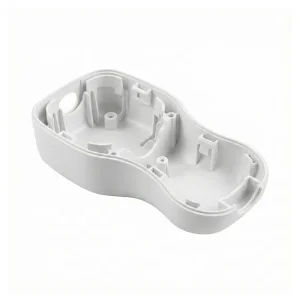
Prior to cutting steel, every mold design undergoes thorough Moldflow® thermal and shear rate simulation. We analyze volumetric shrinkage, weld line placement, injection pressure drops, and cooling channel efficiency to ensure zero warp deformation—critical for sealed IP67/IP68 enclosures.
Industrial Injection Molding Use Cases Across Russian Regions
From the heavy manufacturing corridor of the Urals to the high-tech electronics hubs of Moscow and St. Petersburg, our custom plastic injection molding services power critical infrastructure projects.
Automotive & Commercial Vehicle Electronics (Togliatti Hub)
High-precision PA66+GF30 solenoid valve housings, engine sensor covers, and under-hood wiring clip assemblies built to survive extreme engine heat paired with sub-zero external air intake.
Mining & Siberian Oil Extraction Equipment (Tyumen & Kuzbass)
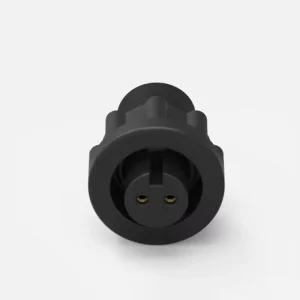
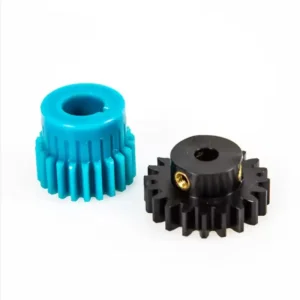
Heavy-duty POM internal gears, PTFE wear seals, and anti-static polyolefin fluid connectors engineered for explosive gas environments and severe mechanical vibration.
Retail Logistics & POS Telematics (Moscow / St. Petersburg)
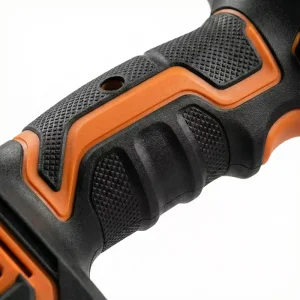
Multi-cavity ABS/PC dual-shot overmolded housings, rubberized protective boots, and silicone keypad assemblies for commercial payment terminals and warehouse handheld scanners.
Future Outlook: Next-Generation Smart Injection Molding (2025–2030)
As global manufacturing moves toward digital twin modeling and autonomous quality verification, our injection molding facilities are upgrading to AI-integrated cavity pressure monitoring systems.
1. Real-Time Cavity Pressure Feedback
Piezoelectric pressure sensors embedded in the mold cavity communicate dynamically with machine hydraulic controllers, automatically adjusting holding pressure to compensate for micro-batch resin viscosity variations.
2. Liquid Silicone Rubber (LSR) Multi-Shot
Expanding 2K and 3K co-injection molding capabilities allowing rigid plastic frames (PA+GF or PBT) to be seamlessly overmolded with self-bonding liquid silicone for absolute IP68 hermetic sealing.
3. Low-Carbon Bio-Based Thermoplastics
Qualifying bio-polypropylene (Bio-PP) and chemically recycled polyamides that maintain mechanical tensile thresholds while satisfying international ESG and green procurement directives.
Frequently Asked Questions for Russian Buyers & Engineers
How do you handle cross-border payments and SWIFT alternatives for Russian customers?
What logistics channels are used to transport finished plastic parts and molds to Russia?
Can you supply material test reports and EAC certification documentation?
How are plastic parts engineered to prevent cracking at -50°C temperatures?
What is your typical lead time for custom mold tooling and sample approval?
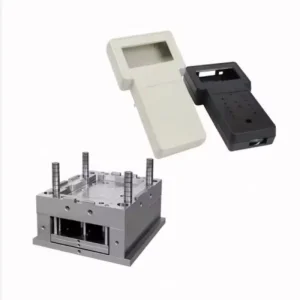
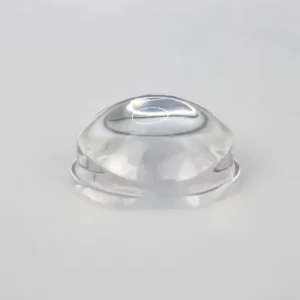
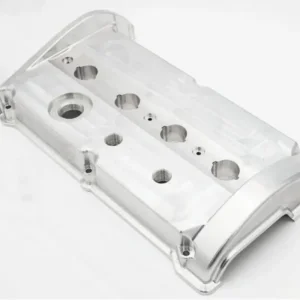
Precision Plastic Injection Molded & Turned Component Solutions
Accelerate Your OEM Project in Russia
Upload your 3D CAD files (STEP, IGES, X_T) or 2D technical drawings today. Receive an engineering DFM feedback report, Moldflow analysis, and transparent quotation within 24 hours.
Send Inquiry Now →