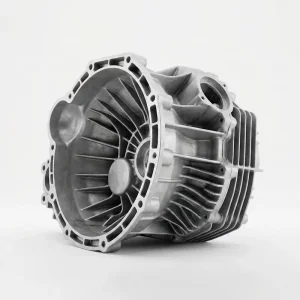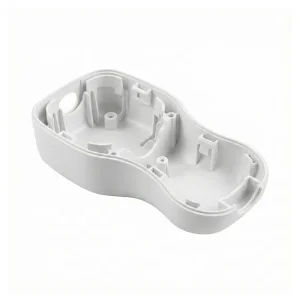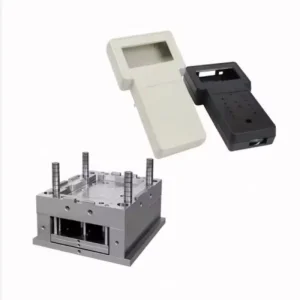
High-Precision Hardware & Casting Solutions
Explore our factory-direct OEM products engineered for high structural strength, tight tolerances, and superior thermal performance.
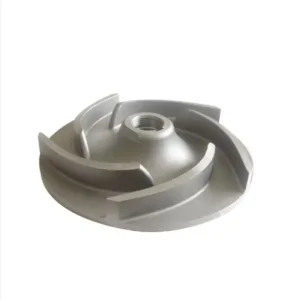
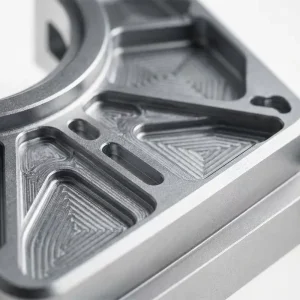
Defining OEM Thin Wall Die Casting: Engineering Boundaries & Rheological Physics
In modern precision manufacturing, Thin Wall Die Casting (TWDC) represents the pinnacle of High-Pressure Die Casting (HPDC) engineering. While conventional aluminum and zinc die castings maintain nominal wall thicknesses between 2.5 mm and 4.0 mm, thin-wall casting pushes geometric thresholds down to 0.6 mm to 1.5 mm without compromising mechanical yield strength, electromagnetic shielding, or structural integrity.
Achieving ultra-thin cross-sections requires precise thermal balance and extreme metal injection velocities (ranging from 40 m/s to over 70 m/s at the gate). Liquid aluminum alloys (such as ADC12, A380, and AlSi9Cu3) freeze within milliseconds upon contact with cold steel mold cavities. To prevent cold shuts, misruns, and micro-porosity, specialized Vacuum-Assisted HPDC systems extract cavity air down to pressures below 30 mbar prior to liquid metal shot displacement.
- Reduced Physical Mass: Up to 45% weight savings compared to traditional heavy casting designs.
- Enhanced Thermal Dissipation: Thin web structures coupled with optimized heat sink fins accelerate cooling rates.
- High Dimensional Repeatability: Near-net-shape production eliminates secondary CNC finishing operations by up to 70%.
Core Rheological Challenges in Thin-Wall HPDC
Injecting liquid metal into sub-millimeter cavities creates immense shear stress and ultra-fast solidification rates. Key fluid-dynamic variables managed by OEM engineers include:
Gate Velocity (Vg): Maintained between 45–65 m/s to ensure complete mold filling before thermal crystallization occurs.
Cavity Pressure (Pc): Intensely intensified to 600–1000 bar during the third phase (intensification stage) to collapse residual gas voids.
Die Surface Temperature (Td): Thermally balanced using multi-zone oil-based mold temperature controllers at 200°C–240°C.
Thin Wall Die Casting vs. Alternative Manufacturing Processes
A rigorous comparative analysis for component designers, supply chain managers, and OEM procurement directors.
| Evaluation Parameter | Thin Wall Die Casting (HPDC) | Conventional Die Casting | 5-Axis CNC Machining | Sheet Metal Stamping |
|---|---|---|---|---|
| Min Wall Thickness | 0.6 mm - 1.2 mm | 2.5 mm - 5.0 mm | 0.8 mm (High Scrap Rate) | 0.5 mm - 3.0 mm |
| Structural Complexity | Extreme (3D ribs, bosses, heat sinks) | Moderate to High | High (Limited by tool access) | Low to Moderate (2.5D shapes) |
| Unit Cost (High Volume) | Ultra Low | Low | Very High | Low |
| Weight Optimization | Optimal (-40% vs standard) | Heavy / Bulkier | Moderate | Good (Limited geometry) |
| Initial Tooling Cost | High (Hardened Tool Steel H13) | Moderate to High | Zero Tooling | Moderate to High |
| Production Cycle Time | 15 – 45 seconds / cycle | 40 – 90 seconds / cycle | 15 – 120 minutes / part | 2 – 10 seconds / hit |
Macro Drivers Sourcing Thin Wall Die Cast Products
Why Tier-1 Automotive, 5G Telecommunications, Aerospace, and Medical OEMs are shifting toward specialized thin-wall casting factories.
Automotive EV Lightweighting
Electric Vehicle (EV) manufacturers are aggressively minimizing curb weight to extend battery range. Thin-wall aluminum die cast battery enclosures, inverter housings, and structural motor brackets offer high stiffness-to-weight ratios while maintaining crashworthiness standard crash loads.
5G Telecom & Heat Dissipation
5G base station outdoor transceivers generate enormous thermal fluxes. Thin-wall aluminum castings with integrated high-density cooling fins maximize heat transfer area without adding heavy bulk to tower-mounted equipment setups.
Portable Medical & Avionics Enclosures
Next-generation diagnostic handhelds and aerospace avionics modules mandate EMI/RFI shielding coupled with lightweight physical durability. Thin-wall magnesium and aluminum castings shield sensitive electronic components efficiently.
Alloy Selection Matrix for Thin Wall Applications
Selecting the optimal chemical composition ensures high fluidity during injection and superior post-casting yield stress.
Aluminum Alloys (Al-Si-Cu System)
Aluminum remains the primary metal for thin-wall die casting due to its optimal balance of density, mechanical strength, thermal conductivity, and melt cost.
- ADC12 / A383: Outstanding castability and fluidity; ideal for ultra-thin intricate electronic shells down to 0.7 mm.
- A380 / AlSi9Cu3: Outstanding structural integrity and impact toughness; ideal for automotive brackets and power tool housings.
- Silafont-36 / Castasil-37: Ductile low-copper specialty alloys that achieve higher elongation (>10%) without requiring heat treatment, ideal for structural automotive crash nodes.
Magnesium Alloys (AZ91D & AM60B)
When absolute minimum mass is required, magnesium alloys provide a 33% weight reduction compared to aluminum, with exceptional vibration damping.
- AZ91D: Highest yield strength among cast magnesium alloys; exceptional fluidity allowing wall thicknesses down to 0.5 mm in laptop housings.
- AM60B / AM50A: Higher ductility and fracture toughness; specified for steering wheel frames, seat structures, and drone arms.
- EMI Shielding Advantage: Inherent electrical conductivity shields high-frequency microwave electronics superior to plastic alternatives.
Supply Chain Resilience & Smart Factory Infrastructure
How leading Chinese OEM die casting facilities combine real-time sensor analytics, robotic automation, and advanced tooling engineering.
Automated HPDC Cells
Automated robotic dosing, spray lubrication, and extraction arms minimize thermal cycling variations. Real-time hydraulic pressure monitoring locks clamping forces up to 4,500 Tons instantly.
ProCAST Flow & Thermal Simulation
Before cutting hard tooling steel (H13/SKD61), full mold-flow numerical simulation predicts gate turbulence, air entrapment risk, thermal hotspots, and shrinkage stress zones.
Industrial Cluster Speed
Located in southern China's hardware manufacturing hubs, raw material procurement, specialized heat treatment, high-precision CNC machining, and plating are co-located within a 30-minute radius.
End-to-End Thin Wall Production Workflow
DFM & Simulation
3D CAD review, wall taper optimization, flow gate design, and thermal analysis.
Precision Tooling
CNC EDM mold machining using H13 steel with multi-channel conformal cooling channels.
Vacuum HPDC Shot
High-pressure liquid metal injection backed by <30 mbar cavity vacuum extraction.
Trim & CNC Milling
Automated flash trimming followed by high-speed CNC finish machining on critical datum faces.
NDT & CMM Inspection
X-ray porosity verification, CMM 3D scanning, and salt spray surface testing.
Designing Thin-Wall Die Cast Components for High Yield
Follow these essential mechanical design rules to maximize casting yield, prevent tool wear, and lower unit procurement costs.
1. Wall Uniformity & Gradual Transitions
Abrupt changes in wall thickness create localized thermal masses, leading to sink marks, internal shrinkage voids, and stress concentration cracking. Designers should maintain uniform wall thickness across the component. Where wall thickness transitions are required, implement a gradual 1:3 tapered transition angle to allow smooth liquid metal flow.
2. Draft Angle Optimization
Thin-wall castings shrink rapidly around mold cores. Adequate draft angles are essential to prevent galling during ejection. Inner walls require a minimum draft angle of 1.0° to 1.5°, while outer walls should maintain at least 0.5° to 1.0°. Magnesium alloys tolerate slightly tighter draft angles than aluminum due to lower soldering tendencies.
3. Rib Geometry for Structural Stiffness
Instead of increasing overall wall thickness to achieve stiffness, engineers should utilize networks of thin structural ribs. Rib thickness should ideally measure 0.6 to 0.8 times the adjoining base wall thickness to avoid sink marks on appearance surfaces. Ensure generous radii (R > 0.5 mm) at all rib-to-wall intersections.
4. Boss Design & Fastener Mounting
Screw bosses in thin-wall components should be supported by gusset ribs connected to external walls. Avoid isolated thick bosses, which act as thermal sinks and cause internal porosity. Incorporate cored holes directly in the casting to minimize post-process drilling operations.
Multi-Tier Inspection Protocols & Traceability
Ensuring zero-defect shipments through rigorous material certification, non-destructive testing, and dimensional scanning.
Material Spectrometry
Optical Emission Spectrometry (OES) verifies every raw ingot batch against international material standards (ASTM, DIN, JIS). Full chemical composition certificates are provided with every delivery batch.
X-Ray NDT Porosity Check
In-line X-Ray inspection systems analyze interior wall structures according to ASTM E505 standards, guaranteeing that pressure-tight enclosures are free from micro-voids and gas pockets.
Coordinate Measuring Machine
High-precision 3D CMM probing and optical laser scanning check complex geometric tolerances down to ±0.015 mm, validating true position, flatness, and parallelism specifications.
Thin Wall Die Casting Procurement & Engineering Q&A
Expert answers to critical technical questions asked by global OEM buyers, mechanical design engineers, and sourcing directors.
What is the absolute minimum wall thickness achievable in production thin-wall die casting?
How does vacuum-assisted die casting eliminate internal porosity in thin-wall parts?
What tooling steels are recommended for high-volume thin wall aluminum casting molds?
What are the standard lead times for thin-wall die cast tooling and prototype samples?
Which surface finishing processes can be applied to thin-wall aluminum castings?
- Electro-Coating (E-Coat) & Powder Coating: Provides outstanding salt spray corrosion resistance (up to 1,000 hours) for outdoor automotive housings.
- Anodizing (Chromic or Sulfuric Acid): Suitable for low-copper aluminum alloys (e.g., AlSi9Mg) to achieve durable oxide layers.
- Electroless Nickel Plating: Delivers uniform wear resistance and high electrical conductivity for microwave EMI enclosures.
- Chemical Conversion Coating (Chromate/Passivation): Prepares surfaces for superior paint adhesion while maintaining grounding contact resistance.
How do Chinese factories maintain cost advantages while meeting strict ISO/IATF quality standards?
What is the typical tool life expectancy for an aluminum thin-wall die casting mold?
What non-destructive testing (NDT) reports are supplied with production orders?
- Raw Material Spectrometric Analysis (Chemical Composition Certificate)
- First Article Inspection Report (FAIR) with full CMM 3D layout data
- X-Ray Radiographic Porosity Inspection Reports (ASTM E505)
- Tensile Strength & Hardness Test Reports
- Salt Spray Corrosion Testing Reports (ASTM B117)
Explore Additional OEM Hardware & Custom Machining Solutions
Browse our expanded line of custom transmission components, medical housings, electrical busbars, and precision hardware.