
Engineered Hardware & Custom Molded Products Showcase
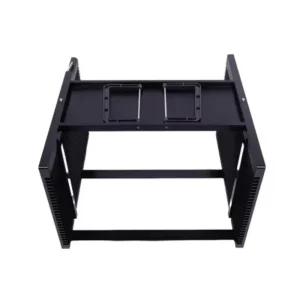
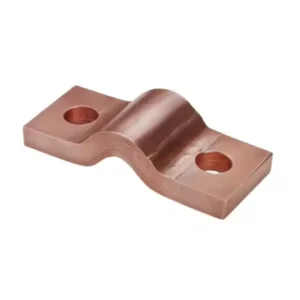
Explore our high-precision product portfolio across semiconductor carriers, custom electrical busbars, die-cast assemblies, motor fans, and structural components built for global OEM programs.
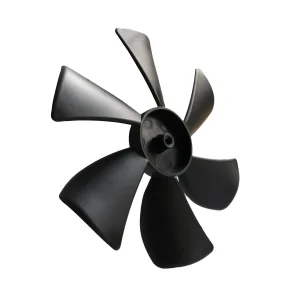
China Custom PA66-GF30 Injection Molded Motor Cooling Fan Blade | 6-Blade Axial Impeller
View Product Spec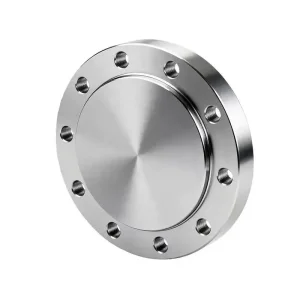
China OEM Precision CNC Machined Stainless Steel Flanges | Reliable Suppliers & Factory
View Product Spec
The Global Procurement Landscape for OEM Polypropylene (PP) Molding
Evaluating supplier capabilities, micro-structural polymer performance, and precision tooling dynamics for industrial-scale PP production.
Macroeconomic Demand Drivers
Polypropylene (PP) remains the cornerstone of modern industrial polymer engineering due to its exceptional strength-to-weight ratio, chemical inertness, high fatigue resistance, and cost efficiency. Global OEM procurement teams across automotive, electrical, medical, and consumer electronics sectors are expanding their sourcing of custom injection molded PP parts to achieve structural lightweighting and strict regulatory compliance.
Technical Sourcing Bottlenecks
Despite its commercial popularity, PP presents unique molding challenges. Semi-crystalline polymers exhibit high volumetric shrinkage rates (typically 1.5% to 2.5%), making tight-tolerance dimensional control extremely difficult. Inexperienced suppliers frequently suffer from post-molding warpage, differential cooling stress, sink marks on heavy ribs, and compromised weld line strength in complex geometries.
Sunmy Hardware Solution Edge
As a premier Shenzhen-based OEM/ODM contract manufacturer, Shenzhen Sunmy Hardware Co., Ltd. resolves these engineering hurdles by integrating advanced Moldflow® thermal/cavity pressure simulations, high-precision P20/NAK80/H13 hardened steel tooling, and real-time closed-loop injection molding process controls—ensuring sub-tier stability for tier-1 OEM clients worldwide.
Technical Decision Matrix: Polypropylene (PP) Resin Formulations for OEM Manufacturing
Selecting the optimal PP polymer grade directly determines mechanical fatigue threshold, thermal deflection temperature (HDT), and tooling shrink ratios. The matrix below outlines engineered options available at Sunmy Hardware:
| Polymer Variant | Melt Flow Index (MFR) | Tensile Strength (MPa) | Heat Deflection (HDT @ 0.45 MPa) | Mold Shrinkage Rate (%) | Primary OEM Applications |
|---|---|---|---|---|---|
| PP Homopolymer (hPP) | 12.0 – 25.0 g/10min | 32 – 38 MPa | 95°C – 105°C | 1.5% – 2.2% | Rigid packaging, electronic enclosures, textile bobbins, caps. |
| PP Random Copolymer (rPP) | 7.0 – 15.0 g/10min | 26 – 32 MPa | 80°C – 92°C | 1.2% – 1.8% | Optically clear medical devices, food containers, labware. |
| PP Impact Copolymer (bPP) | 2.0 – 10.0 g/10min | 24 – 30 MPa | 85°C – 100°C | 1.4% – 2.0% | Automotive bumpers, tool cases, sub-zero structural components. |
| 30% Glass-Reinforced PP (PP-GF30) | 3.0 – 8.0 g/10min | 75 – 95 MPa | 145°C – 155°C | 0.3% – 0.7% | Under-the-hood engine shrouds, structural brackets, pump impellers. |
| 40% Mineral-Filled PP (PP-T40) | 5.0 – 12.0 g/10min | 35 – 45 MPa | 115°C – 130°C | 0.6% – 1.0% | Washing machine tubs, automotive HVAC units, dimensionally stable housings. |
Engineering Architecture: Tooling Design & Injection Molding Dynamics
How Sunmy Hardware controls thermal gradient dissipation, gate shear rate, and crystal morphology during industrial PP part execution.
Moldflow® Rheological Analysis & Cavity Balancing
Before steel is cut, our certified tooling engineers execute complete Moldflow® simulations to predict polymer melt fronts, volumetric shrinkage, shear stress concentration, and potential gas traps. By evaluating non-isothermal crystallization behavior of Polypropylene, we optimize gate placement (fan gates, submarine gates, or hot runner tips) to ensure uniform filling pressure across multi-cavity tools and prevent warpage.
Conformal Cooling Channel Thermal Control
Polypropylene’s semi-crystalline nature makes it hypersensitive to mold surface temperature variations. Inconsistent cooling causes differential crystallization rates, resulting in post-mold twisting. Sunmy Hardware utilizes 3D-printed metal conformal cooling inserts in core/cavity blocks, keeping thermal variance under ±1.5°C across the molding area, reducing cycle times by up to 30%, and maintaining strict flat tolerances (≤0.05 mm/100mm).
Two-Shot (2K) & Overmolding Integration
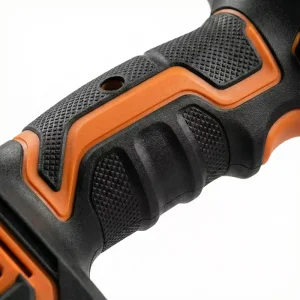
For applications demanding tactile ergonomics or dynamic sealing (such as power tool handles, automotive dashboards, or waterproof enclosures), we combine rigid PP substrate molding with soft Thermoplastic Elastomers (TPE/TPV) via 2K rotary injection molding. Chemical bonding compatibility between PP core structures and olefinic TPE skins guarantees peel strengths exceeding 8.5 N/mm without adhesives.
High-Precision CNC Post-Machining & Secondary Operations
When custom PP molded components feature cross-drilled passages, tight-tolerance bearing seats, or metallic thread insert installations, Sunmy Hardware leverages high-speed 5-axis CNC machining centers. Machining PP requires custom razor-sharp carbide tooling with polished flutes to prevent chip re-welding and plastic burr formation, guaranteeing critical feature tolerances down to ±0.01 mm.
Turnkey Industry Solutions Across Global OEM Sectors
How tailored polypropylene injection molding formulations solve critical engineering bottlenecks in major global manufacturing markets.
Automotive Under-the-Hood & Interior Modules
Supplying talc-filled and long-glass-fiber reinforced PP parts for engine cooling fan housings, battery tray brackets, air intake manifolds, and interior door trim panels. Our materials withstand continuous operating temperatures up to 125°C while absorbing severe vibrational impacts.
New Energy Battery Packs & Electrical Systems
Molding flame-retardant Polypropylene (UL94 V-0 rated) module cell holders, busbar insulation covers, and high-voltage junction boxes. Offering dielectric strength >30 kV/mm, low moisture pickup, and long-term chemical resistance against battery electrolyte spills.
Medical Diagnostic & Laboratory Consumables
Class 100,000 cleanroom production of USP Class VI medical-grade random copolymer PP. Manufacturing low-retention pipette tips, centrifuge tubes, reagent reservoirs, and microfluidic cassettes with exceptional optical clarity and gamma/autoclave sterilization survival.
Industrial Pumps, Valves & Fluid Handling
Chemically inert PP pump bodies, valve diaphragms, and threaded pipe fittings engineered to transfer concentrated acids, alkalis, and industrial effluents without stress corrosion cracking or trace metal leaching.
Smart Home Appliances & Consumer Hardware
Custom aesthetic PP enclosures with molded-in color fastness, scratch-resistant surface textures (VDI 3400 / Mold-Tech standards), living hinges tested to >1,000,000 flex cycles, and zero snap-fit hinge fracturing.
Semiconductor Wafer Logistics & Storage
High-purity conductive/anti-static PP-ESD carriers (surface resistivity 10^4 to 10^9 ohms/sq) engineered to prevent electrostatic discharge damage during sub-micron semiconductor substrate handling.
Technology Roadmap: Next-Generation Polypropylene Innovations
Leading the global transition toward smart molding closed loops, lightweight micro-cellular foaming, and circular PCR resin integration.
Physical Microcellular Foaming (MuCell®)
Integrating supercritical N2 or CO2 gas injection into the polymer melt. Micro-cellular PP molding achieves weight reductions of 10-20%, completely eliminates sink marks on thick sections, lowers clamping force requirements, and minimizes internal stress warpage.
AI-Driven Closed-Loop Cavity Pressure Control
Deploying piezoelectric cavity pressure sensors coupled with real-time AI algorithms. In-mold sensors dynamically adjust holding pressure and transfer points cycle-by-cycle, compensating for viscosity batch fluctuations in raw PP resin.
High-Percent Post-Consumer Recycled (PCR) PP Validation
Empowering global eco-compliance by formulating up to 100% PCR Polypropylene compounds fortified with nano-graphene and impact modifiers to match virgin PP tensile impact performance without structural degradation.
Sunmy Hardware Quality Management Framework
From raw polymer melt analysis to full CMM inspection reports, explore our 6-step quality control protocol enforcing E-E-A-T reliability.
Design for Manufacturability (DFM)
Every customer drawing undergoes multi-point DFM evaluation. We analyze wall thickness uniformity, draft angles (minimum 1.5° to 2.0° for PP), gate vestige locations, and ejector pin placement prior to mold steel cutting.
Raw Material Spectroscopy & MFI Audit
Incoming polymer batches are tested via Melt Flow Index (MFI) meters, Differential Scanning Calorimetry (DSC), and RoHS XRF analyzers to guarantee virgin resin purity and material certification compliance.
Tooling Construction & CMM Inspection
Mold cores, cavities, and sliders are fabricated using CNC, EDM, and wire-cut machines. High-precision coordinate measuring machines (CMM) audit mold component dimensions before assembly.
Scientific Molding & T1 Sample Validation
Executing systematic trial runs (T1 to T3) using decoupled molding techniques. We measure pressure drops, viscosity curves, and gate seal times to establish a repeatable operational process window.
First Article Inspection (FAI) & CPK Tracking
Complete FAI reports detailing 100% of blueprint dimensions, along with CPK statistical process capability data (CPK ≥ 1.67) for key critical-to-quality (CTQ) specifications.
Export Protection & Compliance Sign-Off
Final parts undergo moisture-proof vacuum packing, anti-static polybag bagging, and custom corrugated/wooden crate palletization tailored to ocean freight and air cargo standards.
Frequently Asked Questions: OEM Polypropylene Molding & Tooling
In-depth technical answers addressing engineering considerations, shrink control, tooling maintenance, and supplier evaluation.
How does Sunmy Hardware mitigate post-molding warpage in custom PP parts?
Polypropylene’s differential crystallization rate during solidifying causes warpage. We mitigate this through four synchronized strategies: (1) Running Moldflow thermal analysis to equalize cooling rates between mold core and cavity; (2) Maintaining a uniform nominal wall thickness (recommended 1.5 mm – 3.0 mm); (3) Utilizing nucleating additives in PP resins to promote rapid, uniform micro-crystallization; and (4) Utilizing conformal cooling channels to eliminate thermal hot spots in heavy core sections.
What draft angle is required for Polypropylene (PP) injection molded components?
Because Polypropylene is flexible and self-lubricating compared to rigid polymers like PC or PMMA, a minimum draft angle of 1.0° to 1.5° per side is suitable for smooth untextured surfaces. However, if the component features VDI or Mold-Tech surface texturing (e.g., leather or geometric graining), an additional 1.0° of draft per 0.025 mm of texture depth is required to prevent drag marks during part ejection.
What are the key tooling steel recommendations for high-volume PP injection molding?
For prototype or low-volume runs (<50,000 shots), pre-hardened steel such as P20 or 718H (30-33 HRC) provides cost-effective machining speed. For high-volume production tooling (>500,000 to 1,000,000+ shots), particularly when processing abrasive glass-filled PP (PP-GF), we mandate hardened tool steels such as NAK80, H13, or S136 (48-52 HRC) with specialized titanium nitride (TiN) or PVD coatings to withstand runner wear.
Can Sunmy Hardware execute custom living hinge designs in molded PP components?
Yes. Polypropylene is the premier polymer for living hinge design due to its near-infinite flexural fatigue endurance. To achieve a successful living hinge: (1) The hinge thickness must be strictly maintained between 0.25 mm and 0.50 mm; (2) The mold gate must be positioned so polymer melt flows straight across the hinge line, orienting the polymer chains perpendicular to the flex axis; and (3) The part must be flexed immediately upon ejection while hot to properly align the molecular structures.
What is your minimum order quantity (MOQ) and sample lead time for custom PP tooling?
We accommodate prototype tooling and rapid T1 sample delivery in as little as 15 to 20 calendar days. For production runs, we support low-volume initial batch sizes (500 to 1,000 units) up to multi-million piece continuous mass production. Rapid prototypes can also be produced via 3D printing (SLS/MJF) or urethane casting within 3 to 5 business days for immediate form-fit validation.
How is Intellectual Property (IP) protected during CAD data exchange?
Client confidentiality is paramount. Shenzhen Sunmy Hardware Co., Ltd. executes legally binding Non-Disclosure Agreements (NDAs) prior to receiving 2D/3D CAD drawings (STEP, IGES, X_T). All customer files are processed on secure internal servers, and production is executed factory-direct without transferring data to unverified third-party brokers.
Specialized Metal, Plastic & Hybrid OEM Parts
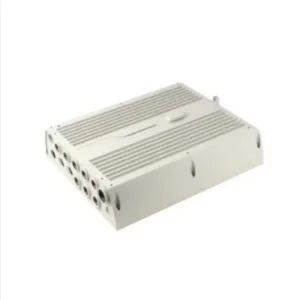
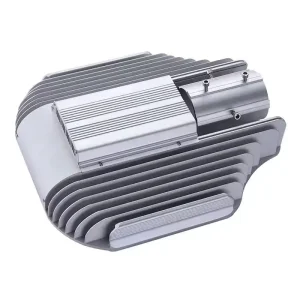
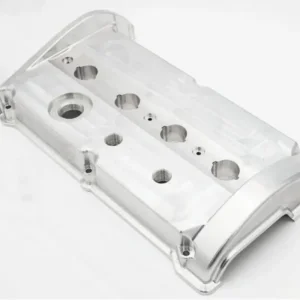
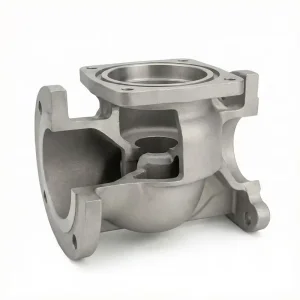
Explore additional custom manufacturing capabilities from our precision CNC machining, metal die casting, structural stamping, and advanced polymer molding facilities.
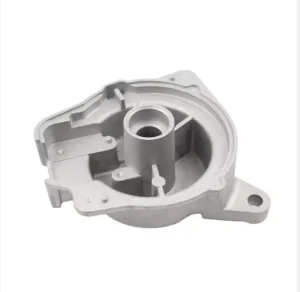
ODM Custom Casting Pneumatic Actuator Accessories: Cylinder End Covers Piston Brackets
View Product Spec
Initiate Your OEM PP Molding Program Today
Upload your 2D/3D CAD drawings for a comprehensive engineering DFM audit, melt rheology assessment, and detailed cost quotation within 24 hours.