Precision Engineering Showcase
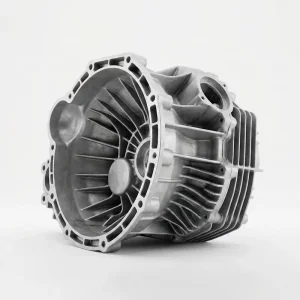
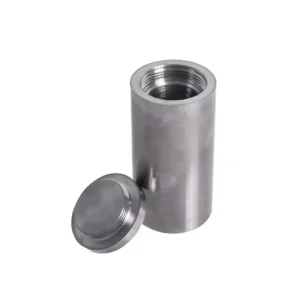
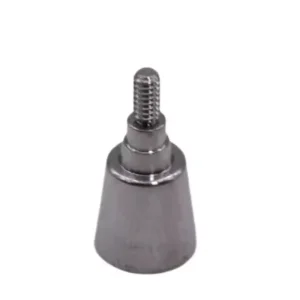
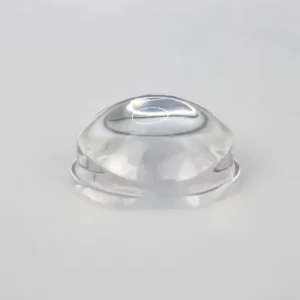
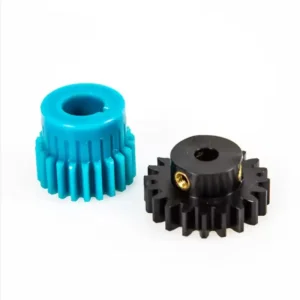
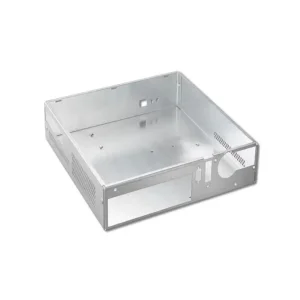
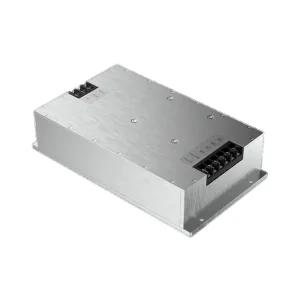
Explore our custom OEM components engineered across multiple processes including investment casting, die casting, precision CNC machining, and high-performance injection molding.
OEM Manifold Casting: Metallurgical Excellence & Fluid Dynamics
A definitive guide to specifying, manufacturing, and procuring custom cast manifolds engineered to withstand extreme pressures, corrosive media, and demanding operational cycles.
Complex Internal Geometry Integration
Manifold casting eliminates the structural vulnerabilities associated with traditional multi-piece welded or cross-drilled assemblies. By using advanced ceramic core molding and sand-core sand binder techniques, internal fluid galleries can be cast with smooth sweeping bends, optimizing hydraulic conductivity and drastically minimizing pressure drop ($\Delta P$) across fluid channels.
Advanced Metallurgical Integrity
From SiMo ductile iron (enabling high-thermal resistance in engine exhaust manifolds) to 316L stainless steel and A356-T6 aluminum alloys for lightweight hydraulic blocks, our casting formulations undergo rigorous spectrographic analysis. Solidification modeling ensures zero porosity in critical wall sectors subjected to hydrostatic operating pressures up to 350 bar.
Turnkey Post-Cast Precision CNC
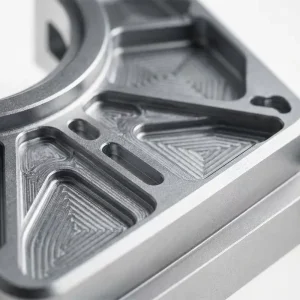
A cast manifold is only as good as its final sealing interfaces. Our 5-axis CNC machining centers finish mating flanges, O-ring grooves, SAE/NPT threaded ports, and valve cavity pockets to tolerances down to ±0.005 mm, guaranteeing leak-free operational reliability in severe-duty environments.
Macro-Industry Solutions & System Integration
Tailored OEM manifold casting solutions engineered for high-reliability sectors, ensuring structural longevity and optimized fluid dynamics under thermal shock, vibration, and high mechanical fatigue.
Heavy Machinery & Hydraulics
Cast hydraulic integrated circuits (HICs) engineered for excavators, mining rigs, and agricultural machinery. Integrated multi-valve galleries replace complex hose arrays, significantly reducing potential leak points and simplifying field maintenance.
Marine & Offshore Energy
Duplex stainless steel and nickel-bronze aluminum manifold castings built to endure aggressive saltwater corrosion, cavitation erosion, and deep-sea hydrostatic forces in subsea oil & gas manifolds and desalination infrastructure.
Automotive & Commercial Engines
High-silicon molybdenum ductile iron engine exhaust manifolds and aluminum intake manifolds designed via thermal-stress simulation (FEA) to eliminate warping and cracking under rapid temperature oscillations ($20^\circ\text{C}$ to $850^\circ\text{C}$).
Manifold Casting Process Selection Matrix
Compare casting methodologies to choose the optimal trade-off between tooling investment, dimensional accuracy, structural density, and production volume.
| Casting Process | Suitable Alloys | Dimensional Tolerance | Min Wall Thickness | Surface Finish ($R_a$) | Best For (Volume & Complexity) |
|---|---|---|---|---|---|
| Investment Casting (Lost Wax) | Stainless Steel, Carbon Steel, Superalloys | ±0.10 mm to ±0.25 mm | 1.5 mm | 3.2 μm - 6.3 μm | High complexity, low-to-medium volume, tight near-net shapes. |
| Resin Sand Casting | Ductile Iron (GGG40/50, SiMo), Grey Iron | ±0.50 mm to ±1.00 mm | 4.5 mm | 12.5 μm - 25 μm | Large hydraulic blocks, heavy engine manifolds, medium-to-high volume. |
| High-Pressure Die Casting (HPDC) | Aluminum Alloys (A380, ADC12, A356) | ±0.05 mm to ±0.15 mm | 2.0 mm | 1.6 μm - 3.2 μm | High-volume automotive & HVAC manifolds, lightweight structures. |
| 3D Printed Core + Sand Casting | All Cast Metals & Alloys | ±0.30 mm | 3.0 mm | 6.3 μm - 12.5 μm | Rapid prototyping, tooling-less short runs, extreme internal geometry. |
Next-Gen Technology Roadmap in Manifold Manufacturing
How digital foundry integration, AI-driven thermal simulation, and hybrid additive techniques are reshaping the next decade of fluid power manifold manufacturing.
Simulation-Driven Solidification Modeling
Using MAGMASOFT® and ProCAST simulation software prior to cutting tool steel dies, our engineers predict micro-porosity, cold shuts, and thermal stress points. Virtual gating system optimization guarantees sound internal casting density before poured metal ever touches the mold.
Hybrid Additive Core Manufacturing
Direct Binder Jetting 3D printing of silica and ceramic sand cores allows for organic fluid channel designs impossible with conventional core pullers. This reduces internal turbulence by up to 30% and enables lightweighting through topology optimization.
Real-Time AI Quality Analytics
Industry 4.0 integrated sensor suites monitor melt temperature, degasification pressure, and mold vibration in real time. Machine learning algorithms flag micro-variations immediately, maintaining process stability and zero-defect yields across mass production batches.
China Factory 4.0: Supply Chain Resilience & Cost Efficiency
Leveraging Shenzhen’s high-tech manufacturing ecosystem to deliver rapid prototyping, vertically integrated casting-to-machining operations, and unmatched global price competitiveness.
End-to-End Vertical Integration
From rapid 3D sample sand-core printing to in-house casting pouring, heat treatment, 5-axis CNC machining, surface anodizing/electropolishing, and hydrostatic pressure testing—every single step is managed under one unified quality control protocol.
Raw Material & Energy Buffer Security
Our strategic stockpiles of certified alloy ingots (aluminum, stainless steel, ductile iron) and direct long-term foundry partnerships safeguard global OEM clients against raw material price shocks and sudden supply chain bottlenecks.
Agile Tooling & Prototyping Speed
Where traditional foundries require 8 to 12 weeks for tooling development, our computerized toolmaking shop delivers initial sample castings backed by First Article Inspection (FAI) reports in as few as 14 to 21 business days.
Localization Support, Compliance & OEM Risk Mitigation
We bridge overseas procurement with local engineering support, full regulatory compliance, and transparent quality documentation tailored for North American and European buyers.
Strict Quality Certification Standard
All manufacturing workflows adhere strictly to IATF 16949 (Automotive), ISO 9001:2015, and ISO 14001 environmental management standards. Material test reports (MTRs) complying with EN 10204 3.1 are provided with every single shipment batch.
Non-Destructive Testing (NDT) Assurance
To guarantee structural density, manifolds undergo X-ray radiography inspection (ASTM E155 / E505), liquid penetrant testing (PT), ultrasonic testing (UT), and 100% helium/air-under-water leak detection prior to global dispatch.
Flexible Logistics & DDP Services
We offer flexible trade terms including FOB, CIF, DDP (Delivered Duty Paid), and VMI (Vendor Managed Inventory) buffering, taking full responsibility for customs clearance, tariff compliance, and door-to-door delivery.
OEM Manifold Casting Quotation & Technical Q&A
Clear answers to crucial engineering and procurement inquiries regarding drawing formats, lead times, quote structures, and design recommendations.
- 3D CAD Model: STEP, IGES, or X_T format (essential for volume calculations and draft angle evaluation).
- 2D Engineering Drawing: PDF/DWG format specifying critical tolerances, thread specs, and sealing surface roughness ($R_a$).
- Material Grade: e.g., Ductile Iron GGG50, Stainless Steel 316L, Aluminum A356-T6.
- Estimated Annual Volume (EAV): Prototype batch size and mass production forecasts.
- Testing Requirements: Specific NDT, pressure testing (e.g., 30 bar hydrotest), or X-ray inspection levels.
Related Custom OEM Hardware Capabilities
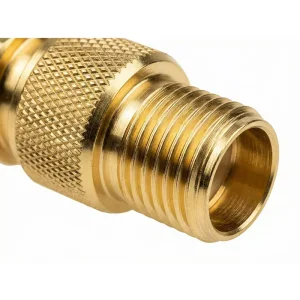
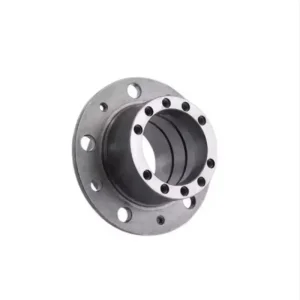
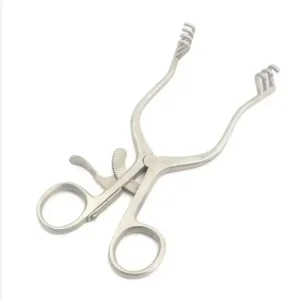
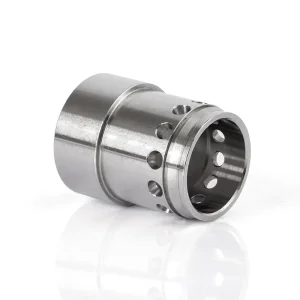
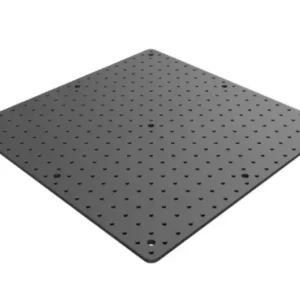
Browse additional custom manufactured metal and plastic parts designed for medical, automotive, heavy equipment, and industrial automation assemblies.