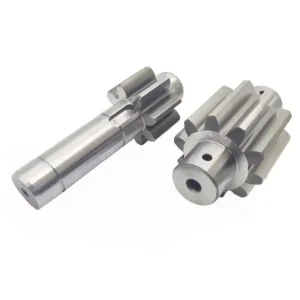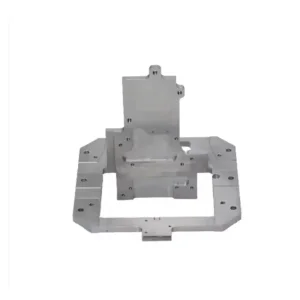
Explore our diverse portfolio of custom-molded thermoplastics, high-tolerance CNC hardware, and integrated electromechanical enclosures engineered for global industrial OEMs.
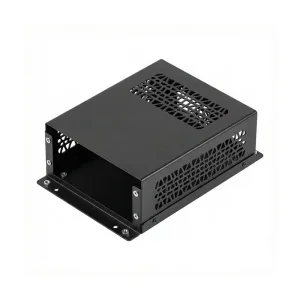
In the contemporary landscape of high-volume plastics manufacturing, Polypropylene (PP) Injection Molding stands as an indispensable cornerstone for engineering resilient, lightweight, and chemically immune components. As a semi-crystalline thermoplastic, Polypropylene exhibits a unique balance of low density (0.90–0.91 g/cm³), exceptionally high flexural fatigue resistance (often designated as the "living hinge" polymer), superior hydrophobic performance, and broad resistance to organic solvents, acids, and bases. However, translating these intrinsic polymer advantages into dimensionally stable, defect-free OEM/ODM products demands an uncompromising fusion of advanced rheological analysis, precision mold design, dynamic thermal management, and smart factory execution.
As a senior ODM PP injection molding supplier, our engineering framework integrates modern polymer physics with digital twin simulation toolsets. Whether developing intricate medical diagnostic cassettes, lightweight automotive interior structures, high-efficiency HVAC impellers, or durable packaging systems, managing the inherent challenges of PP—such as high isotropic and anisotropic volumetric shrinkage rates (1.5% to 2.5%), thermal warpage, sink mark formation, and weld line structural degradation—requires deep expertise. This industrial whitepaper comprehensively details the technological paradigms, procurement strategies, process control metrics, and Industry 4.0 supply chain capabilities essential for global engineering leaders seeking competitive advantage.
Strategic selection of Polypropylene variants dictates the mechanical toughness, optical clarity, thermal deflection, and dimensional fidelity of the final injection-molded component.
Polypropylene Homopolymer (PPH)
Characterized by a high degree of crystallinity, PPH delivers maximum mechanical stiffness, high tensile strength, and elevated heat deflection temperatures (HDT up to 100°C under load). Ideal for structural housings, electrical appliance enclosures, and rigid industrial brackets requiring long-term creep resistance.
Block Copolymer Polypropylene (PPC)
Synthesized by polymerizing ethylene monomers into co-monomer phase blocks, PPC dramatically enhances sub-zero impact strength (down to -20°C) without compromising flexural modulus. Essential for automotive bumpers, heavy-duty industrial totes, battery casings, and cold-chain logistics containers.
Random Copolymer Polypropylene (PPR)
Formulated by randomly incorporating ethylene units into the polymer backbone, PPR disrupts molecular order to provide optical clarity, reduced melting point, and superior surface finish. Highly preferred for medical diagnostic disposables, clear storage containers, and laboratory fluidic components.
| Material Parameter / Property | PPH (Homopolymer) | PPC (Impact Copolymer) | PPR (Random Copolymer) | 30% Glass-Filled PP (PP-GF30) |
|---|---|---|---|---|
| Density (g/cm³) | 0.90 - 0.91 | 0.89 - 0.90 | 0.90 - 0.91 | 1.12 - 1.15 |
| Tensile Strength at Yield (MPa) | 31 - 40 | 23 - 30 | 26 - 33 | 75 - 95 |
| Flexural Modulus (GPa) | 1.3 - 1.7 | 0.9 - 1.2 | 0.8 - 1.1 | 5.5 - 7.0 |
| Notched Izod Impact (kJ/m² @ 23°C) | 2.5 - 4.0 | 9.0 - 45.0 (High Impact) | 4.5 - 7.5 | 8.0 - 14.0 |
| Heat Deflection Temp (HDT @ 0.45 MPa) | 95°C - 110°C | 85°C - 98°C | 75°C - 90°C | 145°C - 158°C |
| Linear Mold Shrinkage (%) | 1.5% - 2.2% | 1.3% - 1.8% | 1.2% - 1.7% | 0.3% - 0.7% |
Eliminating non-conformance before steel cutting: Leveraging CAE Moldflow analysis to systematically mitigate gate blush, differential warpage, air traps, and voiding.
Conformal Cooling Channel Layout
Standard linear cooling channels lead to localized heat accumulation, triggering severe asymmetrical shrinkage in PP parts. Utilizing 3D metal printing (DMLS), we implement conformal cooling lines following the complex geometry of the mold core and cavity, reducing cycle times by up to 28% while stabilizing volumetric shrinkage.
Gate Location & Type Optimization
Because PP is sensitive to shear rate stress, improper gating causes cosmetic jetting and mechanical weakness. We employ hydraulic valve-gated hot runner systems or subsurface cashew gates configured with sequential valve gating (SVG) to eliminate knit lines and maintain uniform packing pressure distribution across long flow lengths.
Wall Thickness & Rib Dynamics
To avoid sink marks in PP molding, nominal wall thickness must remain uniform (typically 1.5 mm to 3.0 mm). Attached reinforcing ribs are engineered to a base thickness ratio of 50% to 60% of the adjacent wall thickness, supported by 0.5° to 1.5° draft angles for frictionless part ejection without mechanical stress marks.
Scientific Molding Pressure Control
Decoupled Molding (Molding 3.0) methodologies separate fill, pack, and hold phases. Microprocessor-controlled cavity pressure sensors capture real-time viscosity shifts in the PP melt, adjusting injection speed profiles dynamically to keep part weight variation strictly within ±0.15% across multi-cavity tools.
Leveraging automated digital ecosystems, integrated material sourcing, and agile tooling facilities in China to deliver unbeatable speed-to-market and cost efficiency.
The global manufacturing ecosystem demands unprecedented supply chain agility, cost efficiency, and uncompromised quality assurance. Our state-of-the-art injection molding facilities in China synthesize the principles of Industry 4.0 Smart Manufacturing with decades of plastic processing expertise. Operating fully automated central resin drying and conveying systems, high-speed 6-axis robotic arm extraction units, and real-time MES (Manufacturing Execution System) monitoring, our production floors run continuously with minimal human intervention, dramatically lowering scrap rates and operational overhead.
Closed-Loop Automated Dosing
Precision gravimetric blenders mix raw PP virgin pellets, masterbatch colorants, and structural additives (such as talc, glass fiber, or impact modifiers) with batch accuracy within ±0.1%, eliminating color variance and property degradation.
Vertical Tooling Integration
Our in-house mold building department houses ultra-precision 5-axis CNC machining centers, high-speed wire EDM, and mirror spark erosion machines, enabling rapid T1 sample generation within 15 to 21 calendar days from final DFM approval.
Resilient Supply Network
Situated in China's prime industrial manufacturing hub, we maintain strategic partnerships with global petrochemical giants (SABIC, Borealis, ExxonMobil, Sinopec), guaranteeing raw material continuity even during global shipping disruptions.
Tailored PP injection molding solutions across critical engineering sectors, manufactured to strict regulatory and functional specifications.
Automotive Systems & Lightweighting
Under-the-hood battery trays, HVAC ducting assemblies, interior door panel carriers, wheel arch liners, and pillar trims. Talc-filled and long-glass-fiber reinforced PP (LGF-PP) replace heavy metal alloys to cut vehicle weight, enhancing fuel efficiency and EV battery range.
Medical Diagnostic & Healthcare Devices
Autoclavable pipette tip racks, microcentrifuge tubes, surgical instrument trays, diagnostic test cassette housings, and inhaler components. Molded in medical-grade ISO 10993 and USP Class VI compliant Random Copolymer PP inside Class 8 cleanroom environments.
Consumer Appliances & Smart Home
Washing machine outer tubs, dishwasher detergent dispensers, vacuum cleaner filter frames, and coffee machine internal fluid valves. Utilizing flame-retardant (UL94 V-0 rated) halogen-free PP formulations for high thermal and electrical safety.
Industrial Logistics & Packaging
Heavy-duty stackable crates, foldable supply chain totes, chemical storage drum bungs, and living-hinge dispensing closures. Built using impact-modified PP copolymers engineered to withstand repeated drops and high static compressive loads.
Rigorous multi-stage quality verification ensures every production lot conforms to exact dimensional tolerances, mechanical specifications, and international compliance standards.
CMM Dimensional Metrology
Equipped with Zeiss automated 3D Coordinate Measuring Machines (CMM) and optical laser scanners, we conduct full geometric dimensioning and tolerancing (GD&T) inspections against customer CAD models down to micron-level accuracy.
Full PPAP Level 3 Documentation
For automotive and medical OEM orders, we provide comprehensive Production Part Approval Process (PPAP) packages including Process Flow Diagrams, PFMEA, Control Plans, Measurement System Analysis (MSA), and Dimensional Inspection Reports.
Mechanical & Physical Testing
In-house laboratories verify raw material Melt Flow Index (MFI via ASTM D1238), Tensile & Flexural modulus, Izod/Charpy impact resistance, Differential Scanning Calorimetry (DSC) thermal purity, and RoHS/REACH chemical compliance.
In-Line Vision AI Quality Gate
High-resolution AI vision cameras integrated directly onto conveyor streams inspect 100% of molded parts in real-time, instantly ejecting items exhibiting flash, short shots, black spots, surface oil contamination, or boundary deformities.
Clear, authoritative technical answers addressing key tooling, polymer behavior, processing parameters, and procurement queries for PP injection molding.
How do you control volumetric shrink and warpage in PP injection molding?
Polypropylene experiences relatively high volumetric linear shrinkage (typically 1.5% to 2.5%) due to its semi-crystalline molecular structure. To precisely control dimensions, we apply a multi-faceted approach:
- Melt Flow & Cooling Analysis: We perform predictive CAE Moldflow simulations to map differential cooling and volumetric shrinkage patterns before building tool steel.
- Nucleating Agents: We incorporate nucleating or clarifying additives into the PP resin. These increase the crystallization temperature and crystal density, reducing overall shrinkage variance.
- Scientific Molding Parameters: We implement Decoupled II/III molding procedures, holding precise pack pressures (typically 50–70% of peak injection pressure) until gate freeze-off time is empirically established via part weight study.
- Optimized Mold Cooling: Maintaining uniform mold wall temperatures (30°C to 50°C) with high-flow conformal cooling circuits prevents asymmetrical thermal stresses that drive part warpage.
What design guidelines ensure long-lasting "living hinges" in PP molded parts?
Polypropylene is the premier polymer for living hinge design—capable of flexing millions of cycles without brittle fracture—provided strict DFM rules are applied during tool engineering:
- Hinge Thickness: The hinge section must be thinned down to between 0.25 mm and 0.38 mm to force molecular orientation across the flex line during injection fill.
- Flow Direction: The mold gate must be strategically positioned so that molten PP flows directly *across* the hinge perpendicular to the flex axis, aligning polymer chains along the bending strain vector.
- Post-Molding Flexing: The living hinge must be mechanically flexed immediately upon ejection while the molded PP retains residual heat. This co-aligns micro-crystallites, enhancing fatigue life exponentially.
Which mold steel grade is recommended for high-volume PP production runs?
Tool steel selection depends on target volume production lifecycle, resin corrosiveness, and structural reinforcement fillers:
- Unfilled PP (Volumes < 100k units): P20 pre-hardened steel (HRC 28–32) provides cost-effective prototype and mid-volume tooling.
- High-Volume Unfilled PP (1M+ units): NAK80 or H13 vacuum-heat-treated steel (HRC 48–52) delivers high polishability and wear resistance.
- Glass-Filled PP (PP-GF15/30): Glass fibers cause high mechanical abrasion. We utilize hardened S136 or H13 tool steel (HRC 52–54) supplemented with physical vapor deposition (PVD) TiN coating on cores and high-wear gate inserts.
What are the primary differences between Homopolymer PP and Copolymer PP for structural applications?
Homopolymer PP (PPH) consists purely of repeating propylene monomers, yielding higher stiffness, higher tensile strength, and superior thermal resistance. However, PPH becomes brittle at temperatures near or below 0°C. Copolymer PP (PPC) incorporates ethylene units into the polymer matrix, which dramatically boosts impact strength at lower temperatures (down to -20°C) and improves toughness, making PPC the preferred material for automotive exterior parts, heavy crates, and cold-climate enclosures.
What quality documentation accompanies custom PP production shipments from your factory?
We supply full quality trace packages with every outbound container, including: Raw Material Certifications (MTRs detailing batch MFI, density, and lot trace), RoHS / REACH compliance declarations, First Article Inspection (FAI) reports with full CMM dimensional layout, Capability Index reports (Cpk / Ppk ≥ 1.67 for critical characteristics), and Certificates of Conformance (CoC).
Explore additional specialized mechanical components, precision turnings, cast housings, and molded assemblies available for immediate engineering review.