Precision OEM/ODM Component Portfolio
Global Industrial Demand & Macro-Economic Landscape of Lost Wax Casting
The global manufacturing ecosystem is undergoing a profound structural shift. As OEM and ODM engineers design increasingly complex, near-net-shape components for high-reliability applications, traditional sand casting and multi-axis subtractive milling frequently hit commercial and physical limits. Lost wax casting—technically designated as Investment Casting—has re-emerged as the apex methodology for producing near-net-shape metal parts with intricate internal cavities, thin walls, and zero draft-angle requirements.
According to global metallurgical market reports, the investment casting market is accelerating at a CAGR of 5.8%, propelled by rapid modernization in aerospace propulsion, green energy generation, biomedical implants, and automotive electrification. Enterprise buyers in North America and Western Europe face rising domestic labor costs, energy overheads, and extended tooling lead times. Consequently, establishing robust strategic partnerships with specialized high-tech Original Design Manufacturers (ODM) in advanced manufacturing hubs like Shenzhen, China, has shifted from a pure cost-saving tactic to a core supply-chain resilience strategy.
Evaluating an ODM lost wax casting supplier requires looking far beyond basic per-piece pricing. Procurement leaders must evaluate foundry metallurgical integrity, ceramic shell technology (Silica Sol vs. Water Glass), automated wax pattern injection capabilities, non-destructive testing (NDT) rigor, and seamless integration with post-casting precision CNC machining.
Demystifying Lost Wax Investment Casting: Process & Engineering Parameters
Lost wax investment casting creates ceramic molds around expendable wax patterns. Once the ceramic shell hardens, the wax is liquefied and extracted ("lost") in a high-pressure steam autoclave, leaving a precise cavity that is filled with molten metal alloys. The underlying chemical binder dictates the dimensional resolution, surface finish, and mechanical properties of the final casting.
Silica Sol Process
Utilizes pure colloidal silica binders with zircon flour slurries. Provides exceptional dimensional tolerances (ISO 8062 CT4–CT6) and ultra-smooth surface finishes (Ra 1.6–3.2 µm). Essential for medical devices, aerospace brackets, and complex stainless steel components.
Water Glass Process
Employs sodium silicate binders. Ideal for heavy-duty commercial equipment, construction machinery, and carbon steel components weighing up to 100 kg. Offers lower tooling costs and fast turnaround for large structural parts requiring CT7–CT9 tolerances.
Hybrid Rapid Tooling
Combines 3D-printed SLA/SLS photopolymer wax patterns with ceramic shell building. Eliminates traditional aluminum mold tooling costs for low-volume engineering prototypes and customized ODM pilot builds.
Technical Comparison Matrix: Investment Casting Technologies
| Engineering Metric | Silica Sol Investment Casting | Water Glass Investment Casting | Conventional Sand Casting |
|---|---|---|---|
| Dimensional Tolerance | ISO 8062 CT4 – CT6 (Linear ±0.1mm) | ISO 8062 CT7 – CT9 (Linear ±0.3mm) | ISO 8062 CT10 – CT12 (Linear ±1.0mm) |
| Surface Roughness (Ra) | 1.6 µm – 3.2 µm (Mirror smooth) | 6.3 µm – 12.5 µm (Standard industrial) | 12.5 µm – 25.0 µm (Rough texture) |
| Min. Wall Thickness | 1.5 mm (0.060 in) | 3.0 mm (0.120 in) | 5.0 mm (0.200 in) |
| Material Compatibility | Stainless Steels, Superalloys, Titanium, Aluminum | Carbon Steels, Alloy Steels, Ductile Iron | Gray Iron, Cast Steels, Heavy Bronze |
| Machining Allowance Needed | 0.5 mm – 1.0 mm (Minimal finish machining) | 1.5 mm – 3.0 mm (Moderate machining) | 3.0 mm – 6.0 mm (Extensive machining) |
China ODM Ecosystem: Manufacturing Velocity & Cost Engineering
Enterprise procurement professionals seeking competitive lost wax casting quotes often find that raw piece-price comparisons tell only half the story. The ultimate advantage of sourcing from tier-one Chinese ODM manufacturing partners—such as Shenzhen Sunmy Hardware Co., Ltd.—lies in the comprehensive industrial cluster synergy, engineering velocity, and total cost of ownership (TCO) optimization.
1. Rapid Tooling & Rapid DFM Cycles
By using 5-axis high-speed CNC mold tooling alongside Moldflow and MAGMA solidification simulation software, Chinese ODM engineers complete DFM feedback within 24 hours. Aluminum wax pattern dies are produced in days rather than weeks, trimming 40% off development schedules.
2. Integrated Vertical Secondary Operations
A frequent failure point in global casting procurement is vendor fragmentation—shipping raw castings between separate machine shops, heat-treatment facilities, and plating contractors. Modern Shenzhen ODM factories house investment casting, multi-axis CNC milling, Swiss lathe turning, thermal vacuum heat treatment, and surface passivation under one unified quality management system.
3. Automated Ceramic Dipping & Climate Control
Consistency in investment casting hinges on shell drying environmental control. China's leading ODM foundries use robotic arm ceramic slurry dipping lines paired with automated humidity-controlled drying tunnels. This ensures uniform shell thickness, eliminating ceramic spalling defects and structural porosity.
OEM/ODM Quote Calculation: Understanding Investment Casting Cost Drivers
When requesting an ODM Lost Wax Casting quotation, submitting raw 3D CAD files without comprehensive technical specifications leads to generic estimations or unnecessary risk premiums. A accurate quote balances metallurgical yield, cycle times, quality control protocols, and post-processing requirements.
Key Variables Impacting Your Lost Wax Casting Quotation:
- Alloy Grade & Metallurgical Purity: Standard carbon steels (e.g., WCB, 1045) carry lower material costs compared to austenitic stainless steels (316L, 304L), precipitation-hardening grades (17-4PH, 15-5PH), or medical-grade Titanium (Ti-6Al-4V ELI). Pure raw ingot sourcing with chemical spectrographic certificates ensures consistent alloy density.
- Pattern Tree Cluster Design & Gating Yield: The number of wax patterns that can be assembled onto a single central sprue (tree) directly dictates energy, ceramic slurry, and labor expenditure per part. Advanced ODM design optimizes gate locations to maximize yield while preventing shrinkage defects.
- Ceramic Shell Slurry Layers: Complex geometries requiring intricate internal cores or narrow channels require additional slurry dips and specialized ceramic cores, increasing shell production cycle times.
- Non-Destructive Testing (NDT) Level: Commercial hardware requires basic visual and dimensional checks. In contrast, aerospace, automotive transmission, and surgical hardware demand 100% X-ray (Radiographic) inspection, Liquid Penetrant Testing (LPT), Magnetic Particle Inspection (MPI), and CMM full-dimensional reporting.
Precision Applications Across High-Tech Industrial Sectors
Biomedical & Surgical
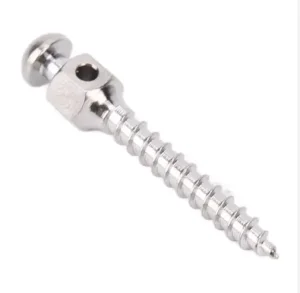
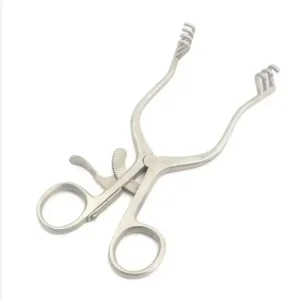
Custom titanium micro-screw blanks, prosthetic knee/hip joints, surgical retractor handles, and dental abutments requiring biocompatibility, zero porosity, and micron-level precision post-machining.
Aerospace & Robotics
Turbine impellers, structural drone brackets, robotic articulation joint links, and optical sensor housings where high strength-to-weight ratios are paramount.
Automotive & EV Systems
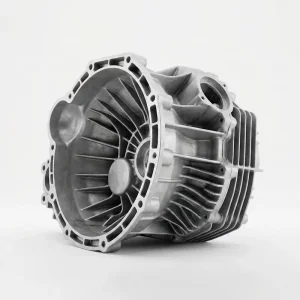
Die-cast and investment-cast aluminum fluid manifolds, transmission gear housings, electric vehicle battery heat exchangers, and turbocharger compressor wheels.
Fluid Handling & Valves
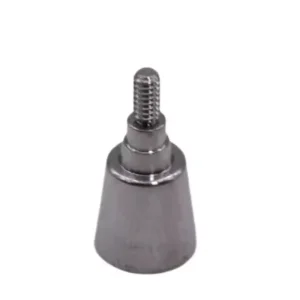
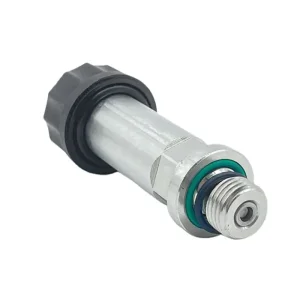
High-pressure hydraulic solenoid valve cores, stainless steel pump impellers, waterproof sensor thermowell housings, and chemical pipe connectors.
Emerging Trends in Lost Wax Investment Casting (2026–2035)
The investment casting industry is entering a new era powered by digital manufacturing integration, artificial intelligence, and environmental sustainability standards:
- AI-Driven Thermal Solidification Modeling: Real-time simulation of molten metal flow allows engineers to predict micro-porosity, cold shuts, and stress concentrations prior to cutting physical molds.
- Direct Metal 3D Printing Hybridization: Selective Laser Melting (SLM) is increasingly used for ultra-low volume, extreme-complexity components, while investment casting retains its dominance for medium-to-high volume production runs.
- Closed-Loop Green Foundry Systems: Advanced factories now utilize 98% recycled pattern wax systems, low-VOC ceramic binders, and energy-recovery induction melting furnaces to meet global ESG compliance requirements.
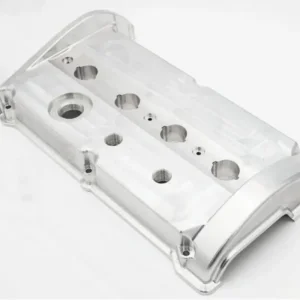
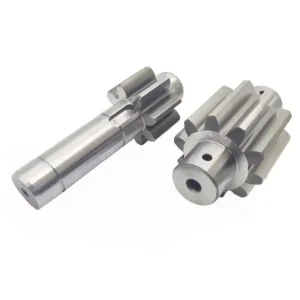
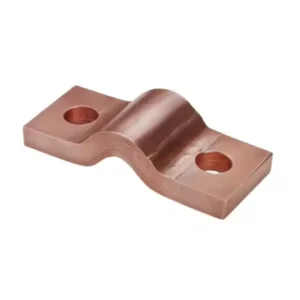
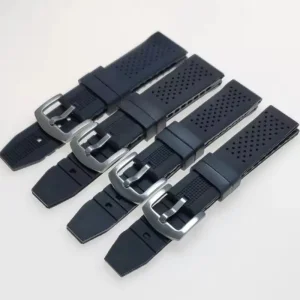
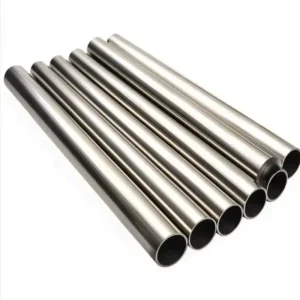
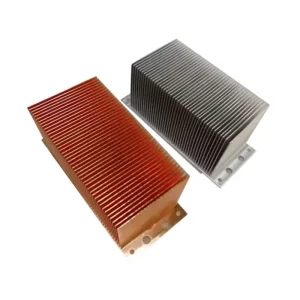
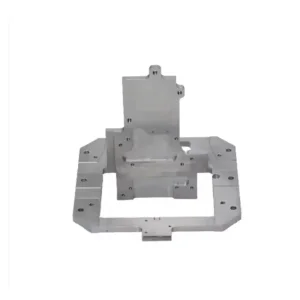
Expanded Custom Manufacturing & Precision Components
Frequently Asked Questions: ODM Lost Wax Casting & Quotes
What parameters are required to get an accurate lost wax casting quote within 24 hours?
To receive an accurate engineering quotation, supply a 3D CAD model (STEP, IGES, or SolidWorks format) along with a 2D engineering drawing indicating critical tolerances, material alloy grade (e.g., 316L, 17-4PH, A356), required non-destructive testing (X-ray, CMM), surface finishing specs, and projected batch volume (EAU).
What is the typical lead time for investment casting tooling and sample validation?
Standard aluminum pattern mold creation and First Article Inspection (FAI) sample delivery take 15 to 25 calendar days. For rapid prototype verification, we offer 3D-printed SLA/SLS wax patterns that bypass hard tooling, delivering physical casting samples within 7 to 10 days.
How does silica sol casting differ from water glass casting in terms of tolerance and surface finish?
Silica sol investment casting delivers tighter tolerances (ISO 8062 CT4–CT6) and superior surface finishes (Ra 1.6–3.2 µm), making it ideal for precision stainless steel, titanium, and medical components. Water glass casting yields CT7–CT9 tolerances with a rougher surface (Ra 6.3–12.5 µm), which suits heavy agricultural and structural carbon steel parts.
Can Sunmy Hardware handle post-casting precision CNC machining in-house?
Yes. We operate fully integrated 3, 4, and 5-axis CNC machining, Swiss turning, and wire EDM workshops. This allows us to perform post-casting machining on critical features, bringing cast dimensions down to tighter tolerances of ±0.005 mm while keeping quality control under one roof.
How is customer Intellectual Property (IP) protected during the engineering evaluation?
We enforce strict corporate IP security protocols. We sign formal non-disclosure agreements (NDAs) prior to receiving proprietary engineering files. Drawings are stored on secure internal servers accessible only to authorized project managers and engineering staff.