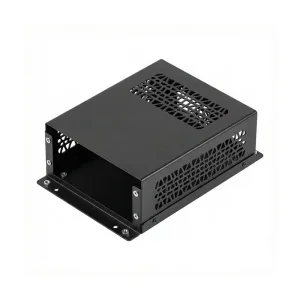
Precision Engineered Metal & Hardware Portfolio
Direct factory manufacturing solutions engineered for extreme environmental reliability, tight dimensional tolerances down to ±0.005mm, and seamless system integration.
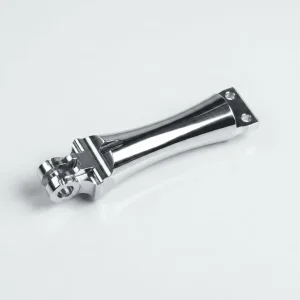
ODM Custom CNC Machined Robot Finger Joint Link Manufacturer, Exporter
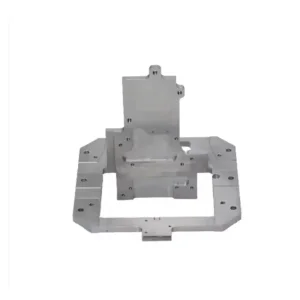
High-Quality Custom CNC Machined Metal Brackets & Structural Frames from China Suppliers | High-Precision Wire EDM & Milling Factory Manufacturers
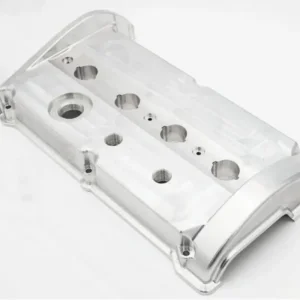
High-Quality High-Precision CNC Machined 7075 Aluminum Billet Engine Valve Cover - Custom Performance Solution Quotes, Factory
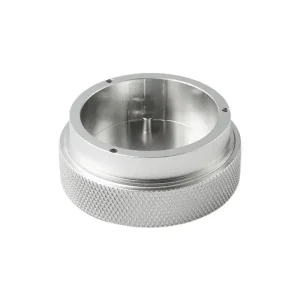
Custom Premium Custom CNC Machined Aluminum Control Knobs Exporter, Quotes
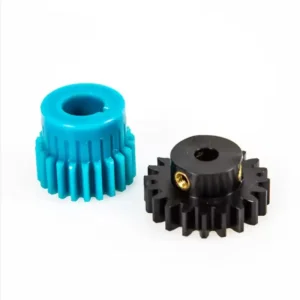
China Custom Precision Injection Molded POM Plastic Gears Manufacturers, Products
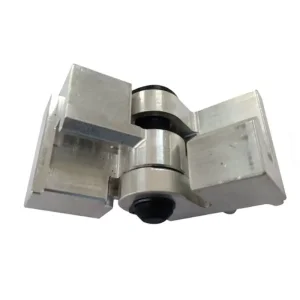
China Custom Precision CNC Machined Aluminum Hinge Assembly Structural Connector Supplier, Quotes
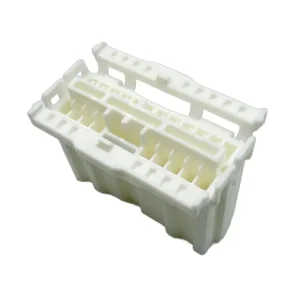
China High-Precision White PBT Automotive Connector Housing from China Factory - Reliable Suppliers for Electrical Solutions Manufacturer, Factories
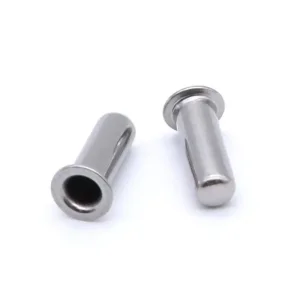
China Custom SS316 Deep Drawn Closed-End Flanged Sensor Housing for Temperature Probes (4mm OD) Manufacturers, Factories
Macro Industry Solutions for Modern ODM Electronic Contacts
In an era defined by rapid electrification, autonomous systems, and high-frequency data exchange, electronic contacts serve as the foundational critical components across multi-tiered industrial architectures. As leading Original Design Manufacturers (ODM), engineered precision and alloy science determine signal integrity, power loss mitigation, and operational longevity.
Automotive E-Mobility & BMS
Next-generation Electric Vehicles (EVs) demand battery management system (BMS) contacts capable of carrying continuous high currents with minimal thermal dissipation. ODM contact springs utilize high-conductivity copper-nickel-silicon (CuNiSi) alloys with selective silver-gold plating to guarantee lower contact electrical resistance (ECR) over 100,000 thermal cycles.
Aerospace & Defense Interconnects
Military avionics and satellite payloads require zero-fail interconnections. Custom stamped pin headers and socket contacts engineered from Beryllium Copper (C17200) undergo vacuum heat treatment to maintain spring force integrity even under ambient operating conditions exceeding 200°C and extreme mechanical shock environments.
Medical Instrumentation Probes
In bio-compatible sensors and diagnostic imaging arrays, contact pins require non-magnetic materials, extreme dimensional uniformity, and gold-flashed outer layers to resist physiological fluids, chemical sterilization, and high-frequency signal interference (EMI/RFI).
Global Commercial Landscape & Procurement Optimization
Procurement directors and senior hardware architects face an increasingly volatile global supply chain landscape. Mitigating risk while securing cost-competitive ODM custom contact manufacturing requires a partner with deep vertical integration—from raw material alloy smelting to precision continuous reel-to-reel plating.
Vertical Manufacturing Integration
By keeping high-speed progressive tool tooling, stamping press lines, automated deburring, electroplating, and plastic insert molding under one roof, ODM factories eliminate third-party markup, protect intellectual property (IP), and compress prototype-to-mass-production lead times from 12 weeks down to 3 weeks.
Total Cost of Ownership (TCO) Reduction
The true cost of an electronic contact encompasses not just the unit stamping cost, but also assembly downtime, contact fretting wear, plating flaking, and field warranty claims. Precision engineering mitigates fretting corrosion via optimized contact geometry and stress-relief annealing, yielding up to 35% reduction in long-term field failures.
Comprehensive Alloy Selection & Electroplating Matrix
| Base Material Alloy | Electrical Conductivity (% IACS) | Tensile Strength (MPa) | Recommended Plating | Primary Industrial Application |
|---|---|---|---|---|
| C17200 Beryllium Copper | 22 - 28% | 1100 - 1350 | Selective Gold over Nickel | High-reliability spring clips, RF connectors, switches |
| C5191 Phosphor Bronze | 13 - 15% | 550 - 720 | Bright Tin / Matte Tin | Telecom relay contacts, automotive fuse block terminals |
| C7025 CuNiSi Alloy | 40 - 50% | 650 - 800 | Selective Silver / Hard Gold | EV Battery Management Systems, high-power relays |
| C2680 Yellow Brass | 27 - 28% | 340 - 450 | Nickel / Flash Gold | Consumer electronic contacts, appliance terminal pins |
| C1100 Pure Tough-Pitch Copper | 100% | 200 - 250 | Heavy Silver / Palladium | High-voltage power distribution busbars, solid contacts |
Engineering Capabilities: Micro-Stamping & Surface Metallurgy
ODM Electronic Contact manufacturing represents a converging point of mechanical precision engineering and surface chemistry. Sunmy Hardware leverages high-speed automated progressive die stamping and advanced plating technology to guarantee performance consistency across millions of produced units.
High-Speed Progressive Stamping
Operating custom-built high-speed press lines running up to 1,200 strokes per minute. Equipped with in-die sensor technology that detects tool wear, burr height variations, and misfeeds instantly to prevent micro-defects.
Continuous Reel-to-Reel Electroplating
Selective plating capabilities including spot gold deposition, micro-porosity-free nickel underplates, and lead-free tin plating. Plating layer thickness is verified in real-time using X-Ray Fluorescence (XRF) spectrometry.
Laser Welding & Contact Riveting
Automatic bimetallic contact riveting and precision fiber laser welding process for combining copper alloy spring blades with solid silver/tin oxide (AgSnO2) or silver nickel (AgNi) contact rivets for high-current relays.
Localized Application Scenarios & Tailored Configurations
Different operating environments dictate unique structural forms, plating specifications, and mounting methods. Our ODM engineering support works directly with customer hardware designers to optimize contacts for automated Surface Mount Technology (SMT) or press-fit insertion.
◆ Smart Metering & Industrial Energy Storage
Smart electrical grids and commercial battery storage banks require high-voltage interconnect terminals capable of handling sustained direct current without thermal runaway. Custom stamped copper contacts with heavy silver plating deliver minimal voltage drop and resist oxidation in outdoor cabinet enclosures.
◆ High-Speed Data Center Server Rack Backplanes
Hyperscale server architectures rely on blind-mate power connectors and high-density signal spring pins. Micro-stamped beryllium contacts feature optimized beam profiles to achieve soft mating force while maintaining a continuous 100g contact normal force over years of server rack hot-swapping.
◆ Consumer Wearables & Magnetic Pogo Pin Interfaces
Waterproof smartwatches and TWS earbud charging cases utilize precision-turned, gold-plated pogo pin contacts integrated with silicone gasket housings. Highly smooth gold surface finishes prevent sweat corrosion and salt-crust buildup during daily consumer wear.
◆ Harsh-Environment Industrial Automation Sensors
Inductive proximity sensors and heavy-duty M12 circular connectors require solid machined brass contacts with nickel-gold dual-barrier plating to withstand continuous vibration, oil spray, and aggressive washdown cycles in automated factory floors.
Quality Control Framework & Global Compliance Assurance
Ensuring total reliability requires stringent batch control, raw material traceability, and thorough laboratory testing. Every batch of electronic contacts shipped from our facility complies with major international environmental and safety standards.
Full Environmental Compliance
All products strictly adhere to RoHS 3 (EU 2015/863), REACH (SVHC), and Conflict Minerals (CMRT) regulations. Heavy metals such as Lead (Pb), Cadmium (Cd), and Mercury (Hg) are systematically tested via ICP-OES spectrometry.
Rigorous Laboratory Validation
Our in-house metrology lab executes Salt Spray Corrosion Testing (ASTM B117, 96h+), Solderability Testing (ANSI/J-STD-002), Contact Resistance Testing (MIL-STD-202), and 3D Coordinate Measuring Machine (CMM) dimensional verification.
Traceable Inspection Documentation
Every delivery batch is accompanied by comprehensive quality control documentation, including First Article Inspection (FAI) Reports, Material Mill Certificates, Plating Thickness Test Sheets, and Certificate of Conformance (CoC).
Technical Roadmap & Future Outlook (2025–2030)
As electronics transition to higher data rates, extreme miniaturization, and higher power densities, ODM electronic contact manufacturing must continuously evolve. Our R&D engineering focus targets key metallurgical and structural innovations.
1. Nanoscale Graphene Plating
Investigating the application of graphene-enhanced noble metal electroplating. Graphene micro-doping increases wear resistance by 300% while reducing precious gold consumption, dramatically cutting unit costs for high-cycle spring contacts.
2. Ultra-Fine Pitch Stamping (< 0.2mm)
Developing micro-progressive dies capable of stamping ultra-fine pitch connector contacts for next-gen silicon-photonics packaging and foldable display interconnects with beam widths under 0.15mm.
3. Smart Telemetry Interconnects
Embedding micro-resistive sensing elements directly into heavy power busbar contacts to enable real-time temperature and contact degradation monitoring for AI data centers and EV megawatt chargers.
Engineering Q&A: ODM Electronic Contacts Manufacturing
Common technical inquiries addressed by our Chief Metallurgist and Lead Tooling Engineers.
What is the primary advantage of choosing an ODM contact supplier over a standard OEM broker?
An ODM (Original Design Manufacturer) provides full DFM (Design for Manufacturability) engineering, custom progressive tool fabrication, alloy selection assistance, and specialized plating formulation under one roof. Unlike brokers, ODM factories directly control dimensions, mechanical spring temper, and surface electroplating quality, ensuring lower unit costs, protected IP, and faster resolution of engineering changes.
How do you select between Gold, Silver, and Tin electroplating for electronic contacts?
Gold plating is ideal for low-voltage signal contacts, micro-switches, and harsh environments due to its exceptional oxidation resistance and low contact force requirements. Silver plating offers superior electrical conductivity and high thermal tolerance, making it optimal for EV battery terminals and high-current power connectors, though anti-tarnish coatings are required. Tin plating is cost-effective for static board-to-board interconnects and automotive fuse blocks with high contact normal force.
What dimensional tolerances can Sunmy Hardware hold on high-speed stamped contacts?
Our high-precision progressive dies maintain standard dimensional tolerances of ±0.01mm across high-volume production runs. Critical dimensions such as contact gap spacing, latching feature pitch, and pin coplanarity can be held down to ±0.005mm when utilizing optical sensor-guided presses and carbide tooling inserts.
How is fretting corrosion prevented in high-vibration automotive or industrial contacts?
Fretting corrosion is caused by micro-motion at the contact interface which breaks down protective plating. We prevent this by optimizing spring force geometry to maintain adequate contact normal force (>100g), utilizing lubricant-impregnated noble metal plating barriers (e.g., Palladium-Nickel with Gold flash), and designing mechanical anti-vibration locking tabs within the connector housing.
What is the typical lead time for custom stamping tooling and prototype contacts?
Rapid prototype contacts produced via wire EDM laser cutting and soft tooling can be delivered in as little as 5 to 7 business days for engineering verification. Full-scale multi-stage progressive stamping dies typically require 3 to 4 weeks, including First Article Inspection (FAI) reports and CMM measurement validation.
Explore Complete Hardware & Custom Interconnect Catalog
Full-spectrum manufacturing capabilities covering custom plastic injection molding, turned contact pins, structural aluminum enclosures, and power distribution components.
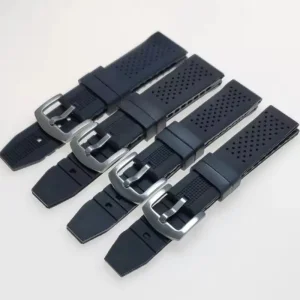
ODM Universal Breathable Silicone Sport Watch Strap with Multi-Hole Air Vents (18mm - 24mm) Manufacturers, Product
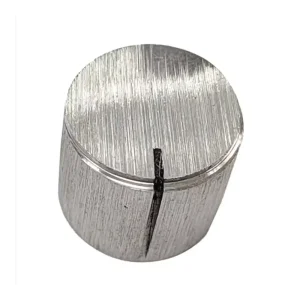
ODM Custom Plastic Injection Molded Control Knob Factory in China | Premium Brushed Metallic Finish Suppliers Manufacturer, Factories
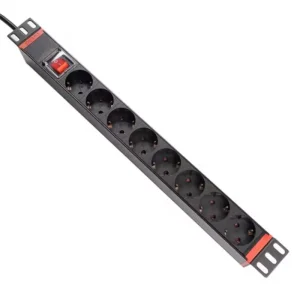
China Custom 8-Way 16A Rack-Mount PDU Power Strip - China Suppliers & Factory for Sheet Metal Fabrication Suppliers, Factories
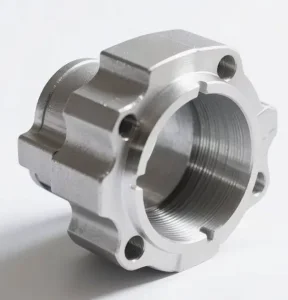
Custom High-Performance Aluminum, Zinc, Magnesium, and Copper Alloy Components for Automotive, Industrial, and Fluid Control Systems Suppliers, Exporters
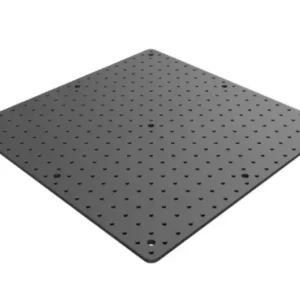
China Custom Aluminum Optical Breadboard - Precision CNC Machining by China Suppliers & Factory Suppliers, Service
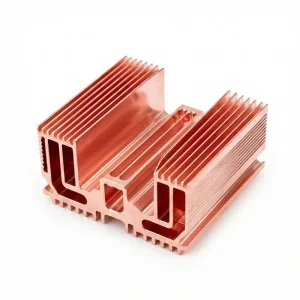
Custom High-Performance Copper Heatsink Products, Factories
China High-Precision CNC Machined 7075 Aluminum Valve Covers - Custom Solutions from China Suppliers and Factory Manufacturer, Service