
Integrated OEM Components & Assembly Portfolio
Explore our high-precision custom fabrications, titanium medical implants, aerospace structural elements, thermal management units, and die-cast enclosures built to exact engineered tolerances.
High-Quality MIG Welding Services: Engineering Excellence & Metallurgical Integrity
An authoritative analysis of Metal Inert Gas (MIG) / Gas Metal Arc Welding (GMAW) processes, thermal dynamics, robotic integration, and structural contract manufacturing.
1. The Evolution of Industrial MIG Welding in Modern Heavy Fabrication
Metal Inert Gas (MIG) welding, technically classified by the American Welding Society (AWS) as Gas Metal Arc Welding (GMAW), represents a foundational pillar of modern industrial manufacturing. Operating through the creation of an electric arc between a continuous solid wire electrode and the metallic workpiece, MIG welding achieves fusion by melting both base materials under a protective envelope of shielding gas. In high-demand contract manufacturing environments, achieving a high-quality MIG welding service requires a synthesis of advanced power electronics, precise wire feeding dynamics, tailored shielding gas chemistry, and rigorous quality management systems.
Historically viewed as a high-speed but aesthetically inferior process compared to Gas Tungsten Arc Welding (GTAW/TIG), contemporary MIG welding has undergone a technological renaissance. The integration of high-frequency inverter power sources, synergic pulse controllers, and AI-driven adaptive arc monitoring has elevated GMAW to a precision engineering discipline capable of delivering flawless structural welds across carbon steels, high-strength low-alloy (HSLA) steels, aluminum alloys, and stainless steel formulations.
Controlled Heat Input
Synergic pulsed-MIG controls deposition frequencies to reduce thermal deformation, minimizing the Heat-Affected Zone (HAZ) while ensuring deep root penetration.
Zero-Spatter Performance
Advanced Waveform Control Technology suppresses droplet explosion during short-circuit transfer, dramatically reducing post-weld grinding and surface conditioning overhead.
Full Metallurgical Integrity
Strict gas mixture selection (Ar/CO₂/O₂) prevents porosity, hydrogen cracking, and lack-of-fusion defects, ensuring compliance with AWS D1.1 and ISO 5817 Level B standards.
2. Metal Transfer Modes & Process Dynamics
Understanding the fundamental metal transfer physics is critical for procurement officers and lead structural engineers selecting a MIG welding factory partner. The electrical parameters—voltage, current, and inductance—dictate how filler metal detaches from the wire tip into the weld pool:
- Short-Circuit Transfer (GMAW-S): Operates at low voltages and currents. The wire physically touches the molten pool, creating a short circuit that melts the wire tip. Ideal for thin sheet metals and root passes, though prone to spatter if uncompensated by electronic inductance.
- Globular Transfer: Occurs at intermediate energy levels where large droplets of molten metal drop irregularly into the puddle via gravity. Rarely used in high-end structural welding due to excessive spatter and risk of cold-lap defects.
- Spray Transfer: High-voltage, high-current mode utilizing high argon gas ratios (>80%). Wire metal is transferred as a fine, continuous spray of tiny droplets across the arc. Yields smooth bead profiles, high deposition rates, and deep penetration in thick plate fabrications.
- Pulsed-Spray Transfer (GMAW-P): The gold standard for modern precision factories. The power source pulses between a high peak current (detaching one molten droplet per pulse) and a low background current (maintaining the arc without melting the wire). Provides spray-transfer quality at low average heat inputs, enabling out-of-position welding and distortion-free aluminum/stainless fabrication.
Quantifiable Engineering Excellence
Operational data driving our OEM/ODM contract manufacturing plant in Shenzhen, China.
3. Process Selection Matrix: MIG vs. TIG vs. Laser Welding
To assist global enterprise procurement teams in evaluating process trade-offs, the engineering benchmark table below contrasts MIG welding against competing thermal joining techniques across core operational indicators:
| Engineering Attribute | MIG / GMAW (Pulsed) | TIG / GTAW | Fiber Laser Welding |
|---|---|---|---|
| Deposition Rate (kg/hr) | High (3.5 – 8.0 kg/hr) | Low (0.5 – 1.5 kg/hr) | Medium-High (1.0 – 4.5 kg/hr) |
| Heat Input & Distortion | Controlled / Moderate | High Total Heat Input | Extremely Low Heat Input |
| Max Single-Pass Thickness | Up to 12 mm (V-groove >25mm) | Up to 6 mm | Up to 8 mm (Keyhole mode) |
| Joint Fit-up Tolerance | Forgiving (Gaps up to 3 mm) | Strict (<0.5 mm) | Extremely Tight (<0.1 mm) |
| Equipment & Tooling Cost | Moderate / Highly Scalable | Moderate | High Capital Expenditure |
| Structural Load Suitability | Exceptional (Heavy Dynamic Loads) | High (Thin Precision Metals) | High (Low-gap High-speed) |
4. Global Procurement Intent & Enterprise Requirements
Industrial buyers sourcing MIG welding services from Tier-1 Chinese manufacturers require far more than basic arc-striking capability. Global supply chain leaders prioritize partners who demonstrate compliance across four core commercial and technical axes:
Repeatable Metallurgical Quality
Enterprise clients demand verified weld chemistry and mechanical properties. Our factory conducts regular tensile testing, Charpy V-notch impact tests, and bend testing to guarantee that weld metals match or exceed base plate yield strength (e.g., E70S-6 wire matching S355JR structural steel).
Design for Manufacturability (DFM) Support
Every incoming CAD drawing undergoes rigorous DFM analysis. Our welding engineers evaluate joint accessibility, torch clearance angle, contraction stress relief, and fixture clamping schemes before cutting a single piece of metal.
Comprehensive Traceability
From raw material Mill Test Reports (MTRs compliant with EN 10204 3.1) to consumable batch certificates and final NDT inspection records, complete traceability documentation accompanies every production batch shipped worldwide.
Intellectual Property Safeguards
Operating as a direct OEM/ODM manufacturer (Shenzhen Sunmy Hardware Co., Ltd.), we sign binding Non-Disclosure Agreements (NDAs) prior to receiving customer STEP/IGES/DWG files, eliminating third-party broker exposure.
Macro Industry Solutions Powered by Advanced Welding
Deploying targeted MIG welding methodologies across demanding global industrial sectors.
Aerospace & Defense
Robotic pulse-MIG welding of lightweight structural aluminum frames, ground support chassis, and aerospace engine transportation cradles requiring 100% X-ray radiographic inspection (RT).
Automotive & EV Mobility
Automated high-speed GMAW joining of aluminum 6xxx battery trays, vehicle subframes, and crash management structures with ultra-low thermal distortion and liquid-tight seam sealing.
Heavy Machinery & Earthmoving
Multi-pass flux-cored arc welding (FCAW-G) and heavy MIG welding of structural excavator booms, crane jibs, and mining chassis plates up to 50mm thick with AWS D1.1 structural certification.
Telecom & Electronics Enclosures
Precision MIG and spot welding for outdoor 5G base station cabinets, 1U/2U/4U rackmount server chassis, and IP66 waterproof aluminum electrical enclosures with seamless finish sanding.
Medical Equipment Assemblies
Stainless steel 316L MIG welding for mobile hospital cart frames, diagnostic imaging gantry structures, and sterile sterilization vessel housings meeting FDA surface cleanliness standards.
Energy & Power Infrastructure
Pressure vessel connections, transformer tank fabrications, and renewable energy wind turbine structural tower internal platforms engineered to withstand cyclic fatigue.
Strict NDT Testing & International Compliance
Ensuring zero-defect manufacturing through multi-stage quality control and rigorous non-destructive evaluation.
To eliminate catastrophic field failures, our factory implements a comprehensive Quality Assurance System aligned with ISO 9001:2015, ISO 3834-2 (Comprehensive Quality Requirements for Fusion Welding), and EN 1090-2 (Execution of Steel Structures). Every weldment undergoes standardized non-destructive testing (NDT) based on client criticality classifications:
1. Visual Testing (VT) & CMM Inspection
100% of completed welds undergo VT by certified AWS CWI (Certified Welding Inspectors). Weld profile dimensions, fillet leg length, reinforcement height, and undercut limits are measured. Critical geometry is validated on coordinate measuring machines (CMM) to ±0.005 mm tolerances post-machining.
2. Ultrasonic Testing (UT) & Radiography (RT)
For primary load-bearing structural joints and pressure-retaining components, internal volumetric integrity is evaluated using high-frequency Ultrasonic Testing (UT) or X-ray Radiography (RT) to detect hidden subsurface inclusions, lack of side-wall fusion, or internal porosity.
3. Liquid Penetrant (PT) & Magnetic Particle (MT)
Used to verify surface-breaking discontinuities in non-ferrous alloys (aluminum/stainless steel via PT) and ferromagnetic steel assemblies (via MT). Essential for high-vibration automotive chassis and dynamic crane components.
4. WPS & PQR Certification
All production welding is executed strict to qualified Welding Procedure Specifications (WPS) supported by Procedure Qualification Records (PQR) in accordance with AWS D1.1 (Steel), AWS D1.2 (Aluminum), and AWS D1.6 (Stainless Steel).
Technology Roadmap: The Future of Automated MIG Joining
Pioneering Next-Generation Manufacturing Capabilities for Tomorrow's Industrial Demands.
Robotic Laser-MIG Hybrid Systems
Combining the deep penetration of fiber lasers with the gap-bridging capability of MIG wire feed, enabling single-pass welding of 15mm steel plates at speeds 300% faster than conventional GMAW.
AI Optical Seam Tracking
Integrating high-speed laser vision sensors directly onto 6-axis Fanuc/ABB robotic welding arms. Real-time path compensation adjusts torch orientation dynamically to joint variations during arc operation.
IoT Arc Analytics & Digital Twin
Capturing voltage, amperage, wire feed speed, and gas flow rates at 10,000 Hz frequencies. Cloud algorithms analyze waveform anomalies, automatically flagging potential internal defects before parts exit the cell.
Frequently Asked Questions: Technical & Procurement FAQ
Expert answers addressing structural design, material selection, quality verification, and factory procurement queries.
What shielding gas mixtures yield the highest quality MIG welds for carbon steel vs. stainless steel?
How does Sunmy Hardware control thermal distortion and warping during heavy MIG welding?
What are your minimum tolerances for weldment fabrications with post-weld CNC machining?
Which welding certifications and NDT inspection reports can be provided with international orders?
Can you execute MIG welding on thin-gauge aluminum sheet metal without burn-through?
What is the typical production lead time from prototype approval to volume delivery?
How do you ensure IP protection when custom 3D CAD files are shared with your engineering team?
What post-weld surface finishing processes do you offer in-house or through certified partners?
Precision Turned, Molded & Stamped Solutions
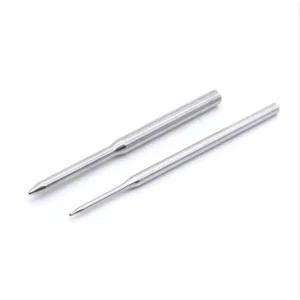
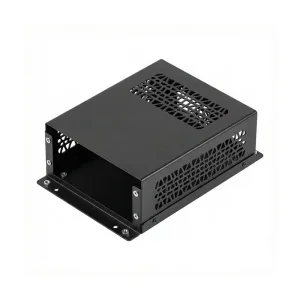
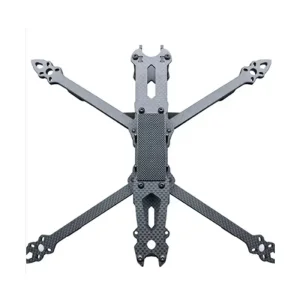
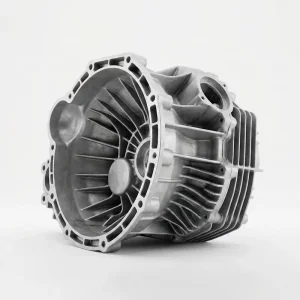
Discover our comprehensive engineering capabilities spanning optical components, thermowells, carbon fiber assemblies, and transmission housings.

Accelerate Your OEM Manufacturing Program
Partner directly with Shenzhen Sunmy Hardware Co., Ltd. for high-precision MIG welding, CNC post-machining, casting, and stamped assemblies. Receive a comprehensive DFM review and competitive factory direct quote within 24 hours.