Precision Micro-Components & Custom Hardware Solutions
Explore our export-grade OEM products manufactured with sub-millimeter accuracy, verified by CMM metrology, and exported directly from China's premier hardware hub.
1. Sub-Micron Precision: The Paradigm Shift in Global Micro Machining
A comprehensive examination of how micro-scale subtractive manufacturing, sub-millimeter Swiss turning, and ultra-precision EDM are redefining global OEM supply chains.
From Macro to Micro Manufacturing Dynamics
Micro machining is not merely traditional CNC milling scaled down—it operates under fundamentally altered physics. When micro-tool diameters shrink below 0.5 mm (down to micro-endmills of 0.05 mm), parameters such as minimum chip thickness, cutter edge radius, tool deflection, and high-spindle runout (< 1 micron) dominate component quality.
Global original equipment manufacturers (OEMs) in surgical robotics, satellite communication, and optical networking demand absolute geometrical tolerance holding capability down to ±0.001 mm (1 micron). Achieving this requires specialized thermal stabilization, active anti-vibration granite bases, and real-time optical tool setters.
Surface Integrity & Micro-Burr Eradication
In micro-scale mechanical parts (such as titanium bone screws, vascular stents, or micro-fluidic manifold valves), a burr measuring 10 micrometers can cause catastrophic mechanical jamming or biological rejection. Leading micro machining exporters utilize state-of-the-art deburring methodologies, including thermal energy deburring (TEM), electrochemical polishing, and laser-assisted edge finishing.
Surface roughness ratings of Ra < 0.05 µm are routinely mandated for optical connectors and medical implants to prevent friction-induced galling and ensure flawless biological osseointegration.
Key Technical Takeaway for Sourcing Directors
When procuring micro-machined parts, traditional CMM touch probes are often too large for internal micro-bores. Leading micro machining exporters must validate quality using non-contact optical metrology, white-light interferometry, and micro-CT tomographic inspection.
2. Global Commercial Landscape & Procurement Intent Mining
Understanding regional manufacturing hubs, global spending shifts, and procurement strategies across high-precision industrial sectors.
The global micro machining market is projected to expand at a compound annual growth rate (CAGR) exceeding 8.5% over the next decade, fueled by component miniaturization in AI hardware, wearable medical diagnostics, sub-tier aerospace avionics, and next-generation EV sensors. Procurement intent has shifted from pure cost minimization to an integrated evaluation of Information Gain, manufacturing agility, and total cost of ownership (TCO).
| Manufacturing Region | Primary Technical Strengths | Cost Structure & Lead Time | Export Fit & Target Sectors |
|---|---|---|---|
| China (Shenzhen & Yangtze Delta) | Ultra-dense supply chain ecosystems, 5-axis high-speed CNC centers, rapid scaling, complete surface treatments. | Highly Competitive TCO; 5-7 days rapid prototyping; 2-3 weeks volume export production. | Medical implants, optical networking, telecom EMI frames, automotive solenoids, consumer electronics. |
| DACH Region (Germany/Switzerland) | Legacy ultra-precision watchmaking machinery, ultra-high accuracy ultra-fine turning. | High overhead cost structure; long lead times (8-16 weeks lead time for custom tooling). | Low-volume luxury horology, boutique surgical instruments, niche defense optics. |
| North America (US/Canada) | Domestic defense compliance (ITAR), localized rapid response for prototype iterations. | Premium pricing; labor-intensive constraints for medium-to-high volume production runs. | Military aerospace, specialized ITAR components, local R&D iterations. |
Medical & Dental Implants
Micro turning of Titanium Grade 5 (Ti-6Al-4V ELI) and PEEK for dental abutments, spinal cages, and orthopedic bone screws. Demands strict biocompatibility, zero surface contamination, and 100% optical dimensional sorting.
Optoelectronic & RF Shielding
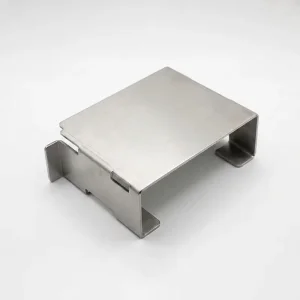
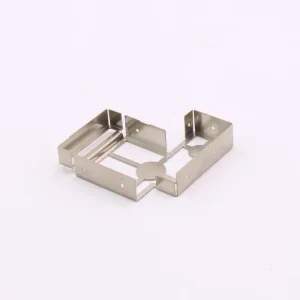
Custom micro-milled brass and copper housings with gold plating. PCB-level EMI/RFI shielding frames requiring thin-wall micro stamping down to 0.1mm thickness with precise flatness tolerances.
Aerospace & Automotive Micro-Valves
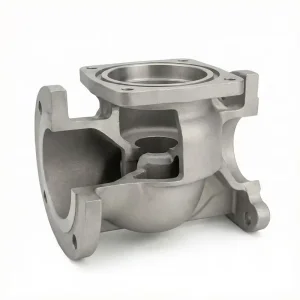
High-pressure solenoid core components, micro fuel injectors, and hydraulic spool valves manufactured in stainless steel 316L and Inconel with sub-micron micro-hole drilling.
3. China Factory Efficiency & High-Precision Export Advantage
Why Tier-1 global engineering firms partner with specialized Chinese precision exporters for complex micro machining projects.
Dense Industrial Clustering & Turnkey Integration
China's Pearl River Delta (Shenzhen, Dongguan) offers unmatched industrial density. Within a 30-minute radius, micro machining facilities seamlessly access raw certified materials (titanium, Kovar, Nitinol, PTFE), specialized heat treatment, passivating anodization, electro-polishing, and PVD coating services. This geographic integration cuts procurement turnaround times by up to 70% compared to fragmented Western supply chains.
Capital Investment in Swiss-Type Lathes & 5-Axis Centers
Leading Chinese exporters have aggressively modernized their machine parks, investing in Japanese Tsugami and Citizen Swiss-type lathes, German KERN ultra-precision milling centers, and Makino micro-EDM machines. Combined with automated robotic loading, Chinese factories achieve 24/7 lights-out production, drastically reducing unit labor costs while maintaining zero defect rates.
4. Core Micro Machining Processes & Material Capabilities
A granular technical overview of manufacturing processes utilized by premier exporters to produce micro-scale geometries.
Micro CNC Milling
Utilizing high-speed spindles (up to 60,000–100,000 RPM) and diamond-coated micro tools down to 50 µm diameter. Ideal for complex 3D micro cavities, optical lenses mold inserts, and micro-fluidic chip molds.
Swiss Screw Machining
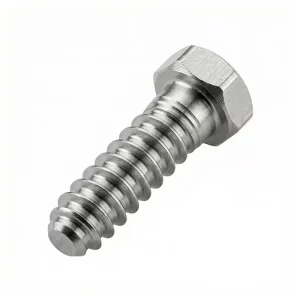
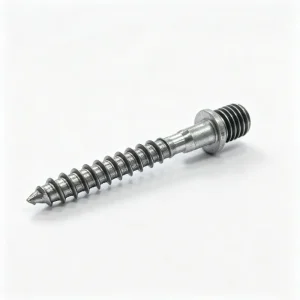
Sliding-headstock Swiss CNC turning machines enable simultaneous multi-axis machining of long, ultra-thin turned components (aspect ratios exceeding 20:1) without workpiece flex, essential for bone screws and connectors.
Micro Wire & Sinker EDM
Electro-Discharge Machining using wire diameters down to 0.02 mm. Capable of slicing razor-thin slits, square internal corners, and burr-free micro slots in hardened tool steels, carbide, and conductive ceramics.
Advanced Material Processing Matrix
Metals: Titanium Grade 5/Grade 2, Stainless Steel 316L, 304, 17-4PH, Inconel 718, Kovar, Brass C3604, Beryllium Copper.
Engineering Plastics & Elastomers: PEEK (Unfilled/Glass-Filled), PTFE (Teflon), PC (Optical Grade), PA66, Delrin (POM-C), Silicone.
Specialty Materials: Nitinol shape memory alloys, tungsten copper heat sinks, structural ceramics.
5. Specialized Application Scenarios & Engineering Case Studies
How precision micro machining components perform in harsh operational environments and high-reliability systems.
Case Scenario A: Dental Abutment & Implants
Technical Challenge: High dynamic fatigue loading, micro-gap tolerances under 2 microns between implant and abutment to prevent bacterial ingress.
Exporter Solution: Precision turned Grade 5 Titanium on 9-axis Swiss CNC lathes with custom thread whirl cutters. Finished parts undergo citric acid passivation and 100% shadow-graph optical inspection prior to cleanroom packaging.
Case Scenario B: High-Frequency 5G/6G RF Connectors
Technical Challenge: Extreme signal attenuation losses caused by surface roughness inside micro coaxial pin housings.
Exporter Solution: High-speed micro milling in tellurium copper followed by chemical polish and flash gold plating. Surface finish held consistently at Ra < 0.1 µm, delivering signal attenuation under 0.2 dB at 40 GHz.
6. RFQ Technical Specification & Exporter Audit Matrix
A step-by-step framework for procurement officers to obtain accurate quotes and audit international micro machining exporters.
1. Drawing Preparation & GD&T
Provide 3D CAD models (STEP/IGES) accompanied by 2D vector drawings (PDF) clearly marking critical dimensions, datum frames, surface finish (Ra), and geometric tolerances (concentricity, runout, position).
2. Material Certification
Specify raw material traceability requirements: EN 10204 3.1 material certificates, RoHS compliance, REACH declarations, and biocompatibility certificates (ISO 10993) for medical components.
3. Quality Deliverables
Mandate clear quality control paperwork with quotes: First Article Inspection (FAI) reports, CMM dimensional measurement sheets, and material lot lot-number tracking.
Supplier Audit Checklist for Micro Machining Exporters
✔️ Are metrology rooms climate-controlled to 20°C ±0.5°C to prevent thermal expansion errors?
✔️ Does the factory possess non-contact optical video measurement systems (VMM) and CMM equipment with sub-micron resolution?
✔️ Is there a documented IP protection procedure and standard Non-Disclosure Agreement (NDA) executed before CAD transfer?
7. Industry Trends: Micro Machining 4.0 & AI Optimization
Key technological shifts defining the next generation of precision manufacturing and global supplier selection.
AI-Driven Tool Wear Monitoring
Because micro endmills are prone to sudden breakage without visible warning, smart factories implement acoustic emission sensors and spindle motor current AI analysis. Machine learning algorithms predict tool wear in real time, automatically adjusting feed rates and replacing tools before catastrophic part failure occurs.
Hybrid Femtosecond Laser Micro-Machining
Combining ultra-short pulse femtosecond lasers with micro CNC milling. Femtosecond lasers ablate material cold—without thermal stress or heat-affected zones (HAZ)—enabling cold-processing of micro holes in glass, sapphire, and bio-resorbable polymers.
8. Frequently Asked Questions (FAQ)
Direct technical answers to the most common questions raised by engineering teams and purchasing agents.
Explore Additional Custom Machining & Injection Molded Parts
Direct factory quotes, certified quality management, and international shipping options for global OEM buyers.