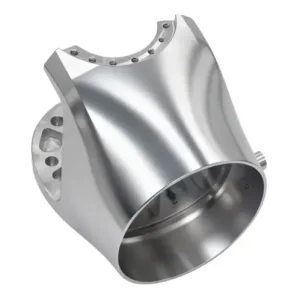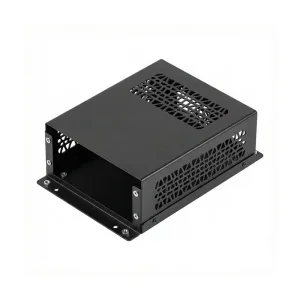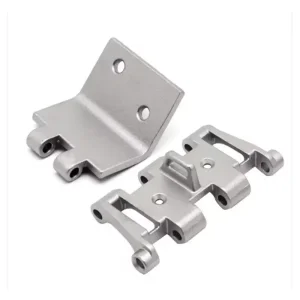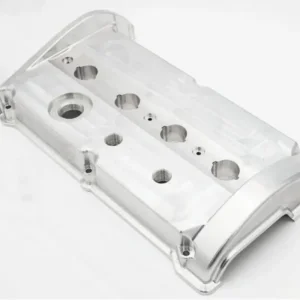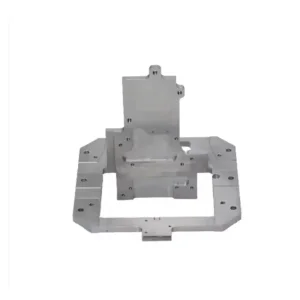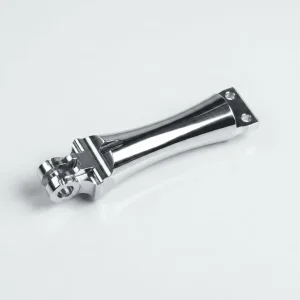
Featured Large-Scale & Precision Engineered Components
Direct factory OEM manufacturing with CMM-verified micron tolerances and full material traceability.
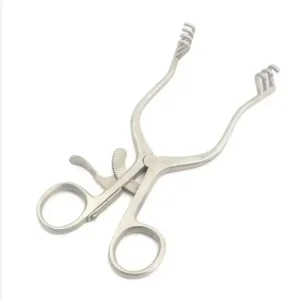
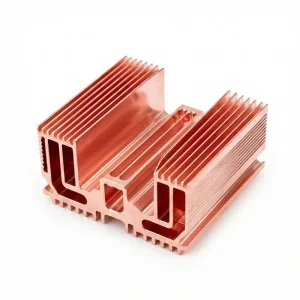
Defining Large-Scale Machining in Modern Heavy Industry
Large-scale machining represents the apex of subtractive manufacturing engineering, involving the custom fabrication, boring, turning, and multi-axis milling of heavy structural components whose dimensions exceed conventional CNC envelopes—frequently reaching span lengths from 2 meters up to over 12 meters.
Executing precision subtractive operations on massive forgings, heavy castings, and structural weldments requires vastly different operational paradigms compared to standard small-part CNC machining. When managing components weighing anywhere from 500 kilograms to 50 metric tons, machining facilities must contend with gravitational deflection, dynamic thermal expansion vectors, and tool-reach chatter dynamics. Achieving mechanical tolerances down to ±0.010 mm on a 6-meter steel gantry structure requires an integrated ecosystem comprising heavy-duty foundation beds, laser tracker metrology, climate-controlled machining halls, and specialized 5-axis kinematic heads.
For global procurement leaders, sourcing large-scale machining services is rarely a simple cost-per-hour calculation. It represents a strategic risk-mitigation process. A single dimensional flaw or material void on a massive, fully-machined wind turbine main hub or semiconductor base frame can result in catastrophic financial scrap costs and project delay penalties. Consequently, top-tier manufacturers must demonstrate deep technical mastery in finite element analysis (FEA) for workholding, in-situ CMM probing, dynamic tool vibration damping, and verified raw material metallurgy.
Massive Kinematic Envelope
Floor-type horizontal boring mills (PAMA / TOS) and gantry machining centers capable of handling workpieces up to 12m × 4.5m × 2.5m with floor payload ratings reaching 50 tons.
Volumetric Metrology Accuracy
Leica laser trackers and Zeiss bridge CMMs equipped with thermal sensors to conduct live spatial compensation and continuous geometric dimensioning & tolerancing (GD&T) validation.
Advanced Metallurgical Control
Full verification of large-format alloy steels, 7075-T6 aluminum, titanium 6Al-4V, and ductile iron castings with ultrasonic non-destructive testing (NDT) prior to spindle engagement.
The Macro Advantage of China’s Heavy Machining Infrastructure
Why international engineering primes and Fortune 500 OEMs leverage China’s integrated heavy-industrial hubs for complex large-scale mechanical production.
1. Vertical Industrial Supply Chain Integration
China’s industrial manufacturing ecosystem—particularly in major hardware hubs such as Guangdong (Shenzhen/Dongguan) and Jiangsu—offers unmatched vertical density. Unlike Western machining shops that must outsource heavy casting, stress-relief heat treatment, large-scale electroplating, and multi-axis machining to vendors located hundreds of miles apart, Chinese manufacturing hubs unite these processes within localized industrial clusters.
Raw sand castings or forged alloy blocks transition seamlessly to thermal annealing facilities, progress directly to floor-type CNC boring mills, and complete surface treatment (such as hard anodizing, nickel plating, or heavy epoxy coating) within streamlined turnaround windows. This integration reduces supply chain lead times by up to 40% to 60% compared to fragmented Western supply chains.
2. Capital Expenditure in Cutting-Edge Multi-Axis Equipment
Over the last decade, leading Chinese manufacturers have invested heavily in top-tier global and domestic CNC machine tool technology. Production floors feature 5-axis simultaneous gantry mills (e.g., Waldrich Coburg, Zimmermann, Mazak, and leading Chinese precision brands like NCM and DMTG), paired with Siemens 840D SL and Heidenhain TNC 640 CNC control systems.
This massive capital deployment allows Chinese factories to offer high-velocity machining (HVM) capabilities, achieving high material removal rates (MRR) without sacrificing fine surface finishes (Ra 0.8 µm to Ra 0.4 µm) or tight geometric positioning.
3. Cost Structural Optimization Without Quality Compromise
While labor costs in China have matured, the overall landed-cost efficiency of large-scale machining remains significantly superior to Western alternatives. The financial advantage stems from optimized engineering overhead, efficient internal tooling creation, scalable energy tariffs for heavy industrial zones, and highly efficient fixture engineering.
| Capability Metric | China Advanced Factory Hubs | North American / EU Shops |
|---|---|---|
| Large-Scale 5-Axis Rate | $75 – $120 / hour | $180 – $300 / hour |
| Heavy Casting Lead Time | 3 to 5 Weeks | 8 to 14 Weeks |
| Tooling & Fixturing Cost | Optimized (In-house built) | High (Outsourced specialty) |
| Metrology & NDT Reports | Included as Standard (CMM/NDT) | Premium Surcharge Added |
| Scalability (Proto to Series) | High Speed & Rapid Scale | Constrained Capacity |
*Data compiled from global OEM industrial procurement surveys evaluating Tier-1 custom heavy machining contracts.
Technological Frontiers in Large-Scale Precision Machining
The convergence of AI-assisted CAM toolpath generation, digital twin thermal modeling, and real-time volumetric error compensation.
Digital Twin Thermal Compensations
Ambient shop temperature fluctuations can cause a 5-meter aluminum component to expand or contract by over 0.1mm during long machining cycles. Modern large-scale facilities utilize IoT sensor arrays and digital twin algorithms to dynamically calculate thermal growth vectors and modify CNC coordinate offsets in real time.
High-Velocity Adaptive Trochoidal Milling
By leveraging dynamic software toolpath optimizations, cutting tool engagement angles remain constant throughout heavy roughing operations. This approach dramatically lowers cutting forces, reduces spindle vibration, extends carbide tool life, and increases volumetric material removal rates across tough alloys like Inconel 718 and Titanium 6Al-4V.
In-Situ Laser Tracker Integration
Transporting a 20-ton part off a machine table to a dedicated inspection lab introduces significant setup risks. Modern heavy machining units integrate Leica or Faro laser trackers directly onto the machine bed, allowing 3D point cloud surface scans and feature location checks without disturbing the mechanical setup.
Heavy Machining Application Scenarios & Macro Solutions
Engineering custom machining workflows tailored for demanding industrial sectors globally.
Aerospace & Defense Structural Airframes
Monolithic aircraft wing spars, bulkhead structural frames, and rocket motor mounting rings demand substantial pocketing operations starting from massive solid forged aluminum 7075-T651 slabs. Machining solutions require high-speed 5-axis simultaneous profiling to eliminate stress concentration points and achieve uniform thin-wall structures down to 1.5mm without distortion.
- Zero-stress mechanical vacuum clamping fixtures.
- 5-Axis continuous head swiveling for complex compound angles.
- Complete AS9100D compliance and material heat-treat traceability.
Energy, Nuclear & Wind Power Structures
Wind turbine planet carriers, rotor hubs, and nuclear reactor pressure boundary components require precision line-boring and heavy face-milling across large diameter flange faces. Machining centers must maintain absolute flatness and parallelism tolerances across 4-meter diametrical spans to prevent fluid leaks and gear mesh vibration.
- Deep-hole boring capabilities up to 2000mm depth.
- Sub-micron bore surface finish via micro-honing attachments.
- Ultrasonic Flaw Detection (UT) & Magnetic Particle Testing (MT).
Heavy Industrial Robotics & Automation Base Frames
Industrial articulated robot bases, large gantry robot beams, and automated line bed rails require heavy-duty weldment stress relief prior to finish machining. Machining workflows combine stress-annealing, shot peening, and 3-axis precision rail seat milling to ensure linear guide rails align perfectly straight over lengths exceeding 10 meters.
- Parallelism of guide rail mounting surfaces within 0.02mm/m.
- Custom steel weldment stress relief thermal profiling.
- Integrated tapped hole pattern drilling via high-speed gang heads.
Semiconductor Equipment Large Vacuum Chambers
High-vacuum chamber bodies for chemical vapor deposition (CVD) and EUV lithography tooling require massive solid aluminum blocks to be hollowed out with ultra-clean interior surfaces. Machining must prevent oil contamination and maintain micro-seal grooves (O-ring seals) without single scratch defects.
- Dry cutting or clean-coolant specialized fluid systems.
- Helium leak detector test preparation for seal surfaces.
- High-purity cleanroom packaging after machining and anodizing.
Global Enterprise Sourcing: How RFQs & Quotes Are Calculated
Understanding the structural cost breakdown of large-scale machining quotes empowers engineering buyers to evaluate vendors accurately and optimize component designs for manufacturability (DFM).
Unlike commodity small-part machining, quoting large-scale components relies heavily on machine setup hours, cycle time risks, tool wear rates, and specialized handling requirements. A transparent engineering quote from a professional manufacturer breaks down costs into five distinct core elements:
1. Raw Material & NDT Certification Cost ($M)
Includes raw material volume cost (billet, forging, or casting weight), alloy surcharges, and mandatory non-destructive testing (such as X-ray, ultrasonic, or dye-penetrant testing) to verify raw block integrity prior to spindle engagement.
2. Machine Hour Rate & Spindle Kinematics ($T_m \times R_h$)
The total machine runtime ($T_m$) multiplied by the hourly rate of the specific machine class ($R_h$). A 10-meter 5-axis gantry machine carries a higher hourly rate than a 3-axis machine due to equipment depreciation, power usage, and maintenance costs.
3. Specialized Tooling & Fixture Amortization ($F_c$)
Heavy workpieces require custom welded steel fixtures, tombstone plates, or modular vacuum plates to withstand cutting torque without causing workpiece deformation.
4. Metrology, CMM & Quality Assurance ($Q_c$)
Covers laser tracker setup time, coordinate measuring machine runtime, First Article Inspection (FAI) report generation, and compliance documentation (RoHS, Material Mill Test Reports).
5. Heavy Packaging & Export Logistics Handling ($L_p$)
Custom ISPM-15 compliant seaworthy wooden crates, anti-corrosion VCI vacuum wrapping, shock-monitoring indicators, and heavy crane loading onto flat-rack containers.
Procurement Assurance Checklist for Engineering Buyers
When issuing an RFQ for large-scale machining components, ensure your supplier candidate provides:
Frequently Asked Questions | Heavy Machining Sourcing
Direct technical answers from senior manufacturing engineers on tolerances, materials, lead times, and quality protocols.
1. Temperature Control: Machining occurs in climate-regulated halls kept at a constant 20°C ± 1°C.
2. Thermal Stress Relief: Large castings and weldments undergo artificial vibratory or thermal annealing cycles before final finishing passes.
3. Real-Time Laser Metrology: We utilize Leica Absolute Laser Trackers directly on the machine table to monitor workpiece thermal expansion and execute dynamic CNC offset corrections.
• Aluminum Alloys: 7075-T651, 6061-T6, 2024, 5083 high-plate alloys.
• Structural & Stainless Steels: Q355D, 4140/4340 alloy steel, 304L, 316L, 17-4PH precipitation hardening stainless steel.
• Heavy Castings: Ductile iron (QT450-10, QT600-3), gray iron (HT250/300), cast steel.
• Exotic Alloys: Titanium Grade 5 (Ti-6Al-4V), Inconel 625/718, and Monel for marine/subsea environments.
• Material Mill Test Certificates (EN 10204 3.1) guaranteeing chemical and mechanical properties.
• Full CMM / Laser Tracker Inspection Reports covering 100% of critical GD&T features.
• Heat Treatment & Hardness Verification Logs.
• Non-Destructive Testing (NDT/UT) Reports where specified.
• First Article Inspection (FAI) per AS9102 standard upon request.
Explore Additional Custom Precision Capabilities
Review our specialized precision turned parts, castings, enclosures, and robotic assemblies.