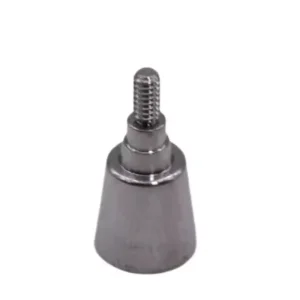
Precision Engineered OEM Component Portfolio
Explore our cross-industry high-precision prototyped components, manufactured utilizing state-of-the-art CNC machining, plastic injection tooling, and advanced alloy casting techniques.
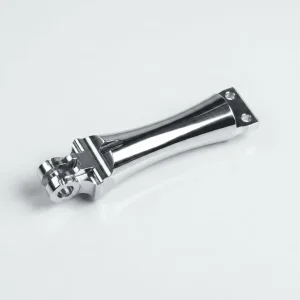
ODM Custom CNC Machined Robot Finger Joint Link Manufacturer, Exporter
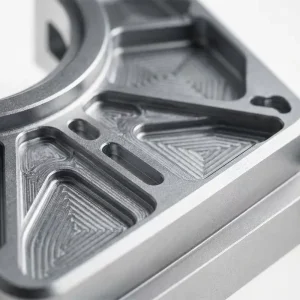
China Lightweight Aerospace Structural Components from Reliable China Suppliers and Factory Supplier, Service
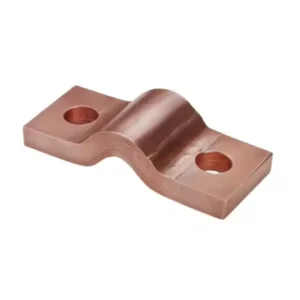
High-Quality Custom Flexible Laminated Copper Busbars for Battery & Electrical Equipment - China Suppliers and Factory Products, Factory
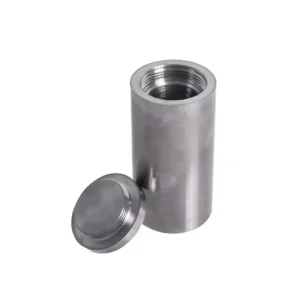
High-Quality Customized Tungsten Carbide Shielded Canister with Lid Manufacturer, Exporter
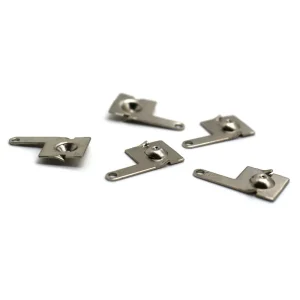
High-Quality Custom Precision Stamped Battery Contact Plates & Terminals Manufacturer, Exporters
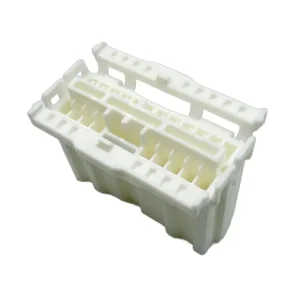
China High-Precision White PBT Automotive Connector Housing from China Factory - Reliable Suppliers for Electrical Solutions Manufacturer, Factories
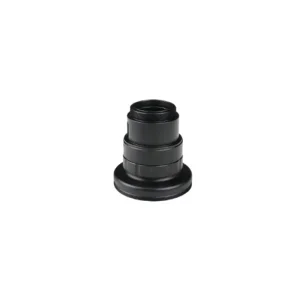
Custom Custom Black Anodized Aluminum Lens Barrel & Optical Housing Components - China Suppliers & Factory Manufacturer, Exporter
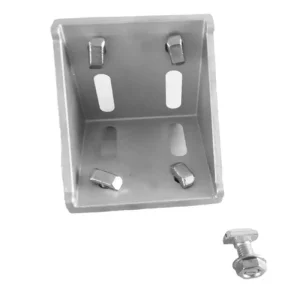
ODM Premium 8080 Aluminum Profile T-Slot Corner Bracket | Custom Heavy Duty Inside Corner Brace Manufacturers, Product
The Paradigm Shift in Rapid Injection Molding Prototyping
In today's hyper-competitive global manufacturing landscape, the timeline for hardware commercialization has compressed drastically. Original Equipment Manufacturers (OEMs) and Original Design Manufacturers (ODMs) across North America, Europe, and Asia-Pacific no longer view injection molding prototyping merely as a physical proof-of-concept phase. Instead, rapid prototyping in thermoplastics has evolved into a strategic operational lever—enabling simultaneous engineering validation, regulatory compliance testing, early-stage market seeding, and bridge-to-production manufacturing.
Historically, product development teams faced a rigid dichotomy: low-fidelity 3D printing (additive manufacturing) which lacked real-world mechanical and thermal isotropic properties, or traditional steel production tooling requiring 12 to 18 weeks of lead time and massive capital expenditure (CapEx). High-quality injection molding prototyping bridges this technological divide. By utilizing pre-hardened aircraft-grade aluminum tooling (QC-10, 7075-T651) and modular master unit dies (MUD), qualified suppliers deliver production-grade molded components—utilizing the exact end-use engineering resins—in as few as 7 to 15 business days.
3D printed prototypes often yield misleading mechanical feedback due to anisotropy and layer adhesion variances. Prototyping via actual injection molding ensures that tensile strength, impact resistance, heat deflection temperature (HDT), dielectric breakdown, and chemical resistance perfectly mirror mass-production parts, safeguarding against catastrophic field failures.
Advanced Prototype Tooling Architecture & DFM Methodologies
Achieving ultra-high precision in rapid injection molding requires an integrated synergy between automated Design for Manufacturability (DFM) algorithms, predictive thermal Moldflow simulations, and high-speed multi-axis CNC mold machining.
AI-Driven DFM & Flow Analysis
Every CAD geometry undergoes virtual injection modeling to predict volumetric shrinkage, melt front advancement, shear stress spikes, air traps, and weld line formation. Gating locations, runner systems, and wall thickness gradients are optimized prior to metal cutting.
Rapid Tooling Matrix Selection
We deploy specialized tool steel alloys based on part volume and polymer abrasiveness: Alumold / 7075-T6 for ultra-fast turns (under 10,000 shots), P20 pre-hardened steel for glass-filled resins (up to 100,000 shots), and NAK80 / H13 for optical grade high-polish demands.
Micro-Finish & EDM Surface Texture
Utilizing CNC sinker EDM and high-speed milling spindles (up to 42,000 RPM), we execute intricate mold textures ranging from SPI-A1 mirror diamond polish for optical housings to VDI 34 / Mold-Tech MT textures for ergonomic, scratch-resistant tactile surfaces.
Rapid Prototype Tooling vs. Bridge Tooling vs. Production Tooling
| Tooling Characteristic | Rapid Prototype Tooling | Bridge Tooling | High-Volume Production Tooling |
|---|---|---|---|
| Mold Core/Cavity Material | Aluminum 7075-T6 / Alumold | P20 / NAK80 Pre-Hardened Steel | H13 / S7 / 420 Stainless Steel (Hardened) |
| Typical Lead Time | 5 - 12 Business Days | 2 - 3 Weeks | 6 - 10 Weeks |
| Expected Tool Life | 1,000 - 25,000 Shots | 25,000 - 100,000 Shots | 500,000 - 1,000,000+ Shots |
| Tolerance Capability | ±0.025 mm to ±0.05 mm | ±0.015 mm to ±0.03 mm | ±0.005 mm to ±0.015 mm |
| Target Application | EVT/DVT Validation, Functional Testing | PVT, Market Seeding, Low-Volume Supply | Global Mass Production |
Engineering Polymers, Elastomers & Shrinkage Engineering
As a global exporter of custom prototyped components, our injection molding facility processes over 150 commercial-grade thermoplastics, elastomeric compounds, and advanced high-temperature polymers. Precision shrinkage calculation is critical to preventing sink marks, internal voiding, and dimensional distortion.
High-Performance & Structural Polymers
We specialize in molding demanding engineering resins that require elevated barrel and mold temperatures (up to 400°C), including:
- PEEK / PEI (Ultem): Aerospace structural parts requiring extreme heat resistance and flame retardancy (UL94-V0).
- PBT + 30% Glass Fiber: Automotive electrical connectors demanding low moisture absorption and dielectric strength.
- Polyamide (Nylon 6/66 + GF): High impact industrial gears, structural brackets, and motor end-bells.
- PPS (Polyphenylene Sulfide): Chemical pump impellers exposed to aggressive solvents and acids.
Overmolding, 2K & Elastomeric Compounds
Advanced multi-material injection molding prototyping enables soft-touch grips, hermetic sealing gaskets, and vibration dampening:
- TPU / TPE over Polycarbonate/ABS: Handheld medical diagnostic tools and ruggedized outdoor telemetry enclosures.
- Liquid Silicone Rubber (LSR): Biocompatible medical seals and microfluidic valves requiring medical-grade cleanliness.
- Insert Molding: Precision brass threaded inserts, stamped copper busbars, and pins overmolded within a single cycle.
Global Industry Applications & Specialized Solutions
Tailored prototyping strategies engineered to meet stringent regional and industry-specific qualification standards worldwide.
Automotive E-Mobility & Powertrain
Prototyping high-voltage PBT connector housings, battery module insulator trays, flexible copper busbar guards, and under-the-hood sensors. Fully compliant with IATF 16949 quality controls, supported by PPAP (Production Part Approval Process) Level 3 documentation.
Medical Devices & Life Sciences
ISO 13485-certified prototype tooling for surgical handles, microfluidic cassettes, bio-absorbable trial components, and diagnostic device housings. Molded in Class 8 cleanroom environments with full USP Class VI material traceability.
Robotics, Physical AI & Automation
Ultra-lightweight robot joint linkages, finger kinematics, optical housings, and sensor barrels. We combine CNC hybrid machining with thin-wall plastic injection molding to achieve structural rigidity and low inertia for fast dynamic motion.
Industrial IoT & Telecommunications
Weatherproof IP67/IP68 rated outdoor sensor enclosures, optical lens barrels, and RF shielding cans. Precision gasket grooves overmolded with TPU ensure absolute ingress protection against moisture and atmospheric contaminants.
Rigorous Metrology, Inspection & Global Compliance
To guarantee that every prototyped component arriving at your assembly facility is defect-free, our quality management system enforces multi-tiered metrological verification. We do not ship parts based on visual estimation; every critical dimension is backed by empirical data.
CMM 3D Coordinate Measuring
Fully automated Zeiss Coordinate Measuring Machines (CMM) record GD&T parameters, true positions, concentricity, and profile tolerances down to ±0.002 mm against CAD geometry.
FAI & Material Certifications
Every prototype shipment includes complete First Article Inspection (FAI) reports, raw resin mill test certificates, UL flame rating documents, and RoHS/REACH chemical compliance sheets.
IP Protection & Data Security
We operate under strict Non-Disclosure Agreements (NDAs). Your 3D CAD models, production volumes, and proprietary designs are stored on air-gapped, encrypted servers and never shared with brokers.
Next-Generation Prototyping: AI, Conformal Cooling & Sustainability
The future of rapid injection molding lies at the intersection of additive manufacturing, computational fluid dynamics, and smart factory automation. As an innovative export supplier, we continuously integrate emerging manufacturing technologies into our rapid tooling ecosystem.
DMLS 3D Printed Conformal Cooling
By leveraging Direct Metal Laser Sintering (DMLS) to print tool inserts with 3D conformal cooling channels that closely follow complex mold geometries, we reduce prototype molding cycle times by up to 40% while completely eliminating differential thermal warpage in thick-walled sections.
Bio-Based Resins & Circular Molding
To support global carbon neutrality mandates (EU Green Deal, ESG goals), our facility is qualified to process post-consumer recycled (PCR) resins, bio-attributed polyolefins, and compostable PLA compounds without compromising dimensional fidelity or surface aesthetics.
Frequently Asked Technical Questions (FAQ)
Direct engineering answers to technical queries raised by global procurement leaders and mechanical design engineers.
Precision Turned, Cast & Molded Components Export Line
Browse our additional OEM hardware assemblies engineered for global export to demanding industrial sectors.
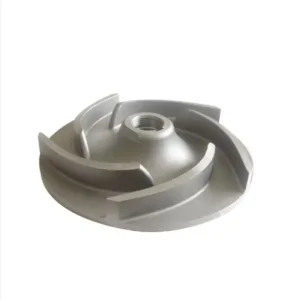
ODM High-Quality Centrifugal Slurry Pump with Open Impeller - Stainless Steel Suppliers and Factory in China Manufacturers, Exporter
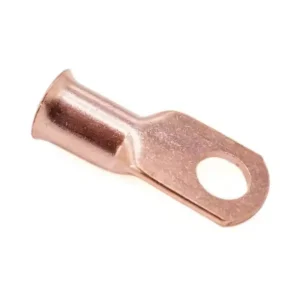
Custom Custom Tinned Copper Lug Ring Crimp Terminal Battery Wire Connector from China Suppliers & Factory Manufacturers, Exporters
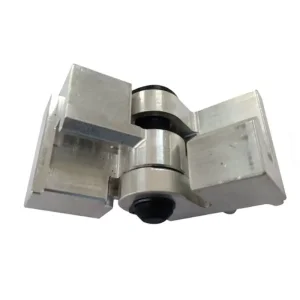
ODM Custom Precision CNC Machined Aluminum Hinge Assembly Structural Connector - Top China Suppliers & Factory Product, Quotes
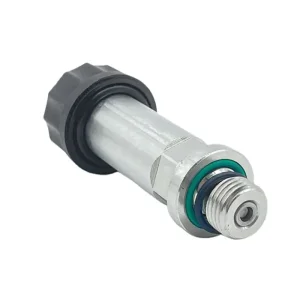
China High-Performance Hydraulic Solenoid Valve Core - Precision CNC Parts from China Suppliers and Factory for Excavators Service, Factory
ODM Custom Black Anodized Aluminum Lens Barrel & Optical Housing Components | China Suppliers & Factory Supplier, Quotes
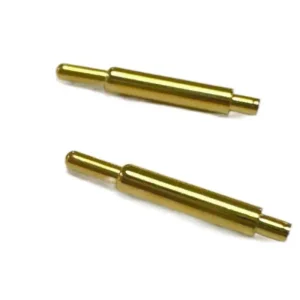
ODM High-Precision Gold-Plated Brass Pogo Pins for PCB - China Factory Suppliers Custom Connectors Manufacturers, Factories
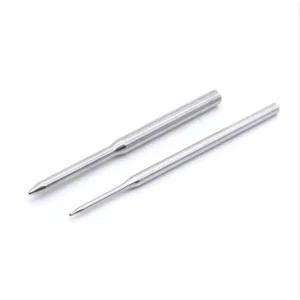
ODM Custom Stainless Steel Waterproof Sensor Probe Housing / Thermowell (OEM Support) Manufacturers, Product