Featured Precision Component Solutions
Explore our engineering capability matrix across micro-tolerance brass, stainless steel, and alloy stamped components.
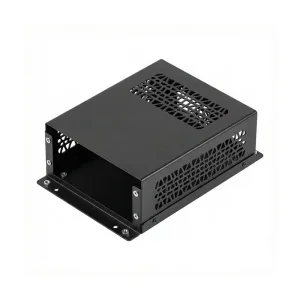
Metallurgical Engineering & Alloy Science in Precision Brass Stamping
A comprehensive examination of copper-zinc phase dynamics, work-hardening thresholds, and structural performance in high-speed progressive die operations.
Alpha-Phase Alloys (C26000 / CuZn36)
Characterized by up to 37% Zinc content, single-phase face-centered cubic (FCC) lattice structures provide exceptional cold-work ductility. Ideal for deep-drawn components, complex spring clips, and high-formability electrical terminals requiring uniform grain elongation without micro-cracking.
Duplex Alpha-Beta Alloys (C37700 / C36000)
Containing 37% to 45% Zinc with body-centered cubic (BCC) beta phase elements. Delivers superior yield strength and hardness at elevated temperatures, perfect for heavy-gauge structural brackets, stamped valve bodies, and components requiring secondary precision machining or broaching.
Specialty High-Conductivity Bronzes
Incorporating Phosphor Bronze (C51000) and Beryllium Copper (C17200) variants where extreme fatigue resistance, thermal resilience up to 200°C, and electrical conductivity exceeding 60% IACS are mandated for mission-critical automotive switchgear and aerospace sensors.
Information Gain Insight: Controlling Stress Corrosion Cracking (SCC) in Stamped Brass
During progressive stamping, localized shear strains induce residual tensile stresses. In environments containing ambient ammonia or industrial pollutants, brass components with >15% zinc are susceptible to Season Cracking (SCC). Superior manufacturing protocol mandates in-line stress-relief annealing at 250°C to 300°C for 30–60 minutes, mitigating residual stress without reducing cold-worked tensile yield strengths.
| Alloy Grade (UNS) | Copper (Cu) % | Tensile Strength (MPa) | Electrical Conductivity (% IACS) | Primary Stamping Application |
|---|---|---|---|---|
| Cartridge Brass (C26000) | 68.5 - 71.5 | 300 - 580 | 28 | Deep-drawn enclosures, EMI shields, precision contacts |
| Yellow Brass (C27200) | 62.0 - 65.0 | 330 - 620 | 27 | Automotive terminals, architectural hardware, switch plates |
| Free-Cutting Brass (C36000) | 60.0 - 63.0 | 380 - 480 | 26 | Thick-gauge blanked plates with secondary tapped holes |
| Phosphor Bronze (C51000) | 94.8 - 95.8 (5% Sn) | 330 - 690 | 15 | High-fatigue spring terminals, EV battery connectors |
Global Procurement Demands: Total Cost of Ownership & Quality Risk Mitigation
Analyzing the critical decision metrics utilized by tier-1 procurement directors when evaluating international brass stamping suppliers.
Tooling Longevity & Carbide Die Architecture
Global enterprises demand zero-downtime manufacturing. Advanced exporters utilize tungsten carbide die inserts (Grain size < 0.5µm) with Titanium Nitride (TiN) or Diamond-Like Carbon (DLC) physical vapor deposition (PVD) coatings. This yields tool life cycles exceeding 10,000,000 strokes while preventing brass galling and zinc pickup on die radii.
Plating Integrity & Intermetallic Diffusion Control
For brass electrical contacts, direct gold or tin plating suffers from copper/zinc diffusion into the outer layer, leading to oxidation and contact resistance spikes over time. Industry-leading suppliers mandate a 1.25µm to 2.5µm electrolytic Nickel underplate barrier before tin, silver, or gold deposition, extending contact shelf-life to 10+ years.
The China Manufacturing Eco-Cluster: Strategic Supply Chain Synergy
How concentrated industrial ecosystems in Guangdong accelerate prototyping cycles, optimize raw strip sourcing, and lower landed component costs.
Vertical Integration
From raw strip slitting to in-house wire-EDM die fabrication, heat treatment, and continuous reel-to-reel plating, China's hardware clusters eliminate third-party transport latency, cutting prototype delivery cycles from 6 weeks to 7 business days.
Advanced FEA Simulation
Utilizing AutoForm and PAM-STAMP software algorithms, Chinese DFM engineers simulate metal stretch, thinning rates, and springback geometry prior to cutting steel. This reduces die tuning iterations by up to 70%.
Scale Flexibility
Equipped with high-precision stamping presses ranging from 25-ton high-speed units to 400-ton hydraulic deep-drawing lines, capable of seamless scaling from initial pilot batches (5,000 units) to annual mass production (50M+ units).
Localization Support, International Compliance & Quality Auditing
Ensuring seamless integration into North American, European, and Asia-Pacific supply chains through strict regulatory alignment and traceable documentation.
Global Environmental Compliance (RoHS & REACH)
With global restrictions on hazardous substances, exporting brass requires vigilant lead (Pb) content management. We support compliance with RoHS 3 (Directive 2015/863) under Exemption 6(c) allowing up to 4% Lead in copper alloys, alongside fully unleaded alloy alternatives (such as C27450 and Eco Brass) meeting strict EU REACH SVHC and California Proposition 65 thresholds.
IATF 16949 & ISO 9001 Quality Protocols
Every stamping export batch is governed by rigorous Advanced Product Quality Planning (APQP) and Production Part Approval Process (PPAP Level 3) workflows. Deliverables include 3D CMM full-dimensional mapping, capability studies (Cpk ≥ 1.67), Material Test Certificates (EN 10204 3.1), and 24-hour Salt Spray Corrosion Test validation (ASTM B117).
Industry Trends: Electrification, Miniaturization & Smart Manufacturing
Emerging market forces reshaping the technical landscape of custom brass stamping components worldwide.
EV High-Voltage Busbars
Transition toward 800V Electric Vehicle architectures requires heavy-gauge laminated brass and copper busbars featuring high electrical conductivity, precision coining, and integrated flame-retardant polyamide insulation overmolding.
Micro-Miniaturized Contacts
Driven by 5G telecommunications, wearable medical sensors, and IoT hardware, progressive stamping dies now routinely stamp micro-contacts with wall thicknesses down to 0.08mm at pitches tighter than 0.4mm with sub-micron burr thresholds.
AI Automated Optical Inspection (AOI)
In-line high-speed computer vision systems automatically scan 100% of stamped parts on the press at 1,000+ parts/minute, instantly flagging surface scratches, plating voids, or dimensional drift to ensure zero-defect shipment batches.
Target Application Scenarios & Engineering Case Deployment
Custom brass stamping parts optimized for specific industrial operations across major global sectors.
Automotive Electronics
Heavy-duty brass terminal pins, relay clips, sensor housings, and ABS control unit connectors engineered to resist shock, vibration, and thermal cycling from -40°C to +150°C.
Smart Grid & Energy
High-current switchgear components, smart meter disconnect blade contacts, circuit breaker spring terminals, and solar inverter grounding clips built for low contact resistance.
Industrial Automation
Solenoid valve armatures, pneumatic manifold fittings, precision shims, and heavy equipment enclosure shielding plates demanding strict geometric flatness and burr-free edges.
Consumer Appliances
HVAC thermostat contact blades, water heater heating element brass flanges, power plug pins, and architectural decorative brass faceplates with premium electroplated aesthetic finishes.
Frequently Asked Questions (FAQ) & Engineering Guide
Expert insights answering critical engineering, procurement, and manufacturing questions for custom brass stamping components.
What is the standard tolerance capability for high-speed progressive brass stamping?
Our standard progressive stamping tolerances range from ±0.01mm to ±0.03mm for general linear dimensions. For critical pitch distances, hole diameters, and coined features, our precision carbide tooling achieves tolerances as tight as ±0.005mm. All dimensions are verified using optical CMM profile projectors under climate-controlled conditions.
How do you select between Cartridge Brass (C26000) and Free-Cutting Brass (C36000) for stamped parts?
Selection depends primarily on the required forming operations. C26000 (70/30 brass) possesses high cold ductility, making it superior for deep drawing, severe bending, and crimping without fracturing. Conversely, C36000 contains lead additions that optimize chip breakability, making it the alloy of choice when stamping thick blanks that require secondary high-speed CNC tapping, counterboring, or precision broaching.
What surface treatments and electroplating options are available for brass stampings?
We provide comprehensive surface finishing including electrolytic bright tin plating (matte or shiny), selective gold plating for low-voltage signal integrity, silver plating for high-current contacts, nickel plating for corrosion resistance, ultrasonic degreasing, passivation, and anti-tarnish organic protective coatings (OFC). Reel-to-reel continuous plating is offered for automated terminal insertion lines.
How does your factory protect customer IP and proprietary drawing designs?
Intellectual Property security is maintained through strict non-disclosure agreements (NDAs), encrypted CAD data management systems, segregated toolmaking bays, and restricted-access production networks. Customer drawings are never shared with external brokers; all DFM, tooling design, and manufacturing take place directly within our certified facilities.
What quality certification documents accompany international shipments?
Every shipment batch includes a full Quality Quality Assurance Dossier containing Raw Material Certificates (MTC EN 10204 3.1), First Article Inspection Reports (FAIR), CMM Dimensional Inspection Data, RoHS 3 & REACH Compliance Statements, Plating Thickness Measurement Reports (X-ray Fluorescence), and Salt Spray Test Certification upon request.
Additional OEM/ODM Precision Manufacturing Capabilities
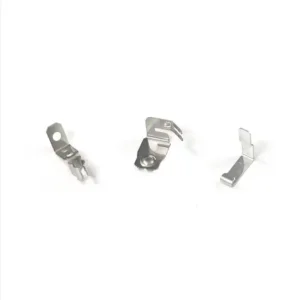
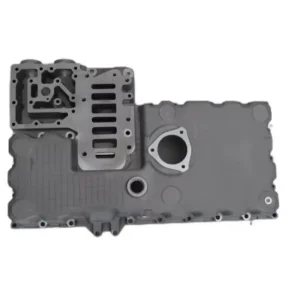
Explore complementary custom manufacturing capabilities ranging from battery contact springs to low-pressure cast engine enclosures.
-
-
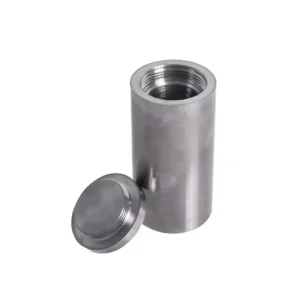
High-Quality Customized Tungsten Carbide Shielded Canister with Lid Manufacturer, Exporter
-

China Custom TPE and ABS Double Color Injection Molding & Overmolding Supplier, Manufacturers
-
-
-
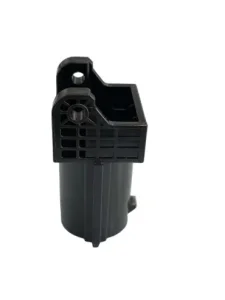
ODM Custom PA66 Automotive Electronic Sensor & Solenoid Valve Plastic Housing Product, Quotes
-

Custom Custom Medical Grade Liquid Silicone Rubber (LSR) Components Supplier, Exporter
-