
Featured OEM Anodized Components & Mechanical Assemblies
Explore our featured high-precision components manufactured under strict ISO quality controls, combining precision CNC machining, custom alloy casting, and industrial-grade surface anodizing.
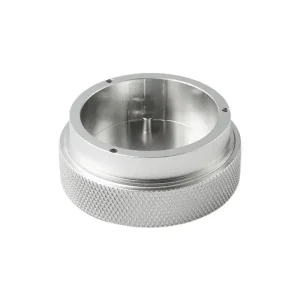
Custom Premium Custom CNC Machined Aluminum Control Knobs Exporter, Quotes
View Product Details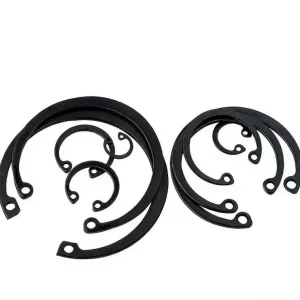
OEM Premium DIN 471 C-Type External Retaining Rings Supplier, Manufacturers
View Product Details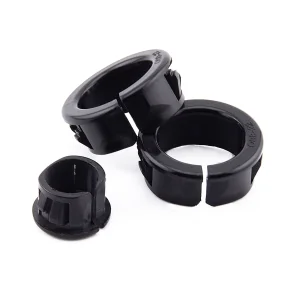
OEM Custom Open Snap Bushings (Split-Type Cable & Panel Protection) Supplier, Exporter
View Product Details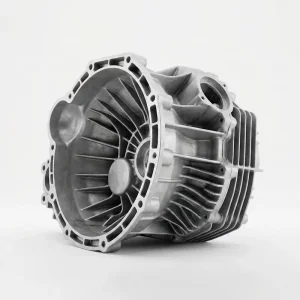
OEM China Die-Cast Aluminum Transmission Housing - Supplier & Factory Solutions
View Product Details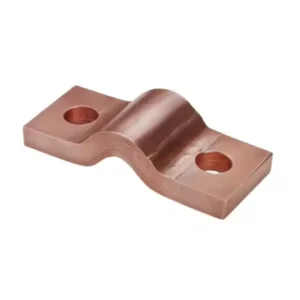
China Custom Flexible Laminated Copper Busbar for Battery & Electrical Equipment
View Product Details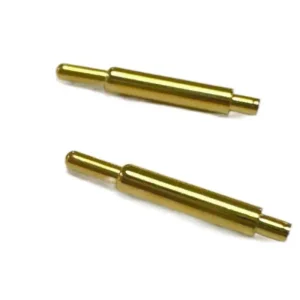
China Custom Gold-Plated Brass Pogo Pins - High Precision Connectors from China
View Product Details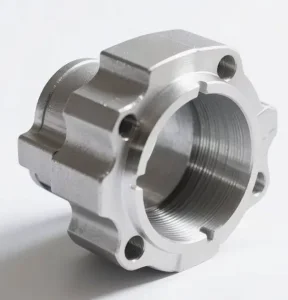
Custom High-Performance Aluminum, Zinc, Magnesium, and Copper Alloy Components
View Product Details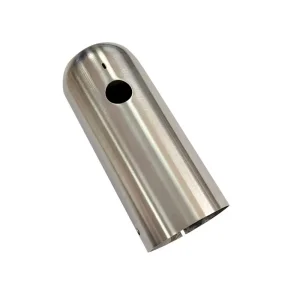
China Custom Precision CNC Medical Sleeve Bushing from China Suppliers
View Product DetailsExecutive Summary: The Modern Landscape of Industrial Anodizing
In the rapidly evolving landscape of advanced global manufacturing, surface engineering is no longer merely a cosmetic final step; it is a fundamental pillar of structural integrity, micro-hardness engineering, corrosion mitigation, and thermal dissipation performance. As global OEMs transition toward lighter aluminum alloys (such as 6061-T6, 7075-T6, and high-silicon die-casting alloys like A380/ADC12), selecting verified, engineering-driven High-Quality Anodizing Manufacturers & Exporters has become a mission-critical procurement decision.
The global market for aluminum anodizing is projected to expand significantly, driven by aggressive expansion in Electric Vehicles (EV) battery enclosures, 5G telecommunication heat sinks, aerospace structural brackets, and semiconductor processing equipment. Anodizing converts the base aluminum surface into a durable, highly porous, corrosion-resistant aluminum oxide ($\text{Al}_2\text{O}_3$) layer via controlled electrolytic passivization. When executed by leading Chinese export manufacturers utilizing automated titrating tanks and closed-loop wastewater recovery systems, international buyers achieve unprecedented cost efficiencies without sacrificing MIL-A-8625 or ISO 7599 compliance.
Deep-Dive Engineering: The Chemistry & Process Metallurgy of Anodizing
To assist procurement directors and mechanical design engineers in specifying optimal surface finishing parameters, Sunmy Hardware provides a rigorous breakdown of the primary anodizing classifications governed by military standard MIL-A-8625 and industrial specification ISO 7599.
| Anodizing Type Standard | Electrolyte Bath Chemistry | Coating Thickness ($\mu\text{m}$) | Vickers Hardness (HV) | Primary Industrial Use Case |
|---|---|---|---|---|
| Type I (Chromic Acid Anodizing) | $\text{H}_2\text{CrO}_4$ (38°C–40°C) | 0.5 – 5.0 $\mu\text{m}$ | 200 – 300 HV | Aerospace fatigue-critical structures, tight-tolerance flight controls. |
| Type II (Sulfuric Acid Anodizing) | $\text{H}_2\text{SO}_4$ (18°C–22°C) | 5.0 – 25.0 $\mu\text{m}$ | 300 – 400 HV | Consumer electronics, automotive trim, color-dyed optical housings. |
| Type III (Hardcoat Anodizing) | Low Temp $\text{H}_2\text{SO}_4$ (0°C–5°C) + High Voltage | 25.0 – 100.0 $\mu\text{m}$ | 450 – 600 HV | Hydraulic valves, military weapons components, wear-resistant gears. |
| PTFE-Infused Hardcoat | Type III + Fluoropolymer Impregnation | 30.0 – 50.0 $\mu\text{m}$ | 400 – 500 HV | Non-stick robotic grippers, dry-lubricated medical sleeve bushings. |
Micro-Pore Structure & Dye Absorption
During Type II anodizing, columnar cellular structures form with microscopic pore diameters between 15 nm to 25 nm. High-quality export manufacturers control bath concentration, current density ($1.2 - 1.5 \text{ A/dm}^2$), and temperature within $\pm0.5^\circ\text{C}$ tolerances to ensure completely uniform organic dye absorption, eliminating batch-to-batch color variance ($\Delta E < 0.8$).
Hydrothermal & Chemical Sealing Mastery
Unsealed anodized layers remain chemically reactive. We implement mid-temperature Nickel Acetate sealing ($80^\circ\text{C} - 85^\circ\text{C}$) or deionized hot water sealing ($95^\circ\text{C}+$) to convert $\text{Al}_2\text{O}_3$ into hydrated Boehmite ($\text{AlOOH}$), effectively plugging microscopic pores and achieving zero weight-loss metrics under acid dissolution testing.
Dimensional Allowance & Thread Masking
Anodizing grows inside and outside the substrate surface in a 50/50 ratio. For instance, a 20 $\mu\text{m}$ total film thickness adds 10 $\mu\text{m}$ of dimensional growth per side. Our DFM engineering team calculates exact pre-anodize CNC cutting dimensions and applies specialized silicone plugs or precision masking tape to threaded blind holes and ground bearing fits.
China Factory Efficiency: Integrated Manufacturing & Cost Advantage
Global sourcing managers frequently encounter fragmented supply chains—purchasing raw billets from one vendor, sending them to an offline CNC machine shop, shipping parts to a third-party anodizing job-shop, and performing inspection elsewhere. This disconnected approach increases lead times, inflates freight expenses, and creates quality dispute friction.
1. Single-Source Accountability
Sunmy Hardware integrates precision toolmaking, die-casting, high-speed 5-axis CNC machining, and automated plating/anodizing lines under one centralized quality management system (QMS). One single purchase order covers raw material to final packaged part.
2. Automated Titration & Racking
Our automated anodizing lines feature computer-controlled PLC racking, real-time chemical concentration titration, and current-density feedback loops. This guarantees zero touch marks on visual surfaces and yields a 30% reduction in processing lead time compared to manual workshops.
3. Rapid DFM & Prototyping
Using advanced simulation tools, our technical team evaluates drawing geometries for trapped-air risks, contact point placing, and electrolyte flow dynamics within 24 hours of RFQ submission, drastically mitigating mass-production yield losses.
Localized Application Scenarios: Cross-Industry Engineering Execution
Our custom surface finishing and anodizing solutions are deployed across demanding industrial domains worldwide. Each sector demands unique mechanical specifications and surface quality criteria:
Medical & Surgical Devices
Requires non-toxic, bio-compatible, high-sterilization resistant coatings. We utilize Type II Class 1 clear anodizing and specialized black anodizing on CNC medical sleeve bushings, endoscopic housings, and dental micro-implant fixtures capable of enduring hundreds of autoclave steam cycles ($134^\circ\text{C}$).
Automotive EV & Powertrains
Die-cast aluminum transmission housings, battery thermal plates, and lightweight structural brackets undergo heavy-duty clear or black anodizing to resist road-salt spray corrosion (ASTM B117 > 1000h), fluid splash, and localized galvanic degradation.
Consumer & Industrial Electronics
Premium tactile feel, anti-fingerprint properties, and precise color match are vital for audio control knobs, smart enclosure panels, and heat dissipation fins. Fine bead blasting (Glass Bead #10 or Aluminum Oxide #120) prior to anodizing creates a luxury matte metallic aesthetic.
Global Procurement Needs: Meeting Strict Quality Assurance & Regulatory Audits
Modern international supply chain executives in North America, Europe, and Asia-Pacific face tightening environmental regulations, strict ESG commitments, and aggressive quality assurance targets. Working with Sunmy Hardware ensures full alignment with modern procurement standard operating procedures:
RoHS & REACH Compliance
100% heavy-metal-free processing. Zero Hexavalent Chromium ($\text{Cr}^{6+}$) utilization in sealing tanks; full chemical safety data sheets (MSDS) provided with every batch export.
CMM & Eddy Current Inspection
Dimensional inspection verified via Zeiss CMM equipment. Anodize film thickness measured non-destructively per ISO 2360 magnetic/eddy-current thickness gauges.
Spectrophotometer Color Matching
Utilizing industrial spectrophotometers to measure color reflectance spectra under standard illuminant D65, maintaining strict CIE $L^*a^*b^*$ tolerances across multi-lot shipments.
Comprehensive FAI & PPAP Level 3
Full First Article Inspection (FAI) documentation, material chemical certificates, heat treatment charts, and Production Part Approval Process (PPAP) documentation for automotive buyers.
Frequently Asked Questions: Technical Anodizing Engineering Guide
Get quick, engineering-focused answers to the most common technical questions regarding metal selection, post-processing options, masking, and turnaround times for custom anodizing projects.
Which aluminum alloys yield the highest visual quality and corrosion resistance after anodizing?
Die-Casting Alloys (A380, ADC12): Die-casting alloys contain high silicon content ($>8-11\%$), which normally turns dark gray during standard anodizing. We utilize specialized low-temperature electrolyte blends and pulse current techniques to achieve acceptable cosmetic anodize on cast aluminum.
What is the difference between Type II decorative anodizing and Type III hardcoat anodizing?
How does anodizing affect tight-tolerance CNC machined features?
What masking options are available for ground surfaces, threads, and conductive grounding pads?
What quality documentation and testing reports are supplied with international orders?
Additional Specialized Precision OEM Solutions
Browse our complete catalog of extended hardware products, featuring titanium implants, medical sleeves, deep-drawn sensor housings, marine propellers, and plastic automotive components.
China Custom Precision CNC Turned Medical Sleeve Bushing Service, Exporters
View Product Details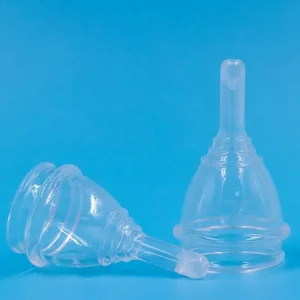
ODM Custom Medical Grade LSR Components | China Suppliers & Factory
View Product Details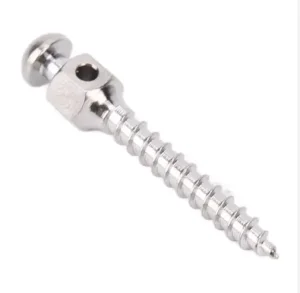
Custom Custom Precision Titanium Orthodontic Micro Implant Screws Products
View Product Details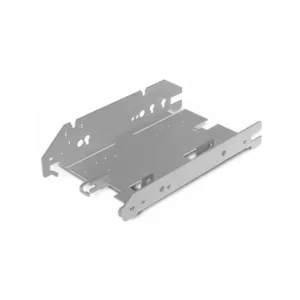
Custom Custom Precision Sheet Metal Brackets & Stamping Parts for Electronic Devices
View Product Details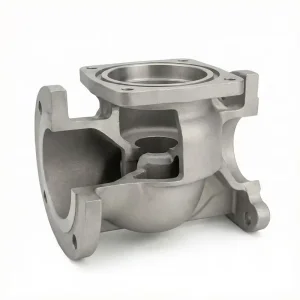
Custom Stainless Steel Valve Body Suppliers, Factory
View Product Details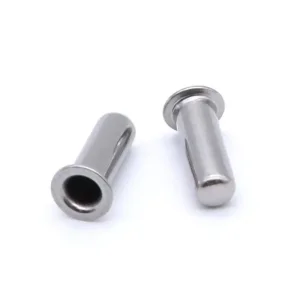
China Custom SS316 Deep Drawn Closed-End Flanged Sensor Housing for Temperature Probes
View Product Details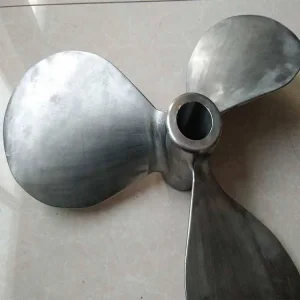
China OEM Custom Stainless Steel 3-Blade Marine Propeller (Precision Investment Casting)
View Product Details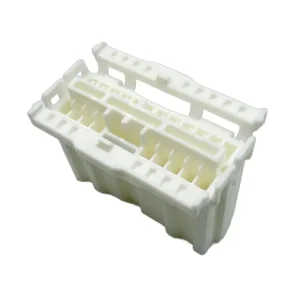
China High-Precision White PBT Automotive Connector Housing from China Factory
View Product DetailsReady to Accelerate Your Anodizing & CNC Component Sourcing?
Upload your 3D CAD files (STEP, IGES, X_T) or 2D technical drawings today. Our senior metallurgical and DFM engineering team will review your specifications and supply a comprehensive quotation and DFM analysis within 24 hours.