
The Global Evolution of Aluminum Casting Foundry Exporters
Analyzing macroeconomic shifts, lightweight engineering paradigms, and the technical necessity for high-integrity aluminum alloys across modern industrial manufacturing.
Industrial Landscape & Thermal Thermodynamics in Modern Metallurgy
In the contemporary industrial ecosystem, the global aluminum casting market has undergone a structural transformation. Driven by stringent carbon neutralization mandates, the rapid acceleration of Electric Vehicle (EV) powertrains, and the miniaturization of aerospace structural components, global Original Equipment Manufacturers (OEMs) no longer view aluminum casting merely as a preliminary shaping process. Instead, aluminum casting is recognized as an integrated metallurgical science combining fluid dynamics, thermal dissipation optimization, and structural micro-porosity management.
As tier-1 aluminum casting foundry exporters, international suppliers must navigate complex trade environments while providing exceptional technical depth. Modern foundries must maintain precise control over molten alloy chemical compositions—such as A356, A380, ADC12, and AlSi10Mg—to eliminate internal gas entrapment, micro-shrinkage voids, and dendritic segregation. Achieving yield strengths exceeding 240 MPa and elongation rates above 8% requires strict adherence to vacuum-assisted high-pressure die casting (HPDC) and low-pressure die casting (LPDC) parameters.
Furthermore, global procurement managers face escalating demands for cost efficiency without sacrificing structural reliability. The integration of advanced computer-aided engineering (CAE) casting simulation tools—such as MAGMASOFT® and ProCAST—allows leading exporters to analyze molten metal filling behavior, thermal solidification stress, and mold erosion prior to cutting steel tooling. This pre-production rigor drastically shortens developmental lead times from months to weeks while eliminating costly iterative tooling modifications.
Advanced Metallurgy
Complete control over eutectic silicon morphology, grain refinement via Titanium-Boron additives, and inline hydrogen gas degassing down to <0.12 mL/100g Al.
Rapid Prototyping
Accelerated bridge tooling, 3D sand printing, and direct CNC machining from billet stock to validate mechanical interfaces prior to full hard-tool production.
Zero-Defect Quality
IATF 16949 certified quality management system backed by inline CMM measurement, optical blue-light scanning, and 100% helium leak detection.
Comparative Process Matrix & Aluminum Alloy Standards
Selecting the optimal manufacturing methodology based on structural loads, wall thickness, thermal conductivity, and production volume.
| Casting Methodology | Primary Alloy Grades | Target Wall Thickness | Dimensional Accuracy | Key Industrial Applications |
|---|---|---|---|---|
| High-Pressure Die Casting (HPDC) | A380, ADC12, AlSi9Cu3 | 1.2 mm – 6.0 mm | ISO 8062 CT4 – CT6 | Automotive engine brackets, 5G telecom heat sinks, electronics housings. |
| Low-Pressure Die Casting (LPDC) | A356.0, AlSi7Mg0.3 | 3.0 mm – 15.0 mm | ISO 8062 CT5 – CT7 | EV motor housings, aluminum alloy wheels, structural subframes. |
| Investment Casting (Lost Wax) | A356, C355, AlSi10Mg | 1.0 mm – 10.0 mm | ISO 8062 CT3 – CT5 | Aerospace optical brackets, surgical retractor handles, defense components. |
| Gravity Permanent Mold Casting | A356, AC4C, 354 | 3.0 mm – 25.0 mm | ISO 8062 CT6 – CT8 | Heavy hydraulic pump bodies, high-pressure valve manifolds, industrial handles. |
Mission-Critical Sector Solutions
Demonstrating technical mastery across aerospace, semiconductor, automotive, and medical device engineering domains.
Semiconductor & Optoelectronics
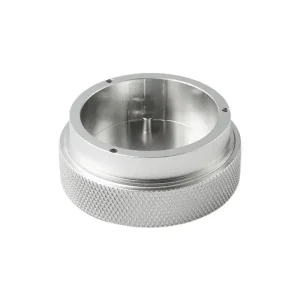
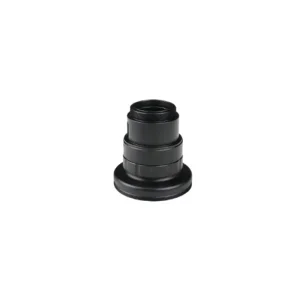
High-vacuum chambers, black-anodized aluminum optical barrels, and wafer carrier handling systems require zero outgassing and extreme dimensional stability. Castings undergo stress-relief heat treatment and CNC ultra-precision lathe turning to hold geometric tolerances within ±0.005 mm.
- Class 10,000 cleanroom cleaning compatibility
- Hard anodizing layer thickness up to 50μm
- Helium mass spectrometer leak testing
Automotive & EV Powertrains
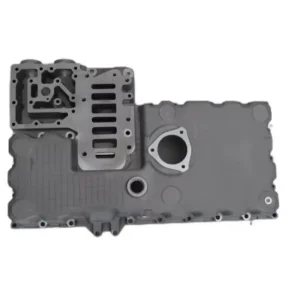
Next-generation e-axles, retarder oil pans, and battery structural trays require lightweighting paired with high crash-worthiness. Low-pressure die casting (LPDC) utilizing A356-T6 alloy ensures fatigue durability under intense vibrational loads.
- Integrated fluid cooling passages
- T6 solution treatment & artificial aging
- 100% CT scan for internal shrinkage voids
Medical & Surgical Instrumentation
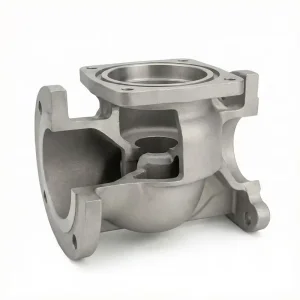
Surgical retractors, equipment frames, and fluid handling valve bodies demand biocompatibility, chemical corrosion resistance, and flawless surface finishes capable of surviving repeated autoclave sterilization cycles.
- Electropolished stainless & anodized aluminum
- Zero micro-crack surface integrity
- Full raw material heat-lot traceability
Localized Support & International Regulatory Safeguards
Mitigating cross-border supply chain risks for tier-1 OEMs in North America, Europe, and Asia-Pacific markets.
Comprehensive Regulatory Compliance & ESG Transparency
As international trade policies evolve, tier-1 aluminum casting exporters must offer more than technical proficiency. Importers in the European Union and North America must satisfy stringent environmental, social, and governance (ESG) regulations alongside complex customs tariffs.
1. EU CBAM & Low-Carbon Aluminum Sourcing: To mitigate financial liabilities under the European Union's Carbon Border Adjustment Mechanism (CBAM), premier foundries utilize green hydroelectric-smelted aluminum ingots. By tracking Scope 1 and Scope 2 emissions, exporters provide verified Carbon Footprint Declaration certificates per kilogram of cast aluminum delivered.
2. RoHS & REACH Substance Compliance: All raw alloys, surface treatment chemicals (including trivalent chromate conversion coatings and anodizing dyes), and packaging materials strictly conform to EU Directive 2011/65/EU (RoHS) and EC 1907/2006 (REACH). Full Material Declarations (FMD) and IMDS (International Material Data System) filings are supplied standard with first-article inspections (FAI).
3. Localized Warehousing & Inventory Buffer Programs: To insulate overseas customers from maritime freight disruptions, established exporters establish localized Vendor-Managed Inventory (VMI) buffers and Safety Stock programs across key hub locations in Hamburg, Rotterdam, Chicago, and Los Angeles.
Foundry Technology Roadmap (2025 – 2030)
Pioneering next-generation casting methodologies, AI-driven process optimization, and gigacasting scalability.
AI Melt Quality Control
Deployment of neural network computer vision to monitor molten aluminum surface oxidation and inline spectral analysis, reducing scrap rates by 35%.
3D Sand Core Printing
Elimination of hard core-box tooling for ultra-complex internal cooling geometries via binder-jetting 3D sand printing for rapid low-volume prototyping.
Gigacasting Expansion
Integration of 6000+ Ton super-large HPDC cells to consolidate multi-part sheet metal assemblies into single-piece structural aluminum castings.
Closed-Loop Carbon Neutrality
100% recycled secondary aluminum scrap utilization paired with green hydrogen furnace heating for zero net-carbon casting exports.
Frequently Asked Questions (FAQ)
Expert engineering answers addressing procurement intent, quality standards, and technical export specifications.
What aluminum alloys are recommended for high thermal conductivity vs structural strength?
How does your foundry guarantee zero internal porosity for pressure-tight casting applications?
1. Rotary Degassing: Molten aluminum undergoes continuous argon gas flushing to reduce dissolved hydrogen gas below 0.12 mL per 100g of metal.
2. Vacuum-Assisted HPDC: Sub-atmospheric cavity evacuation (<50 mbar) during injection prevents air entrapment during mold filling.
3. Squeeze Pins & Localized Chill Blocks: Applied in thick structural bosses to enforce directional solidification.
4. 100% NDT Verification: Industrial 3D X-ray CT scanning and computerized helium mass spectrometer leak testing validate pressure tightness up to 30 bar.
What dimensional tolerances can be maintained post-casting and post-machining?
What surface treatment options are available for exported aluminum castings?
- Anodizing: Type II Decorative Clear/Black Anodizing and Type III Hardcoat Anodizing (up to 50μm layer) for wear resistance.
- Chemical Conversion Coating: Chromate conversion (SurTec 650 / MIL-DTL-5541F Type II) for electrical conductivity with corrosion protection.
- Powder Coating & E-Coating: Automotive-grade epoxy/polyester coatings surviving >1,000 hours of neutral salt spray testing (ASTM B117).
- Electroless Nickel Plating: Superior chemical immunity for semiconductor and fluid-handling valve bodies.
How are intellectual property (IP) rights and proprietary CAD files protected during export?
What documentation accompanies overseas container shipments?
- First Article Inspection (FAI) Report per AS9102 or PPAP Level 3 standards.
- 3.1 Material Test Certificate detailing chemical spectrographic analysis and mechanical tensile testing.
- CMM Full Dimensional Inspection Layout.
- RoHS & REACH Compliance Declarations.
- X-Ray CT Porosity and Salt-Spray Test Inspection Reports.