
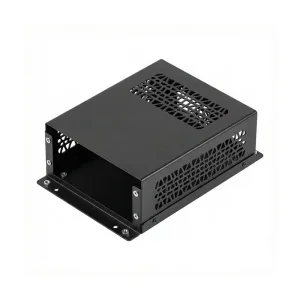
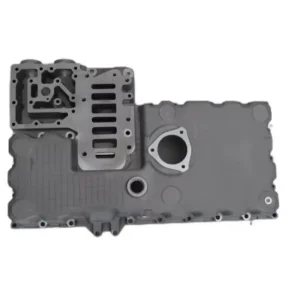
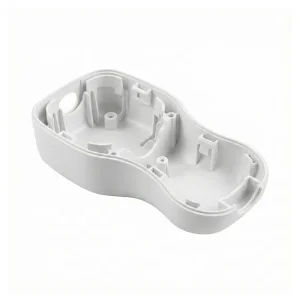
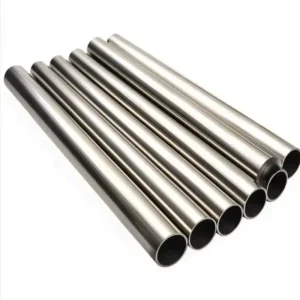
Custom OEM Metal & Plastic Electronic Enclosure Components
Explore our factory-direct hardware manufacturing capabilities ranging from stamped RF shield cans to precision CNC turned and cast metal housings.
Executive Summary: Engineering Principles of Custom Shielding Cans
In modern high-density printed circuit board (PCB) design, electromagnetic interference (EMI) and radio-frequency interference (RFI) present critical challenges to signal integrity, wireless sensitivity, and regulatory electromagnetic compatibility (EMC) compliance. As an industry-leading custom shielding cans supplier & factory, Shenzhen Sunmy Hardware Co., Ltd. provides precision-engineered Board-Level Shielding (BLS) solutions that isolate sensitive analog/RF components, system-on-chips (SoCs), power management ICs (PMICs), and high-frequency transceivers from extraneous electromagnetic radiation.
Custom shielding cans operate on Faraday cage principles, utilizing high-permeability and high-conductivity metallic alloys to reflect, absorb, and bypass radiated EMI noise to the system ground plane. The effectiveness of a board-level shield depends on three metallurgical and geometric pillars: material magnetic permeability, overall structural coplanarity, and SMT solder joint continuous seam integrity.
Information Gain Note: One-Piece vs. Two-Piece Board-Level Shielding Architecture
One-Piece Shield Cans: Cost-effective single-cavity stamped covers soldered directly onto PCB ground pads during SMT reflow. Ideal for high-volume, cost-sensitive consumer IoT electronics where post-reflow inspection under the shield is unnecessary.
Two-Piece Shield Cans (Frame & Removable Lid): Consists of a surface-mounted perimeter frame and a snap-on/removable cover lid. Enables rework, tuning, chip replacement, and visual testing without desoldering the shield frame. Highly recommended for 5G telecommunications, automotive ADAS, and medical equipment.
Technical Roadmap & Future Outlook (2025–2030)
The rapid escalation of wireless protocols—transitioning from sub-6GHz 5G to mmWave 6G, Wi-Fi 7 (6GHz band), and high-frequency radar modules (77-79GHz for automotive ADAS)—has fundamentally reshaped shielding requirements. Future-ready custom shielding cans must meet distinct micro-miniaturization and thermal co-design criteria:
- Millimeter-Wave (mmWave) High-Frequency Attenuation: Traditional micro-perforations act as slot antennas when aperture diameters approach fractions of the operating wavelength. Next-generation RF cans utilize laser-drilled sub-0.2mm degassing vents or conductive woven mesh inserts to prevent RF leakage at frequencies exceeding 28GHz.
- Multi-Cavity Compartmentalized Shielding: Integrating internal cross-walls within a single stamped shielding frame allows distinct RF stages (e.g., LNA, PA, Synthesizer) to be isolated in discrete sub-cavities without adding PCB footprint area or weight.
- Hybrid Thermal-EMI Co-Design: Modern high-performance SoCs generate significant thermal loads while emitting high radiated noise. Advanced shielding cans incorporate stamped recess pockets for Phase Change Materials (PCM), graphite sheets, or ultra-thin vapor chambers directly integrated with the top surface of the shield cover.
- Ultra-Thin Metal Gauges & High Coplanarity: Shifting from standard 0.20mm stock to 0.15mm and 0.10mm ultra-thin Nickel-Silver alloys, demanding automated inline 3D optical coplanarity monitoring to guarantee variance below 0.05mm across the entire SMT footprint.
Macro Industry Solutions & Application Environments
Shenzhen Sunmy Hardware Co., Ltd. designs and manufactures specialized shielding cans tailored to stringent environmental, thermal, and mechanical stressors across diverse industrial sectors:
Automotive Electronics (ADAS & EV)
Complying with AEC-Q100 and IATF 16949 specs. Heavy-duty Tin-Plated Steel and C7701 shield cans engineered to withstand high vibration, thermal shock (-40°C to +125°C), and aggressive humidity in battery management systems (BMS) and LiDAR modules.
5G Telecom & Satellite Networks
Precision multi-compartment frame-and-lid shield cans optimized for low-loss insertion, high magnetic permeability, and low intermodulation distortion (PIM) in base stations, LEO satellite receivers, and microwave routers.
Medical Equipment & Diagnostics
Non-magnetic stainless steel (SUS316L) and specialized raw materials for implantable monitors, surgical telemetry, and MRI-compatible electronics requiring zero magnetic field interference and high bio-compatibility compliance.
Metallurgical Selection Matrix & Shielding Effectiveness
Selecting the optimal raw material alloy balances electrical conductivity, magnetic permeability, corrosion resistance, solderability, and unit manufacturing cost. Sunmy Hardware stocks prime-grade mill-certified metal coils:
| Material Grade | Permeability (µr) | Electrical Cond. (% IACS) | SMT Reflow Solderability | Attenuation (100MHz - 10GHz) | Recommended Application |
|---|---|---|---|---|---|
| Nickel-Silver (C7701 / German Silver) | Non-magnetic (~1) | ~5.5% | Excellent (No Plating) | 65 - 80 dB | Standard Board-Level Shielding (No post-plating rust hazard) |
| Tin-Plated SPTE / Cold Rolled Steel | High (>100) | ~15% | Excellent (Pre-plated) | 75 - 90 dB | Low-frequency magnetic & high-frequency electric field shielding |
| Stainless Steel 304 / 316L | Non-magnetic (~1.02) | ~2.5% | Requires Selective Tin Plating | 55 - 70 dB | High structural strength, marine corrosion & medical devices |
| Phosphor Bronze (C5191) | Non-magnetic (~1) | ~13% | Excellent (Tin-Plated) | 60 - 75 dB | Spring-snap removable lids requiring high fatigue resistance |
| Mu-Metal / Permalloy (80% Ni) | Ultra-High (>20,000) | ~3.0% | Requires Plating Process | > 95 dB (Low Freq B-Field) | Ultra-sensitive audio ICs, flux gate sensors, cryogenic electronics |
China Factory 4.0: High-Precision Stamping & Supply Chain Resilience
Shenzhen Sunmy Hardware Co., Ltd. integrates state-of-the-art Industry 4.0 manufacturing processes to ensure batch-to-batch repeatability across multi-million piece OEM orders:
High-Speed Progressive Tooling
Equipped with carbide-inserted progressive stamping dies running on high-speed precision presses (up to 600 strokes/min). Tooling tolerances held down to ±0.005mm with built-in sensor shut-offs to prevent burrs or tool collision.
Automated 3D Optical CMM Inspection
Every shielding can production line utilizes non-contact laser measurement vision systems to inspect 100% of critical dimensions, wall perpendicularity, edge burrs (<0.02mm), and coplanarity (≤0.05mm) prior to reel packaging.
Shenzhen Supply Chain Synergy
Located in Shenzhen's hardware hub, Sunmy offers rapid turnaround for custom prototype dies (7-10 calendar days), immediate raw material procurement (C7701, SPTE, SUS304 coil stock), and inline plating/anodizing partner auditing.
Global Enterprise Procurement & DFM Engineering Rules
When submitting CAD drawings (STEP/IGES/DXF) to our engineering department, implementing the following Design for Manufacturability (DFM) guidelines will lower tooling costs, shorten turnaround times, and maximize SMT soldering yield:
- Wall Corner Reliefs & Radius: Ensure internal corner radius $R \ge t$ (where $t$ is material thickness). Add corner notches to prevent material tearing during deep drawing or box bending operations.
- Reflow Soldering Vent Hole Ratio: Outgassing of PCB flux during reflow can blow open solder bridges if shield cans are completely sealed. Incorporate top perforation vent holes with $1.0\text{mm} - 1.5\text{mm}$ diameters, maintaining an open area ratio of 5% to 10% directly above non-critical components.
- SMT Castellation & Land Pattern: Solder castellations along the perimeter edge should feature minimum $1.5\text{mm}$ width and $2.0\text{mm}$ pitch to facilitate automated optical inspection (AOI) solder fillet verification.
- Pick-and-Place Flat Spot: Ensure a central flat zone of minimum $6.0\text{mm}$ diameter on single-piece shield covers (or frame cross-bars) for vacuum pickup nozzle suction during automated SMT placement.
- Embossed Carrier Tape Packaging: Custom shielding cans are degreased, anti-statically cleaned, and packed into EIA-481 compliant Thermoformed Embossed Tape and Reel packaging for direct high-speed SMT feeder compatibility.
Localization Support, Quality & Regulatory Compliance
As an audited supplier for global Fortune 500 tech firms and tier-1 OEM manufacturers across North America, Europe, and Asia-Pacific, Shenzhen Sunmy Hardware Co., Ltd. upholds rigorous quality standards:
- Full Regulatory Compliance: 100% compliant with EU RoHS 3 (Directive 2015/863), REACH SVHC candidate list regulations, and Conflict-Free Minerals (3TG) standards. Complete material heat number traceability and mill certificates supplied per lot.
- Quality Assurance Documentation: Every shipment includes First Article Inspection (FAI) reports, CMM dimensional reports, SMT solderability test documentation, and salt-spray corrosion test results (ASTM B117 standard).
- Strict IP & Security Protection: Bi-lingual Non-Disclosure Agreements (NDAs) executed prior to drawing receipt. Direct factory communications eliminate third-party broker or trading company data exposure.
Custom Shielding Can Design & Manufacturing FAQ
Detailed technical answers addressing common procurement, manufacturing, and engineering inquiries.
What is the standard SMT coplanarity tolerance for Sunmy custom shield cans?
Our standard manufacturing specification enforces a coplanarity tolerance of ≤ 0.08 mm for standard sizes and ≤ 0.05 mm for high-precision or micro-miniature board-level shielding cans. We inspect 100% of parts using non-contact 3D laser scanners before packing them into carrier tapes to eliminate SMT solder open bridging defects.
Why is C7701 (Nickel-Silver) the preferred material over Tin-Plated Steel for board-level shielding?
C7701 Nickel-Silver (German Silver) offers exceptional natural solderability without requiring secondary electroplating processes. Unlike post-plated or pre-plated steel, stamped edges of C7701 will not expose raw base metal, completely preventing edge rust and oxidation over long-term product lifecycles. It is also non-magnetic, making it ideal for sensitive RF circuits.
How do you determine single-piece vs. two-piece shielding frame and lid selection?
One-piece shielding cans are selected for high-volume, low-cost consumer electronics where circuit rework is unnecessary. Two-piece shielding (frame + snap-on cover) is recommended when under-shield components require tuning, firmware flashing, rework, or visual quality inspection after SMT reflow, common in automotive ADAS, medical, and telecom infrastructure.
What is the typical tooling lead time and sample turnaround for custom shield cans?
Rapid prototype samples using soft tooling or laser cutting can be delivered within 3 to 5 calendar days. Production-grade high-speed progressive dies take approximately 7 to 12 days to complete T1 sample approval, followed by immediate mass production scaling.
Can Sunmy integrate thermal interface materials (TIM) or thermal pads inside the shielding can?
Yes. We offer fully integrated sub-assemblies where pre-cut thermal conductive pads, phase change materials (PCM), or conductive EMI gaskets (FIP or elastomeric) are pre-applied to internal shield lid surfaces before tape-and-reel packaging, streamlining your automated assembly process.
How do vent holes affect shielding effectiveness at higher RF frequencies?
Apertures or vent holes will leak electromagnetic radiation if their maximum dimension exceeds λ/20 (one-twentieth of the signal wavelength). For 5G mmWave frequencies (e.g., 28GHz), vent hole diameters must remain under 0.5mm or utilize micro-perforated arrays to ensure > 70 dB RF attenuation while still providing proper reflow outgassing.
Which test standards are used to measure shielding effectiveness (SE)?
We test shielding effectiveness in accordance with IEEE 299, MIL-STD-285, and ASTM D4935 standards using reverberation chambers and vector network analyzers (VNA) measuring insertion loss (dB) across frequency spectra from 100 kHz up to 40 GHz.
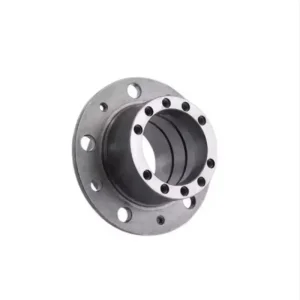
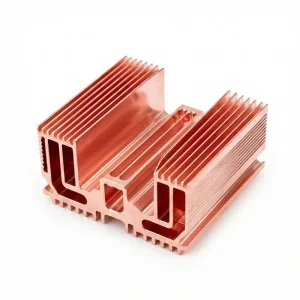
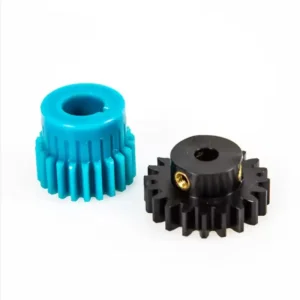
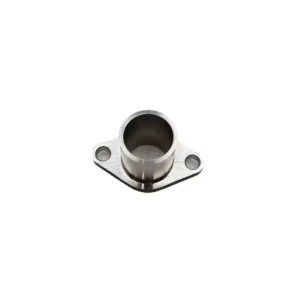
Custom Precision Stamping, Machining & Molding Solutions
Discover our complementary line of custom metal hardware, control panels, turned components, and precision molded assemblies.
Ready to Optimize Your Shielding Can Project?
Request an immediate engineering DFM evaluation, shielding effectiveness review, and factory-direct quote. Our engineering team responds within 24 hours under complete NDA protection.