
Featured Precision Hardware & Robot Component Assemblies
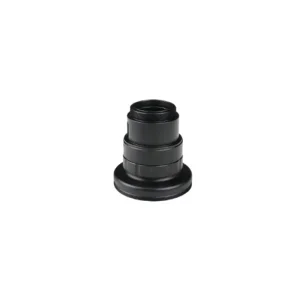
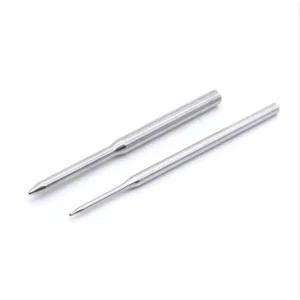
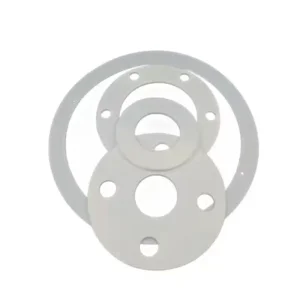
Explore our custom OEM manufacturing capabilities engineered for high-stress automation setups, sensory enclosures, and fluid control units.
Navigating Modern Robotic Welding Architecture & Supplier Ecosystems
In contemporary manufacturing, robotic welding systems have transitioned from simple repetitive automation tools into hyper-intelligent, sensor-driven physical AI platforms. Sourcing custom robotic welding suppliers and engineered sub-assemblies requires an analytical framework beyond unit pricing. Industrial buyers must evaluate multi-axis mechanical kinematics, seam tracking response rates, dynamic heat-input control, and structural integrity under fatigue stress.
This technical guide examines the critical engineering criteria for specifying custom robotic welding cells, integrating end-effectors, establishing robust Industry 4.0 supply chain linkages, and enforcing international welding quality compliance (ISO 3834-2, AWS D1.1, EN 1090).
E-E-A-T Verification & Engineering Rigor
Our engineering leadership holds direct field experience managing certified robotic fabrication plants across Europe, North America, and East Asia. Every technical parameter detailed in this whitepaper is validated by operational data, CMM (Coordinate Measuring Machine) dimensional reports, and NDT (Non-Destructive Testing) ultrasonic weld integrity assessments.
- Process Standards: GMAW (MIG/MAG), GTAW (TIG), Fiber Laser-Arc Hybrid Welding
- Kinematics & Motion Control: 6-DOF Articulated Arms + Synchronized 2-Axis Servo Positioners
- Quality Systems: Real-time arc sound/light spectrum analysis & laser vision correction
Global Enterprise Procurement Needs in Robotic Welding Systems
Evaluating Total Cost of Ownership (TCO), multi-vendor interoperability, and long-term modular scalabilities for fortune 500 manufacturing leaders.
Total Cost of Ownership (TCO)
Global procurement leaders look beyond initial hardware capital expenditure (CAPEX). True TCO analysis incorporates wire feed efficiency, shield gas consumption rates, consumable torch tip lifespan, electrical power factor optimization, and preventative maintenance downtime coefficients.
Kinematic & Controller Openness
Modern production floors require seamlessly integrated controllers capable of handling multi-axis external positioners (rotary tables, gantry linear tracks). Compatibility with major robot architectures (KUKA KRC, ABB IRC5/OmniCore, FANUC R-30iB) avoids proprietary software lock-in.
Strict Metallurgical Traceability
Enterprise buyers demand certified raw material mill certificates (EN 10204 3.1/3.2), full batch traceability for filler wires, real-time logging of voltage/current heat-input profiles, and 3D CMM point-cloud verification to ensure zero structural failures in the field.
| Welding Process Mode | Typical Heat Input (kJ/mm) | Travel Speed Range | Distortion Potential | Ideal Application Scenario |
|---|---|---|---|---|
| Standard GMAW (MIG/MAG) | 0.8 – 1.5 | 350 – 600 mm/min | Moderate to High | Heavy structural steel framing, thick plate machinery brackets |
| Pulsed GMAW / CMT | 0.3 – 0.7 | 500 – 1200 mm/min | Very Low | Thin sheet metal enclosures, aluminum battery trays, server chassis |
| Robotic GTAW (TIG) + Cold Wire | 0.5 – 1.2 | 150 – 400 mm/min | Moderate | Sanitary food-grade tubing, medical housings, aerospace ducting |
| Fiber Laser-Arc Hybrid | 0.1 – 0.4 | 1500 – 4500 mm/min | Negligible | Automotive chassis rails, shipbuilding deck panels, high-speed lines |
Macro Industry Applications & Engineered Systems
Tailored automated welding configurations designed to solve specific sector-based structural challenges.
Automotive & EV Battery Enclosures
Automotive EV production requires airtight, low-distortion welding on lightweight 6xxx-series aluminum alloys. Automated Cold Metal Transfer (CMT) robotic cells integrated with vision systems eliminate spatter, prevent burn-through on thin battery tray walls, and maintain IP67 liquid-tight seal geometry.
Heavy Machinery & Excavator Components
Excavator booms, crane arms, and hydraulic cylinder mounts operate under high dynamic fatigue loads. Heavy-duty robotic welding cells utilize multi-pass adaptive arc weaving software, dynamic voltage control, and pre-heat telemetry to achieve complete joint penetration (CJP) in thick high-strength steel (e.g., Hardox, Weldox).
Server Chassis & Electronic Enclosures
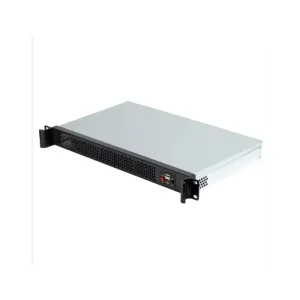
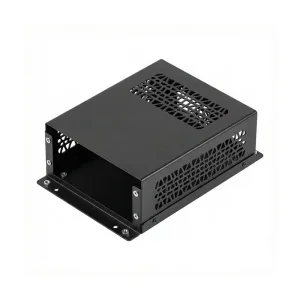
Data center server racks (such as 1U/2U Mini-ITX metal enclosures) demand micro-welding capabilities. High-frequency robotic TIG and fiber laser seam welders join ultra-thin galvanized sheet metal without warping mounting faces or disturbing precise PCB motherboard standoff locations.
Energy, Offshore & Fluid Control Systems
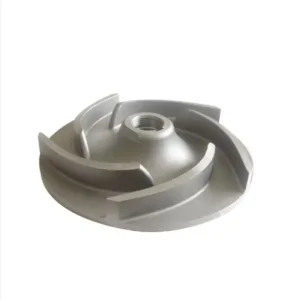
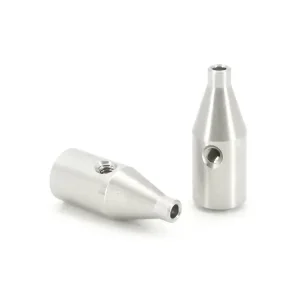
Pumping systems, centrifugal slurry pumps, and high-pressure thermowell housings operate in corrosive environments. Robotic orbital welding systems joined with high-nickel alloy filler metals (Inconel, Duplex SS) guarantee zero-defect welds capable of withstanding extreme hydrostatic pressure testing.
Supply Chain Resilience, Automation Density & Efficiency Advantages
How Guangdong’s hardware ecosystem combines advanced CNC precision, digital twin simulation, and scale to accelerate global delivery schedules.
Hyper-Dense Manufacturing Ecosystem
Situated in Shenzhen and the greater Pearl River Delta, custom robot component manufacturing leverages immediate access to raw material casting mills, precision CNC machining shops, surface treatment facilities (anodizing, electroplating, powder coating), and rapid tooling centers within a 50 km radius.
Digital Twin & Offline Offline Programming
Before striking a single physical arc, engineering teams execute 3D Digital Twin collision modeling and reachability simulations using RobotStudio, DELMIA, or Visual Components. This reduces physical fixture setup time by 75% and guarantees zero torch head collisions with complex workpiece geometries.
Scalable Capacity & Agile Tooling
China's manufacturing infrastructure enables seamless ramping from low-volume NPI (New Product Introduction) prototypes to high-volume continuous robotic production. Standardized quick-change pneumatic clamping fixtures (Zero-Point Clamping Systems) ensure rapid job turnaround times with sub-10-micron positioning accuracy.
Supply Chain Resilience Insight:
By integrating in-house CNC post-machining with automated welding cells, lead times for complex assemblies (such as cast motor housings, hydraulic solenoid valve bodies, and customized lens barrels) are reduced from 12 weeks down to 3–4 weeks, mitigating global market bottlenecks.
The Future of Robotic Welding (2025–2030 Outlook)
Key technological shifts redefining automated joining processes over the next decade.
1. AI-Driven Adaptive Real-Time Seam Correction
Legacy robotic welding relied on rigid, pre-programmed paths. Modern and next-gen systems incorporate real-time High-Dynamic-Range (HDR) optical sensors and AI vision algorithms. As the robot moves along a joint, the vision system measures thermal gap variation, component misplacement, and bevel angle discrepancies at 100 Hz, automatically modifying wire feed speed, torch oscillation frequency, and robot velocity on the fly.
2. High-Power Fiber Laser-Arc Hybrid Synergy
Combining deep-penetration fiber laser optics (up to 20 kW) with conventional GMAW arcs allows single-pass welding of heavy structural plates up to 20 mm thick without beveling. This hybrid synergy delivers travel speeds up to 4 times faster than traditional MIG welding while cutting shield gas consumption by half.
3. Autonomous Collaborative Robots (Cobots)
Lightweight, power-and-force-limited cobots featuring hand-guide lead-through programming enable rapid deployment in low-volume, high-mix job shops. Cobot welding cells eliminate complex safety fencing through integrated area-scanning LiDARs, allowing human operators to safely load and unload workpieces alongside operating welding arms.
4. IIoT Telemetry & Predictive Quality Analytics
Every robotic weld cell functions as a data node within the enterprise MES/ERP network. Edge computing modules capture weld voltage, current, wire feed motor torque, and shielding gas flow rate at millisecond intervals. Machine learning algorithms analyze these waveforms to flag potential porosity or lack-of-fusion defects before parts leave the cell.
International Quality Standards & Localized Support SLA
Ensuring global regulatory adherence, seamless cross-border engineering collaboration, and long-term service stability.
International Welding Certifications
Manufacturing partners must maintain ISO 3834-2 (Quality requirements for fusion welding of metallic materials), AWS D1.1/D1.2 structural welding codes, EN 1090 execution of steel and aluminum structures, and ISO 15614 WPQR (Welding Procedure Qualification Record) documentation.
Localized Field Engineering & SLA
To bridge overseas procurement gaps, leading Chinese suppliers establish regional technical service centers in Europe and North America. Localized engineering support provides onsite installation commissioning, DFM engineering consultation, fast-turnaround spare parts stocking, and 24-hour service level agreements (SLA).
Compliance & Export Packaging
All exported sub-assemblies undergo strict surface protection protocols: anti-corrosion VCI wrapping, custom CNC-milled foam cradles, and ISPM 15 compliant heat-treated wooden crates. Full RoHS, REACH, and Conflict Minerals declarations accompany every international shipment.
Engineering & Procurement FAQ
Detailed technical answers to common questions raised by procurement officers, hardware design leads, and plant managers.
How do custom robotic welding suppliers ensure zero weld spatter on sensitive cosmetic parts?
What positioning accuracy is required for automated robotic welding fixtures?
How are weld defects detected and prevented in automated volume production?
1. In-Process Monitoring: High-speed arc voltage/current telemetry flags anomalies in real time.
2. Visual Laser Seam Profilers: 3D laser line scanners check bead geometry, fillet leg lengths, and undercut immediately behind the torch.
3. Non-Destructive Testing (NDT): Dye penetrant testing (PT) and ultrasonic testing (UT) are conducted on random batch samples or 100% of critical structural joints.
What CAD/CAM file formats are required for custom robotic cell design and DFM analysis?
Can robotic welding cells handle dissimilar metal joining (e.g., Copper to Aluminum or Steel to Stainless)?
What lead times should be expected for custom OEM turned, cast, and welded sub-assemblies?
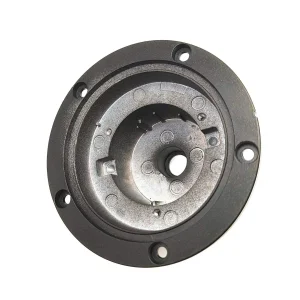
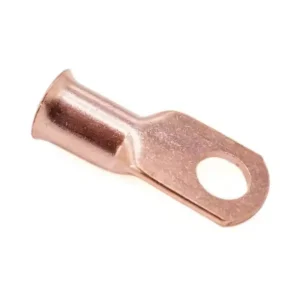
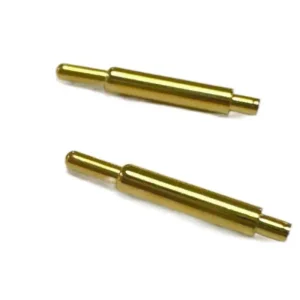
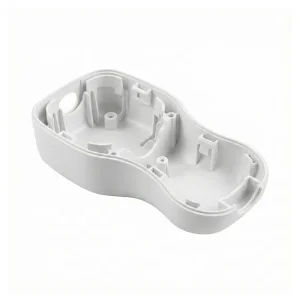
Precision Turned, Cast & Stamped OEM Solutions
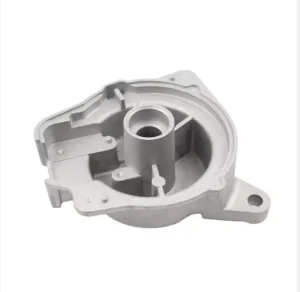
Expand your automated assembly capability with our custom components, engineered to meet tight tolerances down to ±0.005 mm.
Accelerate Your Industrial Manufacturing Program Today
Request a comprehensive DFM manufacturability evaluation and competitive quotation from our senior engineering team within 24 hours. NDA protected & direct factory collaboration.