High-Precision Injection Molded Components & Custom Tooling
Engineered to strict SPI standards, our custom plastic and hybrid tooling components serve demanding global OEM applications.
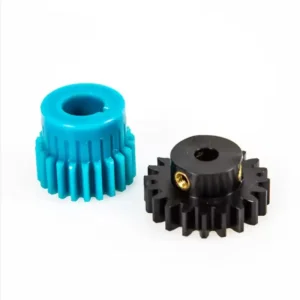
OEM Custom Precision Injection Molded POM Plastic Gears
View Details & Specs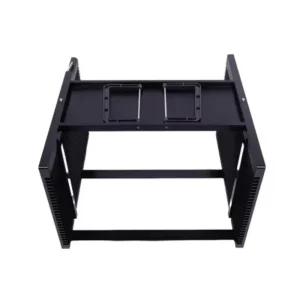
8-Inch CNC Machined Aluminum Semiconductor Wafer Carrier
View Details & Specs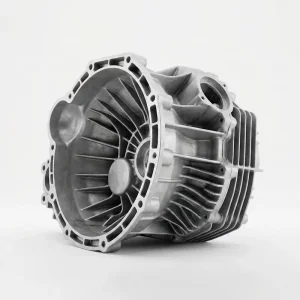
Aluminum Die-Cast Transmission Housing Precision CNC Machining
View Details & Specs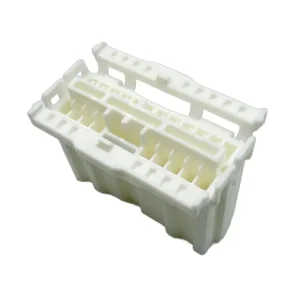
High-Precision White PBT Automotive Connector Housing
View Details & Specs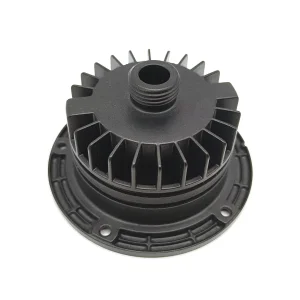
Custom Die Cast Aluminum Finned Housings & End Caps
View Details & Specs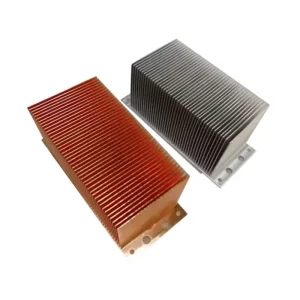
High-Performance Square Aluminum & Copper Skived Fin Heat Sink
View Details & Specs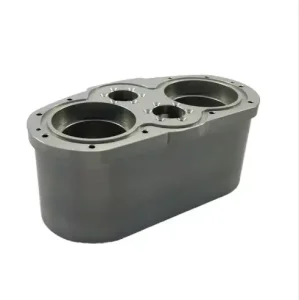
Custom 5-Axis CNC Machined Joint Base & Gearbox Shell
View Details & Specs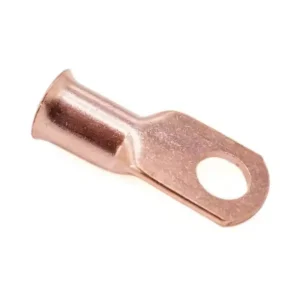
Custom Tinned Copper Lug Ring Crimp Terminal Connector
View Details & SpecsStrategic Engineering of High-Precision Plastic Molds & Global Supply Networks
Navigating the complexities of modern polymer processing requires a synergy between material science, advanced toolmaking algorithms, and strict quality verification protocols.
In today's fast-moving manufacturing environment, procuring custom plastic tooling is no longer just a purchasing transaction—it is a core engineering partnership. As OEM components grow smaller, structurally more intricate, and functionally more demanding, global buyers in North America, Europe, and Asia-Pacific must balance rapid market launch with high tooling reliability.
The Architecture of Industrial-Grade Mold Making
Plastic injection tooling serves as the backbone of mass production. Creating a reliable tool requires addressing key variables long before metal cutting begins. High-precision tooling relies on structural stability under intense clamping pressures (often exceeding 500 tons) and thermal consistency across millions of thermal cycles.
- SPI Class Specification Compliance: Custom tooling built precisely to SPI (Society of Plastics Industry) standards—from Class 105 rapid prototype molds (under 500 cycles) to Class 101 ultra-high production tooling capable of exceeding 1,000,000 cycles.
- Optimized Tool Steel Selection: Precision matching of core/cavity inserts with certified tool steels including ASSAB S136 (stainless mirror polish), NAK80, H13 (hardened to HRC 48-52), P20, and 1.2344 to prevent wear when running glass-filled engineering resins.
- Advanced Gating & Runner Systems: Integration of cold runner systems or fully balanced hot runner manifolds (Yudo, Mold-Masters, Synventive, Incoe) featuring pneumatic or hydraulic valve gates to eliminate weld lines and minimize runner waste.
Procuring tooling directly from experienced China mold factories offers more than just lower labor costs. The real advantage lies in their rapid tool-building capacity, access to vast tooling steel supply chains, and hands-on DFM expertise developed across thousands of complex mold projects.
Technological Innovations Reshaping Plastic Tooling (2026–2030)
Smart manufacturing, AI-assisted flow dynamics, and additive tooling inserts are fundamentally changing quality standards for custom plastic injection molds.
AI-Powered Moldflow Simulation
Predictive algorithms analyze plastic melt behavior, shear rates, volumetric shrinkage, and potential air traps. By detecting structural defects virtually, engineers eliminate expensive physical mold rework before steel cutting begins.
Conformal Cooling Inserts
Utilizing Direct Metal Laser Sintering (DMLS) 3D printing technology, internal cooling channels follow the exact geometric contour of the part. This cuts molding cycle times by 20% to 40% while preventing part warpage.
Liquid Silicone Rubber (LSR) Tooling
Driven by medical and automotive electrification demand, high-precision LSR and multi-shot (2K/3K) overmolding tooling achieves flash-free production under tight temperature-controlled vulcanization parameters.
| Tooling Standard | Target Lifetime (Shots) | Core & Cavity Steel Grade | Recommended Resin Types | Typical Application |
|---|---|---|---|---|
| SPI Class 101 | 1,000,000+ | S136 (HRC 48-52), H13, 1.2344 | Abrasive/Corrosive (PA66+30%GF, PBT, PEEK) | Automotive Connectors, High-Volume Medical |
| SPI Class 102 | Up to 1,000,000 | 420 Stainless, NAK80, 718H | Engineering Resins (ABS, PC, POM, Nylon) | Consumer Electronics Housings, Power Tools |
| SPI Class 103 | Up to 500,000 | P20, 718H, Pre-hardened Steel | Standard Commodity Resins (PP, PE, PS) | Industrial Enclosures, Appliance Housings |
| SPI Class 104 | Up to 100,000 | P20, Mild Steel, QC-10 Aluminum | Low-Abrasion Resins (ABS, HIPS, TPE) | Low-Volume Commercial Components |
| SPI Class 105 | Under 500 | Aluminum 6061 / 7075, Soft Steel | Prototype Resins (All types) | Rapid Engineering Verification (T1 Sampling) |
Localized Application Scenarios & Macro-Industry Solutions
Custom plastic tooling underpins critical subsystems across modern global industries. Here is how tailored moldmaking delivers targeted performance.
Automotive & E-Mobility Electrical Systems
High-density multi-cavity tooling for PBT and PA66 automotive connector housings (as seen in our featured products). Tooling features slide mechanisms with tolerances tight enough to prevent flash across tiny terminal pin pockets, ensuring reliable moisture and vibration seals in electric vehicles.
Semiconductor & Cleanroom Handling Equipment
High-precision tooling designed to process ESD-safe (Electrostatic Discharge) engineering polymers such as PEEK, PEI (Ultem), and modified POM. Tool layouts minimize internal material stress, producing dimensionally stable wafer carriers, chip trays, and component handling fixtures that remain flat across high thermal cycles.
Medical Devices & Diagnostic Hardware
ISO 13485 compliant mold building for medical-grade polycarbonate, polypropylene, and Liquid Silicone Rubber (LSR). Specialized mold designs use electric ejector drives and polished, mirror-finish cores (SPI-A1) to prevent particulate contamination and simplify cleanroom processing.
Robotics, Drones & Industrial Automation
Tooling for high-strength, lightweight functional structural elements including gearboxes, joint frames, and drone motor mounts. Molds combine complex 3D parting lines with side-action lifters to mold intricate undercut features into tough, glass-filled engineering thermoplastics.
The Strategic Advantages of China's Plastic Tooling Ecosystem
How leading Shenzhen and Guangdong toolmakers deliver superior precision, fast execution, and favorable cost structures for global OEM buyers.
Global procurement directors evaluate mold suppliers using three core metrics: Quality Assurance, Lead Time Dependability, and Total Cost of Ownership (TCO). Chinese tool factories—specifically across the Pearl River Delta manufacturing hub—offer clear operational strengths aligned with these goals.
1. Integrated Tooling Supply Chain
From specialized steel suppliers and heat treating facilities to custom texture shops (Mold-Tech, VDI) and hot runner producers, every component of the mold supply chain is located within a 50km radius. This geographic density drastically reduces toolmaking lead times.
2. Engineering Agility & Rapid DFM
Chinese export toolmakers maintain dedicated engineering teams ready to review client CAD files around the clock. Detailed Design for Manufacturability (DFM) analyses—including draft angle checks, wall thickness evaluations, and gating recommendations—are typically completed within 24 hours.
3. Comprehensive Quality Verification
Leading export factories operate climate-controlled CMM inspection labs equipped with Zeiss and Hexagon measuring equipment. Every tool export includes full dimensional verification reports, steel mill certificates, heat treat hardness logs, and full T1 sample documentation.
Protecting client IP is central to a successful global sourcing strategy. Trusted export toolmakers enforce strict security protocols, including non-disclosure agreements (NDAs), secure isolated data servers, and direct factory-to-buyer communications that bypass unnecessary third-party brokers.
Frequently Asked Questions by Global Engineering & Sourcing Teams
In-depth answers addressing key procurement, engineering, and manufacturing questions for custom plastic injection tooling.
What is the typical lead time for custom plastic injection mold building?
Lead times depend heavily on mold size, structural complexity, cavitation count, and surface finish requirements. For small to medium-sized prototype or low-volume tools (SPI Class 104/105), T1 samples are typically delivered in 15 to 25 calendar days. Complex, multi-cavity production molds (SPI Class 101/102) with side actions, lifters, and hot runner manifolds usually take 35 to 50 days from DFM and mold design approval.
How do engineers select the right steel grade for injection mold cores and cavities?
Steel selection balances resin aggressiveness, required mold life, surface finish targets, and project budget. For non-corrosive commodity resins (PP, ABS, PS), P20 or 718H steel offers reliable performance up to 500,000 shots. When running abrasive glass-filled materials (e.g., PA66-GF30) or corrosive resins (PVC, clear PC), hardened steels like ASSAB S136, H13, or 1.2344 (heat-treated to HRC 48–54) are essential to prevent premature gate erosion and cavity wear.
What critical feedback is included in a factory DFM (Design for Manufacturability) review?
A detailed factory DFM review analyzes nominal wall thickness uniformity, identifies potential sink marks and draft angle issues, evaluates parting line placement, and suggests optimal gate locations. It also includes moldflow simulations to flag potential air traps or weld lines, allowing design adjustments before committing to steel machining.
How do export toolmakers ensure international dimensional standards and quality control?
Reputable Chinese mold factories use high-precision CNC machinery (such as Makino and Yasda) along with advanced wire EDM systems (Sodick, AgieCharmilles). Quality validation relies on coordinate measuring machines (CMM) in climate-controlled labs, providing full First Article Inspection (FAI) reports, steel hardness certifications, and step-by-step trial sample parameters (T1, T2) aligned with ISO 9001 quality systems.
What are the main advantages of running production molds directly in China vs. exporting the tooling?
Both options offer clear strategic benefits. Exporting tools allows OEMs to run production in localized facilities near final assembly lines. However, running both mold manufacturing and part production directly with the Chinese supplier reduces initial tooling costs, ensures fast mold maintenance and engineering modifications, and leverages competitive unit pricing for high-volume parts.
Explore Additional OEM Tooling & Machined Products
Discover our full product range spanning plastic injection molding, precision turned components, and metal casting assemblies.
OEM Custom Tinned Copper Lug Ring & Metal Stamping Plug
View Details & Specs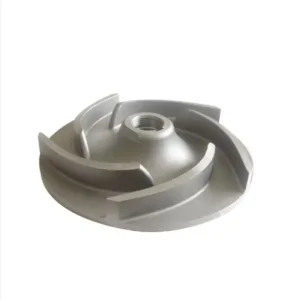
Stainless Steel Investment Casting Centrifugal Pump Open Impeller
View Details & Specs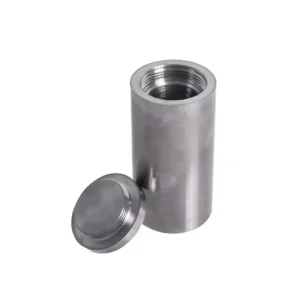
ODM Customized Tungsten Carbide Shielded Canister with Lid
View Details & Specs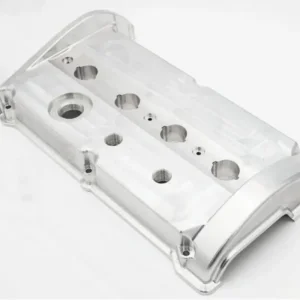
High-Precision CNC Machined 7075 Aluminum Valve Cover
View Details & Specs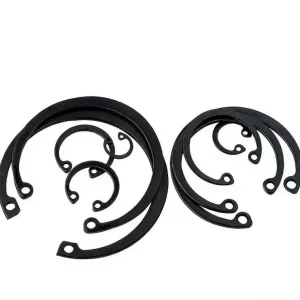
Premium DIN 471 C-Type External Retaining Rings Fasteners
View Details & Specs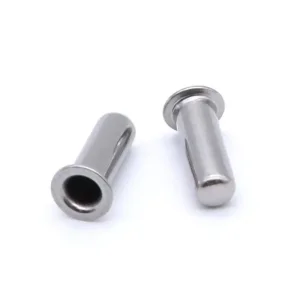
Custom SS316 Deep Drawn Closed-End Flanged Sensor Housing
View Details & Specs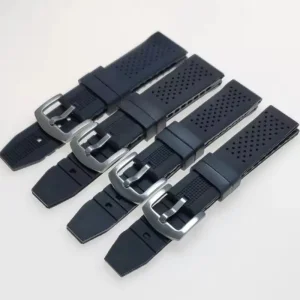
Universal Breathable Silicone Sport Watch Strap (18mm-24mm)
View Details & Specs