
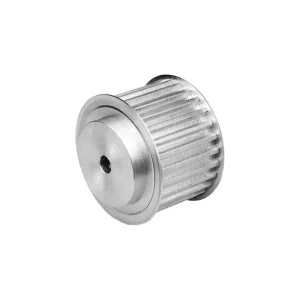
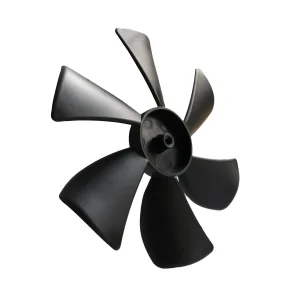
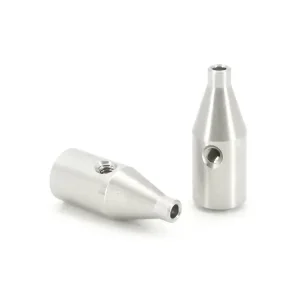
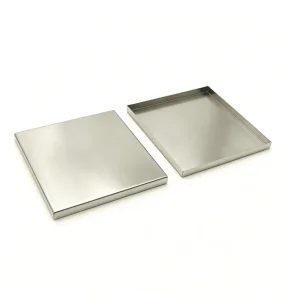
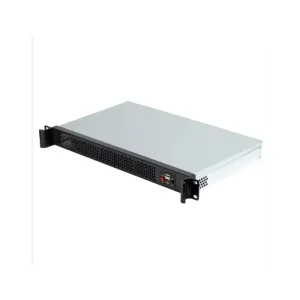
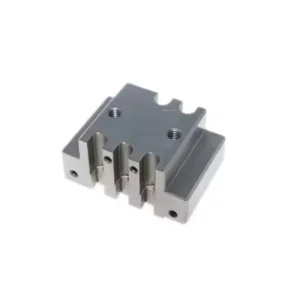
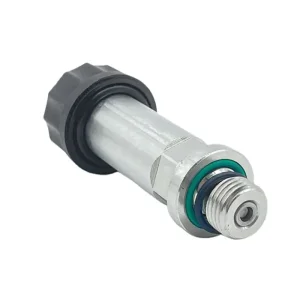
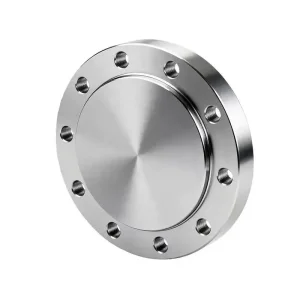
Primary Machined & Molded OEM Component Lineup
Explore our core custom manufacturing capabilities, engineered for precision, high structural density, and rigorous international quality standards.
1. Executive Summary & Global HPDC Market Dynamics (2025–2032)
The global high pressure die casting (HPDC) manufacturing landscape is undergoing a structural paradigm shift driven by light-weighting imperatives in Electric Vehicles (EVs), strict carbon-neutral legislation, and the miniaturization of high-performance industrial power units. High Pressure Die Casting has evolved far beyond basic metal pouring; it is now an exact physical-chemical process combining computational fluid dynamics (CFD), multi-cavity thermal balancing, and ultra-high dynamic shot velocity (up to 50 m/s) under hydraulic clamping forces ranging from 400 to over 3,500 metric tons.
As a leading custom high pressure die casting exporter and OEM tooling specialist based in Shenzhen, Sunmy Hardware bridges the gap between complex engineering concepts and reliable mass production. Global enterprise buyers—ranging from Tier-1 automotive integrators to industrial robotics OEMs—demand non-porous casting structures, near-zero dimensional deviation, and total compliance with international material standards (ISO, DIN, ASTM, JIS). HPDC allows for complex geometries, thin wall sections (down to 1.2 mm), and integrated functional bosses that eliminate expensive multi-part assembly processes.
Information Gain Key Insight: Total Cost of Ownership (TCO) in Global HPDC Procurement
Traditional procurement decisions often focus solely on unit price per casting piece. However, enterprise-grade Total Cost of Ownership analysis reveals that internal gas porosity, die thermal fatigue, and poor post-machining datums account for over 65% of hidden downstream costs. Partnering with an exporter utilizing integrated vacuum-assisted die casting and 5-axis CNC inline machining reduces secondary scrape rates from an industry average of 4.2% down to less than 0.15%.
2. Metallurgical Engineering & Material Matrix
Selecting the optimal non-ferrous alloy formulation tailored to mechanical strain, thermal dissipation, and corrosion resistance requirements.
| Alloy Grade | Alloy Family | Tensile Strength (MPa) | Yield Strength (MPa) | Thermal Conductivity (W/m·K) | Primary Industrial Applications |
|---|---|---|---|---|---|
| A380 (ANSI/AA) | Aluminum (Al-Si-Cu) | 325 MPa | 160 MPa | 96 W/m·K | Electronic enclosures, motor end bells, general hardware |
| ADC12 (JIS H5302) | Aluminum (Al-Si-Cu) | 310 MPa | 150 MPa | 92 W/m·K | Automotive transmission covers, power tool housings |
| AlSi9Cu3 (EN AC-46000) | Aluminum (Al-Si-Cu) | 340 MPa | 170 MPa | 105 W/m·K | Heavy engine blocks, high-load structural brackets |
| AlSi10Mg(Fe) | Aluminum (Al-Si-Mg) | 350 MPa (T6) | 210 MPa | 110 W/m·K | EV inverter cold plates, high-ductility crash boxes |
| Zamak 3 (ANSI Z35531) | Zinc (Zn-Al) | 283 MPa | 209 MPa | 113 W/m·K | High-precision thin-wall connectors, door locks, micro gearboxes |
| AZ91D (ASTM B94) | Magnesium (Mg-Al-Zn) | 230 MPa | 160 MPa | 72 W/m·K | Ultra-lightweight drone frames, handheld medical housings |
Advanced Defect Mitigation: Vacuum-Assisted HPDC Technology
A primary structural hurdle in conventional high pressure die casting is gas entrapment. During the high-velocity injection phase (shot velocity reaching 30 to 50 m/s), turbulent flow forces ambient air and vaporized die lubricants into liquid metal pockets, leading to internal porosity. This prevents structural components from undergoing T6 heat treatment or structural welding due to blistering risks.
To eliminate this challenge, our production facility deploys state-of-the-art Super-Vacuum High Pressure Die Casting (V-HPDC). By evacuating the die cavity pressure down to less than 30 mbar prior to liquid metal injection, gas entrapment is virtually eliminated. This enables our custom aluminum die castings to achieve yield elongation rates exceeding 7% and allows structural parts to undergo T6 solution heat treatment for maximum tensile strength.
3. Design for Manufacturability (DFM) Engineering Guidelines
Empowering design engineers to optimize die casting geometries for lower tooling costs and extended die life cycles.
Uniform Wall Thickness
Maintaining nominal wall thicknesses between 1.5 mm and 3.5 mm prevents localized shrinkage voids, reduces cooling cycle times by up to 25%, and ensures consistent grain structure throughout the part cross-section.
Optimal Draft Angles
Incorporating draft angles of 1.0° to 2.0° on internal cores and 0.5° to 1.5° on outer cavity walls guarantees clean part ejection without drag marks, galling, or core damage across 150,000+ die shots.
Ribs, Bosses & Radii
Design internal structural support ribs at 60% of adjacent wall thickness with generous internal fillets (R ≥ 1.5 mm). This eliminates stress concentration hotspots and prevents sink marks on cosmetic outer surfaces.
4. Macro Industry Solutions & Turnkey Ecosystem
Custom HPDC product manufacturing for specialized, demanding international market sectors.
Automotive & EV Systems
High-integrity lightweight structural parts including EV motor housings, battery module frames, power inverter enclosures, and steering knuckle brackets compliant with IATF 16949 standards.
5G Telecom & Electronics
Thin-wall aluminum heat-sink enclosures featuring intricate fin architectures designed for high thermal dissipation (up to 160 W/mK) and IP67/IP68 weather-sealed outdoor installations.
Industrial Robotics & Automation
High-rigidity articulated robot arm links, servo motor housings, and precision reducer gear casings machined on 5-axis CNC centers with bearing bore tolerances held within ±0.006 mm.
5. Quality Assurance, Inspection Metrology & Global Compliance
For custom die casting exports destined for Western markets, physical quality verification is non-negotiable. Sunmy Hardware operates a dedicated Quality Control metrology center equipped with industrial-grade inspection systems:
- Real-Time Industrial X-Ray Non-Destructive Testing (NDT): 100% volumetric inspection for internal porosity, cold shuts, and oxide inclusions according to ASTM E505 reference radiographs.
- 3D Coordinate Measuring Machine (CMM): ZEISS CMM systems with contact probe scanning accurate to 0.0025 mm, providing complete dimensional layout reports (FAI reports) against 3D CAD models.
- Optical Emission Spectrometer: Melt-by-melt chemical composition testing to guarantee strict compliance with elemental limits (Si, Cu, Mg, Fe, Zn content).
- Salt Spray Corrosion Testing Chamber: ASTM B117 / ISO 9227 neutral salt spray testing exceeding 720 hours for passivated, anodized, E-coated, or powder-coated custom components.
Traceability & Compliance Guarantees
Every export shipment from Sunmy Hardware includes full lot traceability, material mill test certificates (EN 10204 3.1), REACH and RoHS compliance certificates, and First Article Inspection (FAI) packages under PPAP Level 3 protocols.
6. Global Supply Chain Management & Localized Support
Cross-border procurement of high pressure die cast components requires robust risk management against currency fluctuations, raw material price shifts (LME Aluminum indices), and shipping lead times. Sunmy Hardware mitigates these factors through localized procurement frameworks:
DFM & Quote SLA
Complete DFM engineering analysis and accurate multi-option quotation delivered within 24 to 48 hours upon receipt of STEP/IGES files.
Rapid Die Tooling
Hardened steel mold construction (using SKD61, H13, or Dievar steels) completed in 25 to 35 days, with T1 initial sample approval.
VMI & Safety Stock
Vendor Managed Inventory (VMI) arrangements and safety stock buffer agreements for seamless JIT (Just-In-Time) assembly line feeding.
7. Technical Roadmap & Future Industry Trends (2026–2030)
Looking ahead, the high pressure die casting sector is converging with digital twin modeling, AI-assisted real-time shot sleeve pressure feedback, and sustainable metallurgy. Key technological milestones shaping our manufacturing line include:
- Giga-Casting & Structural Integration: Transitioning multi-component assembly weldments into single large-format die castings to reduce total vehicle weight and assembly complexity.
- Green Aluminum & Recycled Alloys: Utilizing secondary aluminum alloys with up to 80% lower embodied carbon footprints while maintaining high fatigue limits through electro-magnetic melt refining.
- Additive Tooling Inserts: Incorporating 3D-printed conformal cooling channels in steel mold inserts to achieve uniform die temperature fields, reducing cycle times by 30% and doubling mold fatigue life.
Frequently Asked Questions (FAQ)
Comprehensive technical and commercial answers for OEM buyers and engineering leads.
What is the standard tooling lead time for custom aluminum high pressure die casting dies?
Standard lead time for rapid prototyping die cast tooling is approximately 20 to 25 days. Production-grade multi-cavity hardened steel dies (H13/Dievar steel, 150,000 to 300,000 shots life) typically require 30 to 40 days, including mold flow analysis, CNC mold carving, EDM, and T1 sample submission with full FAI inspection reports.
How does Sunmy Hardware eliminate porosity in critical pressure-tight castings?
We utilize Super-Vacuum Die Casting (cavity pressure < 30 mbar), optimized multi-runner gating designs based on MAGMA/ProCAST simulations, squeezing pins for thick boss sections, and real-time shot sleeve speed profiles. Every pressure-tight component undergoes 100% X-Ray NDT inspection and hydrostatic leak testing prior to export.
What post-machining tolerances can be held on die-cast parts?
While standard as-cast tolerances follow ISO 8062-3 Grade DGBG 4 to 6 (typically ±0.1 mm to ±0.3 mm depending on dimensions), our secondary 4-axis and 5-axis CNC machining centers routinely achieve critical hole centers, bearing bores, and flat mating surfaces down to ±0.005 mm (5 microns).
Which surface finishing options are available for outdoor or anti-corrosion applications?
We offer a complete range of in-house and certified partner surface treatments, including Chromate Conversion Coating (RoHS compliant TCP/SurTec 650), Architectural Powder Coating, Electrophoretic Deposition (E-coating), Anodizing (for specific low-copper alloys), and wet spray painting passing 720+ hours of salt spray testing.
How are customer CAD files and Intellectual Property (IP) protected?
We enforce strict corporate IP security policies. Non-Disclosure Agreements (NDAs) are executed prior to reviewing any 3D drawing or CAD file. Design data is stored on encrypted local engineering servers, and direct communication occurs exclusively between your engineering team and our audited factory staff, eliminating unverified middleman broker risks.
What are the minimum order quantities (MOQ) for custom high pressure die casting projects?
For low-volume production or rapid tooling validation, we support short runs starting at 500 units. For mass production multi-cavity tooling, standard economic order quantities typically range from 1,000 to 50,000+ units per batch depending on part volume, alloy grade, and automation level.
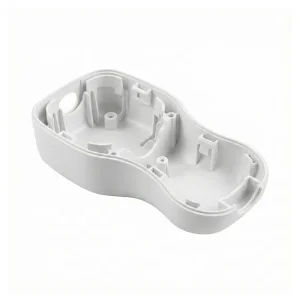
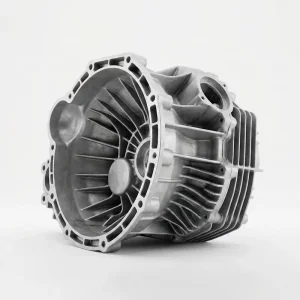
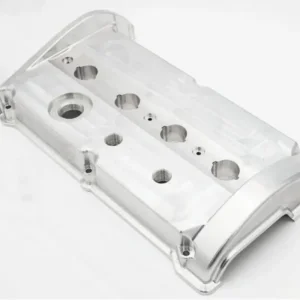
Secondary Manufacturing & Specialty OEM Product Catalog
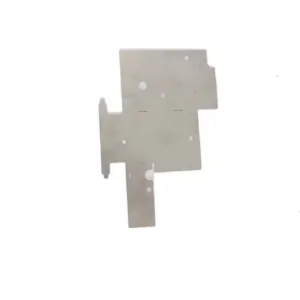
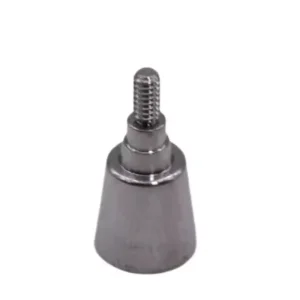
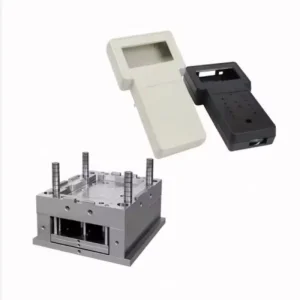
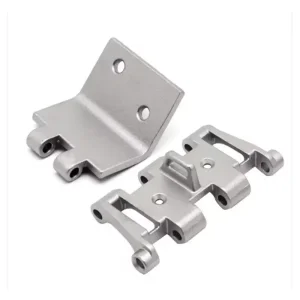
Complete cross-industry custom production solutions including medical enclosures, die-cast housings, precision brackets, and welded structural frames.
Accelerate Your HPDC Project with DFM Expertise
Submit your 3D STEP or CAD files today. Our Senior Engineering Team will provide a thorough Design for Manufacturability (DFM) assessment and detailed quotation within 24 hours.
Contact Our Engineering Team