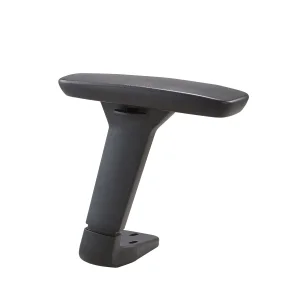
Precision Engineered Component Portfolio
Featured custom metal, hybrid, and specialized polymer hardware solutions engineered for high-reliability applications.
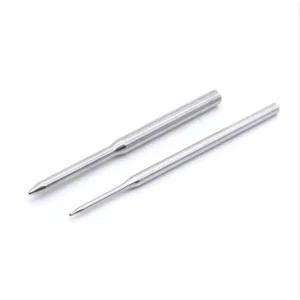
OEM Stainless Steel Waterproof Sensor Probe Housing Thermowell
View Specifications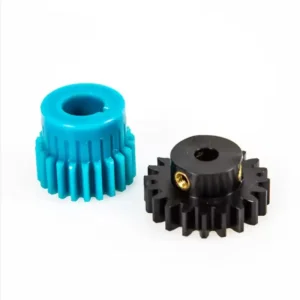
High-Quality Custom POM Plastic Gears Precision Injection Molding
View Specifications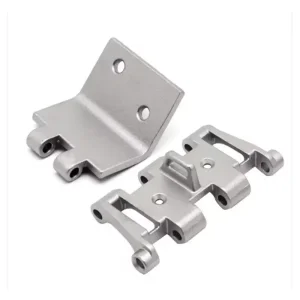
Custom Stainless Steel Investment Casting & Machining Parts
View Specifications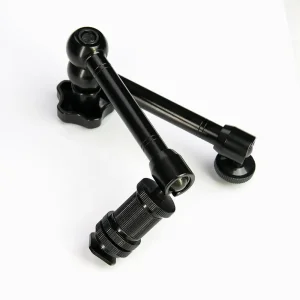
High-Quality 7-Inch CNC Aluminum Articulating Magic Arm
View Specifications
Custom Laser Cut Heavy Equipment Control Panel Assemblies
View Specifications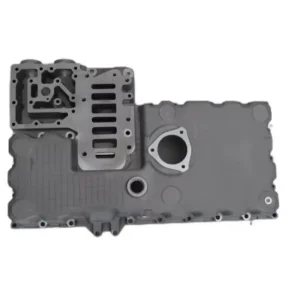
Premium Low-Pressure Cast Aluminum Transmission Oil Pan
View Specifications
High-Precision 5-Axis CNC Machined Robot Joint & Housing Parts
View Specifications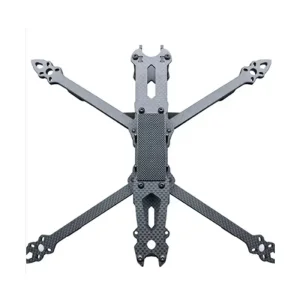
Custom CNC Machined Carbon Fiber Quad/Hexacopter Drone Frames
View SpecificationsIndustrial Whitepaper: Advanced Gas-Assisted Injection Molding (GAIM) Engineering
Deconstructing next-generation hollow-core polymer processing, nitrogen fluid dynamics, and Total Cost of Ownership (TCO) optimization for Tier-1 OEM suppliers.
1. Executive Summary & Macro-Industrial Context
In modern high-precision thermoplastic manufacturing, engineering teams face a perpetual dilemma: how to maximize structural rigidity and section modulus without introducing massive wall thickness variations, internal void stress, surface sink marks, or excessive part mass. Traditional high-pressure injection molding enforces strict limitations on wall thickness (typically under 4mm to prevent warpage, differential shrinkage, and prolonged cooling cycles).
Gas-Assisted Injection Molding (GAIM) represents a definitive engineering paradigm shift. By introducing pressurized inert nitrogen gas ($N_2$) into the core of molten polymer channels during the packing phase, GAIM creates internal hollow cavities that act as continuous, uniform structural beams. This whitepaper systematically evaluates how top-tier Custom Gas Assisted Molding Manufacturers & Factories leverage advanced pneumatic controls, specialized tool steel geometry, and real-time mold flow melt-front analytics to achieve unmatched dimensional stability, drastic material savings, and superior aesthetic finishes for global enterprise buyers.
Structural Integrity
Eliminates residual thermal stress and sink marks on thick rib intersections, creating uniform hollow cross-sections with maximum section modulus.
Cycle Time Compression
Hollowed internal cores allow polymer walls to cool rapidly from both the outer cavity steel and the inner pressurized nitrogen boundary.
Clamping Tonnage Reduction
Gas pressure acts locally inside the cavity melt stream, reducing required press clamping force by 30% to 50% compared to traditional packing.
Global Enterprise Procurement & Sectoral Demand Dynamics
Analyzing global purchasing patterns, structural requirements, and total cost of ownership (TCO) optimization across major OEM verticals.
2. Procurement Vectors Across Key Global Industries
Global procurement directors within automotive, medical, consumer electronics, and industrial logistics are actively shifting high-spec polymer components to gas-assisted factories. The strategic drivers vary by industry vertical:
- Automotive Exterior & Interior Systems: OEM buyers require thick structural components such as exterior door handles, roof rack stanchions, rearview mirror brackets, seat structural frames, and tailgate trim modules. GAIM enables sleek, ergonomic thick-walled geometry without sink marks or warpage while complying with strict lightweighting standards (reducing vehicle mass to boost fuel economy and EV range).
- Industrial & Office Furniture Engineering: High-end ergonomic chair armrests, base star legs, heavy-duty handles, and modular desk framing components utilize internal gas channels to achieve high load-bearing capacity with up to 40% less resin usage.
- Commercial Appliances & Consumer Goods: Dishwasher door structural ribs, washing machine balance rings, power tool handles, and premium appliance bezels demand flawless class-A surface finishes directly out of the mold, avoiding secondary painting or filling processes.
- Medical Equipment Enclosures & Covers: Large diagnostic scanner covers, mobile cart chassis, and fluid manifold blocks benefit from continuous gas channels that maintain exact planar tolerances and structural stiffness under heavy dynamic loads.
Economic & Cost-Benefit Matrix for High-Volume Manufacturing
When assessing suppliers and custom gas-assisted molding factories, procurement teams must look beyond initial tooling costs to evaluate the lifetime Total Cost of Ownership (TCO):
| Economic Factor | Standard Injection Molding | Gas-Assisted Injection Molding (GAIM) | Direct Procurement Impact |
|---|---|---|---|
| Resin Volume / Part Weight | 100% Solid Mass (High Material Consumption) | 60% - 75% Mass (35-40% Hollow Core) | Significant raw resin cost reduction per unit (15-30% unit cost savings) |
| Cooling Phase Duration | Extremely long for thick sections (50s - 120s) | Reduced by 30% to 50% via hollow geometry | Higher daily press output per machine shift; lower labor overhead |
| Required Machine Tonnage | High Clamp Tonnage (e.g., 1000-Ton press) | Medium Clamp Tonnage (e.g., 500-Ton press) | Lower hourly press rate, reduced tool wear, smaller footprint requirements |
| Surface Defect Rate | High sink mark risk on ribs & thick walls | Near 0% sink marks due to internal gas pack | Dramatically reduced scrap rates and zero cost on post-mold filling/polishing |
| Tooling Capital Expense | Baseline standard mold build | +10% to 18% for gas pins & specialized runner layout | Tooling investment fully amortized within initial 15,000–30,000 unit production run |
Technical Architecture & Process Engineering Roadmap
A step-by-step technical breakdown of the nitrogen injection physical sequence and specialized tooling hydraulics.
3. Precision Gas Injection Process Mechanics
Achieving defect-free gas-assisted molded parts requires precise coordination between the injection molding press, the nitrogen compression control unit, and the internal tool gas needles or nozzle valves. The manufacturing process follows five distinct, tightly controlled phases:
Short Shot Polymer Injection
The press injects a precise volumetric short-shot (70% - 95% filled) of molten resin into the mold cavity, leaving calculated void spaces for gas expansion.
Nitrogen Gas Penetration
Controlled high-pressure Nitrogen (100–350 Bar) is injected through specialized gas pins or the machine nozzle, penetrating the molten core along paths of least resistance.
Secondary Gas Packing Phase
The expanding gas drives the melt front to complete cavity filling, pressing the outer skin tightly against tool steel surfaces to freeze pristine surface details.
Internal Pressure Holding & Cooling
Constant internal gas pressure is held while the thin polymer skin solidifies. The hollow center dramatically accelerates heat conduction out to cooling channels.
Gas Exhaust & Part Ejection
Gas pressure is vented back into recovery systems or exhausted. The mold opens, and mechanical ejector pins safely release the rigid, hollowed component.
Advanced Technical Variants: Internal vs. External & Water-Assisted Molding
Leading manufacturers utilize three specialized technological routes depending on part geometry and aesthetic requirements:
- Internal Gas-Assisted Molding (Standard GAIM): Nitrogen forms a continuous hollow channel inside thick handles, ribs, and frames. Ideal for mass-reduction and structural stiffness.
- External Gas-Assisted Molding (EGAM): Pressurized gas is introduced between the backside of the polymer part and the core surface of the mold. The gas pushes the front side of the plastic part against the cavity face, eliminating sink marks on large flat panels (such as electronic display housings or automotive door panels) without creating an internal hole.
- Water-Assisted Injection Molding (WAIM): Water is utilized as the fluid medium instead of gas. Because water has 40 times higher thermal capacity than nitrogen, WAIM delivers up to 70% faster cooling cycles and thinner, more uniform wall profiles—ideal for fluid conduits and automotive cooling pipes.
Material Rheology & Polymer Compatibility
Selecting the optimal engineering resin for predictable gas penetration, fiber orientation, and mechanical strength.
Glass-Reinforced Polyamides (PA66-GF30 / PA6-GF50)
Glass-fiber reinforced thermoplastics offer exceptional tensile strength and modulus. In GAIM processing, gas penetration forces glass fibers toward the skin boundary, forming a dense structural outer shell around a smooth hollow core. Essential for automotive brackets, engine covers, and power tool handles.
Amorphous Blends (PC/ABS, Polycarbonate, PBT)
Amorphous engineering resins exhibit consistent volumetric shrink rates and high melt strength. PC/ABS blends in gas-assisted molding yield superb impact resistance and dimensional fidelity, making them the gold standard for medical device enclosures, automotive trim handles, and high-end outdoor equipment.
DFM Guidelines for Gas Channel Design
Successful gas molding relies heavily on rigorous Design for Manufacturability (DFM). Custom Gas Assisted Molding Factories apply strictly audited design parameters before steel cutting:
- Gas Channel Geometry: Gas channels should be continuous, rounded or trapezoidal, and progressively tapered toward the end of the fill to maintain laminar gas-front propagation.
- Wall Thickness Ratio: Nominal wall thickness surrounding the gas channel should remain between 2.5mm and 6.0mm. Excessive variation can lead to gas fingering (uncontrolled gas branching into thin nominal wall zones).
- Pin Placement & Gating: Gas injection needles must be placed in thick sections near the melt entrance or within runner systems to ensure gas enters when the polymer core remains in a viscous, molten state.
Quality Assurance, Non-Destructive Testing & Compliance
How qualified manufacturers verify internal hollow channel integrity, skin thickness uniformity, and structural load standards.
Industrial X-Ray CT Scanning
Non-destructive 3D computed tomography maps internal gas void geometry, verifying zero gas fingering and uniform wall thickness across entire batch samples.
CMM Dimensional Inspection
Automated Coordinated Measuring Machines (CMM) audit critical assembly datum points to hold strict spatial tolerances down to ±0.01 mm.
Full Traceability & FAI Reports
Complete First Article Inspection (FAI), material melt flow index (MFI) certs, and RoHS/REACH compliance documentation delivered with every shipment.
Global Supply Chain Infrastructure & Engineering Support
Partnering with audited China-based OEM factories for scalable production, DFM consultation, and risk-managed global logistics.
Seamless Engineering Collaboration from Prototype to Mass Production
Working with professional OEM injection molding manufacturers requires clear technical communication, intellectual property protection, and robust quality control systems. Advanced gas-assisted factories provide full-lifecycle project support:
- Moldflow Simulation & Dynamic Gas Flow Modeling: Before single-point steel machining begins, engineers simulate molten polymer front fill, nitrogen gas injection timing, bubble growth, and potential weld line positions to optimize gate locations.
- IP Protection & Confidentiality: Strict non-disclosure agreements (NDAs) protect customer CAD files, mold designs, and proprietary product blueprints. Data remains inside audited secure server infrastructure.
- Turnkey Sub-Assembly & Surface Finishing: Beyond raw gas-assisted molding, top factories integrate CNC post-machining, ultrasonic welding, insert molding, laser etching, painting, soft-touch overmolding, and full box-build packaging under one quality management system.
Frequently Asked Questions (FAQ)
Deep-dive answers to technical procurement, tooling, and manufacturing questions regarding Gas-Assisted Injection Molding.
Additional Industrial & OEM Component Solutions
Explore our full range of precision CNC turned, cast, stamped, and molded custom hardware products.
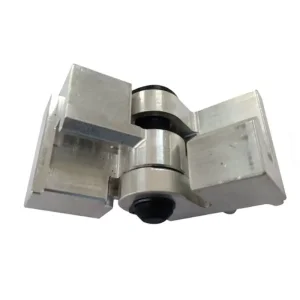
ODM Precision CNC Machined Aluminum Hinge Assembly Structural Connector
View Specifications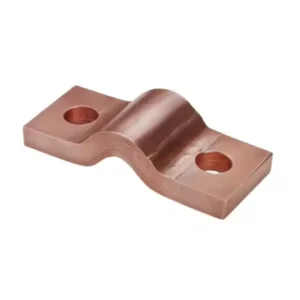
Custom Flexible Laminated Copper Busbar for Electrical Equipment
View Specifications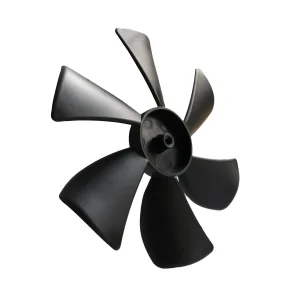
China Custom PA66-GF30 Injection Molded Motor Cooling Fan Blade
View Specifications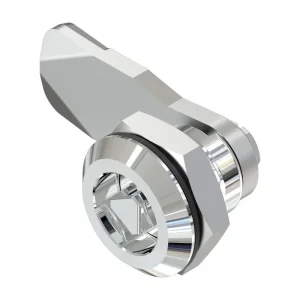
Custom Premium Zinc Alloy Die-Casting Industrial Cabinet Cam Lock
View Specifications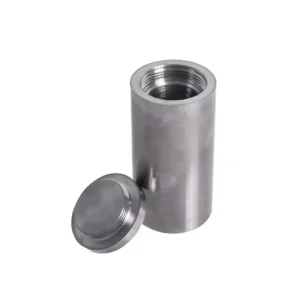
Customized Tungsten Carbide Shielded Canister Container with Lid
View Specifications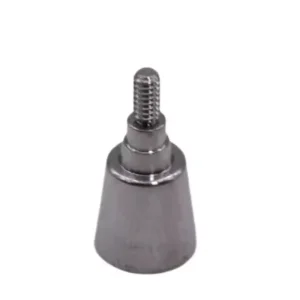
ODM Custom CNC Turned Titanium Abutment Driver & Connector
View Specifications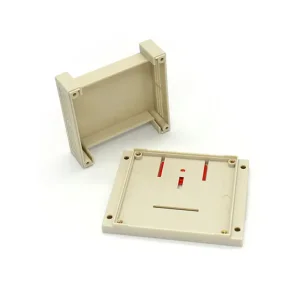
China Custom Modular DIN Rail PLC Electrical Module Enclosure
View Specifications