High-Precision OEM Engineering Catalog (Part I)
Direct factory supply of custom metal, titanium, structural, and micro-machined parts manufactured under strict quality standards.
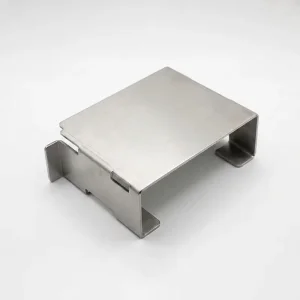
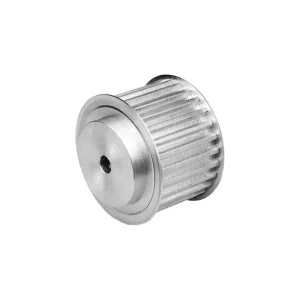
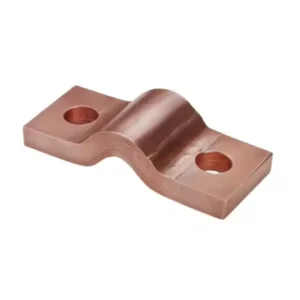
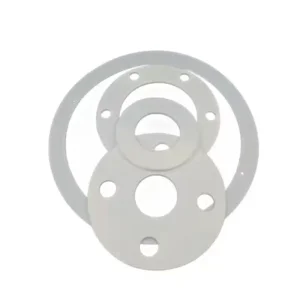
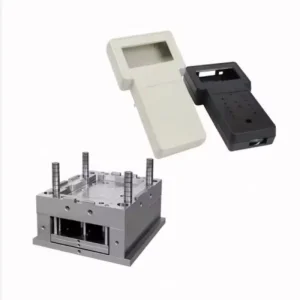
Next-Generation Custom Die Castings: Technical Architecture & Global Industrial Dynamics
An in-depth analysis of high-pressure aluminum, zinc, and magnesium casting methodologies driving modern OEM innovation, structural integrity, and economic efficiency.
In the contemporary global manufacturing ecosystem, the demand for high-integrity, lightweight, and geometrically complex components has established custom die casting as a fundamental pillar of advanced industrial engineering. As Tier-1 OEMs across North America, Europe, and Asia-Pacific shift toward rapid electrification, high-power computing infrastructure, and autonomous robotic systems, the requirement for structural parts exhibiting high strength-to-weight ratios, exceptional thermal dissipation, and precise electromagnetic shielding (EMI/RFI) has escalated exponentially.
Modern High-Pressure Die Casting (HPDC) and Vacuum-Assisted Die Casting are no longer rudimentary foundry processes. They represent highly engineered, automated digital thermal-fluid systems. By injecting molten non-ferrous alloys—predominantly aluminum (A380, ADC12, AlSi10Mg), zinc (Zamak 3, Zamak 5, ZA-8), and magnesium (AZ91D, AM60B)—into hardened steel tooling cavities at velocities exceeding 40 meters per second and under intense pressures ranging from 30 to over 120 MPa, factories can produce high-volume components with complex thin-wall profiles that were previously impossible to achieve through conventional subtractive machining alone.
The Macroeconomic Paradigm: Global Industrial Supply Chain & Demand Trends
The global die casting market is undergoing a structural paradigm shift driven by three macro-forces: Vehicle Electrification (EVs), Telecommunications & Computing Edge Infrastructure, and Industrial Automation & Robotics. Legacy manufacturing models characterized by fragmented supply chains, multi-stage assemblies, and high scrap rates are rapidly being replaced by monolithic casting solutions, advanced tooling simulation software, and integrated post-casting CNC finishing.
- Electric Vehicle (EV) Lightweighting: EV OEMs rely heavily on custom aluminum die casting to optimize energy density and battery range. Battery tray structures, motor end-bells, inverter enclosures, and structural node brackets are designed to consolidate multiple stamped sheet-metal parts into single-piece castings, drastically reducing assembly labor and vehicle curb weight.
- 5G/6G & AI Data Center Thermal Management: High-frequency optical transceiver housings, heat-sink cold plates, and power distribution modules demand die-cast alloys with thermal conductivity values exceeding 150 W/m·K coupled with near-zero porosity to ensure absolute seal integrity under extreme pressure differentials.
- Industrial & Medical Micro-Robotics: High-precision zinc and titanium micro-casting technologies cater to complex miniature gears, surgical manipulators, and sub-miniature fasteners requiring high mechanical hardness and extreme dimensional consistency across multi-million unit production batches.
Localized Application Scenarios & Sector Integration
Engineering tailored casting solutions engineered for rigorous operational environments across critical global industries.
Automotive & EV Powertrains
Thin-walled structural housings, integrated cooling channels for electric drive units, gearbox covers, steering knuckles, and battery module end plates. Cast from A380 or AlSi9Cu3 alloys with zero micro-porosity to withstand high thermal fatigue and dynamic vibration.
Power Electronics & Inverters
Die-cast aluminum power enclosures featuring co-molded copper busbars, intricate heat dissipating fins, and IP68 water-tight sealing grooves. Built to house industrial power units, solar micro-inverters, and high-voltage grid convertors.
Telecommunications & Optics
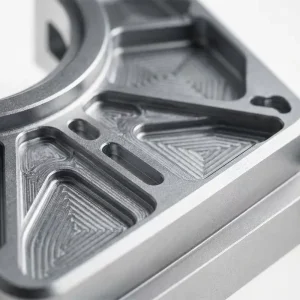
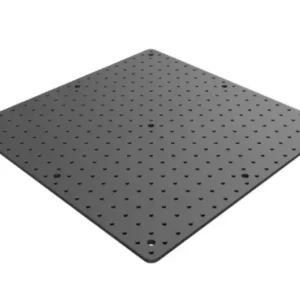
Precision optical breadboards, laser mounting frames, optical switch shells, and RF filter cavities. Demanding surface flatness down to 0.02mm, strict anodization compatibility, and continuous electromagnetic interference shielding.
Medical Devices & Instruments
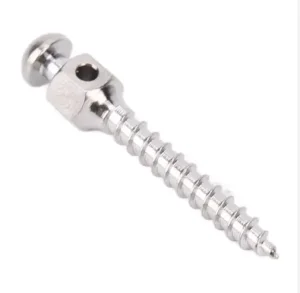
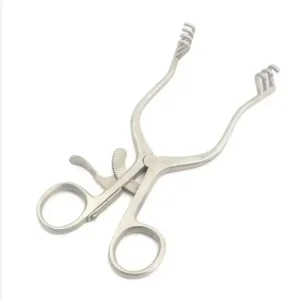
Surgical device frames, retractor mechanisms, diagnostic scanner chassis, and titanium micro-implant fasteners. Manufactured under strict ISO 13485-compliant cleanliness protocols with non-toxic, highly biocompatible material certifications.
Aerospace & Defense Structural Nodes
Ultra-lightweight magnesium alloy brackets, drone arm joints, avionics bay enclosures, and flight-control actuator housings tested via 100% X-ray inspection to eliminate internal void defects.
Robotics & Factory Automation
Precision timing belt pulleys, servo-motor housings, robotic arm joints, and end-effector gripper frames requiring minimal rotational inertia, high rigidity, and sub-micron bearing bore concentricity.
Technology Roadmap & Industry 4.0 Transformation
Bridging traditional foundry practices with artificial intelligence, super-large gigacasting, semi-solid metal processing, and sustainable metallurgy.
1. Super-Gigacasting & Structural Consolidation
Transitioning from multi-piece sub-assemblies to massive 6,000-to-12,000-ton clamping force die casting presses. Eliminating hundreds of spot welds and mechanical fasteners in favor of single-pour structural unibody components.
2. Semi-Solid Rheocasting & Thixocasting
Utilizing semi-solid slurry alloys injected at lower temperatures to practically eradicate turbulent gas entrapment. Enables heat-treatment (T6) and T5 hardening of die-cast aluminum for yield strengths exceeding 320 MPa.
3. AI Computer Vision & X-Ray Defect Recognition
Deploying real-time inline 3D Computed Tomography (CT) scans powered by deep-learning vision models. Automatically identifies internal gas pores, shrinkage voids, and cold snaps down to 0.05mm diameter in under 15 seconds per unit.
Process Matrix: Die Casting vs. Alternative Manufacturing Methods
Selecting the optimal manufacturing route requires evaluating volume scales, geometric complexity, mechanical requirements, and unit piece costs. The matrix below details how high-pressure die casting compares against traditional alternatives:
| Evaluation Parameter | High-Pressure Die Casting (HPDC) | 5-Axis CNC Machining | Investment Casting (Lost Wax) | Sheet Metal Stamping |
|---|---|---|---|---|
| Production Scalability | Very High (10,000 – 1M+ units/yr) | Low to Medium (1 – 5,000 units/yr) | Medium (1,000 – 50,000 units/yr) | Very High (50,000+ units/yr) |
| Initial Tooling Investment | High (Hardened H13 Tool Steel) | Zero to Low (Fixtures only) | Moderate (Wax Molds) | High (Progressive Stamping Dies) |
| Geometric Complexity | High (Complex internal ribs/fins) | Extremely High (Undercuts) | High (Complex shapes) | Limited (Flat sheet profiles) |
| Dimensional Repeatability | High (±0.05mm as-cast) | Ultra-High (±0.005mm) | Moderate (±0.15mm) | High (±0.05mm) |
| Material Utilization / Scrap | Excellent (Runners recycled in-house) | Poor (High chip volume) | Good | Moderate |
China Supply Chain Resilience & Manufacturing Efficiency
Leveraging Shenzhen and Pearl River Delta industrial clusters to offer rapid DFM turns, fully integrated tooling ecosystem, and unmatched speed-to-market.
24-Hour DFM & Rapid Mold Prototyping
Our engineering team performs comprehensive Design for Manufacturability (DFM) analysis—including moldflow solidification modeling, draft angle verification, and ejection pin positioning—within 24 hours of CAD submission. Prototype tooling can be produced in as few as 10 to 14 days.
Vertical Supply Chain Integration
From raw ingot melting and vacuum die casting to 5-axis CNC secondary milling, automated deburring, shot blasting, anodizing, powder coating, and final electro-mechanical assembly—every phase takes place within a single audit-ready supply cluster, eliminating inter-vendor delay.
Rigorous IP Protection & Direct Factory Pricing
We operate with complete commercial transparency under signed non-disclosure agreements (NDAs). By bypassing intermediary brokers, global procurement officers work directly with our engineering floor, securing factory-direct cost efficiency and uncompromised IP protection.
Comprehensive Compliance, CMM Metrology & Global Support
Ensuring every production lot satisfies ISO 9001, IATF 16949, and RoHS compliance specifications through rigorous quality control processes.
Coordinate Measuring Machine (CMM)
High-precision ZEISS 3D CMM inspection systems verify complex geometric dimensioning and tolerancing (GD&T) features against original CAD models down to ±0.002mm.
Optical Emission Spectrometry
Every incoming ingot heat lot undergoes melt spectrometry analysis. Chemical composition reports (MTR) are generated to certify exact alloy elemental balances (Al, Si, Cu, Mg, Zn, Fe).
First Article Inspection (FAI) Reports
Comprehensive AS9102/PPAP Level 3 documentation accompanies initial sampling shipments, providing complete traceability on material properties, surface roughness (Ra), and critical dimensions.
Localized Technical Support & Global Fulfillment
To support North American and European OEM schedules, our technical account management teams offer round-the-clock engineering response windows. We handle DDP (Delivered Duty Paid), DAP, and FOB logistics arrangements, providing seamless sea, air, and express door-to-door delivery with customs clearance pre-managed for zero buyer friction.
High-Precision OEM Engineering Catalog (Part II)
Explore customized engineering components spanning optical, semiconductor, nuclear shielding, battery contact, and fluid management systems.
Custom Die Casting Engineering FAQ
Expert answers to critical procurement, tooling design, material selection, and quality assurance questions.