
Featured Engineering Components & Tooling Portfolio (Part I)
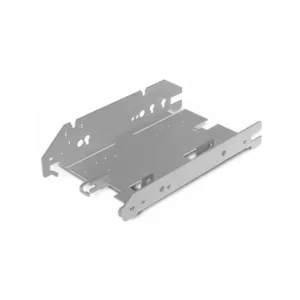
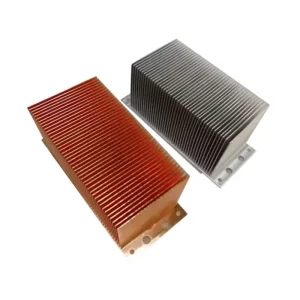
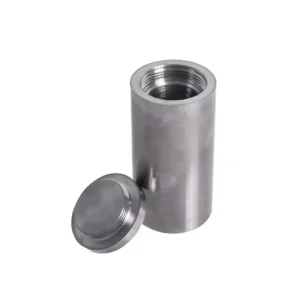
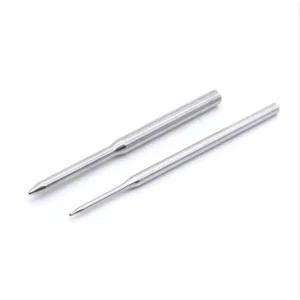
Explore our verified range of custom precision-machined elements, heat management systems, die-cast components, and custom hardware produced under stringent ISO quality standards.
1. Macro-Industrial Ecosystem & Global Sourcing Demands
Navigating the Paradigm Shift in High-Pressure Die Casting (HPDC), Structural Lightweighting, and Precision Tooling Infrastructure.
In the contemporary global manufacturing landscape, precision die casting molds serve as the architectural backbone for mass-producing complex structural metal components. As Tier-1 industrial buyers, automotive OEMs, aerospace engineers, and electronic hardware innovators seek aggressive weight reductions, heightened thermal performance, and unprecedented dimensional consistency, the requirement for world-class custom die casting mold maker suppliers & services has reached a critical inflection point.
The acceleration of Electric Vehicle (EV) adoption, 5G/6G telecommunication infrastructure rollout, renewable energy conversion systems, and compact robotics has reshaped traditional casting dynamics. Procurement teams no longer search simply for toolmakers; they require strategic engineering partners who possess deep technical fluency in CAD/CAM integration, multi-physics thermal simulation, advanced tool steel metallurgy, and post-machining tolerance control down to the micron level.
Information Gain Insight: The cost of die casting tooling accounts for only 10% to 15% of total product life-cycle expenditure, yet mold thermal balance and gating integrity dictate up to 80% of total scrap rates and cycle efficiency during mass production.
Global enterprises face multifaceted supply chain risks including volatile alloy pricing, stringent environmental regulations (RoHS, REACH), and shortening product developmental cycles. Sourcing custom die casting tools from top-tier direct manufacturers eliminates broker markups, guarantees direct engineering transparency via Non-Disclosure Agreements (NDAs), and unlocks substantial Total Cost of Ownership (TCO) reductions across high-volume production schedules.
2. Advanced Engineering Roadmap & Tool Steel Metallurgy
Technical Breakdown of Mold Cavity Design, Gating Optimization, Conformal Cooling, and Thermal Shock Mitigation.
Cavity & Core Fabrication
Utilizing premium hot-work tool steels such as H13, AISI P20, 1.2344, and Dievar. Precision CNC milling, wire EDM, and mirror polishing ensure long mold life exceeding 500,000 shots under continuous high-pressure conditions.
Moldflow & Thermal Physics
Integrating pre-tooling Moldflow simulation to map metal velocity, solidification rate, and gas entrapment risks. Optimizing gating systems to prevent solder formation, cold shuts, and micro-porosity.
Conformal Cooling Channels
Implementation of 3D-printed DMLS conformal cooling inserts within critical core pins and heavy cross-sections. Reduces thermal stress, prevents thermal checking (fatigue cracking), and slashes cycle times by up to 25%.
Comparison of Die Casting Processes & Tooling Demands
Selecting the optimal casting methodology dictates tool steel specification, draft angles, hydraulic ejector configurations, and thermal regulation requirements:
3. Sourcing Strategy & Total Cost of Ownership (TCO) Optimization
How Global Procurement Leaders Mitigate Risk, Evaluate Tooling Suppliers, and Streamline Vendor Chains.
Procuring custom die casting tooling requires navigating intricate financial and quality variables. Experienced buyers look beyond initial NRE (Non-Recurring Engineering) tooling estimates to evaluate full-lifecycle performance. Selecting a supplier with low upfront costs but inadequate heat treatment processing leads to premature heat cracking, flash formation, excessive downtime, and costly tool rebuilds.
Phase 1: Design for Manufacturability (DFM) Assessment
Collaborative analysis of draft angles (minimum 1° to 3°), radii, wall uniformity, parting line placement, and ejector pin positions prior to steel cutting.
Phase 2: Tooling Fabrication & Metallurgical Verification
High-precision CNC roughing, vacuum heat treatment with certified hardness testing, finish EDM, and CMM dimension validation of mold core and cavity inserts.
Phase 3: Mold Trial (T1) & First Article Inspection (FAI)
Initial sampling under production-rate hydraulic pressures. Comprehensive CMM dimensional scans, x-ray porosity analysis, and surface roughness evaluation.
Phase 4: Full Production Release & Preventive Maintenance
Mass production enablement backed by documented maintenance schedules (cleaning, stress relieving after 50,000 shots, replacement spares).
By establishing clear SLAs (Service Level Agreements) and working directly with accredited manufacturers like Sunmy Hardware, engineering departments secure complete IP protection, transparent material certifications, and guaranteed die life cycles tailored to contract requirements.
4. Sunmy Hardware Manufacturing Infrastructure & Execution
End-to-End One-Stop Precision Hardware Fabrication from Shenzhen, China to Global Destination Warehouses.
Precision CNC & Turning
Equipped with 3-axis, 4-axis, and 5-axis CNC milling centers alongside Swiss-type turning equipment capable of maintaining tighter tolerances down to ±0.005 mm for critical mating features.
Die Casting & Stamping
High-tonnage die casting machines (ranging from 160T to 2000T) integrated with automated robotic ladling and spraying arms for continuous, defect-free production output.
In-House Quality Assurance
Rigorous inspection protocols utilizing Zeiss CMMs, optical projectors, spectrometer material verifiers, surface roughness testers, and digital height gauges. Full FAI and PPAP documentation supplied.
Direct Factory Advantage: Sunmy Hardware handles DFM, mold design, steel machining, surface treatments (anodizing, powder coating, e-coating), and final assembly under one unified quality control system—protecting your designs and streamlining logistics.
5. Quality Assurance Standards, Compliance & Certification Protocols
Ensuring Full Traceability, Material Purity, and International Regulatory Adherence for Heavy Industrial Applications.
International industrial procurement demands strict adherence to global compliance standards. Sub-standard mold design or unverified raw material lead to batch rejections and costly field failures. Sunmy Hardware integrates comprehensive quality checkpoints across the entire tooling life cycle:
ISO 9001:2015 Framework
Strict quality management systems ensuring consistent standard operating procedures (SOPs), continuous process auditing, and complete batch traceability from raw ingot to finished part.
RoHS & REACH Compliance
All alloys, coatings, and surface treatments strictly comply with European Union environmental directives, guaranteeing hazardous substance restrictions are fully respected.
CMM & Metrology Data
Dimensional reports, first-article inspection sheets, and material test certificates (MTCs) are generated in-house and delivered with every shipment for incoming quality verification.
6. Tech Roadmap: Smart Molds, AI-Driven Casting & Green Metallurgy
Looking Ahead at the Next Decade of Industrial Tooling Technologies.
The die casting tooling industry is experiencing rapid innovation driven by digitalization, artificial intelligence, and environmental sustainability goals:
- IoT-Enabled "Smart Molds": Integration of embedded wireless thermal sensors and pressure transducers within mold cavities to monitor shot-by-shot metrics in real-time, enabling predictive maintenance and auto-adjusting cooling flow.
- AI-Assisted Defect Diagnostics: Neural network models analyzing thermal camera data from mold parting faces to detect early micro-flashing or temperature drops before casting defects occur.
- Recycled High-Purity Alloys: Development of green aluminum alloys with high secondary content that retain ductility and strength while reducing the carbon footprint of structural die castings by up to 70%.
- Hybrid Additive Tooling: Combining conventional CNC-machined mold bases with 3D-printed tool steel inserts to maximize cooling efficiency while keeping NRE costs manageable.
Featured Engineering Components & Tooling Portfolio (Part II)
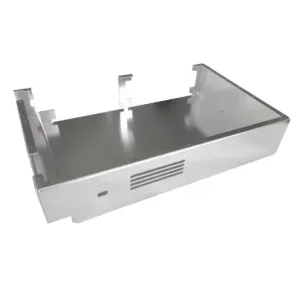
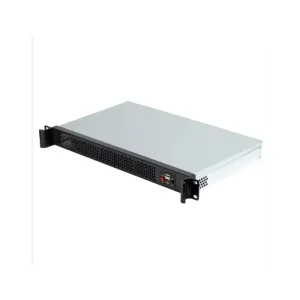
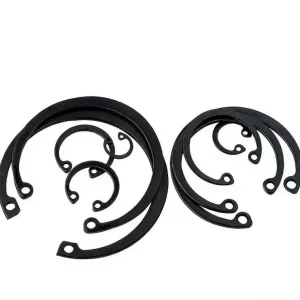
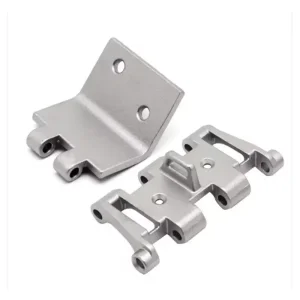
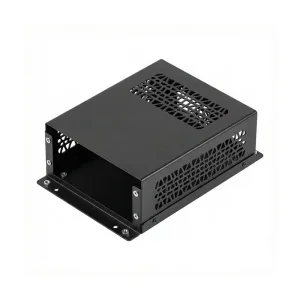
Discover additional high-precision OEM solutions, custom enclosures, heat transfer units, and structural assemblies.
7. Technical & Sourcing FAQ for Hardware Buyers
Clear, Direct Engineering Answers to Common Procurement and Manufacturing Inquiries.