
Precision Manufactured Metal & Polymer Assemblies
-
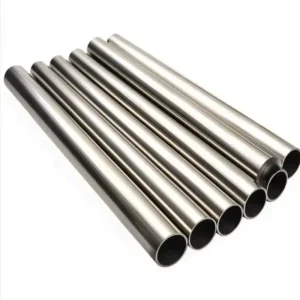
High-Quality Custom Precision Capillary Stainless Steel Tubes (OD 1mm - 8mm)
View Product Details -
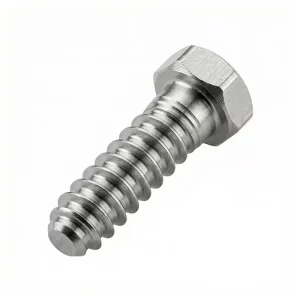
China Titanium Medical Implant Bone Screw - Precision CNC Machining
View Product Details -
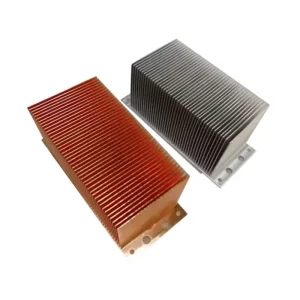
OEM Custom Square Aluminum & Copper Skived Fin Heat Sink for Electronics
View Product Details -
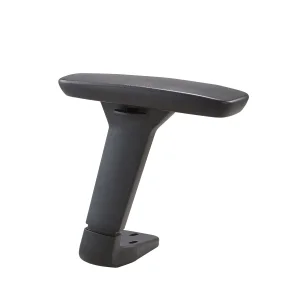
ODM Premium Ergonomic Office Chair Nylon Armrest Component Products
View Product Details -
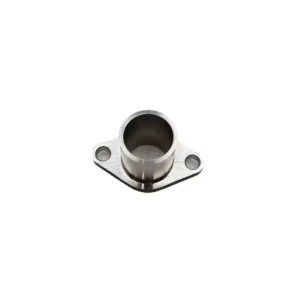
OEM Premium Custom Stainless Steel Casting Services & Valve Housings
View Product Details -
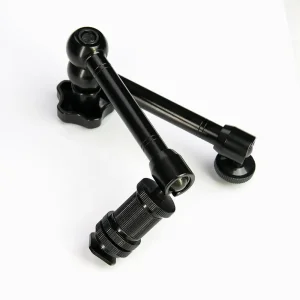
High-Quality 7-Inch CNC Aluminum Articulating Magic Arm Component
View Product Details -
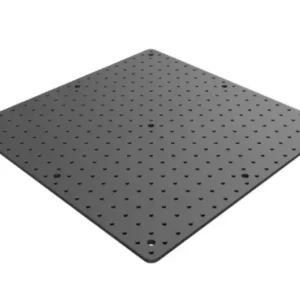
China Custom Aluminum Optical Breadboard - Precision Machining Factory
View Product Details -
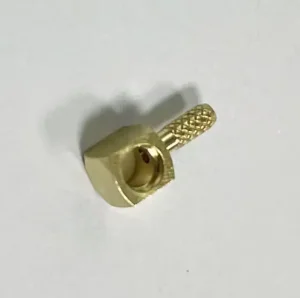
ODM Custom CNC Machining Brass Insert Connector with Knurled Pin
View Product Details
Overcoming Thermal Bottlenecks in Next-Gen Compute & Electrification
As power densities escalate across automotive traction inverters, 5G Massive MIMO beamforming units, AI edge processors, and industrial variable-frequency drives (VFDs), the demand for high-efficiency heat dissipation has reached a critical juncture. Custom die casting heat sinks represent the ideal synthesis of geometric complexity, volumetric dissipation, structural integrity, and scalable economics.
High Power Density Cooling
Modern power electronics require rapid heat flux evacuation from chip junctions to ambient environments. High-pressure die casting (HPDC) allows ultra-dense pin-fin and thin-blade fin configurations impossible through standard extrusion or machining.
Structural & Enclosure Integration
By leveraging custom die casting, thermal design engineers can unite the structural chassis, mounting flanges, EMI shielding baffles, and heat sink fins into a single monolithic die-cast part, drastically reducing assembly bill-of-materials (BOM).
Cost Scaling for High-Volume OEM
While initial tooling expenditure requires precise capital allocation, die casting offers the lowest unit manufacturing cost (COGS) for production volumes exceeding 1,000 units, delivering unparalleled ROI for commercial programs.
Metallurgical Precision & Thermal Engineering Architecture
Achieving minimum junction-to-case ($\theta_{JC}$) thermal impedance requires holistic control over alloy composition, cavity flow dynamics, solidification rates, and interface machining. Standard die-casting alloys often trade thermal conductivity for fluid castability; our custom metallurgy balances both parameters.
| Alloy Grade | Thermal Conductivity (W/m·K) | Tensile Strength (MPa) | Castability & Thin-Wall Flow | Primary Industrial Application |
|---|---|---|---|---|
| ADC12 / A383 | 96 - 103 | 310 | Exceptional | Standard Electronic Enclosures, Automotive Housings |
| A380 (Al-Si-Cu) | 96 - 105 | 320 | Excellent | General Industrial Heat Sinks & Motor End Caps |
| AlSi10Mg | 110 - 130 | 340 | Very Good | Structural Aero & Automotive Thermal Components |
| High Conductive (Custom Al-Mg) | 150 - 180+ | 240 - 280 | Specialized Hydraulic Control | 5G Base Station Radiators, AI Edge Server Cold Plates |
| Zamark 3 / 5 (Zinc) | 105 - 113 | 280 - 330 | Ultra-Thin Wall (<0.8mm) | Micro-Optics, Fiber Transceiver Housings |
Traditional High-Pressure Die Casting often suffers from gas entrapment, causing internal void porosity that reduces effective thermal conductivity by up to 22%. Sunmy Hardware utilizes Vacuum-Assisted Cold Chamber Die Casting with real-time hydraulic pressure intensifiers (up to 120 MPa). This ensures gas evacuation down to <1.5% volumetric porosity, enabling high thermal transfer and secondary T6 heat treatments without surface blistering.
DFM Guidance: Draft Angles & Aspect Ratios
For die-cast heat sink fins, optimizing the draft angle is vital for die extraction without drag marks. We recommend a minimum draft angle of 1.0° to 1.5° per side. High aspect ratio fins (fin height to gap width) up to 10:1 are reliably cast using automated thermal balance mold temperature controllers.
Secondary CNC Precision Post-Machining
While die casting provides net-shape fins, interface surfaces mating directly to CPUs, IGBTs, or MOSFETs require precision fly-cutting. Our 5-axis CNC machining centers guarantee surface roughness down to Ra 0.8 µm and flatness within 0.02 mm over a 300mm span, minimizing thermal interface material (TIM) thickness.
Global Commercial Landscape & Industrial Realities
The global heat sink market is undergoing a seismic realignment. Historically dominated by simple extruded aluminum profiles, the rapid escalation of power requirements in North American electric vehicle platforms, European renewable energy grids, and Asian industrial robotics has shifted procurement capital toward custom die-cast thermal modules.
EV & Data Center Scaling
Strict emissions standards and massive AI data center investments drive demand for custom liquid-to-air die-cast heat sinks. Tier-1 automotive suppliers require PPAP Level 3 compliance and full material traceability from ingot to final part.
Regulatory & Green Energy Mandates
Driven by ISO 14040 Life Cycle Assessment (LCA) mandates and REACH/RoHS compliance, European industrial buyers require low-carbon secondary aluminum die-casting practices combined with high thermal efficiency to reduce operating PUE.
Manufacturing & 5G Infrastructure
As the global nexus of electronics manufacturing, APAC demands high-speed prototyping cycles (DFM to T1 sample within 18 days) alongside volume capacity capable of delivering tens of thousands of units weekly with zero line-stoppages.
Localized Application Scenarios & Industry Use-Cases
Custom die-cast thermal management solutions deployed across demanding global environments.
Automotive Inverters & OBC
Die-cast AlSi10Mg liquid cooling cold plates and heatsinks for Electric Vehicle (EV) On-Board Chargers (OBC) and main traction inverters, built to withstand 30G shock loads and severe thermal cycling (-40°C to +150°C).
5G Outdoor Base Stations
Weatherproof IP67-rated die-cast aluminum enclosures featuring deep vertical fin structures designed for natural convection cooling in remote, high-ambient sunburst environments without failure-prone fans.
High-Bay Industrial LED
Integrated die-cast thermal housings for 200W-1000W industrial luminaires, incorporating radial cooling fins, driver cavities, and optical lens mounting faces into a single high-efficiency casting.
Medical Diagnostics & AI Edge
Ultra-quiet, compact die-cast heat sinks engineered for MRI gradient amplifiers, CT scanner computing units, and ruggedized edge computing devices operating in sterile or harsh industrial floors.
Zero-Defect Quality Control & Global Compliance Framework
At Shenzhen Sunmy Hardware Co., Ltd., quality is built into every stage of the manufacturing matrix. We bridge international sourcing gaps by offering localized engineering consultation alongside factory-direct transparency.
- CMM Coordinate Measuring: 100% verification of critical geometric tolerances and hole locations down to ±0.005 mm.
- Non-Destructive Testing (NDT): Real-time industrial X-ray radiography inspection to eliminate internal gas porosity and shrinkage flaws.
- Helium Leak Detection: Vacuum testing for liquid cooling cold plates ensuring zero fluid egress under 6 bar operational pressure.
- Surface Coating Validation: Salt spray testing (up to 720 hours) for anodized, powder-coated, or chromated surface treatments.
Global Compliance Standards
Technology Roadmap: Next-Generation Die-Cast Thermal Innovation
As semiconductor node shrinking plateaus, physical thermal architecture must evolve. Our R&D engineering matrix is actively pioneering advanced die-casting methodologies designed for 2025–2030 OEM platforms.
AI-Driven Topology Optimization
Utilizing generative design algorithms to construct organic, tree-branch fin structures cast directly via high-flow aluminum alloys, maximizing heat dissipation while reducing part mass by up to 28%.
Hybrid Friction Stir Liquid Cold Plates
Combining high-pressure die-cast liquid channel bases with friction stir welded (FSW) aluminum top covers, creating hermetically sealed liquid cooling blocks at a fraction of CNC billet machining costs.
Graphene & Nano-Composite Die Casting
Integrating carbon nanotube (CNT) and graphene nano-particle reinforcements into aluminum melt alloys to achieve isotropic thermal conductivity exceeding 220 W/m·K without compromising structural ductility.
Explore Our Specialized Hardware & Casting Directory
-
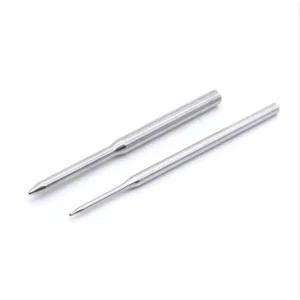
ODM Custom Stainless Steel Waterproof Sensor Probe Housing / Thermowell
View Product Details -
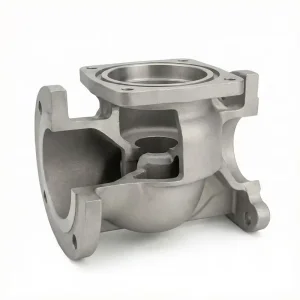
ODM China Stainless Steel Valve Body Suppliers - Investment Casting Factory
View Product Details -
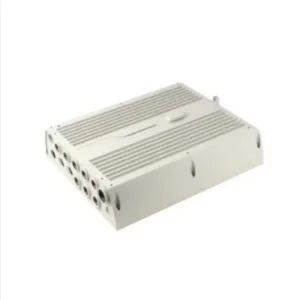
Custom Custom Aluminum Die-Casting Enclosure for Communication Electronics
View Product Details -
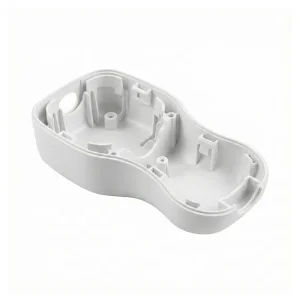
China Custom Medical Device Housing Suppliers & Precision Service
View Product Details -
Custom Aluminum Die-Casting Enclosure Solutions & Engineering Support
View Product Details -
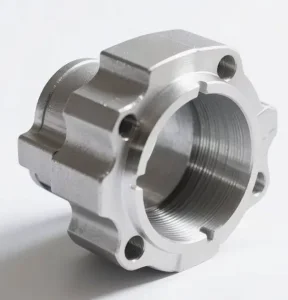
Custom High-Performance Aluminum, Zinc, & Copper Alloy Components
View Product Details -
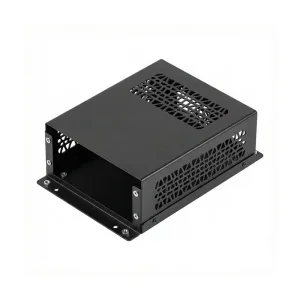
China Custom Aluminum Electronic Enclosures - High Quality OEM Solutions
View Product Details -
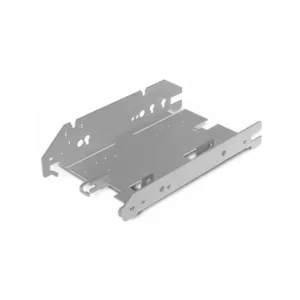
Custom Precision Sheet Metal Brackets & Stamping Parts for Electronics
View Product Details
Frequently Asked Questions: Custom Die Cast Heat Sinks
Expert insights on thermal design, material selection, tooling costs, and production logistics.
- Black Anodizing (Type II/III): Increases thermal radiation emissivity ($\epsilon \approx 0.90$) and provides excellent salt-spray resistance.
- E-Coating / Powder Coating: Ideal for harsh outdoor telecommunication enclosures.
- Chromate Conversion (RoHS SurTec 650): Maintains electrical conductivity while preventing aluminum oxidation.
- Electroless Nickel Plating: Enhances solderability for copper heat pipe integration.
Accelerate Your Engineering Project Today
Submit your STEP/IGES CAD files or 2D technical drawings. Our thermal engineering team will provide a comprehensive DFM manufacturability analysis, mold flow evaluation, and competitive quote within 24 hours.