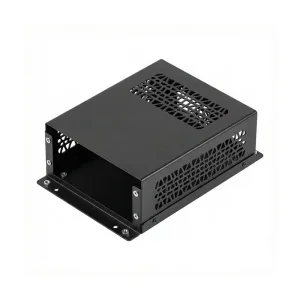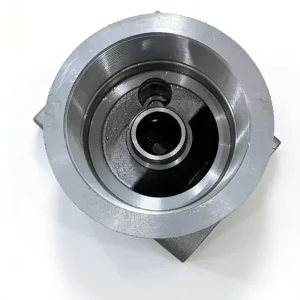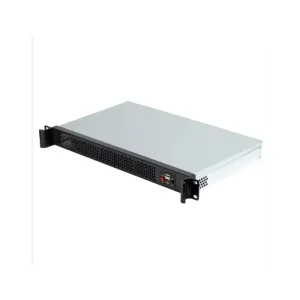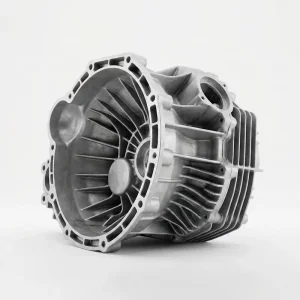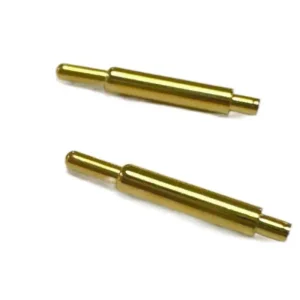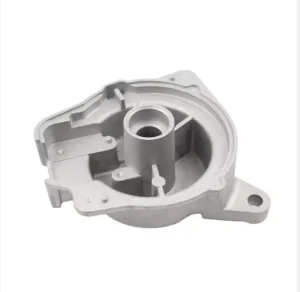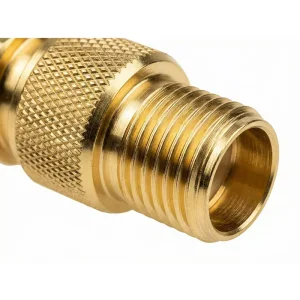
Precision Optical & Engineered Hardware Components
Explore our high-precision product portfolio produced under certified Quality Management Systems with complete material traceability and CMM dimensional inspection.
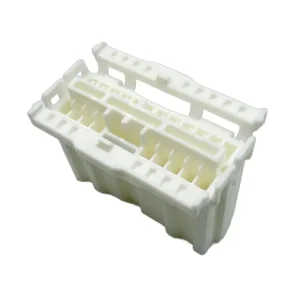
Executive Whitepaper: The Science of Custom Acrylic Molding
A rigorous engineering dive into optical polymer processing, melt rheology control, and precision toolmaking for high-performance industrial applications.
Optical Clarity & Refractive Dynamics
Acrylic (Polymethyl Methacrylate, PMMA) remains the gold standard among transparent polymers due to its outstanding visible light transmittance of up to 92.8%, surpassing standard soda-lime glass (90%) and Polycarbonate (88%). With a refractive index of 1.491 and an Abbe number of 58, PMMA minimizes chromatic aberration in complex optical arrays, light guides, and instrument windows.
Achieving defect-free optical clarity during the injection molding process requires meticulous control over molecular orientation and thermal history. Acrylic's amorphous polymer matrix eliminates light scattering caused by crystalline domains, but high shear stress during injection can introduce localized birefringence—a double-refraction phenomenon that distorts polarized light and impairs optical sensor accuracy.
Viscoelasticity & Thermal Processing Window
Processing acrylic resin demands an acute understanding of its viscoelastic behavior. PMMA exhibits a high glass transition temperature (Tg ≈ 105°C) and a relatively narrow processing thermal window. Melt viscosity is highly temperature-dependent compared to polyolefins, requiring precise multi-zone barrel control (typically 210°C to 250°C depending on polymer molecular weight grade).
Hygroscopic properties present another critical vector: PMMA absorbs up to 0.3% moisture under ambient humidity. Injection molding wet resin leads to hydrolytic degradation, micro-foaming, silver streak voids (splay), and compromised mechanical tensile strength (typically 70 MPa). Direct factory protocols at Sunmy Hardware mandate desiccant dehumidifying drying at 80°C–90°C for a minimum of 4 hours, bringing moisture content below 0.02% prior to plastification.
| Physical Property Parameter | Optical Grade PMMA (Acrylic) | Polycarbonate (PC) | Cyclic Olefin Copolymer (COC) | Soda-Lime Glass |
|---|---|---|---|---|
| Light Transmittance (%) | 92.0% – 93.0% | 88.0% – 90.0% | 91.5% – 92.5% | 90.0% – 91.5% |
| Refractive Index ($n_d$) | 1.491 | 1.586 | 1.533 | 1.520 |
| Abbe Number ($V_d$) (Low Dispersion) | 58 (Very Low) | 30 (High Dispersion) | 56 (Low Dispersion) | 60 (Minimal) |
| Tensile Strength (MPa) | 65 – 75 | 60 – 70 | 60 – 66 | 2000 (Compressive) |
| Density ($\text{g/cm}^3$) | 1.18 – 1.20 | 1.20 | 1.02 | 2.50 |
| Birefringence Level | Extremely Low | Moderate to High | Negligible | Zero |
Global Industry Trends in Acrylic Molding (2025–2030)
The transformation of custom acrylic molding from decorative display fabrication to ultra-precision optical micro-molding and sustainable bio-based polymer engineering.
Nanoscale Surface Optics & Micro-Lenses
Modern optoelectronics demands micro-structured PMMA optics, including Fresnel lenses, diffraction gratings, and micro-lens arrays (MLA) for LiDAR system receivers and AR/VR head-mounted displays. Standard tooling yields surface roughness ($Ra$) around 0.05µm, whereas next-generation ultra-precision diamond turning (UPDT) mold inserts achieve sub-nanometer finish ($Ra < 2\text{nm}$), eliminating light scattering and secondary hand-polishing operations.
Micro-Fluidic Bio-Diagnostic Chips
In life science diagnostics, PMMA is rapidly replacing glass in point-of-care (POC) microfluidic cartridges. Precision acrylic molding enables micro-channels with aspect ratios exceeding 10:1 and channel widths under 50 microns. PMMA offers ideal biocompatibility, low fluorescence interference, and cost-effective sealability via ultrasonic welding or solvent bonding protocols.
Automotive Lightguide Architecture
The transition toward electric vehicles (EVs) has revolutionized automotive exterior lighting. Designers deploy continuous thick-walled acrylic light bars, illuminated front grilles, and matrix beam optical guides. PMMA’s intrinsic UV stability guarantees zero yellowing over 15-year vehicle lifecycles, unlike Polycarbonate which requires complex anti-UV hard coatings.
Closed-Loop Sustainable rPMMA Resins
Global ESG mandates are driving demand for chemical recycling of acrylic polymers. Uniquely among synthetic plastics, PMMA can be thermal-depolymerized back into its high-purity monomer monomer unit (MMA) with over 98% yield. Recycled PMMA (rPMMA) retains virgin-grade optical transparency and mechanical specs, significantly shrinking carbon footprints for automotive and architectural OEMs.
Hybrid Overmolding & Smart Surfaces
Integration of capacitive touch sensors directly into structural acrylic components (In-Mold Electronics or IME) is exploding in luxury smart home appliances and automotive cockpits. Acrylic front plates are overmolded with conductive silver traces and LED backlit channels, yielding seamlessly flat, scratch-resistant control panels.
Variothermal (RHCM) Molding Technologies
Rapid Heat Cycle Molding (RHCM) or variothermal tooling uses dynamic steam or pressurized hot water heating to raise mold temperatures above PMMA’s Tg during injection, followed by rapid glycol cooling. This process eliminates weld lines, reduces residual stress by over 80%, and yields ultra-glossy optical surfaces straight from the tool.
Global Sourcing Criteria for Custom Acrylic Moldings
How Tier-1 engineering brands, industrial procurement managers, and OEM buyers evaluate international manufacturing partners to eliminate tooling risks and yield failures.
1. Gate Selection & Birefringence Mitigation
Procurement teams often face quality rejections caused by "gate blush"—cloudy cosmetic micro-fractures surrounding the injection point. Premium acrylic molding factories utilize specialized valve-gate hot runner systems, edge fan gates, or sub-gates designed with gradual shear transitions. Controlling shear rate at the gate prevents polymer chain scission and keeps internal stress low, eliminating birefringence artifacts under polarized stress-analysis testing.
2. Tooling Steel Selection & SPI A-1 Mirror Polishing
Because PMMA faithfully replicates every microscopic tool defect, standard P20 or 718 tool steels are insufficient for optical parts. High-purity electro-slag remelted (ESR) stainless steels such as S136, NAK80, or ASSAB 8407 hardened to HRC 52–54 are mandatory. Toolmakers must possess in-house SPI A-1 diamond paste polishing capabilities to ensure optical surfaces remain free of micro-scratching over 500,000 molding cycles.
3. Design for Manufacturability (DFM) Gatekeeper
Global buyers require comprehensive DFM reports prior to steel cutting. DFM analysis for acrylic must evaluate wall thickness variations (keeping transition taper under 15% to prevent sink marks), draft angles (minimum 1.5° to 3.0° for polished acrylic to avoid mold scuffing during ejection), cooling line distance balance, and predicted volumetric shrinkage using Moldflow simulation software.
4. Quality Assurance: CMM, FAI, & Spectrophotometry
Beyond dimensional validation using 3D Coordinate Measuring Machines (CMM) to ±0.005mm accuracy, procurement guidelines mandate First Article Inspection (FAI) documentation, spectrophotometric light transmission curve verification (wavelength range 380nm–780nm), and environmental thermal cycling tests (-40°C to +85°C) to verify structural reliability.
China Factory 4.0: Supply Chain Resilience & Precision Execution
Inside Sunmy Hardware’s Shenzhen production facilities: Bridging rapid prototyping, precision toolmaking, automated injection molding, and direct global logistics.
Smart IoT Mold Monitoring
Our clean-room molding cells incorporate cavity pressure sensors and closed-loop hydraulic feedback systems. Real-time pressure monitoring detects melt viscosity fluctuations across material batches, instantly adjusting packing pressure curves to guarantee part-to-part weight repeatability within ±0.1% variance.
In-House Toolmaking & CNC Precision
By pairing high-speed 5-axis CNC machining (spindle speeds up to 40,000 RPM) with mirror EDM machinery, Sunmy Hardware achieves tool cavity dimensional tolerances down to ±0.005mm. In-house mold fabrication reduces tooling lead times by 35% compared to outsourced operations.
Integrated Multi-Process Synergy
Sunmy Hardware simplifies complex OEM purchasing by offering seamless cross-process manufacturing. Pair your custom optical acrylic lenses with CNC-machined anodized aluminum bezels, stamped stainless spring retainers, or custom PBT electrical housings—all managed under one purchase order with guaranteed mechanical fitment.
Sunmy Hardware 6-Stage Quality Control Protocol
01. DFM & Moldflow Analysis
Complete simulation of gate position, shear stress, cooling rate, and warpage prior to raw material cutting.
02. Spectro Material Inspection
Verification of raw resin optical purity, melt flow index (MFI), and RoHS compliance upon delivery.
03. Tooling & Mold Polishing
Hardened S136 cavity machining with SPI A-1 diamond mirror polish performed in temperature-controlled rooms.
04. Pilot Run & Annealing
First Article samples subjected to thermal annealing cycles (80°C for 2 hours) to eliminate internal stress.
05. CMM & Optical Verification
Full 3D coordinate measurement, surface roughness testing ($Ra$), and optical transmittance analysis.
06. Export Dust-Free Packing
Components are vacuum-sealed with anti-static protective film and packaged in heavy-duty export boxes.
Cross-Industry Application Benchmarks for Custom PMMA Moldings
How leading global enterprises utilize Sunmy Hardware’s acrylic engineering expertise across critical industrial sectors.
Automotive Lighting & Interior HUD Optics
Automotive OEMs specify high-heat acrylic grades (e.g., Plexiglas 8N or Altuglas HT121) for headlamp collimator lenses, daytime running light (DRL) pipes, and Head-Up Display (HUD) combiner mirrors. Sunmy Hardware’s precision molding guarantees scratch resistance, zero optical distortion across wide viewing angles, and tight seal-groove tolerances to meet IP67 weatherproofing standard requirements.
Medical Diagnostics & Analytical Cuvettes
Laboratory equipment manufacturers utilize custom molded acrylic micro-plates, flow cells, and optical cuvettes for clinical chemistry analyzers. PMMA's high UV transmission in the 340nm near-UV spectrum permits accurate spectrophotometric blood analysis. Production is conducted under ISO-certified cleanroom environments to protect components from airborne dust particles or oil contamination.
Industrial Automation Sensing & HMI Covers
Factory automation equipment requires rugged optical windows for infrared safety light curtains, laser distance sensors, and capacitive touch human-machine interface (HMI) screens. Molded PMMA panels are often hard-coated via dip or spray application to boost surface hardness from 2H to 6H Pencil Hardness, protecting against industrial solvent splash and abrasive dust scuffing.
Architectural & Commercial High-End Display
Premium retail branding, luxury architectural fixtures, and heavy-section optical LED diffusers demand thick-walled acrylic casting and molding. Utilizing multi-stage packing pressure profiles, Sunmy Hardware achieves crystal-clear acrylic blocks up to 25mm thickness without internal voids, sink marks, or yellow tinting.
Custom Acrylic Molding Technical FAQ
Direct answers from our Senior Optical Molding Engineers regarding material selection, tooling design, lead times, and quality assurance.
How does PMMA compare to Polycarbonate (PC) for optical molding projects?
PMMA offers superior light transmission (92.8% vs 88% for PC), higher scratch resistance, significantly lower chromatic dispersion (Abbe number 58 vs 30), and excellent inherent UV resistance without requiring coatings. However, Polycarbonate provides substantially higher impact strength. Select PMMA when optical clarity, color rendering, low birefringence, and weatherability are paramount, and Polycarbonate when shatter-resistance is the primary functional requirement.
What draft angle is required for optical acrylic injection molds?
For highly polished SPI A-1 mirror surfaces, a minimum draft angle of 1.5° to 2.0° per side is recommended. If the component features textured side-walls or deep draw pockets, draft angles should be increased to 3.0° or 5.0° to prevent drag marks, scuffing, or micro-cracking during part ejection.
How does Sunmy Hardware prevent internal stress and crazing in molded acrylic?
Internal stress is mitigated through a three-tier engineering process: 1) Moldflow gate location optimization to ensure uniform flow fronts and minimize pressure drop; 2) Microprocessor-controlled packing pressure decay profiles; and 3) Post-molding thermal annealing. Components are baked in circulating hot-air ovens at 75°C–85°C (approximately 10°C below Tg) for 2 to 4 hours to relieve residual molded-in stress.
What mold steel grades are selected for high-volume acrylic molding?
We utilize premium electro-slag remelted (ESR) stainless steels, primarily AISI S136 (or ASSAB Stavax) hardened to HRC 52–54, or NAK80. These steels possess ultra-dense metallurgical microstructures free from non-metallic inclusions, allowing diamond-paste polishing to an SPI A-1 mirror mirror finish capable of delivering over 1,000,000 molding cycles.
Can custom color tints or anti-glare additives be integrated into PMMA molding?
Yes. We utilize pre-compounded optical colorants or high-dispersion liquid masterbatches for translucent red/amber automotive tail lamps, smoked IR-transmissive sensor covers (transmitting 850nm/940nm infrared while blocking visible light), and anti-static or diffusion-diffuse light filtering additives.
What is the standard turnaround time for tooling and sample approval?
Prototype tooling and initial T1 samples are typically completed within 15 to 25 calendar days depending on part complexity and optical surface specs. Full production hardened tooling (SPI A-1 finish with CMM reports and complete FAI inspection) is executed within 30 to 40 days.
How are surface scratches prevented during transit and assembly?
Optical acrylic parts are robotically removed from injection molds to eliminate human handling marks, immediately fitted with protective PE static cling films on critical faces, packaged into individual anti-static thermoformed blister trays, and vacuum sealed prior to export shipment.
How does Sunmy Hardware guarantee intellectual property (IP) protection?
We execute strict legally binding Non-Disclosure Agreements (NDAs) prior to receiving 3D STEP/IGES files. All customer drawings are processed strictly on isolated internal servers, and production takes place in our direct factory facilities in Shenzhen without third-party handoffs.
Explore Our Full OEM/ODM Custom Manufacturing Capabilities
Integrate acrylic optical molded elements with turned metal fittings, stamped shielding, and heavy-duty structural die castings.