
Examine our engineering capability through high-precision custom parts built directly to OEM customer specifications with full CMM verification and batch traceability.

The Global Commercial Landscape of Chinese Rapid Prototyping
In the modern hyper-competitive hardware ecosystem, time-to-market is the fundamental vector determining market dominance. Rapid Prototyping (RP) in China has evolved from mere quick-turn sample fabrication into an enterprise-grade digital manufacturing backbone that bridges concept design directly to high-volume OEM production.
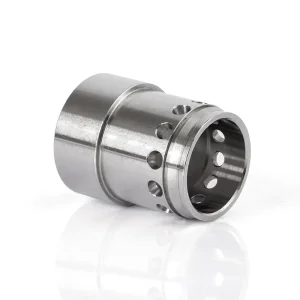
Contemporary industrial applications require sub-micron precision. China's top-tier prototyping suppliers deploy 5-axis DMG MORI CNC milling machines and Swiss-type lathes capable of executing intricate internal geometries, ultra-smooth surface finishes (Ra 0.4 µm), and complex thin-wall structures for medical implants, automotive sensors, and optical housings.
By blending subtractive CNC machining with additive Direct Metal Laser Sintering (DMLS/SLM) and vacuum investment casting, suppliers can fabricate functional prototypes using production-grade alloys (Titanium Ti-6Al-4V, Stainless Steel 316L, Inconel 718) and high-performance engineering plastics (PEEK, PTFE, Ultem) within 48 hours.
Overcoming legacy sourcing misconceptions, leading Chinese prototyping operations maintain ISO 9001:2015, ISO 13485 (Medical), and IATF 16949 (Automotive) accreditations. Full compliance is verified through automated Zeiss Coordinate Measuring Machines (CMM), Optical Spectrum Analyzers, and comprehensive First Article Inspection (FAI) reports.
Strategic Trends Shaping China's Prototyping Sector
The global industrial landscape is undergoing a structural transition toward distributed digital manufacturing. Procurement managers and hardware directors must understand these macro trends to maintain operational agility.
Traditional prototype quoting required days of manual drawing analysis. Advanced Chinese supplier networks now leverage cloud-native AI algorithms that scan native STEP/IGES CAD files in seconds, highlighting undercut features, sharp internal radii, and draft angle defects before stock is cut. This eliminates engineering delays early in the product lifecycle.
The boundary between "prototype" and "mass production" has blurred. Procurement leaders increasingly rely on China's rapid tooling capability—utilizing modular aluminum or soft steel mold inserts—to produce 1,000 to 50,000 injection-molded or die-cast parts. This enables rapid market validation before capital commitment to hard steel production tooling.
Modern applications demand specialized material properties. Chinese rapid prototyping suppliers have expanded their inventories to include Medical Grade Titanium (Grade 5 / Grade 23), Stainless 17-4PH, Copper Skived Fin thermal alloys, high-temp PEEK, and flame-retardant thermoplastics (UL94-V0), meeting specialized industrial compliance standards.
Leading China prototyping partners now operate fully integrated, one-stop facilities. Raw machining, secondary heat treatment (T6 tempering), anodizing (Type II/III hardcoat), laser engraving, PVD coating, and electro-polishing are performed under a single quality management system, avoiding fragmented vendor risks.
Rapid Manufacturing Process Selection Matrix
Choosing the optimal rapid prototyping route depends on geometry complexity, material grade, structural strength requirements, and target order volume. Use this engineering matrix to streamline process selection.
| Technology Route | Common Materials | Achievable Tolerances | Surface Roughness (Ra) | Optimal Quantity | Primary Industrial Use |
|---|---|---|---|---|---|
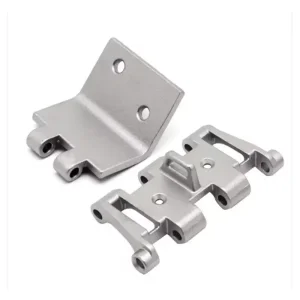
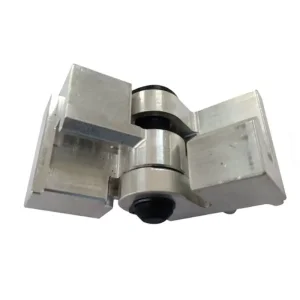
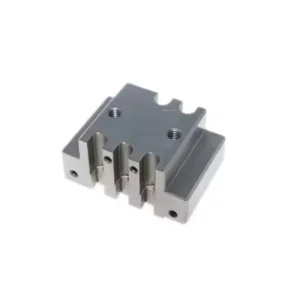
| CNC Milling & Turning | AL6061/7075, SS304/316, Brass, PTFE, PEEK | ±0.005 mm – ±0.01 mm | 0.4 µm – 1.6 µm | 1 – 500 pcs | Enclosures, Structural Hinges, Sensor Bodies, Turned Shafts |
| Stainless Investment Casting | SS316L, SS304, Carbon Steel, Alloy Steel | ±0.05 mm – ±0.1 mm | 3.2 µm – 6.3 µm | 50 – 5,000 pcs | Complex Structural Components, Valve Bodies, Brackets |
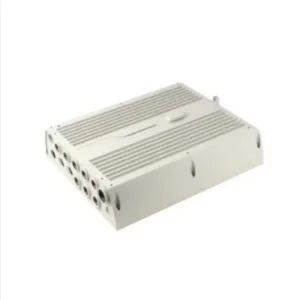
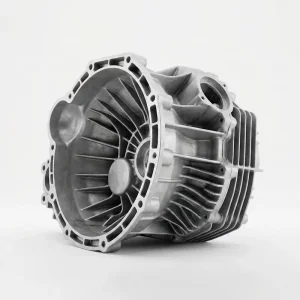
| Aluminum Die Casting | ADC12, A380, AlSi10Mg | ±0.02 mm (Post-CNC) | 1.6 µm – 3.2 µm | 100 – 100,000+ pcs | Automotive Housings, LED Heatsinks, Communication Boxes |
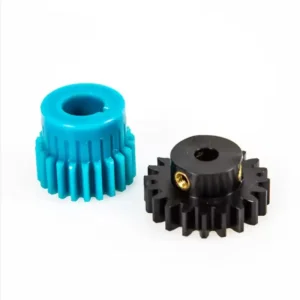
| Precision Plastic Injection Molding | ABS, PC, POM (Acetal), Nylon PA66, PP | ±0.01 mm – ±0.05 mm | 0.2 µm – 0.8 µm (Polished) | 500 – 50,000+ pcs | Precision Gears, Modular Project Boxes, Cable Bobbins |
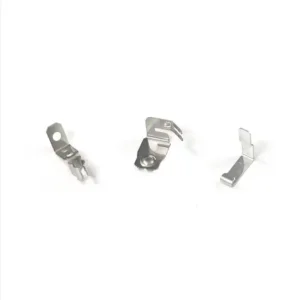
| Deep Drawing & Stamping | Phosphor Bronze, SS316, Cold Rolled Steel | ±0.01 mm – ±0.03 mm | Mill Finish / Plated | 500 – 100,000+ pcs | Battery Contacts, EMI/RFI Shielding Cans, Sensor Shells |
| Direct Metal Laser Sintering (DMLS) | Titanium Ti64, CoCr, Stainless 17-4PH | ±0.05 mm – ±0.1 mm | 6.3 µm – 12.5 µm | 1 – 50 pcs | Medical Implants, Aerospace Ducts, Lattice Structures |
Targeted Application Scenarios & Engineering Case Studies
Discover how advanced rapid prototyping and precision manufacturing solve complex engineering bottlenecks across key global technology sectors.
Application: Titanium Bone Screws, Surgical Instrumentation & Sensor Thermowells.
Technical Solution: Utilizing Swiss-turning lathe clusters and biocompatible Titanium (Ti-6Al-4V Grade 23), suppliers produce orthopedic fasteners and hermetically sealed thermowell housings. Thread profiles undergo optical inspection to guarantee zero burrs and flawless surgical engagement.
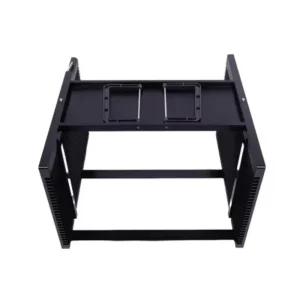
Application: 8-Inch & 12-Inch Machined Aluminum Wafer Carriers & Vacuum End-Effectors.
Technical Solution: Aluminum 7075-T6 components milled on high-speed 5-axis machining centers. Parts are treated with Type III Hard Anodizing (MIL-A-8625) to provide corrosion resistance, minimal particle outgassing, and planar pocket tolerances within ±0.008 mm across large surface areas.
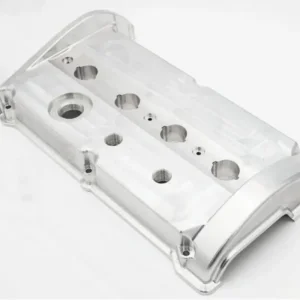
Application: Die-Cast Transmission Housings, Engine Covers & High-Efficiency Heat Sinks.
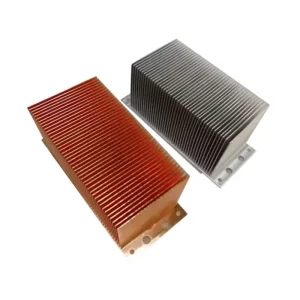
Technical Solution: High-pressure aluminum die casting paired with secondary CNC post-machining. Copper and aluminum skived-fin heat sinks are integrated to resolve extreme thermal loads in electric vehicle power electronics and LED control units.
E-E-A-T Quality Assurance Protocol & Metrology Assurance
Reliability is built on verifiable physics and documentation. Our zero-defect quality architecture ensures every custom component matches your engineering drawings prior to international dispatch.
Every incoming mill batch of metal bar stock, plate, or plastic resin undergoes X-Ray Fluorescence (XRF) spectrometry testing. Raw Material Test Reports (RoHS, REACH, and MTRs) are issued with every shipment, ensuring zero contamination.
Critical dimensions are verified inside temperature-controlled metrology labs using Zeiss Coordinate Measuring Machines (CMM) with touch-trigger probes and 3D optical scanners. Full First Article Inspection (FAI) reports per AS9102 standards are provided upon request.
We enforce strict intellectual property isolation controls. Proprietary 3D CAD models, STEP files, and technical schematics are stored on encrypted servers with restricted internal access, protected by legal Non-Disclosure Agreements (NDAs).
Frequently Asked Questions: Sourcing Rapid Prototyping from China
Clear, expert engineering answers to common technical and commercial queries raised by global hardware buyers, mechanical engineers, and procurement specialists.
How do Chinese rapid prototyping suppliers achieve tight tolerances (±0.005 mm)?
What is the typical lead time for custom prototype parts from China to US/Europe?
What technical drawing formats are required for accurate DFM and quotation?
How does rapid tooling differ from production injection molding tooling?
Which surface finishing treatments can be applied to rapid prototypes?
How do you ensure intellectual property (IP) protection for custom designs?
Browse our complete spectrum of turned, cast, molded, and stamped custom OEM components engineered for global distribution.
Before submitting your next engineering RFQ to China rapid prototyping suppliers, verify these five key technical criteria to ensure frictionless execution:
- Complete 3D/2D Documentation: STEP file for 3D model, plus 2D PDF with GD&T and thread specifications.
- Specified Material Grades: Clear designation (e.g., Al 6061-T6 vs Al 7075-T6; SS304 vs SS316L).
- Surface Roughness Target: Explicit Ra callouts for sealing faces, bearing journals, and cosmetic exteriors.
- Inspection Requirements: State upfront if CMM dimensional logs, material certs, or FAI reports are mandatory.
- Bridge vs Prototypes: Indicate estimated annual production volume to select optimum tooling paths.