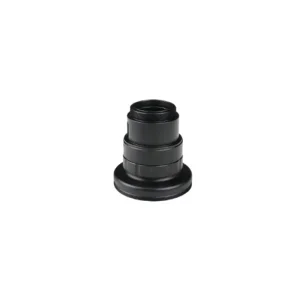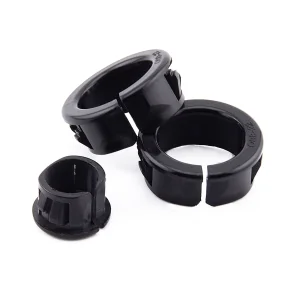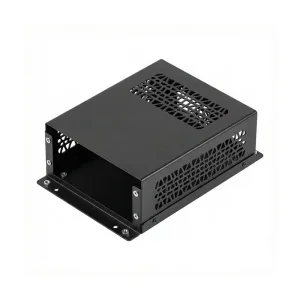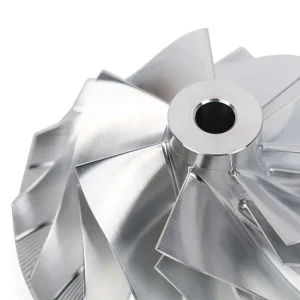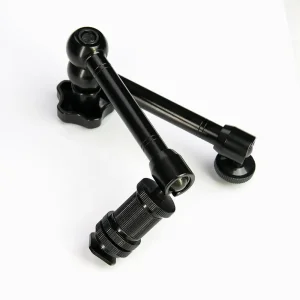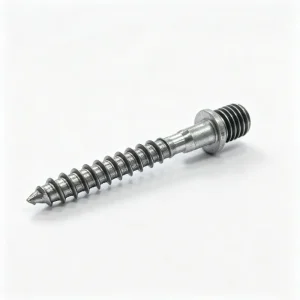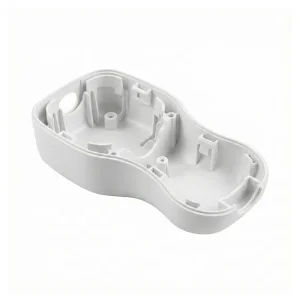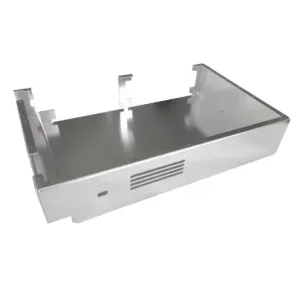
Featured Precision Engineered Components (Part I)
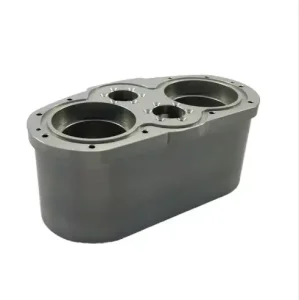
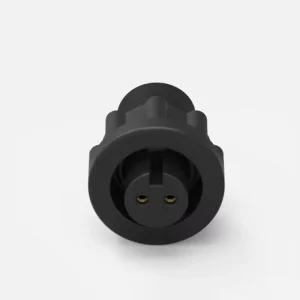
Explore our validated OEM/ODM manufacturing portfolios spanning 5-axis CNC machining, micro-capillary turning, optical polymer molding, and complex electrical housings.

1. Executive Summary & The Paradigm Shift in Global Prototype Manufacturing
Analyzing how contemporary China prototype machining factories transitioned from simple rapid prototyping shops into high-precision, digitalized engineering hubs capable of bridge production and low-volume OEM supply.
In the modern hardware product development lifecycle, the transition speed from conceptual CAD rendering to functional physical verification dictates a company’s market dominance. Historically, rapid prototyping was viewed as a quick, disposable iteration phase. Today, however, the global industrial ecosystem demands that prototype machining components adhere strictly to production-grade tolerances (down to ±0.005 mm), metallurgical fidelity, and structural integrity.
China's industrial landscape—specifically within concentrated manufacturing clusters such as Shenzhen, Dongguan, and the broader Pearl River Delta—has undergone a profound technological transformation. China prototype machining factories are no longer merely low-cost labor providers; they represent state-of-the-art advanced manufacturing facilities integrated with 5-axis simultaneous CNC milling centers, multi-spindle Swiss CNC turning lathes, adaptive AI toolpath software, and in-line CMM (Coordinate Measuring Machine) metrology.
Information Gain Insight: Unlike generic prototype shops that suffer from thermal deflection and tool deflection during multi-axis machining, top-tier Chinese prototyping facilities utilize temperature-controlled clean rooms (maintained at 20°C ±0.5°C) and active laser tool setters to guarantee sub-micron repeatability across exotic alloys and engineering polymers.
2. China Factory Supply Chain Resilience & Structural Efficiency Advantages
Unpacking the economic, logistical, and technical engines driving China's unmatched response speeds and component precision.
Hyper-Clustered Raw Material Sourcing
Within a 30-minute radius of major manufacturing hubs, factories access fully certified raw stocks—including certified Aircraft Aluminum 7075-T6, Surgical Stainless Steel 316L, Titanium Ti-6Al-4V, PEEK GF30, and high-purity brass—eliminating stockout delays.
Integrated Surface Finishing Ecosystem
Prototyping requires seamless integration with secondary operations. Local ecosystems provide immediate access to Hardcoat Anodizing (Type III), Physical Vapor Deposition (PVD), Electroless Nickel Plating, Electropolishing, and Powder Coating without extended transit logistics.
Agile Engineering & DFM Velocity
Dedicated Design for Manufacturability (DFM) engineering teams analyze 3D CAD step files around the clock. By identifying thin wall risks, deep cavity radius limitations, and thread engagement issues prior to spindle rotation, scrap rates are reduced by over 92%.
Technical Comparison: Prototyping vs. Volume Machining Architecture
| Vector Metric | Legacy Western Rapid Prototyping | Advanced China Machining Factory |
|---|---|---|
| Standard Machining Tolerance | ±0.050 mm to ±0.100 mm | ±0.005 mm to ±0.010 mm |
| Setup & Tooling Lead Time | 2 - 4 Weeks | 24 to 72 Hours |
| Multi-Axis Capability | 3-Axis standard (5-axis outsourced) | In-house 5-Axis Trunnion & Swiss Lathes |
| Surface Roughness (As-Machined) | Ra 1.6 µm - 3.2 µm | Ra 0.4 µm - 0.8 µm (Optics to Ra 0.05 µm) |
| Quality Telemetry | Basic calipers & manual height gauges | Full CMM 3D Scanning, FAI & Material MTC |
3. Technical Roadmap & Future Horizons in CNC Prototype Machining
How AI-assisted CAM programming, hybrid additive-subtractive systems, and sub-micron optical metrology are shaping the next decade of precision manufacturing.
AI-Driven Adaptive Toolpaths
Modern machine setups utilize machine learning CAM algorithms to dynamically adjust feed rates and spindle speeds based on real-time tool vibration and cutting load sensors. This extends tool life while preventing surface micro-cracking in difficult materials like Inconel 718 and Titanium Grade 5.
Additive-Subtractive Hybrid Manufacturing
By pairing Direct Metal Laser Sintering (DMLS) 3D printing with 5-axis post-machining finish cuts, factories can fabricate parts with internal conformal cooling channels that are impossible to machine directly, followed by CNC milling of critical mounting faces down to micron precision.
Automated Closed-Loop Closed-Gate Metrology
Integration of laser probes directly inside the machining chamber enables zero-point clamping calibration and automated in-process dimensional compensation, eliminating operator inspection bias and ensuring batch uniformity across thousands of complex geometry prototypes.
4. High-Precision Localized Application Scenarios
From autonomous humanoid robotics to deep-space optical payloads, discover how China prototype machining factories satisfy rigid industry standards.
A. Robotics & Industrial Automation
Modern robotic arm joints, cycloidal gear reducers, and UAV gimbal bases require ultra-lightweight structural components with maximum torsional rigidity. Using custom 5-axis CNC machining, factories produce multi-axis universal joint bases out of high-strength Al-7075-T6, applying hard anodizing for extreme wear resistance. Gearbox shells feature precise bearing bore tolerances held within ±0.003 mm to prevent gear tooth backlash and energy transmission loss.
B. Automotive & EV Powertrain Innovations
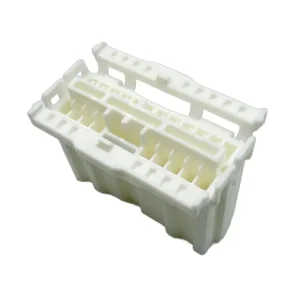
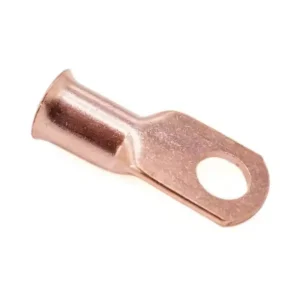
Electric vehicle (EV) engineering requires high-voltage connector housings, battery busbars, and cooling manifold plates. Components molded from flame-retardant White PBT or CNC turned from high-conductivity tinned copper lug ring crimp terminals ensure minimal electrical resistance, heat dissipation under high current loads, and IP67 weather resistance in outdoor conditions.
C. Optics, Telecommunications & Electronics
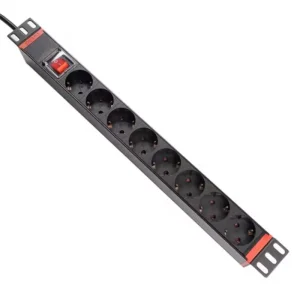
High-end digital cinema gear, optical sensors, and telecommunication switches demand precise light-path control and electromagnetic interference (EMI) shielding. Black anodized aluminum lens barrels are turned on ultra-precision Swiss CNC lathes to ensure absolute concentricity between optical glass elements, while micro PDU power strips and aluminum electronic enclosures provide thermal grounding and noise attenuation.
D. Medical Devices & Bio-Compatible Instrumentation
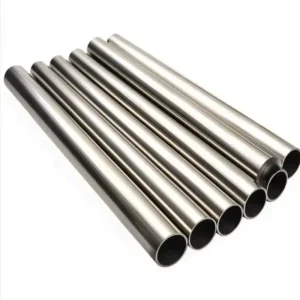
Medical robotics and endoscopic surgical equipment demand surgical-grade stainless steel capillary tubing (diameters ranging from 1mm to 8mm) alongside biostable polymer housings (such as PEEK and optical-grade PC). China machining factories maintain dedicated ISO 13485 processes, implementing full passivated surfaces and burr-free microscopic edge breaks under 50x optical inspection.
5. Localized Support, Intellectual Property & Global Compliance Safeguards
Ensuring complete risk mitigation, institutional quality management, and strict IP protection protocols for international OEM clients.
Institutional IP Security & Non-Disclosure
Prior to receiving technical drawings or STEP models, factories execute legally binding Non-Disclosure Agreements (NDAs). Customer CAD data is encrypted on isolated local servers with strict user role access control, preventing unverified file distribution.
Full Inspection Telemetry & Deliverables
Every shipment is packed with formal quality documentation: First Article Inspection (FAI) reports, Zeiss CMM 3D coordinate measurement data, Material Test Certificates (MTC / Mill Certificates), and RoHS / REACH chemical compliance verifications.
Seamless Global Logistics & DDP Support
Engineers collaborate across global time zones with fluent technical English communications. Dedicated export logistic channels handle customs clearance, tariff classification, and DDP (Delivered Duty Paid) door-to-door delivery via DHL, FedEx, or air cargo.
6. Technical Procurement & Engineering Q&A (FAQ)
Deep-dive answers to technical queries frequently raised by engineering leads, procurement officers, and quality assurance inspectors.
Featured Precision Engineered Components (Part II)
Explore our complete catalog covering turned aluminum optical housings, precision snap bushings, custom compressor impellers, and medical enclosure assemblies.