
Engineered OEM/ODM Metal & Plastic Components
Explore our custom-machined turned and molded products manufactured with micron-level accuracy for semiconductor, automotive, robotics, and industrial infrastructure applications.
Global Commercial Landscape of CNC Turned Components
In the contemporary landscape of high-precision manufacturing, CNC turned components represent the structural and functional bedrock of modern electromechanical systems. From sub-micron optical connectors in semiconductor fabrication equipment to high-pressure hydraulic solenoid valves operating under severe fluid dynamic loads in heavy industrial machinery, turned components require an uncompromising synthesis of metallurgy, kinematic precision, and scalable quality control.
The global precision turned parts market, projected to expand at a compound annual growth rate (CAGR) of 6.8% through 2030, is experiencing a fundamental structural shift. Engineering buyers across North America, Western Europe, and East Asia are demanding higher geometric fidelity (holding tolerances consistently within ±0.005 mm) while demanding shorter prototype-to-production lifecycle transitions. China has established itself as the undisputed global hub for advanced subtractive manufacturing by integrating complete upstream metal supply chains with high-speed multi-axis Swiss lathe technology and real-time metrology automation.
Information Gain Insight: Sourcing CNC turned components from Tier-1 Chinese export manufacturers yields an average total cost reduction of 30% to 45% compared to domestic Western production, without sacrificing critical metrics such as pitch diameter runout, concentricity, or dynamic surface micro-finish (Ra 0.4 µm).
This technical white paper outlines the core competencies, material selection frameworks, Design for Manufacturability (DFM) guidelines, quality verification protocols, and future technology roadmaps for global engineering teams procuring turned hardware from top-tier Chinese manufacturers.
Advanced Kinematics: Swiss Lathes vs. Multi-Axis Turning Centers
Understanding the technical distinction between sliding-headstock Swiss automatic lathes and fixed-headstock multi-turret turning centers is vital for cost optimization and geometric execution.
Swiss Sliding-Headstock Lathes
Ideal for long, slender parts (length-to-diameter ratio > 3:1). The guide bushing supports the workpiece directly adjacent to the cutting tool, eliminating deflection forces. Perfect for high-volume pinions, micro-shafts, and medical bone screws down to 0.5 mm outer diameter.
Multi-Axis Turning Centers
Equipped with dual spindles, Y-axis milling sub-turrets, and live tooling (driven tools up to 12,000 RPM). Enables single-setup "Done-in-One" complete machining of heavy-wall hydraulic valve cores, structural aerospace fittings, and complex housing interfaces without manual re-fixturing.
High-Speed Micro-Machining
Utilizing high-frequency electric spindles and diamond PCD/CVD tooling to execute ultra-fine surface micro-finishes (Ra < 0.2 µm). Critical for optical mirror mounts, laser diode housings, and semiconductor gas flow nozzles demanding zero burr accumulation.
Comprehensive Engineering Material Selection Matrix
Selecting the optimal alloy balances mechanical strength, thermal expansion, corrosion resistance, and chip-breakability during high-speed turning operations.
| Material Category | Specific Alloy Grade | Machinability Rating | Tensile Strength (MPa) | Primary Industrial Application | Surface Treatment Compatibility |
|---|---|---|---|---|---|
| Aluminum Alloys | AL 6061-T6 / AL 7075-T6 | Excellent (90%) | 310 - 570 | Aerospace structural brackets, optical carriers, robot joints | Type II/III Hard Anodizing, Chromate Conversion |
| Austenitic Stainless | SS 304 / SS 316L / SS 303 | Moderate (50-78%) | 515 - 620 | Medical instruments, marine fluid fittings, food handling valve stems | Passivation, Electropolishing, PVD Coating |
| Martensitic Stainless | 17-4PH (H900/H1150) / 416 | Good (65-110%) | 930 - 1310 | High-stress drive shafts, hydraulic solenoid cores, turbine blades | Vacuum Heat Treatment, Nitriding, Black Oxide |
| Copper & Brass | C36000 Free-Cutting Brass / Tellurium Cu | Superior (100%) | 340 - 450 | RF connectors, battery crimp lugs, electrical terminal pins | Electroless Nickel Plating, Direct Tin/Gold Plating |
| Refractory & Exotic | Tungsten Carbide / Titanium Gr 5 / Inconel 718 | Challenging (15-30%) | 950 - 1400+ | Radiation shielding canisters, jet engine nozzles, bio-implants | Thermal Spray, CVD, Precision Lapping |
| Engineering Plastics | PEEK (Unfilled/30% GF) / POM (Delrin) / PBT | High (85-95%) | 70 - 170 | Automotive electrical housings, insulator bushings, low-friction gears | Annealing for Stress Relief, Plasma Treatment |
Sector-Specific Application Scenarios & Engineering Case Studies
Custom CNC turned components engineered for zero-failure performance across extreme operating environments.
1. Semiconductor & Cleanroom Wafer Handling
Challenge: Wafer carriers and vacuum end-effectors require absolute dimensional stability across thermal cycling (-40°C to +200°C) with zero particulate outgassing.
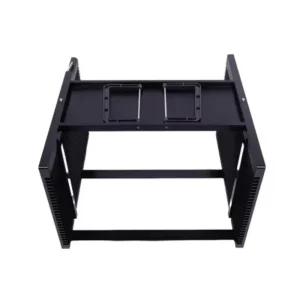
Solution: We engineer 8-inch turned aluminum carriers utilizing AL 6061-T6 stress-relieved billets. Post-machining includes micro-bead blasting and Class 100 cleanroom-packaged Type II anodizing to achieve a particles-free surface finish.
2. Automotive & EV Power Electronics Connectors
Challenge: High-voltage terminal pins and PBT housings must withstand continuous vibrations, moisture ingress, and ambient temperatures exceeding 150°C without dielectric breakdown.
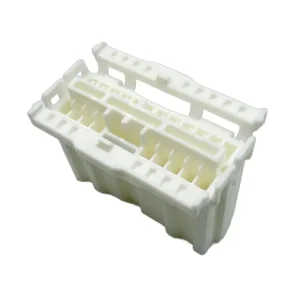
Solution: Turned tellurium copper contact lugs paired with injection-molded precision PBT housings. Swiss lathe turning guarantees tight terminal concentricity within 0.01 mm, optimizing electrical conductivity and crimp retention.
3. Industrial Robotics & Actuator Joint Assemblies
Challenge: Multi-axis humanoid and industrial robotic finger joint links require minimal rotational inertia combined with maximum torsional rigidity under rapid acceleration cycles.
Solution: 5-Axis simultaneous CNC turning and milling of aircraft-grade 7075-T6 aluminum. Integrated hollow-shaft turned geometry reduces total weight by 35% while maintaining strict axial runout under 0.008 mm.
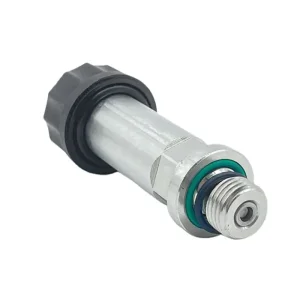
4. Heavy Hydraulics & Solenoid Control Valves
Challenge: Hydraulic solenoid valve cores for mobile excavators operate at dynamic pressures exceeding 350 bar. Internal spools must maintain micro-inch clearances to prevent fluid bypass.
Solution: Precision turned martensitic stainless steel (17-4PH) subjected to vacuum heat treatment to HRC 48-52. Precision cylindrical grinding and honing achieve bore circularity within 0.0015 mm and zero leakage.
Design for Manufacturability (DFM) Rules for Turned Parts
Optimizing turned component geometry prior to releasing engineering drawings directly impacts unit piece price, tool wear rates, and manufacturing yield. Adhering to the following five DFM rules minimizes setup complexity and eliminates costly custom tooling charges:
Rule 1: Standardize Internal Corner Radii
Avoid sharp internal shoulders. Specify an internal fillet radius of at least 0.2 mm to 0.5 mm. This matches standard turned insert nose radii (e.g., standard 0.4 mm or 0.8 mm diamond inserts), preventing chatter marks and excessive tool wear.
Rule 2: Respect Length-to-Diameter Ratios
For standard turning without steady rests or guide bushings, keep the unsupported length-to-diameter (L/D) ratio under 4:1. For ratios exceeding 6:1, design features compatible with Swiss sliding-headstock machining or include tailstock center holes.
Rule 3: Provide Thread Relief Undercuts
When specifying external or internal threads up to a shoulder, include a thread relief groove with a width of at least 1.5 to 2 times the thread pitch. This allows the single-point threading tool to retract safely without damaging the shoulder wall.
Rigorous Metrology Protocols & Traceability Documentation
Every component exported from our Chinese facilities undergoes comprehensive geometric dimensioning & tolerancing (GD&T) validation using certified metrology systems.
Coordinate Measuring Machines (CMM)
Zeiss contact probes providing 3D volumetric accuracy down to 0.9 + L/350 µm for verifying complex geometric features, position tolerances, and true profile of surfaces.
Optical Flash Measurement
Keyence non-contact optical comparators capturing up to 100 turned dimensions simultaneously in under 3 seconds with sub-micron repeatability for high-volume batches.
Surface Roughness & Profilometry
Mitutoyo profilometers measuring micro-finish (Ra, Rz, Rt) across critical sealing journals, bearing seats, and dynamic O-ring groove walls.
Material & Chemical Traceability
XRF spectrographic analysis verifying material chemical composition against EN 10204 3.1 mill test certificates prior to raw stock machining commitment.
Technology Roadmap (2025–2030): Next-Gen Turned Manufacturing
How Tier-1 Chinese manufacturers are pioneering smart manufacturing integration to deliver unprecedented production efficiency.
AI Predictive Tool Wear Monitoring
Integrating acoustic emission sensors and spindle load telemetry to detect cutting edge micro-chipping before dimensional drift occurs, securing continuous Cpk > 1.67 stability.
Autonomous Lights-Out Production
Fully automated robodrill lathe loading coupled with automated guided vehicles (AGVs) enables 24/7 continuous machining cells, reducing lead times for high-volume orders by 40%.
Green & Carbon-Neutral Machining
Transitioning to Minimum Quantity Lubrication (MQL) and 100% closed-loop aluminum and brass chip recycling systems, reducing coolant environmental footprints by 85%.
Precision Machined & Custom Fabricated Components
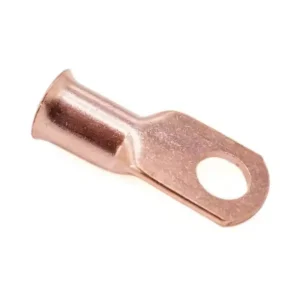
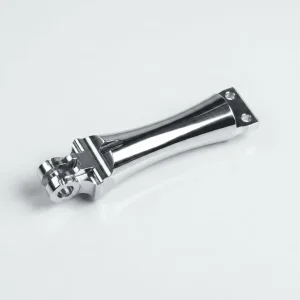
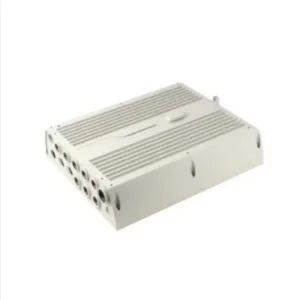
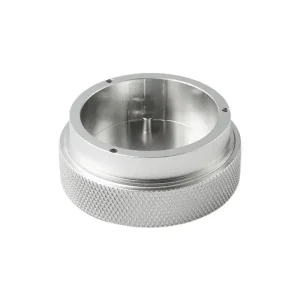
Discover additional high-precision OEM solutions manufactured in our ISO-certified Shenzhen facilities.

Frequently Asked Questions (FAQ)
Expert insights addressing critical buyer queries regarding lead times, quality compliance, and engineering capabilities.
What standard dimensional tolerances can your CNC turning centers achieve?
Our Swiss automatic lathes and multi-axis CNC turning centers maintain a standard machining tolerance of ±0.01 mm for routine commercial production. For high-precision applications—such as semiconductor wafer carriers, bearing seats, and hydraulic spool valves—we routinely execute critical dimensions down to ±0.005 mm (5 microns) with cylindrical runout under 0.003 mm, verified via coordinate measuring machines (CMM).
How do you protect customer IP and proprietary 3D CAD files during quoting and production?
Intellectual property protection is enforced through non-disclosure agreements (NDAs) signed prior to file transfer. Customer CAD data is hosted on secure, encrypted internal servers accessible strictly by authorized project engineers. We never subcontract proprietary components to unverified third parties, maintaining 100% internal control over setup, machining, and inspection.
Which quality compliance documentation accompanies international shipments?
Every export batch is accompanied by comprehensive quality control documentation, including: (1) EN 10204 3.1 Material Test Reports verifying chemical and physical properties, (2) First Article Inspection (FAI) AS9102 reports, (3) CMM full dimensional inspection logs, (4) Surface roughness measurement charts, and (5) RoHS/REACH environmental compliance certificates upon request.
What is your typical turnaround lead time for prototypes versus volume export orders?
Rapid prototype turned components (1 to 50 pieces) are delivered within 3 to 7 business days following DFM approval. Medium-to-high volume production orders (1,000 to 100,000+ pieces) typically require 2 to 4 weeks depending on raw material procurement, thermal treatment, and surface plating specifications. Expedited air freight services are available for urgent assembly line downtime requirements.
Can you process exotic or hard-to-machine alloys like Titanium, Tungsten, and Inconel?
Yes. Our facility is equipped with specialized high-torque live tooling turrets, high-pressure through-spindle coolant systems (up to 70 bar), and diamond PCD/CVD tooling specifically optimized for refractory metals. We regularly turn Grade 5 Titanium for aerospace/medical uses, Tungsten Carbide for radiation shielding canisters, and 17-4PH martensitic stainless steel for heavy industrial hydraulics.