
High-Precision Custom Hardware & Molded Assemblies (Part I)
Engineered solutions crafted with advanced casting mold design, multi-cavity injection tooling, and micrometric CNC finishing. Explore our top exported OEM industrial solutions below.

The Science of Engineering Precision Casting Molds in China
In modern industrial manufacturing, casting mold design serves as the cornerstone of lightweight structural metal production, precision alloy housing fabrication, and high-efficiency OEM component delivery. As global supply chains demand tighter tolerances, lower defect rates, and rapid tooling turnaround, Chinese casting mold design services and exporters have evolved from conventional toolmakers into advanced engineering partners equipped with predictive simulation, CAD/CAM integration, and metallurgical expertise.
Predictive Moldflow Simulation
Utilizing high-performance FEA and thermal fluid dynamics to analyze fill patterns, temperature gradients, gas entrapping risks, and solidification behavior prior to cutting steel, reducing tooling iteration loops by up to 60%.
Thermal Fatigue Mitigation
Engineered conformal cooling layouts and premium H13/SKD61 die steel selection prevent premature thermal cracking, extending casting die lifespan beyond 100,000 to 500,000 shots in high-pressure aluminum die casting.
Micrometric Machining Precision
Integrating 5-axis CNC machining, high-speed Wire EDM, and sub-micron CMM verification ensuring parting line flash reduction below 0.02mm and critical wall thickness stability across multi-cavity layouts.
Casting Tooling Architectures: High-Pressure Die Casting vs. Investment Casting Molds
A successful casting process relies heavily on selecting the correct mold architecture tailored to alloy characteristics, production volumes, wall thickness constraints, and mechanical strength requirements.
| Engineering Parameter | High-Pressure Die Casting (HPDC) Mold | Low-Pressure / Gravity Casting Mold | Investment (Lost Wax) Casting Die |
|---|---|---|---|
| Target Alloy Compatibility | Aluminum (A380, ADC12), Zinc (Zamak 3/5), Magnesium (AZ91D) | Aluminum Alloys (A356), Copper Alloys, Ductile Iron | Stainless Steel (316L, 304), Superalloys, Titanium |
| Typical Tool Steel Grade | H13 (1.2344), SKD61, Dievar (Vacuum Heat Treated HRC 46-50) | Gray Cast Iron HT300, H13, P20 Steel | P20, 718H, NAK80 High-Polish Tool Steel |
| Dimensional Tolerance | ±0.015 mm - ±0.05 mm | ±0.10 mm - ±0.30 mm | ±0.05 mm - ±0.15 mm |
| Gating & Runner System | High-velocity tangential runner, overflow wells, squeeze pins | Riser sleeves, ceramic filter gates, bottom-pour runners | Wax injection runner systems, multi-tree assembly dies |
| Tooling Life Expectancy | 100,000 - 300,000 shots (Al); >1M shots (Zinc) | 50,000 - 150,000 cycles | 300,000 - 500,000 wax injections |
| Key Defect Mitigation Strategy | Vacuum venting valves to eliminate air entrapment porosity | Directional solidification control via chilling blocks | Precision wax shrinkage compensation in cavity modeling |
Optimizing Gating & Runner Systems
The layout of gates, runners, overflow wells, and vacuum vents directly influences molten metal flow velocity and thermal turbulence. Advanced China casting mold designers configure multi-gate layouts to ensure uniform cavity filling within milliseconds, preventing cold shuts, flow lines, and internal air pockets in complex structural castings.
Advanced Thermal Balance & Conformal Cooling
Uneven cooling leads to internal shrinkage voids, warpage, and cycle time degradation. By incorporating 3D metal printed conformal cooling inserts and automated oil/water thermal control units (TCU), Chinese exporters achieve tight thermal equilibrium across die cavities, cutting cycle times by up to 25% while maximizing dimensional accuracy.
Why Global OEMs Source Casting Mold Design from China Facilities
China’s precision hardware and tooling sector—concentrated in advanced hubs like Shenzhen, Dongguan, Ningbo, and Suzhou—combines decades of practical foundry experience with modern automated infrastructure, offering unparalleled technical advantages to international purchasers.
Rapid Prototype to Mass Tooling
Seamless progression from 3D printed wax models and CNC soft tooling to fully hardened multi-cavity production molds, cutting time-to-market by up to 50% compared to Western counterparts.
Uncompromised IP Protection
Stringent non-disclosure agreements (NDAs), encrypted file servers, and direct factory communications ensure your proprietary CAD files and internal component designs remain 100% confidential.
End-to-End Ecosystem Synergy
Integrated raw material supply chains, heat treatment specialization, surface finishing (anodizing, powder coating, e-coating, PVD), and packaging under a single quality management system.
The Standardized 6-Phase Casting Mold Engineering Workflow
Ensuring defect-free castings requires a rigid, documented engineering methodology. Here is how leading China exporters guarantee tooling quality from concept to final shipment.
DFM & Parting Line Analysis
Evaluating draft angles (1.5° - 3°), wall thickness uniformity, undercut elimination, and optimized parting line selection to prevent flash.
Moldflow & Simulation
Simulating molten metal fill velocity, air entrapment risk, porosity location, and solidification thermal distribution using MAGMA / Moldex3D.
Tooling 3D CAD & Detailing
Designing core and cavity inserts, sliding cores, hydraulic ejector pins, cooling lines, and guiding systems in UG/NX or SolidWorks.
High-Speed CNC & EDM Tooling
Roughing and finish milling on 5-axis CNC machines, followed by precision Wire EDM for tight radii, pin holes, and textured surfaces.
T1 Trial & Sample Inspection
Executing initial sample casting runs (T1), inspecting dimensional conformity via CMM, X-ray scanning for internal voids, and FAI report creation.
Die Optimization & Mass Supply
Polishing, surface nitriding/coating of die steel, final validation, and transitioning to volume production or international mold export packaging.
Turnkey Casting Mold Solutions for Global Key Industries
Custom casting molds serve critical functional roles across diverse sectors, demanding tailored metallurgical formulations and strict industry certifications.
Automotive & EV Lightweighting
Structural battery enclosures, motor end bell housings, transmission gear cases, and steering knuckles molded in thin-wall high-strength aluminum alloys (A356/ADC12).
Telecom & Power Electronics
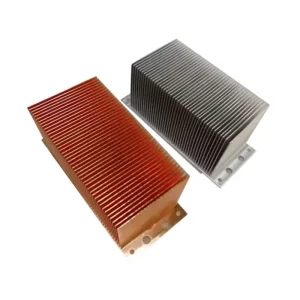
5G base station radiator fins, outdoor LED luminaire housings, skived fin copper/aluminum heatsinks requiring high thermal conductivity and weather-tight IP67 sealing grooves.
Medical Devices & Instruments
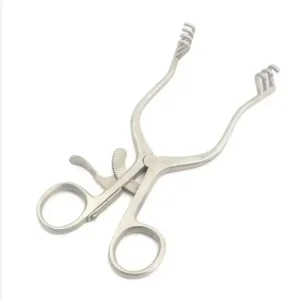
Stainless steel investment cast surgical retractors, high-density optical instrument bodies, and titanium orthopedic component molds requiring biological inertness and mirror polishing.
Industrial Fluid Control
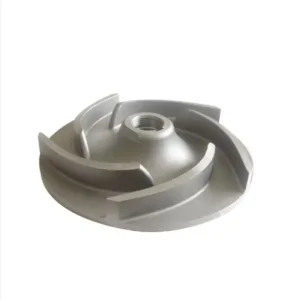
Heavy-duty slurry pump open impellers, high-pressure water valve bodies, and threaded pipe fittings cast in corrosion-resistant 316 stainless steel or bronze alloys.
Next-Generation Trends in Casting Mold Engineering (2026-2030)
As global manufacturing shifts toward digital transformation, sustainable foundries, and integrated artificial intelligence, Chinese casting mold exporters are implementing next-gen tooling innovations.
1. AI-Driven Thermal & Defect Prediction
Machine learning algorithms analyze millions of past casting parameters to automatically adjust gate placement, cooling water flow rates, and shot speed profiles in real-time during die casting operations.
2. Hybrid Tooling & Additive Inserts
Combining conventional CNC-machined die bases with 3D SLM printed tool steel inserts containing internal 3D curved cooling paths, dramatically reducing hot spots in thick bosses and deep cavities.
3. Gigacasting & Ultra-Large Tooling
Scaling up die casting mold design for 6,000t to 12,000t die casting presses, enabling single-piece underbody automotive frame casting that replaces dozens of stamped sheet metal parts.
Frequently Asked Questions by International Engineering Buyers
Find quick, authoritative answers to common inquiries regarding mold design specifications, lead times, quality documentation, and intellectual property safety.
How do Chinese casting mold designers calculate shrinkage rates for complex alloys?
What tool steel grades are recommended for high-pressure aluminum die casting?
What is the typical lead time for custom casting mold fabrication?
How do you eliminate gas porosity and shrink voids in cast parts?
What quality assurance documentation accompanies export molds and castings?
How are client 3D drawings and IP safeguarded when working with your team?
High-Precision Custom Hardware & Molded Assemblies (Part II)
Discover additional high-performance products manufactured utilizing our advanced casting, CNC machining, stamping, and thermal management capabilities.
Accelerate Your Next Casting Mold Program with Certified Expertise
From DFM optimization and high-precision CNC tool cutting to mass die casting and complete global export delivery, our team provides transparent, factory-direct technical excellence.