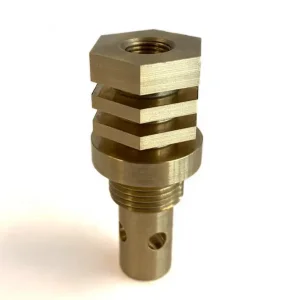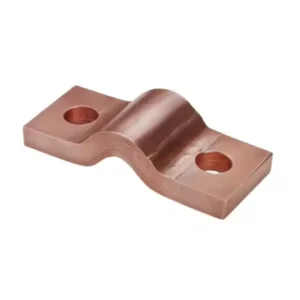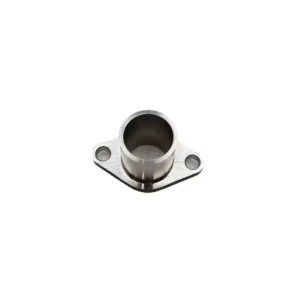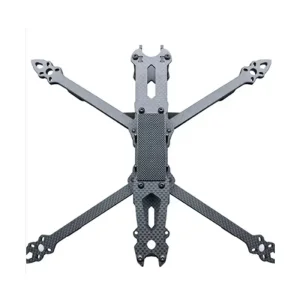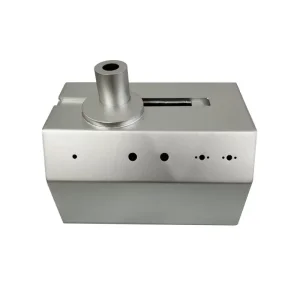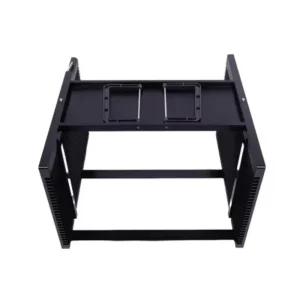
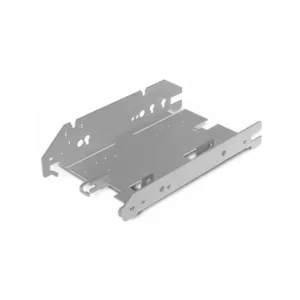
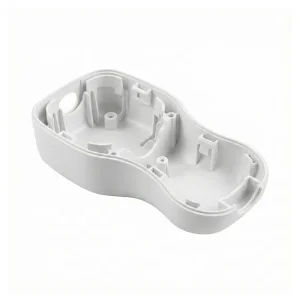
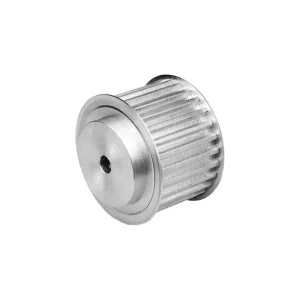
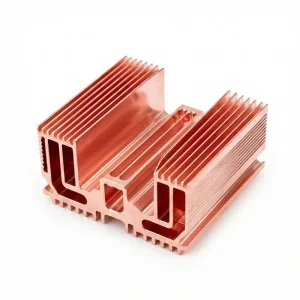
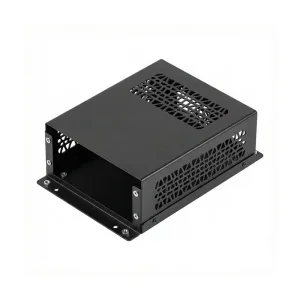
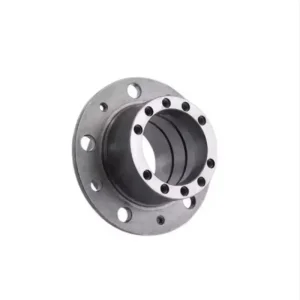
Precision OEM Aluminum & Metal Components
Explore our core engineered hardware solutions built with strict tolerance control down to ±0.005 mm.
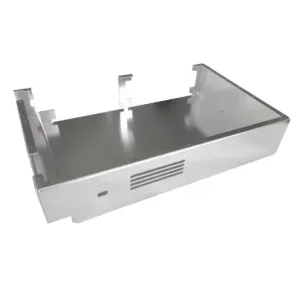
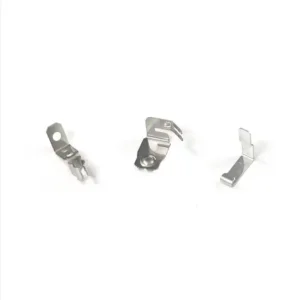
Macro Supply Chain Trends: Sourcing Precision Aluminum Machining from China
In the contemporary global manufacturing landscape, precision aluminum machining has evolved from a conventional subtractive tooling practice into an advanced, technology-driven discipline. As industries such as Electric Vehicles (EV), Aerospace & Defense, Semiconductor Manufacturing, Medical Instrumentation, and AI Edge Computing push the limits of mechanical tolerances and thermal management, sourcing custom aluminum components from China has transformed into a strategic supply chain imperative.
China's aluminum machining ecosystem offers an unparalleled combination of extensive material supply networks, complete vertical integration (from raw billet extrusion to advanced surface treatments), highly specialized engineering talent, and cutting-edge multi-axis CNC machinery. Modern procurement leaders look beyond basic piece-part pricing; they evaluate partners based on Total Cost of Ownership (TCO), Design for Manufacturability (DFM) support, material quality assurance, and robust intellectual property governance.
EV & Automotive Lightweighting
The global shift toward electric vehicles demands aggressive weight reduction to extend battery range. High-strength aluminum alloys (6061-T6, 7075-T6) are extensively machined into motor housings, battery enclosure frames, structural brackets, and inverter cold plates.
Semiconductor & Vacuum Hardware
Microchip manufacturing equipment requires ultra-pure aluminum components machined to micron-level flatnesses, cleanroom-compatible anodizing, and zero internal porosity for high-vacuum chamber applications.
AI Server & High-Power Thermal Systems
With compute density exploding, custom aluminum heatsinks, liquid cooling cold plates, and EMI/RFI-shielded server rack enclosures demand precision CNC slot milling, skiving, and leak-proof friction stir welding.
Aluminum Alloy Matrix & Precision CNC Technologies
Choosing the correct aluminum alloy grade is critical to balancing yield strength, machinability, corrosion resistance, thermal conductivity, and weight parameters. Below is a comprehensive reference matrix utilized by our engineering department during DFM evaluations.
| Alloy Grade | Tensile Strength (MPa) | Machinability Index | Key Characteristics & Properties | Primary Industrial Applications |
|---|---|---|---|---|
| Aluminum 6061-T6 | 310 MPa | Excellent (80%) | Versatile, highly weldable, superior anodizing response, excellent structural integrity. | Electronic enclosures, automotive frames, machine bases, structural fittings. |
| Aluminum 7075-T6 | 572 MPa | Fair to Good (70%) | Ultra-high strength-to-weight ratio, comparable to structural steel, superior fatigue resistance. | Aerospace structural links, high-stress defense hardware, high-end sporting gear, racing hubs. |
| Aluminum 2024-T3 | 483 MPa | Fair (70%) | High strength, excellent fatigue endurance, lower corrosion resistance (requires cladding or coating). | Aircraft skins, shear webs, tension members, structural fasteners. |
| Aluminum 5052-H32 | 228 MPa | Moderate (60%) | Outstanding marine corrosion resistance, high workability and sheet metal draw-formability. | Marine hulls, fluid tanks, electronic chassis panels, sheet metal cabinets. |
| Aluminum 6082-T6 | 340 MPa | Excellent (80%) | European structural standard alloy, exceptional corrosion resistance, high mechanical strength. | Trusses, cranes, bridges, heavy-duty machinery frames, transportation hardware. |
| Aluminum MIC-6 (Cast) | 165 MPa | Superior (95%) | Stress-relieved cast plate, zero internal stress, superior dimensional stability after heavy machining. | Precision fixture plates, semiconductor tooling bases, high-accuracy inspection tables. |
5-Axis Simultaneous CNC Milling
Enables single-setup machining of complex organic geometries, reducing compound tolerance stack-ups. Essential for aerospace impellers, medical prosthetics, and intricate liquid-cooling channels.
Swiss Screw Turning & High-Speed Lathes
Optimized for high-volume cylindrical components such as threaded connectors, fluid adapters, valve spools, and precision shafts, holding tolerances as fine as ±0.002 mm.
Surface Finishing & Anodizing Spectrum
Full suite of post-machining treatments: Type II Decorative Anodizing (Color Matching), Type III Hardcoat Anodizing (MIL-A-8625), Chromate Conversion (Alodine 1200/SurTec 650), Electropolishing, Bead Blasting, and PVD Shielding.
Precision, Quality Governance & Factory Infrastructure
Our Shenzhen manufacturing facilities leverage automated inspection cells and state-of-the-art multi-axis CNC machinery to guarantee batch-to-batch consistency.
Advanced Inspection Equipment
Our metrology laboratories feature Zeiss 3D CMM machines, Keyence optical measurement systems, surface roughness testers, spectrometer material verifiers, and helium leak detectors for vacuum components.
Strict Quality Certifications
Fully compliant with international quality management systems including ISO 9001:2015, IATF 16949 (Automotive standard), and AS9100D (Aerospace quality framework). Full material traceabilities provided with Mill Test Reports (MTR).
IP Protection & Confidentiality
Your engineering designs and 3D CAD data are protected under legally binding non-disclosure agreements (NDAs). Encrypted secure server storage ensures zero leakage of proprietary technology.
How to Optimize Aluminum Machining Quotes & Cost Structures
Understanding the cost drivers behind CNC aluminum machining enables procurement officers and hardware designers to drastically cut unit costs without compromising structural integrity or aesthetic appeal.
1. Material Removal Rate (MRR) & Cycle Time
The volume of aluminum machined away directly dictates machine runtime. Designing parts to use standard extrusion sizes or casting preforms reduces rough-milling time and raw material waste.
2. Internal Radius Optimization
Sharp internal 90-degree corners require expensive EDM wire cutting or tiny end-mills operating at low feeds. Specifying internal corner radii equal to or larger than 1/3 of the pocket depth drastically speeds up milling.
3. Realistic Tolerance Specification
Over-specifying tight tolerances (e.g., ±0.005 mm on non-mating cosmetic surfaces) increases scrap rates and inspection overhead. Reserve high precision for bearing seats, O-ring grooves, and dowel pin alignment holes.
Future Trends in Aluminum CNC Machining (2026–2030)
As industrial automation and manufacturing technologies rapidly converge, our facilities are pioneering next-generation workflows to provide enhanced cost efficiency and sustainability for global clients.
AI-Driven CAM Path Generation
Utilizing machine-learning algorithms to analyze 3D toolpaths in real-time, eliminating tool chatter, optimizing spindle load, and reducing machine cycle times by up to 35% on complex aerospace components.
Hybrid Additive & Subtractive Manufacturing
Combining 3D metal printing (DMLS) of internal conformal cooling channels with high-precision 5-axis CNC finishing, unlocking unprecedented thermal performance in high-power electronics.
Sustainable Low-Carbon Aluminum
Integrating 100% recycled green aluminum billets produced with hydro-electric power, allowing OEM customers to fulfill strict Scope 3 carbon emission requirements for ESG reporting.
China Aluminum Machining Sourcing & Quote FAQ
Everything you need to know about getting accurate quotes, engineering reviews, lead times, and quality assurance.
How can I get an instant and accurate aluminum machining quote?
What standard tolerances can your factory achieve for CNC machined aluminum?
Why should I choose Aluminum 6061 over Aluminum 7075 for my project?
What quality documentation is included with international shipments?
How does your company handle intellectual property (IP) protection?
What are your typical lead times for prototypes versus mass production?
Specialized OEM Engineering Components
High-performance custom turned, cast, and CNC machined components for global enterprise buyers.