Spotlight OEM Engineering Solutions for Namibian Infrastructure
Engineered to survive corrosive coastal fog in Walvis Bay and high-vibration heavy mineral processing across Erongo and Karas regions.
-
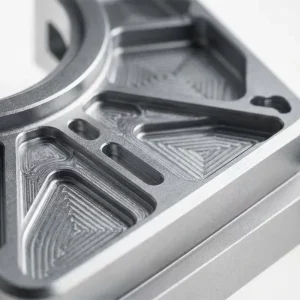
Custom Lightweight Structural Components for Namibia Drone & Geological Exploration
Explore Technical Specs -
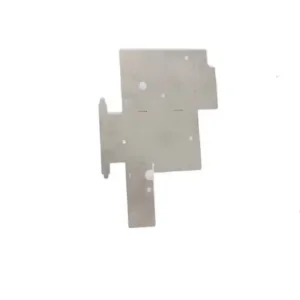
Heavy Duty Laser Cut Control Panels for Namibian Open-Pit Mining Fleets
Explore Technical Specs -
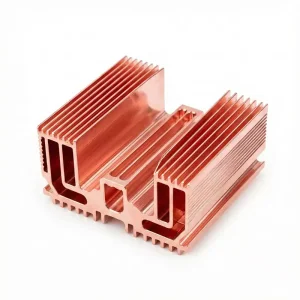
High-Efficiency Thermal Copper Heatsinks for Namibian Solar Substation Inverters
Explore Technical Specs -
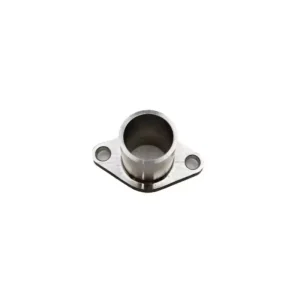
Marine-Grade Stainless Steel Castings for Walvis Bay Desalination & Slurry Handling
Explore Technical Specs
Industrial Landscape & Procurement Drivers in the Namibian Market
A comprehensive analysis of Southern Africa's rapidly scaling engineering, energy, and extractive industries.
Resource Extractive Dynamics & Harsh Ambient Operating Cycles
Namibia is globally renowned for Tier-1 mining resources, including the Husab and Rössing uranium assets, diamond mining along the coastline, and burgeoning lithium and zinc extraction projects. Equipment deployed in regions such as Erongo and Karas encounters severe operational degradation driven by particulate sand abrasion, extreme diurnal temperature variations (−2°C to 45°C), and hypersaline offshore oceanic spray.
OEM hardware procured for Namibian operations cannot rely on light-commercial tolerances. Structural linkages, wear-resistant hydraulic manifolds, and sensor casings require specialized metallurgy—ranging from 316L stainless steels to hardened alloy 4140 and anodized structural aluminum alloys. Our direct-to-factory manufacturing eliminates domestic supply deficits, providing mining project operators direct landed-cost parity with ISO 9001:2015 certification.
Green Hydrogen Corridors & Port of Walvis Bay Logistics
With massive green industrial projects expanding around Tsau //Khaeb National Park and Luderitz, alongside the deep-water transshipment hub at Walvis Bay, Namibia is transforming into Southern Africa’s clean tech and logistical center. The installation of massive MW-scale electrolyzers, solar plants, and coastal desalination facilities requires custom pipe fittings, skived fin heat sinks, and marine-grade junction boxes.
Traditional procurement routes via intermediaries often add 30-50% markups and substantial multi-month delays. By establishing direct CAD-to-dock routing from our precision facility in Shenzhen directly to the Port of Walvis Bay via established maritime shipping links, international project directors capture predictable lead times, fully trace batch certs, and secure critical component availability.
Macro Engineering Solutions: China Factory Precision Meets Namibian Specifications
Bridging the gap between initial mechanical prototyping and steady high-yield mass production runs.
Material Selection for Severe African Climates
Operating in Namibia exposes mechanical assemblies to dual threats: intense ultraviolet solar radiation coupled with fine silica particulate wear in the inland desert regions, and aggressive chloride attack in the coastal zones of Swakopmund and Walvis Bay. Standard sheet metal or unpassivated cast components quickly exhibit pitting corrosion and structural failure under load.
Our manufacturing protocols incorporate tailored material selection matrices to mitigate these risks. For fluid systems and pumps operating near desalination plants, we employ CF8M (316) and Duplex Stainless Steels (2205) with verified pitting resistance equivalent numbers (PREN). For outdoor electronics, telecommunication towers, and solar tracker controls, we implement hard-coat Type III anodizing (up to 50 μm) on 6061-T6 aluminum, providing exceptional surface hardness and electrical insulation capable of withstanding hundreds of hours of salt-spray testing per ASTM B117 standards.
Design For Manufacturability (DFM) & Rapid Prototyping
Before launching mass tooling or setting up high-tonnage stamping presses, our Shenzhen-based design office conducts comprehensive CAD/CAM optimizations. Using Moldflow simulation for complex plastic enclosures and 5-axis collision detection for structural housings, we identify undercuts, unmachinable radius intersections, and wall-thickness transitions that could induce thermal warping or sink marks.
This rigorous upfront DFM methodology provides international EPC contractors, civil engineers, and original equipment manufacturers in Windhoek and Swakopmund with total design certainty. Prototyping lead times average just 5 to 7 days for precision-turned components and wire-EDM components, ensuring rapid site installation trials before volume release.
Complete OEM Precision Catalog for Regional Southern African Deployment
Precision-milled brackets, electronic housings, thermal assemblies, and micro-tolerance turned components.
-
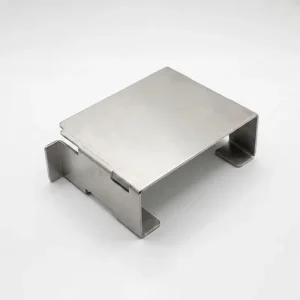
Heavy Duty Stainless Steel Mounting Brackets for Namibian Solar & Utility Installations
Explore Technical Specs -
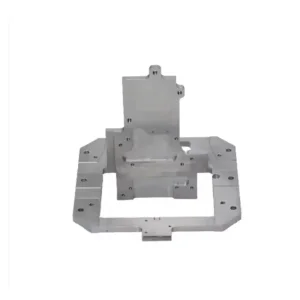
OEM CNC Milled Sub-Frames for Namibian Industrial Machinery & Rig Transport
Explore Technical Specs -
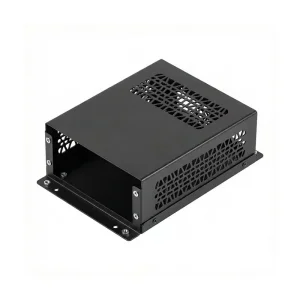
Sealed Aluminum Electronic Enclosures for Namibian Desert Remote Telemetry
Explore Technical Specs -
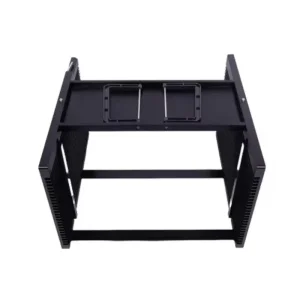
Ultra-Precision Machined Aluminum Carriers for Cleanroom Sensor Fabrication
Explore Technical Specs -
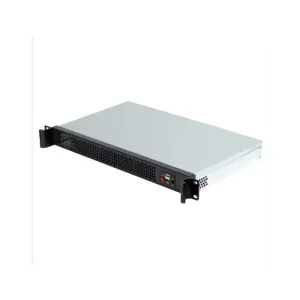
Modular 1U Stamped Metal Server Chassis for Namibian Banking & Telecom Data Hubs
Explore Technical Specs -
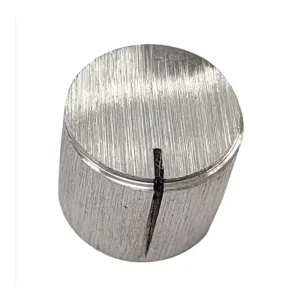
Brushed Finish Injection Molded Control Interfaces for Field Instrumentation
Explore Technical Specs -
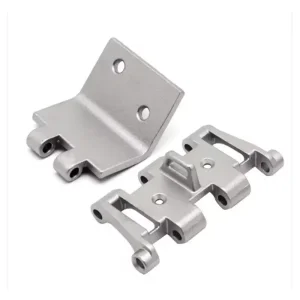
Investment Cast Stainless Steel Impellers & Wear Sleeves for Mineral Beneficiation
Explore Technical Specs -
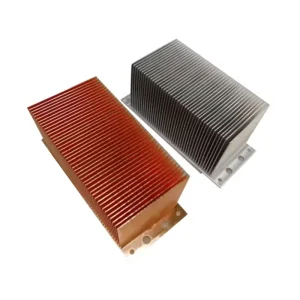
Skived Fin Aluminum Heat Sink Systems for Namibian Highway & Industrial LED Lighting
Explore Technical Specs
Why Global Procurement Heads Route Namibian Projects Through Our Shenzhen Plant
Combining world-class high-density precision clusters with transparent export documentation.
Shenzhen Tooling Speed & Complete Supply Density
Our industrial presence in China South City (Shenzhen) gives us instant access to raw billets, specialized surface treatment chemistry, raw extrusion lines, and certified metallurgy laboratories. Where conventional regional fabricators face weeks of downtime waiting for tooling tooling blanks or third-party coating lines, our vertically integrated plant executes CNC milling, precision wire cutting, stamping, and automated powder coating in continuous production flows.
This geographic concentration reduces manufacturing cycles by up to 60%, delivering completed prototype batches ready for air freight via Hosea Kutako International Airport (WDH) or containerized sea shipments straight into Walvis Bay without intermediate markups.
Rigorous Quality Governance & Traceability
Subcontracting precision parts for African heavy industry demands absolute documentation fidelity. Mining plant downtime can cost tens of thousands of dollars per hour. To guarantee field reliability, every batch produced in our facilities passes a strict 6-stage quality audit.
We supply full material spectroscopic test results, EN 10204 3.1 mill test certificates, First Article Inspection (FAI) reports, and Zeiss Coordinate Measuring Machine (CMM) dimensional verification charts with true positional tolerances down to ±0.005 mm. Buyers receive complete batch traceability, ensuring full compliance with corporate risk audits.
Frequently Asked Procurement Questions: Namibia & Global Projects
Real-world engineering answers concerning orders, logistics, metallurgy, and contracts.
What are your typical ocean and air lead times to Namibia?
For urgent prototypes and low-volume pilot components, we leverage express direct air freight to Windhoek (WDH) via major air corridors, which takes approximately 5 to 8 business days after dispatch. For mass production runs and heavy castings or stamping enclosures, consolidated full container load (FCL) or less-than-container load (LCL) shipments travel via direct maritime lanes to the Port of Walvis Bay. Port transit times typically range from 28 to 35 days, providing the lowest overall landed cost per unit.
How do you verify tolerances and prevent defects on complex parts?
Every component is manufactured under our ISO-aligned management system. Critical dimensions are validated using our in-house optical profile projectors and advanced multi-axis Zeiss Coordinate Measuring Machines (CMM). Prior to bulk packaging, our engineering team generates a comprehensive First Article Inspection (FAI) report covering all critical-to-function callouts, thread tolerances, surface roughness measurements (Ra), and coating thickness evaluations.
Can you manufacture replacement parts from broken or worn mining hardware?
Yes. If original manufacturing blueprints or STEP models are unavailable due to legacy obsolescence, you can send physical samples or high-precision 3D scan data directly to our technical center. Our reverse-engineering team will reconstruct fully detailed parametric 3D CAD files, perform DFM analysis, recommend upgraded metallurgy (e.g., swapping standard grey iron for high-nickel cast alloys or heat-treated duplex steel), and produce validation samples before full manufacturing runs.
What measures protect our proprietary CAD files and intellectual property?
We execute enforceable Non-Disclosure Agreements (NDAs) prior to receiving your CAD geometry, STEP assemblies, or operational data. Because we operate our own precision machining and stamping facility rather than acting as a third-party brokerage, your designs remain entirely within our internal engineering firewall. Data handling follows strict IT security protocols, eliminating unapproved dissemination or intellectual leakage.
What are your Minimum Order Quantity (MOQ) policies?
We support the complete project lifecycle. There are no minimum order quantities for initial CNC-machined prototypes or pilot-scale qualification runs; single-piece orders are welcomed to validate dimensional fit and field performance. For tooling-intensive processes like die casting, investment casting, and injection molding, we provide scalable volume pricing structures with tooling amortized to optimize your total project capital expenditure.
Accelerate Your Namibian OEM Project Today
Upload your 2D drawings or 3D CAD models (STEP, IGES, DXF) to receive full DFM feedback, material certification options, and competitive FOB/CIF Walvis Bay quotes within 24 hours.
Send Inquiry Now