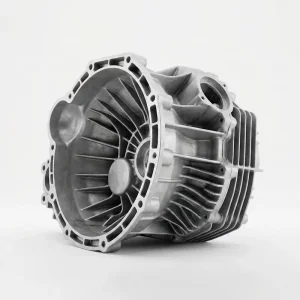
High-Demand OEM Stamping Products & Assemblies
Direct factory solutions engineered from CAD to mass production with verified material certifications and dimensional CMM inspection reports.
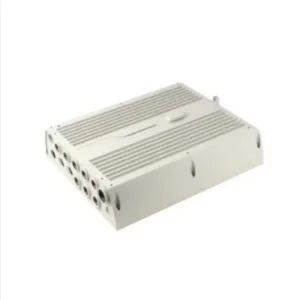
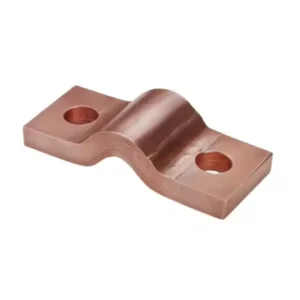
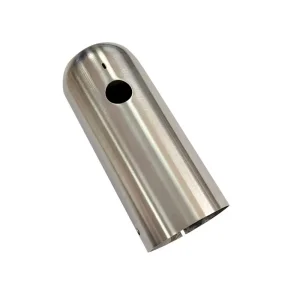
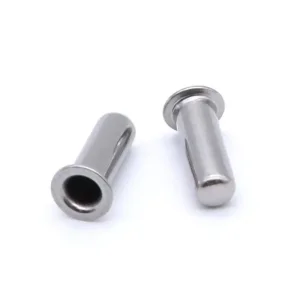
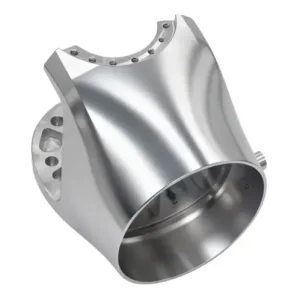
Architectural Mastery in OEM Stamping Dies Tooling & Design
In modern high-speed metalworking, an OEM stamping die is far more than a block of carved steel—it is a ultra-precise kinetic sub-system operating under immense cyclic stress, thermal friction, and micro-inch clearances. At our Shenzhen tooling headquarters, we bridge mechanical physics with advanced metallic diagnostics to fabricate tooling solutions capable of performing tens of millions of strokes at speeds exceeding 1,000 SPM (Strokes Per Minute).
Progressive Stamping Dies
Engineered for continuous multi-station processing. As the strip metal advances sequentially through punching, pilot positioning, coining, embossing, and bending stations, complete complex parts are produced per stroke with integrated scrap ejection and automated sensor piloting.
Deep Drawing Dies
Designed to transform flat sheet metal blanks into seamless hollow cylindrical, rectangular, or complex geometry housings. Utilizing precise blank-holder force management to eliminate wrinkling, thinning, and wall fracturing under severe plastic deformation.
Compound & Transfer Tooling
Combines multiple operations like blanking and piercing into a single stroke for absolute concentricity and flatness, or employs robotic transfer arms to move discrete heavy structural stampings across multi-stage press lines safely and efficiently.
Information Gain Insight: Selecting die steel without factoring in dynamic impact hardness and thermal dissipation coefficient leads to premature galling. We mandate vacuum heat treatment with cryogenic stabilization (-196°C) for all D2 and SKD11 tool steels to convert retained austenite into micro-crystalline martensite, extending die tool life by over 350%.
Die Metallurgy & Material Grade Selection Matrix
| Tool Steel Grade | Hardness (HRC) | Wear Resistance | Toughness | Recommended Application |
|---|---|---|---|---|
| AISI D2 / SKD11 | 58 - 62 HRC | High | Medium | Standard Blanking, Piercing & Bending Progressive Dies |
| DC53 (Cold Work Die Steel) | 60 - 64 HRC | Very High | High (2x vs D2) | High-Speed Precision Punching, Heavy Gauge Sheet Metal Dies |
| SKH-51 (M2 High Speed Steel) | 62 - 66 HRC | Ultra-High | Medium-High | Micro-Punch Inserts, Small Radius Bending Pin Inserts |
| Tungsten Carbide (WC-Co) | 88 - 92 HRA | Extreme | Moderate | Mass-Production Electronic Connector & Busbar Micro Stamping Dies |
| Cr12Mo1V1 | 56 - 60 HRC | Moderate-High | Good | Medium-Volume Structural Die Casting Trimming & Stamping Dies |
Macro Industry Trends Shaping Stamping Die Procurement
As global OEMs accelerate shifts toward EV powertrains, compact AI server architectures, and medical device miniaturization, procurement teams face stringent technical bottlenecks. Tooling specifications are shifting from traditional high-volume single-part dies to modular, quick-change progressive tooling systems capable of handing Advanced High-Strength Steels (AHSS) and laminated non-ferrous alloys.
EV Battery & Busbar Stamping
Transitioning to multi-layer flexible laminated copper busbars and high-capacity battery cell tabs requires zero-burr blanking dies (burr height < 0.005mm) to prevent catastrophic electrical short circuits in high-voltage packs.
AI Server & Micro-Connectors
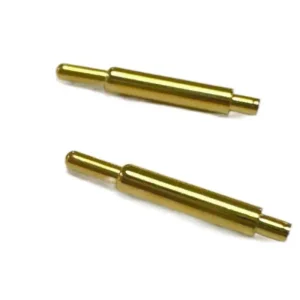
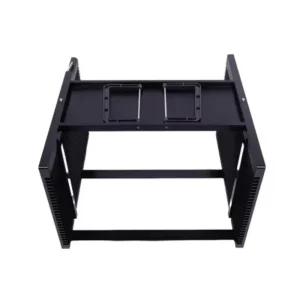
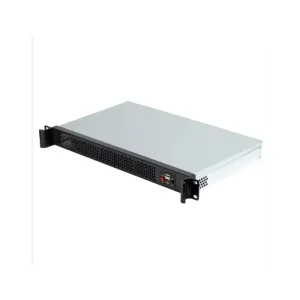
1U/2U server rack enclosures demand structural sheet metal stamping with tight hole pitch alignment. High-frequency pogo pins and gold-plated PCB terminals require carbide micro-dies operating at 1,200+ SPM.
AHSS & Springback Control
Forming ultra-high-strength automotive structural steel requires advanced FEA software simulation (AutoForm) to calculate material springback pre-emptively, eliminating trial-and-error tooling modifications.
Next-Gen Technology Roadmap: Smart Dies & Digital Twins
Modern tooling engineering has evolved beyond empirical hand fitting. We utilize an end-to-end digital twin pipeline—combining AutoForm sheet metal forming simulation, CAD/CAM 3D solid modeling, and CNC Wire EDM cutting—to compress lead times while maximizing tool reliability.
AutoForm Simulation
Predicting thinning, wrinkling, and springback behavior during initial strip layout design before steel cutting commences.
Slow-Feed Wire EDM
Utilizing Sodick and Seibu Swiss Wire EDM machinery to achieve surface roughness Ra 0.1μm and insert clearance of 0.003mm.
In-Die Sensor Integration
Installing optical and acoustic emission sensors into progressive dies to detect double-feed, strip jam, and punch breakage instantly.
PVD/CVD Surface Coating
Applying TiAlN, DLC (Diamond-Like Carbon), or TD (Thermal Diffusion) coatings to die inserts to drastically lower friction coefficients.
Global Compliance, Local Engineering Support
Navigating international procurement requires stringent adherence to regulatory standards and transparent documentation. Every stamping die and custom part manufactured at our factory undergoes rigorous Quality Assurance routines before export.
- Full Traceability: Mill material test certificates (MTC) supplied per EN 10204 3.1.
- Dimensional Inspection: Hexagon CMM full-dimension mapping reports with FAI (First Article Inspection) approval.
- Compliance Guarantee: 100% REACH, RoHS, Heavy Metal Free, and Conflict Mineral Compliance.
- PPAP Level 3 Documentation: Available for automotive and aerospace OEM buyers.
Factory OEM Support Guarantee
We maintain direct technical communication lines between our Senior Tooling Engineers and your design team.
Frequently Asked Questions on OEM Stamping Dies
Everything engineering and purchasing teams need to know regarding die lifespan, lead times, tolerances, and design optimization.
What is the typical lead time for a high-precision progressive stamping die?
How do you guarantee the stroke life of your stamping dies?
What stamping tolerances can your factory consistently maintain?
Can you manufacture stamping dies based on our existing sample parts without CAD drawings?
How do you handle material springback issues in high-strength steel metal stamping?
What quality documentation is supplied with exported OEM dies?
Do you offer low-volume prototype stamping prior to full hard tooling investment?
What are your intellectual property (IP) protection policies for client CAD files?
Comprehensive Metal & Molded Components Portfolio
Explore our extended manufacturing lineup including die-casting, precision CNC turning, busbars, and custom enclosures.