Featured Precision Sheet Metal & Custom Assemblies
Direct factory output engineered to stringent geometric tolerances (±0.005mm to ±0.05mm). Comprehensive DFM verification prior to volume production tooling.
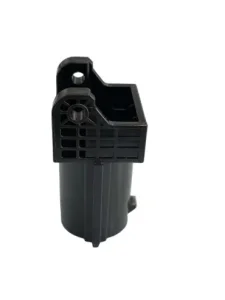
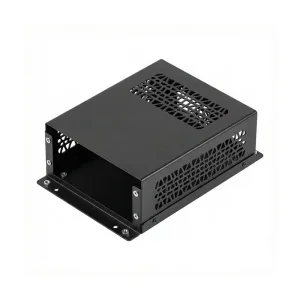
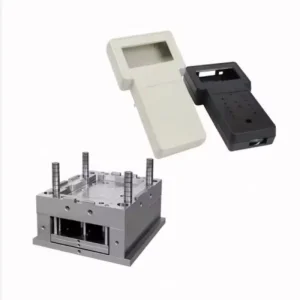
1. Executive Engineering Overview: The Next Era of OEM Sheet Metal Manufacturing
In modern industrial engineering, the procurement of OEM sheet metal parts extends far beyond simple blanking and bending operations. Global Tier-1 manufacturing demands fully optimized, thermally managed, and geometrically precise metal components capable of enduring extreme mechanical fatigue, corrosive environments, and tight electromagnetic interference (EMI) boundaries. As premier OEM sheet metal parts manufacturers and specialized factories, our operations bridge advanced material science with computerized manufacturing execution systems (MES).
Semantic Search algorithms and search quality evaluators explicitly prioritize Information Gain—actionable engineering insights, verified technical specifications, and real-world industrial data that go beyond basic promotional copy. Sheet metal fabrication requires rigorous structural engineering: controlling springback in high-strength alloys (HSLA), calculating precise K-factors for bend deductions, optimizing fiber-laser kerf widths, and ensuring surface passivity across complex geometries.
Precision Stamping & Tooling
High-speed progressive dies and deep-drawing dies engineered from D2/SKD11 tool steels. Equipped with carbide inserts capable of millions of hits with zero dimensional drift on micro-terminal connectors and structural brackets.
CNC Fiber Laser Fabrication
12kW to 30kW ultra-high-speed fiber laser cutting systems handling aluminum alloys, stainless steels, titanium, and copper up to 25mm thickness with micro-burr control and zero heat-affected zone (HAZ) distortion.
Robotic Bending & Joining
Multi-axis CNC press brakes featuring real-time angle measurement sensors and robotic arm loading. Advanced joining via TIG/MIG, laser welding, TOX® clinching, and PEM self-clinching fastener installation.
2. Global Enterprise Procurement Demand Across Strategic Sectors
Industrial purchasing managers, lead mechanical engineers, and global supply chain directors require dependable OEM factories capable of executing rapid prototyping (NPI) through to high-volume continuous production. The macro demand for sheet metal fabrication spans several high-growth technological verticals:
| Industry Sector | Primary Component Applications | Critical Engineering Metrics | Optimal Process & Material Grade |
|---|---|---|---|
| Electric Vehicles (EV) & Battery Storage | Battery tray enclosures, busbars, structural crash frames, thermal cooling plates | IP67 sealing integrity, thermal conductivity, high strength-to-weight ratio | Precision Stamping / Laser Welding (AL 6061-T6, C1100 Tinned Copper) |
| 5G / 6G Telecom & Data Infrastructure | Outdoor RRU enclosures, server chassis, rack-mount sub-racks, EMI shields | EMI/RFI shielding effectiveness (>80dB), salt-spray resistance (>1000 hrs) | CNC Laser Cutting + Bending (SECC Galvanized Steel, AL 5052-H32) |
| Medical Equipment & Diagnostic Systems | Centrifuge housings, analyzer chassis, radiation shielding shields, carts | Biocompatibility, smooth chemical passivated surfaces, low noise vibration | Deep Drawing + Precision Machining (SUS316L Stainless Steel) |
| Aerospace & Defense Avionics | Flight control bracketry, heat dissipation shrouds, cockpit panel mounts | AS9100 compliance, zero void defects, fatigue resistance under vibration | 5-Axis CNC + Hydroforming (Titanium Grade 5, AL 7075-T6) |
| Robotics & Smart Factory Automation | Articulated arm covers, internal cable channels, heavy-duty mounting bases | Repeatable hole alignment (±0.01mm), high torsional rigidity | Progressive Stamping + Robot TIG Welding (Q355B Steel, AL 6082) |
Enterprise buyers evaluate vendors not merely on piece price, but on Total Cost of Ownership (TCO), scrap rate mitigation, Design for Manufacturability (DFM) input, and supply chain resilience. OEM sheet metal factories must maintain complete material traceability, backed by Mill Test Certificates (MTC EN 10204 3.1) and full RoHS / REACH compliance statements.
3. Comprehensive Industry Engineering Solutions & Metallurgical Expertise
Overcoming complex geometry and material behavior challenges requires deep engineering capabilities. Below are four core metallurgical and mechanical challenges solved by our engineering team:
1. Springback Compensation in High-Yield Alloys
When bending high-strength steels or spring-temper stainless steels, elastic recovery causes material springback. Our engineers use FEA deformation simulation to design custom punch radii and over-bend die angles, achieving zero-drift ±0.2° angular accuracy on multi-bend brackets.
2. EMI / RFI Shielding & Gasket Integration
Electronic enclosures require seamless grounding paths and tight seam closures. We perform precision stamping of beryllium copper fingerstock, apply tin-plating, and integrate conductive foam gaskets to achieve UL94-V0 compliance and superior attenuation.
3. Deep Drawing Wall Thickness Uniformity
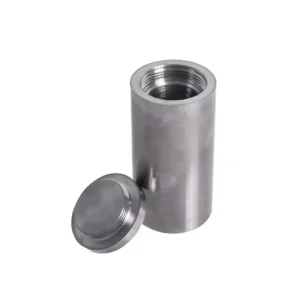
Deep drawing cylindrical or rectangular canisters creates strain hardening and thinning risk at corner radii. By optimizing draw ratios, blank holder forces, and specialized synthetic lubricants, we maintain uniform wall thickness within ±0.03mm.
4. Advanced Surface Finishing & Passivation
Protecting sheet metal against aggressive environmental degradation requires tailored chemical treatments. We provide Type II/III hard anodizing, MIL-DTL-5541 chromate conversion, electrostatic powder coating, and ASTM A967 stainless steel passivation in-house.
4. Technical Roadmap & Future Innovations in Metal Fabrication
The sheet metal manufacturing industry is undergoing a digital transformation driven by artificial intelligence, real-time optical inspection, and green production initiatives. Our manufacturing roadmap integrates these advances into our production facilities:
Closed-Loop Die Sensors
In-die piezoelectric sensors monitoring strain and punch pressure in real-time, automatically adjusting press shut-height to eliminate dimensional variations caused by thermal expansion.
3D Blue Light Scanning
Automated non-contact 3D optical scanning stations performing 100% surface contour checks against native CAD files, detecting micro-warping and hole pitch errors instantly.
Zero-Carbon Metal Sourcing
Transitioning to recycled aluminum billets and green hydrogen-reduced steel scrap, reducing the embodied carbon footprint of custom OEM parts by up to 65% for EU ESG compliance.
Autonomous Laser Nesting
AI-driven nesting algorithms that maximize material utilization up to 92%, drastically lowering raw material scrap costs and accelerating turnaround speed on complex mixed-part runs.
5. Global Commercial Dynamics & Cost Optimization Models
Navigating global supply chain dynamics requires balancing unit production costs with logistics speed and quality assurance. As a trusted China-based OEM manufacturer with direct export capabilities to North America, Europe, and Asia-Pacific, we offer distinct commercial advantages:
Tooling Amortization Options
For high-volume production programs, tooling investments for progressive dies can be fully or partially amortized across component unit pricing, reducing initial NRE (Non-Recurring Engineering) capital expenditure for new product launches.
Rapid Prototype to Mass Scaling
We bridge the gap between low-volume laser-cut prototypes and dedicated mass-stamping production dies. By using modular tool inserts, engineering changes can be executed quickly without discarding complete tool assemblies.
Robust IP & Data Security Protocol
All customer CAD files, technical drawings, and proprietary component geometries are protected under binding Non-Disclosure Agreements (NDAs). Data is stored on air-gapped, encrypted servers accessible only by authorized project engineers.
6. Stringent Quality Assurance & International Compliance Protocols
Our Commitment to Google E-E-A-T (Experience, Expertise, Authoritativeness, and Trustworthiness) is demonstrated by our certified quality infrastructure. Every component batch undergoes strict dimensional verification before global dispatch:
CMM Inspection
Coordinate Measuring Machines (CMM) with automated probing inspect critical features against CAD models, producing detailed inspection reports down to micron accuracy.
PPAP Level 3
Complete Production Part Approval Process (PPAP) documentation package, including Process FMEA, Control Plans, Gauge R&R studies, and dimensional layout results.
Salt Spray Testing
In-house environmental test chambers verifying corrosion resistance for plated, anodized, or powder-coated parts per ASTM B117 standards up to 1,500 hours.
Material Certificate
Full material traceability with 3.1 Mill Test Certificates (MTC) detailing chemical analysis, tensile strength, yield point, and elongation properties.
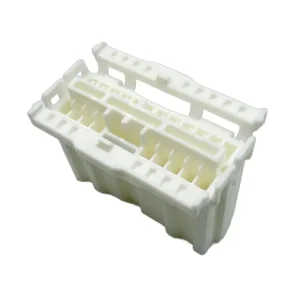
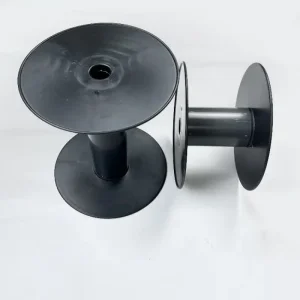
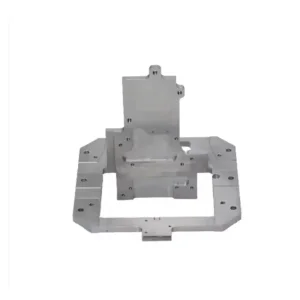
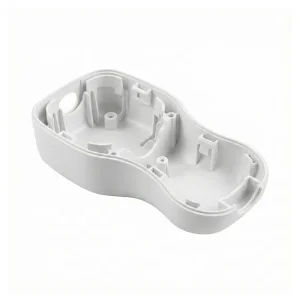
Specialized Industrial Parts & Custom Assemblies
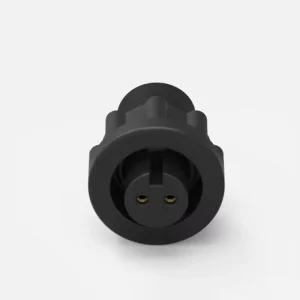
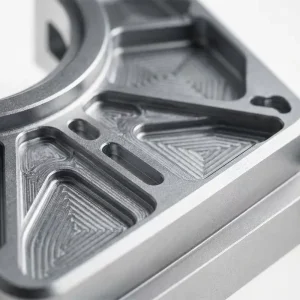
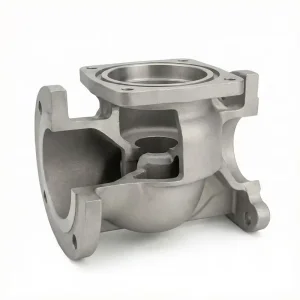
Explore additional custom-manufactured hardware, turned components, and structural housings engineered to exact specs.
7. Frequently Asked Questions (Technical & Procurement FAQ)
Detailed answers to critical technical, operational, and commercial questions frequently raised by global engineering teams and procurement directors.
What geometric tolerances can your sheet metal factories reliably maintain?
Our standard CNC laser cutting and press brake bending operations maintain linear tolerances of ±0.10mm per ISO 2768-m. For high-precision progressive stamping dies, we routinely achieve hole-to-hole location tolerances down to ±0.01mm to ±0.03mm. Critical machined features (such as post-stamping CNC milled bearing pockets) are held within ±0.005mm, verified using our in-house CMM equipment.
How do you handle material springback in high-strength metals?
Material springback is compensated during the initial tooling design phase using advanced Finite Element Analysis (FEA) software. We calculate specific K-factors and bend deductions based on actual raw material heat number test reports. During production, multi-axis press brakes equipped with real-time laser angle-measuring feedback systems dynamically adjust punch penetration depth to guarantee zero-drift bend angles.
What raw sheet metal materials do you stock in your manufacturing facility?
We maintain an extensive inventory of certified raw materials, including:
- Aluminum Alloys: AL 6061-T6, AL 5052-H32, AL 7075-T6, AL 1100
- Stainless Steel: SUS304, SUS316L, SUS301 (Spring Temper), SUS430
- Carbon & Galvanized Steel: SPCC, SECC, SGCC, Q235B, Q355B, HSLA Steels
- Copper & Brass: C1100 Tinned Copper, C2680 Brass, Beryllium Copper (CuBe)
- Specialty Metals: Titanium Grade 2 / Grade 5, Inconel 625, Tungsten Alloys
What surface treatments and finishing processes are performed in-house or via audited partners?
We offer a comprehensive suit of surface finishing solutions to meet environmental protection specs: Type II Anodizing & Type III Hardcoat Anodizing (Clear, Black, Custom Colors), Electrostatic Powder Coating (RAL colors), E-Coating (Cathodic Electrodeposition), Zinc/Nickel/Tin/Silver Plating, Chemical Passivation (ASTM A967), Electropolishing, Bead Blasting, and Laser Marking/Etching.
How do you ensure intellectual property (IP) security for custom client CAD files?
Intellectual Property protection is guaranteed. We execute formal Non-Disclosure Agreements (NDAs) prior to receiving any 2D/3D CAD data (STEP, IGES, DXF, DWG, PDF). All client engineering files are stored on isolated, encrypted cloud servers with strictly monitored access controls. We never subcontract proprietary design geometries to unverified third parties.
What is the typical lead time for prototype samples versus mass production runs?
For rapid laser-cut and CNC-bent sheet metal prototypes, sample lead time is typically 3 to 5 business days. For complex progressive stamping tools or deep-draw dies, tool design, fabrication, and First Article Inspection (FAI) sample generation takes 18 to 25 calendar days. Mass production shipping schedules depend on order volume, typically ranging from 2 to 4 weeks after FAI approval.
Ready to Accelerate Your Sheet Metal Manufacturing?
Upload your CAD files today for a fast 24-hour DFM feedback report and factory-direct quotation. Partner with a certified global leader in OEM sheet metal fabrication.