
Featured High-Volume OEM Precision Components
Immediate access to our specialized OEM turned, milled, and stamped custom component matrix engineered for high-density production runs.

The Commercial & Macroeconomic Reality of High-Volume OEM CNC Manufacturing
Analyzing global supply chain migration, process economics, and the shift toward zero-defect, highly-automated batch processing.
1. Global Market Dynamic & Cost Curve Attenuation
The global CNC machining market is transitioning rapidly from fragmented job-shop models to integrated OEM manufacturing centers. High-volume computer numerical control (CNC) manufacturing is no longer defined merely by spindle speed, but by total unit-cost attenuation over large-batch iterations (10,000 to 1,000,000 units). As global OEM buyers in aerospace, automotive, medical, and consumer electronics demand tighter lead times and multi-tier compliance, modern factories must leverage Automated Pallet Changers (APC), high-density multi-axis clamping, and dynamic tool-wear algorithms to compress cycle times without introducing micro-geometrical variance.
2. Information Gain: Bridging Design & Scalable Volume
A primary bottleneck in OEM high-volume procurement is the "Prototype-to-Mass-Production Gap." Components optimized for low-volume milling often suffer from excessive tool movement, cycle bottlenecks, and thermal drift when scaled to continuous production runs. True information gain lies in implementing Design for Manufacturability (DFM) during early engineering phases: selecting materials with optimal machinability ratings (such as 6061-T6 vs 7075-T6 aluminum or C36000 brass), streamlining internal radius parameters to fit standard endmill aspect ratios, and designing datum structures that fit automated hydraulic fixtures.
3. Supply Chain Resiliency & Direct Factory Integration
Navigating global logistics requires vertical factory transparency. Working directly with precision hardware manufacturers eliminates middle-man margins and prevents intellectual property dilution. From raw bar-stock verification to multi-pass Swiss turning, multi-axis milling, surface post-treatment (Type II/III anodizing, passivation, PVD), and final CMM dimensional validation, single-source OEM suppliers ensure uninterrupted supply lines with traceable Material Test Reports (MTRs) matching EN 10204 3.1 certification protocols.
Multi-Axis Machining Methodologies & Process Selection
Evaluating process capabilities, volumetric efficiency, and tolerance control across primary high-volume manufacturing routes.
| CNC Technology Route | Ideal Batch Volume | Tolerance Capability | Geometric Complexity | Primary Industrial Use Cases |
|---|---|---|---|---|
| Swiss-Type Lathe Turning | 10,000 – 1,000,000+ | ±0.002 mm – ±0.005 mm | High Aspect Ratio Cylindrical | Medical pins, hydraulic valve spools, electrical connector pins, micro-shafts. |
| 5-Axis Simultaneous CNC Milling | 500 – 50,000+ | ±0.005 mm – ±0.010 mm | Complex Freeform 3D Surfaces | Aerospace impellers, drone joint housings, optical lens barrels, robot articulators. |
| High-Speed 4-Axis Horizontal Machining (HMC) | 5,000 – 200,000+ | ±0.008 mm – ±0.015 mm | Multi-Sided Prismatic Housings | Automotive engine brackets, pump impellers, manifold blocks, thermal sinks. |
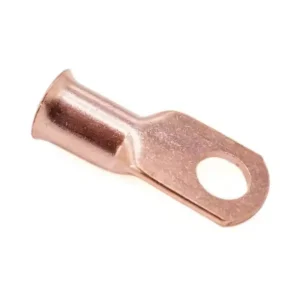
| Precision Progressive Metal Stamping | 50,000 – 5,000,000+ | ±0.015 mm – ±0.030 mm | Formed Sheet Components | Battery crimp terminals, EMI shielding covers, lug ring connectors. |
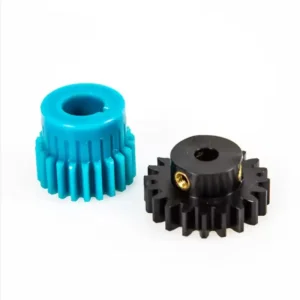
| Injection Molding + Precision CNC Finishing | 10,000 – 500,000+ | ±0.010 mm (Post Machined) | Hybrid Plastic-Metal Structures | POM precision gears, connector housings, automotive PBT shells. |
Localized Application Scenarios & Sector Solutions
How high-volume OEM machining solves critical failure points across demanding operational environments.
High-Pressure Hydraulic & Electrical Interfaces
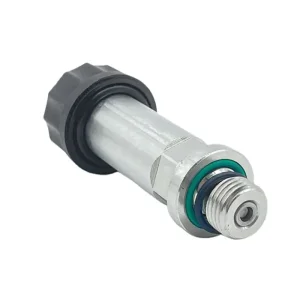
In modern Electric Vehicles (EVs) and heavy machinery hydraulics, solenoid valve cores and electrical connector shells demand zero-leakage tolerances. Machining turned parts from grade-316 stainless steel or tellurium copper ensures chemical resistance against harsh synthetic hydraulic fluids and high-voltage arcing. By applying micro-finish diamond turning (Ra < 0.4 μm), we prevent seals from premature abrasion, reducing warranty claim rates for Tier-1 automotive integrators.
Thermal Expansion & Structural Breadboards
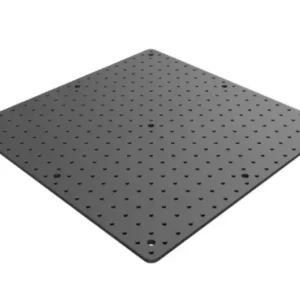
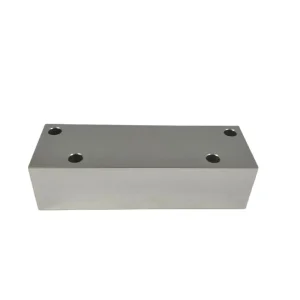
Optical lens barrels and solid aluminum breadboards require exceptionally flat datum surfaces (≤ 0.01 mm per meter) to maintain laser beam alignment. Utilizing stress-relieved MIC-6 or 6061-T6 aluminum alloys combined with high-precision 5-axis flying-cutter milling, our factory delivers ultra-stable platforms that mitigate ambient thermal expansion during continuous high-power laser operation.
Robotic Joints & Carbon Fiber Frame Kits
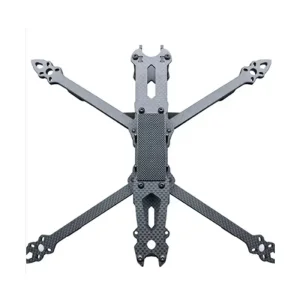
Autonomous agricultural quadcopters and humanoid robot joint housings demand extremely high strength-to-weight ratios. CNC machined 7075-T6 aluminum robot articulators, combined with high-modulus 3K carbon fiber plates, provide the exact structural stiffness necessary to withstand sudden dynamic torque loads without adding parasitic weight to battery systems.
Technology Roadmap: The Era of Cyber-Physical Machining (2026–2035)
Anticipating technological disruptions in autonomous machining cells, generative AI toolpathing, and zero-carbon metalworking.
Phase 1: Real-Time Closed-Loop Metrology
Integration of on-spindle optical probes and acoustic emission sensors that dynamically adjust feed rates and spindle speeds to offset cutting tool wear during ongoing 24/7 production shifts.
Phase 2: Autonomous Lights-Out FMS
Fully automated robot arm loading, automated raw stock loading via AGVs, and machine-vision sorting that reduces human intervention to zero during batch machining cycles.
Phase 3: Generative CAM & DFM Neural Networks
AI algorithms analyzing raw 3D CAD files in seconds to automatically generate optimal multi-axis toolpaths with zero chance of spindle collisions and minimized material removal paths.
Phase 4: Sustainable Green Machining
Implementation of Minimum Quantity Lubrication (MQL), 99.8% chip recycling loops, and carbon-tracked manufacturing data uploaded directly to customer Scope 3 emissions portals.
E-E-A-T Compliance: Systematic Verification Protocols
Delivering certified precision through standardized inspection equipment, statistical process control, and full material lot traceability.
1. Raw Material Spectrometry & Traceability
Every batch of aluminum extrusions, brass rods, or stainless steel billets undergoes X-ray Fluorescence (XRF) spectrometry analysis prior to machining. This guarantees compliance with RoHS, REACH, and DFARS standards, preventing sub-standard alloy contamination from compromising structural components.
2. In-Process Statistical Process Control (SPC)
During high-volume runs, automated CMMs inspect critical dimensions every 50 parts. We measure parameters against target Cpk ≥ 1.67 thresholds. Control charts track micro-variances, triggering automatic tool offset corrections long before tolerances drift toward control limits.
3. First Article Inspection (FAI) & PPAP Level 3
For high-reliability sectors, we deliver full AS9102-compliant First Article Inspection (FAI) reports, including ballooned drawings, material certifications, plating thickness test reports, and Production Part Approval Process (PPAP Level 3) documentation.
Frequently Asked Questions: High-Volume OEM CNC Production
Addressing critical procurement, engineering, and manufacturing validation questions for global OEM sourcing managers.
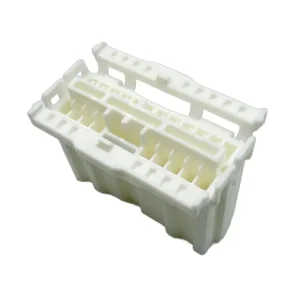
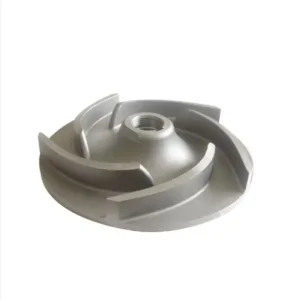
Precision Turned, Cast & Molded OEM Assemblies
Explore our extended portfolio of specialized metal and plastic engineered components built for global equipment manufacturers.
Ready to Scale Your High-Volume CNC Machining Production?
Upload your 2D/3D CAD drawings today to receive a comprehensive DFM analysis, tolerance optimization report, and factory-direct volume price quote within 24 hours.