Engineered Components & Machined Assemblies
Direct factory supply of precision metal, plastic, and multi-material hardware manufactured under strict ISO quality frameworks.
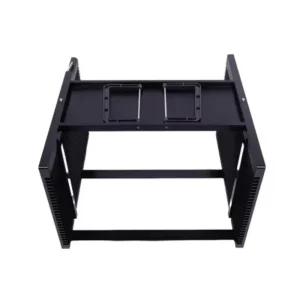
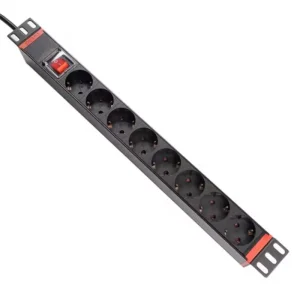
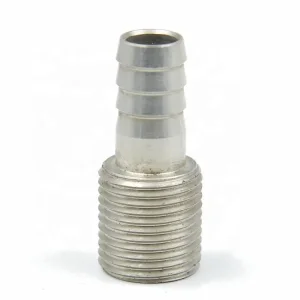
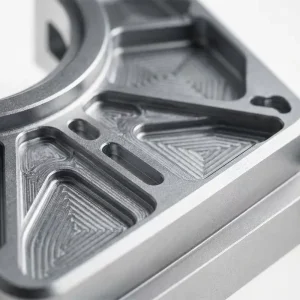
Industrial ODM Waterjet Cutting Services: Cold Machining Mechanics & Precision OEM Integration
In modern precision manufacturing, thermal distortion remains one of the primary mechanisms of structural degradation during stock blanking and net-shape profiling. Abrasive Waterjet (AWJ) technology provides an indispensable solution: a zero-Heat-Affected-Zone (HAZ) cold-cutting methodology capable of processing refractory metals, advanced composites, delicate optical polymers, and thick structural steel plates with sub-millimeter fidelity.
Zero Heat-Affected Zone (HAZ)
Eliminates thermal stress, micro-cracking, phase changes, and heat-induced warping. Preserves parent material metallographic integrity and hardness across titanium, armor steel, and aluminum 7075.
5-Axis Dynamic Taper Compensation
Advanced real-time articulation offsets natural waterjet stream dispersion, yielding perpendicular cut faces down to ±0.05° taper and linear accuracy reaching ±0.025 mm across deep sections.
Versatile Material Spectrum
Cuts virtually any engineering stock: carbon fiber reinforced polymers (CFRP), sapphire, Inconel, bulletproof glass, silicone rubber, tool steel, and high-purity optical grade polycarbonates.
Abrasive Waterjet vs. Thermal & Mechanical Cutting Technologies
Procurement managers and mechanical design engineers must evaluate cutting technologies based on material yield, secondary finishing costs, edge geometry, and metallurgical preservation. The comparative matrix below outlines performance parameters of Abrasive Waterjet (AWJ) cutting against Fiber Laser, Plasma, and Wire EDM.
| Evaluation Parameter | Abrasive Waterjet (AWJ) | High-Power Fiber Laser | CNC Plasma Cutting | Wire EDM (Electrical Discharge) |
|---|---|---|---|---|
| Thermal Distortion / HAZ | None (Cold Cutting, <60°C) | High (Localized Heat Affected Zone) | Extreme (Warping & Slag Formation) | Minimal (Localized Thermal Melt Zone) |
| Maximum Stock Thickness | Up to 250 mm (10 inches) | 25 mm – 30 mm (Steel/Alu) | 50 mm – 80 mm (Heavy Plate) | Up to 300 mm (Conductive Only) |
| Material Compatibility | Universal (Metals, Plastics, Glass, CFRP) | Metals, select acrylics (Reflective materials problematic) | Conductive metals only (Steel, Stainless, Aluminum) | Strictly conductive metals only |
| Edge Finish Quality (Ra) | Ra 1.6 µm – Ra 6.3 µm | Ra 3.2 µm – Ra 12.5 µm | Ra 12.5 µm – Ra 25 µm | Ra 0.4 µm – Ra 1.6 µm |
| Kerf Width / Beam Diameter | 0.7 mm – 1.1 mm (Fine abrasive orifice) | 0.1 mm – 0.3 mm (Ultra-fine beam) | 1.5 mm – 3.0 mm (Wide kerf) | 0.1 mm – 0.3 mm (Wire diameter) |
| Delamination Risk (Composites) | Zero (With low-pressure pierce piercing) | High (Polymer matrix charring) | Not Applicable (Non-conductive) | Not Applicable (Non-conductive) |
Precision Waterjet ODM Architecture: From Raw CAD to Finished Assembly
Delivering repeatable tolerances of ±0.025 mm demands complete control over hydraulic pressure dynamics, abrasive metering, and motion trajectory control. Our engineering setup leverages ultra-high pressure (UHP) intensifier pumps delivering up to 6,200 bar (90,000 PSI) coupled with closed-loop CNC control systems.
1. Ultra-High Pressure Fluid Dynamics
Water is pressurized using dual-plunger ceramic intensifiers and forced through a micro-ruby or diamond orifice (typically 0.25mm to 0.35mm diameter). The resulting supersonic water stream reaches velocities approaching Mach 3, converting hydrostatic pressure into kinetic energy.
2. Venturi Abrasive Mixing & Focusing
Inside the mixing chamber, high-velocity water creates a vacuum effect (Venturi principle), drawing precisely metered Barton Mines 80-mesh or 120-mesh Australian Garnet. The abrasive particles accelerate inside a tungsten carbide focusing tube, turning into an erosion cutting tool.
3. Dynamic Taper Control Kinematics
Traditional waterjets produce a V-shaped taper due to stream energy dissipation. Our 5-axis articulation heads calculate cutting speed, material thickness, and nozzle lag in real-time, automatically tilting the jet head outward to cancel edge taper and achieve perfectly perpendicular cut walls.
Industrial Scale & Operational Milestones
Our Shenzhen manufacturing hub blends rapid ODM prototyping with high-capacity production runs, executing complex multi-process hardware jobs under single-source accountability.
Industry-Specific ODM Applications & Application Scenarios
From critical aerospace structural elements to subsea oil & gas manifolds, our waterjet cutting services integrate into global supply chains demanding stringent material performance and zero thermal alterings.
Aerospace & Defense Structural Blanking
Processing thick Titanium 6Al-4V, Inconel 718, and Carbon-Carbon composites without introducing micro-fractures or heat stresses. Enables near-net-shape blanking prior to 5-axis CNC finishing, saving up to 40% in raw stock material waste.
Semiconductor & Cleanroom Equipment
Machining quartz glass, pure silicon wafers, ceramic substrate heat sinks, and anodized aluminum chamber components. Pure pure-water cutting options avoid oil contamination and guarantee vacuum-compatible surface cleanliness.
Medical Enclosures & Surgical Hardware
Direct blanking and profile cutting for surgical stainless steel tools, titanium implants, and medical device housings. Leaves smooth, burr-free edges ready for passivating and electropolishing.
China Supply Chain Resilience: Speed, Efficiency & Vertical Integration
Sourcing custom metal and plastic hardware from Shenzhen Sunmy Hardware Co., Ltd. provides overseas buyers with an unparalleled strategic advantage: rapid raw material procurement within the Pearl River Delta industrial cluster combined with full in-house secondary post-machining.
Unrivaled Material Availability
Immediate local access to certified metal stock, including aircraft-grade Aluminum 7075-T6, SS316L, Copper C1100, Titanium Grade 5, and specialized engineering plastics (POM-C, PEEK, PTFE). Material mill certificates (MTC) with full heat-number traceability accompany every delivery.
Hybrid ODM Workflow Architecture
By pairing 5-axis waterjet blanking directly with secondary CNC milling, turning, surface anodizing, powder coating, and CMM inspection under one roof, we eliminate intermediate vendor logistics delays and cut total lead times by up to 50%.
Rigorous IP Protection & Quality Oversight
We execute strict non-disclosure agreements (NDAs) prior to receiving proprietary CAD files. Our quality assurance lab conducts 100% first article inspection (FAI) and dimensional verification using high-precision Hexagon CMM units.
Technology Roadmap: The Next Era of Micro-Waterjet & Smart Machining
As mechanical designs push toward miniaturization, tight tolerances, and high-entropy alloy compositions, abrasive waterjet cutting is undergoing rapid technological evolution. Sunmy Hardware invests continuously in next-generation manufacturing breakthroughs.
Micro-Waterjet Precision (100 µm Kerf)
Development of ultra-fine abrasive waterjet nozzles capable of generating a jet stream kerf width down to 0.1 mm (100 µm). This allows cold micro-machining of intricate MEMS components, medical stents, and thin foil electronics without thermal deformation.
AI Adaptive Feed Rate & Acoustic Sensing
Integration of real-time acoustic emission sensors and vision AI system feedback into the CNC controller. The machine automatically detects nozzle wear, adjusts abrasive feed rates dynamically during direction changes, and completely eliminates jet tailing artifacts.
Eco-Closed Closed-Loop Recycling Systems
Advanced continuous garnet reclamation systems that recover up to 75% of spent abrasive media while filtering process water for closed-loop reuse. This dramatically reduces landfill waste and minimizes the overall carbon footprint per manufactured piece.
ISO Compliance, CMM Metrology & International Logistics Support
Ensuring seamless international procurement requires more than physical precision; it demands standard-compliant quality documentation, international chemical regulation adherence, and dependable door-to-door (DDP) export logistics.
ISO 9001:2015 & CMM Documentation
Our quality management system enforces full lot-traceability. Every production lot includes full CMM dimensional inspection sheets, surface roughness checks, and First Article Inspection (FAI) reports mapped to critical CAD dimensions.
RoHS, REACH & Environmental Compliance
All post-cutting surface treatments—including anodizing, passivation, electroplating, and powder coating—strictly comply with EU RoHS 3.0 and REACH chemical safety directives for overseas distribution.
Global Door-to-Door (DDP) Fulfillment
We offer flexible shipping terms including FOB, CIF, DDU, and DDP (Delivered Duty Paid), taking complete responsibility for customs clearance, tariff classification, and containerized sea or express air transport.
Frequently Asked Questions: ODM Waterjet Services
Key technical questions answered by our chief manufacturing engineering team to help clear project specifications and streamline RFQ evaluation.
What is the maximum material thickness Sunmy Hardware can cut with waterjet?
Our ultra-high pressure (6,200 bar) 5-axis abrasive waterjet systems can slice through solid metals, titanium, and carbon steel up to 200 mm (8 inches) thick, and softer materials or plastics up to 250 mm (10 inches). For thicknesses exceeding 100 mm, cut speed is reduced to maintain smooth edge finish and prevent stream washouts.
How does waterjet cutting eliminate taper on thick cut edges?
Uncompensated waterjets naturally produce a V-shaped edge taper because the waterjet loses stream velocity as it penetrates deeper into the stock. We utilize dynamic 5-axis cutting heads that automatically tilt the cutting nozzle outward at calculated angles to cancel out jet divergence, yielding perpendicular walls with ±0.05° angle tolerance.
Is waterjet cutting cost-effective compared to laser cutting for thin metals?
For thin carbon steel or stainless steel under 6 mm, Fiber Laser cutting is typically faster and more economical. However, for reflective materials (copper, brass), composite materials (CFRP), thick plates over 20 mm, or parts sensitive to heat warping, waterjet cutting is far superior and avoids expensive secondary thermal stress-relieving processes.
What engineering CAD/CAM drawing formats do you accept for quotation?
We accept 3D CAD files in STEP (.stp), IGES (.igs), and SolidWorks (.sldprt) formats, as well as 2D vector files in DXF or DWG format. 2D PDF drawings detailing critical dimensional tolerances, thread tapping callouts, and surface finish specifications should be included with every RFQ.
How do you prevent delamination when waterjet cutting carbon fiber composites?
Composite delamination occurs when initial high-pressure water gets trapped between fiber layers during the initial piercing cycle. We prevent this by utilizing a specialized low-pressure vacuum pierce routine (reducing pressure to 1,000 bar during entry) combined with fine 120-mesh abrasive feeding before ramping up to full cutting pressure.
What secondary machining and finishing operations can Sunmy provide in-house?
Waterjet cutting often serves as the initial net-shape profiling stage. Sunmy Hardware seamlessly transitions waterjet-cut blanks directly into our 5-axis CNC machining centers for precision boring, thread tapping, countersinking, surface grinding, anodizing, powder coating, or passivating under one unified PO.
Additional Custom Machining & Molded Hardware Products
Explore our full ecosystem of precision injection molding, turned brass components, waterproof electrical connectors, and deep-drawn sensor housings.