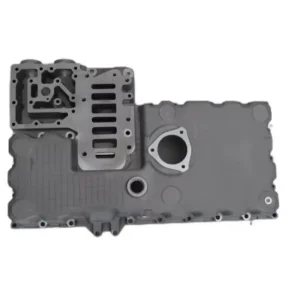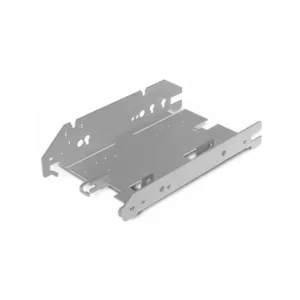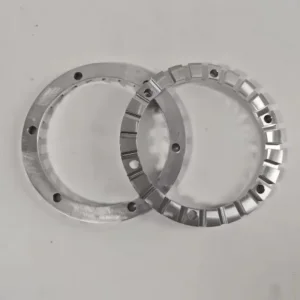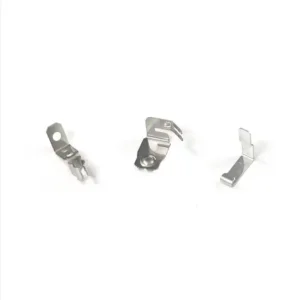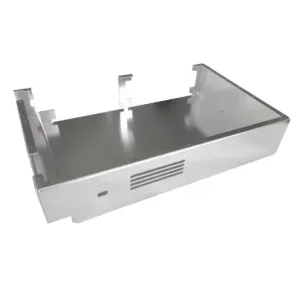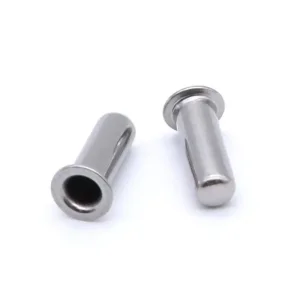
Custom Precision Cast & Machined Components (Top Series)
Explore our specialized ODM/OEM engineered parts, ranging from complex gravity casting alloys and CNC components to deep-drawn sensor housings and high-reliability industrial hardware.
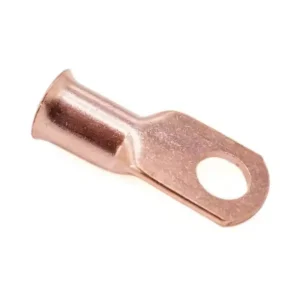
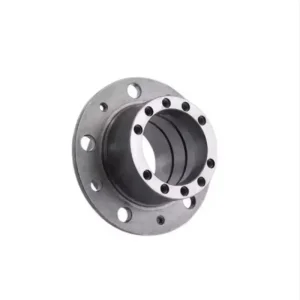
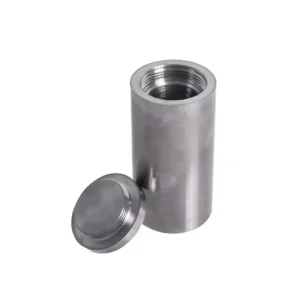
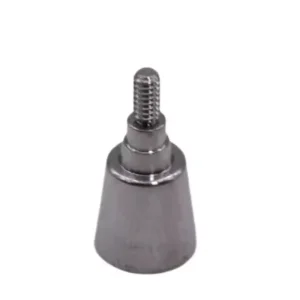
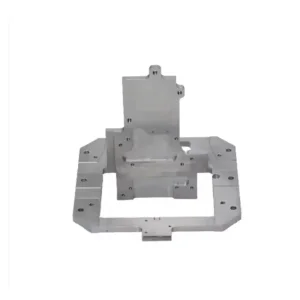
Executive Summary: The Industrial Evolution of ODM Gravity Casting
In modern high-stress industrial engineering, selecting the appropriate metallic casting process is a critical determinant of mechanical performance, structural integrity, and long-term cost optimization. Gravity Casting—also widely recognized in precision metallurgical circles as Permanent Mold Casting or Gravity Die Casting (GDC)—stands as a premier manufacturing method for non-ferrous alloys, particularly high-grade aluminum (e.g., A356, A380, AC4C), copper, and zinc alloys.
Unlike High-Pressure Die Casting (HPDC), which forces molten metal into steel dies under intense hydraulic force causing turbulent gas entrapment, Gravity Casting relies on Earth's gravitational force to achieve smooth, laminar filling of metal molds. This controlled flow rate drastically minimizes gas porosity, making gravity-cast components fully heat-treatable (e.g., T5, T6 heat treatment schedules). As a result, global original equipment manufacturers (OEMs) and original design manufacturers (ODMs) across automotive, power transmission, medical equipment, and aerospace industries increasingly turn to dedicated ODM Gravity Casting manufacturers for mission-critical structural housing and pressure-tight fluid components.
By implementing tilt-pour gravity casting automation combined with degassing melt treatments (using argon fluxing and reduced pressure testing), top-tier China casting foundries achieve internal micro-porosity levels strictly matching ASTM E155 Class 1 quality standards. This enables complete pressure-tightness up to 35 bar, suitable for hydraulic pump housings and EV clutch oil pans.
Comprehensive Process Selection Matrix: Gravity Casting vs. Alternatives
Procurement directors and mechanical design engineers must evaluate total cost of ownership (TCO), tooling amortization, structural fatigue limits, and production velocity when finalizing manufacturing routes.
| Manufacturing Metric | Gravity Casting (GDC) | High-Pressure Die Casting (HPDC) | Sand Casting | Investment Casting (Lost Wax) |
|---|---|---|---|---|
| Liquid Metal Injection | Laminar flow via Gravity / Tilt-Pour | High-velocity turbulent injection | Manual / Automated gravity pour | Gravity / Vacuum-assisted pour |
| Gas & Shrinkage Porosity | Extremely Low (ASTM E155 Class 1/2) | Moderate to High (Surface-trapped gas) | High (Requires heavy risers) | Very Low |
| T6 Heat Treatment Capability | Yes (Significantly boosts strength) | No (Blistering occurs during heating) | Yes | Yes |
| Minimum Wall Thickness | 3.0 mm – 4.5 mm | 1.5 mm – 2.5 mm | 4.5 mm – 6.0 mm | 1.5 mm – 3.0 mm |
| Initial Tooling Investment | Moderate (Re-usable Steel Dies) | Very High (Complex hardened steel dies) | Very Low (Pattern tooling) | Moderate (Injectable wax molds) |
| Mechanical Fatigue Endurance | Superior (Dense grain structure) | Moderate (Internal void vulnerabilities) | Lower grain density | High |
| Optimal Batch Volume | 500 to 50,000 units/year | > 50,000 units/year | 1 to 1,000 units/year | 100 to 10,000 units/year |
China Industrial Advantage: Turnkey OEM/ODM Efficiency & Cluster Synergy
Why leading global fortune 500 enterprises partner with specialized China gravity casting foundries to accelerate time-to-market while reducing unit production expenditure.
Integrated Tooling & Mold Design
China's top foundry hubs in Shenzhen and Guangdong house complete toolmaking facilities under one roof. Utilizing 3D CAD/CAM software (Unigraphics NX, SolidWorks) and MAGMA/ProCAST solidification simulations, mold development lead times are cut from 12 weeks to less than 25 days.
5-Axis CNC Post-Machining Precision
Casting foundries with in-house CNC machining capability eliminate inter-vendor logistical delays. Raw gravity castings undergo multi-axis CNC milling, precision boring, and thread tapping directly on-site, guaranteeing tight tolerances down to ±0.005 mm for mating surfaces.
End-to-End Quality Assurance & Traceability
Leading Chinese exporters provide comprehensive Quality Inspection Packages with every shipment: Optical Emission Spectrometer material heat certificates, X-ray non-destructive testing (NDT), CMM dimensional verification, and 100% pressure leak testing reports.
Sector-Specific Industrial Applications for ODM Gravity Castings
Gravity cast aluminum components are extensively deployed in application environments that require extreme structural toughness, continuous vibration damping, and leak-proof thermal performance.
1. Automotive, Electric Vehicle & Drivetrain Systems
Modern electric vehicles demand high structural integrity and heat dissipation efficiency in lightweight housings. Gravity-cast aluminum alloy (A356-T6) clutch oil pans, transmission retarder housings, motor end bells, and suspension control arms deliver high mechanical yield strength under cyclic load and thermal stress.
- Key Specs: Pressure tight up to 35 bar, T6 solution heat treated, zero liquid leakage.
- Typical Alloys: A356.0, AlSi7Mg0.3, ZL101A.
2. Aerospace, Defense & High-Precision Robotics
Aerospace support brackets, UAV engine crankcases, and robot joint arms require dense internal grain structures without microscopic gas voids that could propagate crack failure during operation. Permanent mold tilt gravity casting combined with precision CNC machining provides high strength-to-weight ratios.
- Key Specs: CMM verified geometry, 100% Radiographic X-Ray inspected to ASTM E155 standard.
- Typical Alloys: A357, A356-T6, Titanium alloy turning integrations.
3. Semiconductor Manufacturing & Optical Instruments
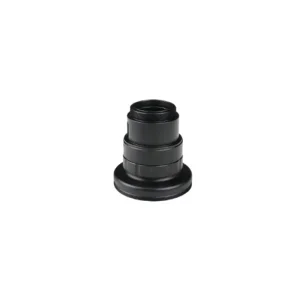
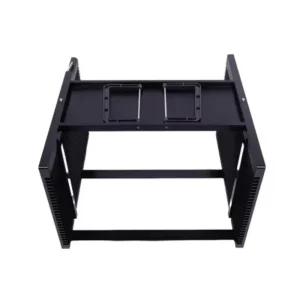
In high-vacuum semiconductor processing chambers and optical lens barrel housings, outgassing caused by microscopic surface pores destroys vacuum purity. Gravity-cast aluminum wafer carriers and optical frames are CNC anodized to achieve ultra-clean, corrosion-resistant surface coatings.
- Key Specs: Hard anodized finish (MIL-A-8625 Type III), surface roughness Ra < 0.8 µm.
- Typical Alloys: High-purity 6061 / 7075 turned stock and low-porosity A356 casting.
4. Medical Devices & High-Shielding Radiation Enclosures
Complex medical imaging hardware, specialized fluid analyzer housings, and tungsten carbide shielded radiation canisters demand extreme density and flawless aesthetic surface finishes. China ODM foundries deliver fully customized, powder-coated housing assemblies ready for cleanroom installation.
- Key Specs: ISO 13485 compliant manufacturing workflows, smooth aesthetic powder coating.
- Typical Alloys: Medical-grade Stainless Steel (SS316L), Tungsten Carbide, Aluminum AC4C.
Industry Trends: The Next-Gen Smart Foundry Transformation
As global environmental standards (ESG) and Industry 4.0 automation transform heavy manufacturing, ODM gravity casting manufacturers are modernizing traditional foundries into high-tech processing centers.
Automated Tilt-Gravity Casting (PLC Controlled)
By replacing manual ladle pouring with programmable hydraulic tilt-casting machines, molten metal enters the mold cavity at a calculated, constant velocity. This eliminates human operator variance, stabilizing filling temperature and achieving 99.2% casting yield consistency.
Vacuum-Assisted Permanent Mold Degassing
Applying localized vacuum evacuation inside steel mold cavities prior to pouring further reduces air resistance, permitting thinner wall sections (down to 2.8 mm) while completely suppressing gas entrapment in complex internal oil channels.
3D Printed Sand Cores for Complex Internal Cavities
Integrating binder-jetting 3D sand core printing with permanent metallic outer dies enables the creation of highly complex internal fluid manifolds and undercut geometries without requiring multi-slide mechanical molds, saving thousands in tooling costs.
Global Procurement Guide: Key Verification Protocols for ODM Gravity Casting
When selecting an ODM gravity casting supplier in China or internationally, procurement managers should verify that the foundry implements robust Quality Engineering Protocols from preliminary Design for Manufacturability (DFM) through final batch container loading.
1. Preliminary DFM & Solidification Flow Modeling
A competent ODM manufacturer will never start mold machining without providing a comprehensive DFM report. This includes mold thermal gradient analysis, recommended wall thickness adjustments, draft angles (minimum 1.5° to 3° for permanent molds), and riser location layouts to guarantee directional solidification.
2. In-Process Melt Metallurgy & Spectrometer Analysis
Before any casting heats are poured, the molten aluminum bath must undergo degassing treatment (argon fluxing) and melt density testing. Optical Emission Spectrometry (OES) must be conducted to confirm alloy chemical composition complies strictly with ASTM, EN, or JIS international standards (e.g., verifying Fe content < 0.15% for optimal ductility).
3. Post-Casting Heat Treatment (T5 / T6 Tempering)
To maximize structural yield strength and hardness, castings undergo T6 solution heat treatment (held at ~535°C, quenched in warm water, and artificially aged at ~160°C). Foundries must supply furnace temperature charts and Brinell hardness testing reports (HBW) with every batch.
Engineering Knowledge Base & Buyer FAQ
Technical answers to common engineering, tooling, and supply chain questions surrounding OEM/ODM gravity casting operations.
Precision Hardware & Custom OEM Manufacturing (Extended Catalog)
Discover our broader custom manufacturing scope, encompassing low-pressure aluminum castings, sheet metal stampings, precision turned sealing rings, and deep-drawn sensor housings.