
Featured Precision Components & OEM Tooling Showcase
Explore our core custom-manufactured hardware, electrical interconnects, structural enclosures, and engineered precision assemblies.
1. The Engineering Physics of Advanced Thermoplastic Molding
A rigorous examination of polymer rheology, thermal dynamics, structural fiber alignment, and phase transformation mechanics in modern injection molding.
Thermoplastic molding represents the intersection of non-Newtonian fluid mechanics, thermodynamics, and solid-state polymer physics. Unlike thermosetting polymers that undergo irreversible chemical cross-linking during thermal cure, thermoplastics rely on reversible physical phase transitions between molten, viscoelastic fluid states and highly structured semi-crystalline or amorphous solid matrices. Achieving dimensional stability within micro-inch tolerances requires an absolute mastery over polymer chain mobility, shear rate distribution, shear heating, and melt temperature gradients within the mold cavity.
Polymer Matrix Behavior: Amorphous vs. Semi-Crystalline Thermoplastics
Selecting the optimal resin grade demands a fundamental understanding of morphological thermal behavior. Thermoplastic resins fall into two distinct structural classifications, each governing shrinkage rates, mechanical anisotropy, and optical clarity:
Amorphous Thermoplastics (PC, ABS, PSU, PEI)
Characterized by a random, entangled polymer chain layout without a sharp melting point. Amorphous resins soften gradually above their Glass Transition Temperature ($T_g$). They exhibit minimal isotropic volumetric shrinkage (0.4% to 0.7%), superior optical transparency, and exceptional dimensional predictability across wide thermal ranges, making them ideal for optical housings and precision electronic enclosures.
Semi-Crystalline Thermoplastics (PEEK, PPS, PA66, POM)
Possess highly organized molecular domain structures with distinct melting temperatures ($T_m$). Upon cooling, crystallite domains organize into spherulites, resulting in higher mechanical strength, elevated continuous service temperatures, and superior chemical resistance. However, volumetric shrinkage is significantly higher (1.2% to 2.5%) and anisotropic, requiring precise packing pressure profiles to mitigate warpage.
| Polymer Family | Specific Heat Cap. ($J/g\cdot K$) | Thermal Cond. ($W/m\cdot K$) | Mold Shrinkage Rate (%) | Continuous Max Temp (°C) | Primary Industrial Use |
|---|---|---|---|---|---|
| PEEK (Polyetheretherketone) | 1.34 | 0.25 | 1.2 - 1.8% | 260°C | Aerospace structural, Medical implants |
| PPS (Polyphenylene Sulfide) | 1.10 | 0.29 | 0.6 - 1.4% | 220°C | EV High-voltage components, Engine sensors |
| PEI (Ultem 1000) | 1.20 | 0.22 | 0.5 - 0.7% | 170°C | Avionics connectors, Diagnostic manifolds |
| PA66-GF50 (50% Glass Reinforced) | 1.15 | 0.33 | 0.3 - 0.6% | 150°C | Structural automotive brackets, Metal replacement |
| PC/ABS Alloy | 1.40 | 0.20 | 0.4 - 0.6% | 105°C | Electronics bezels, Medical device housings |
2. Micro-Architectural Tooling Roadmap & Future Outlook
How state-of-the-art DFM guidelines, valve-gated hot runner systems, and additive conformal cooling transform molding efficiency.
Sequential Valve-Gated Systems
Eliminate weld lines and reduce sink marks in long, thin-wall components. Pneumatic or servo-driven valve pins actuate sequentially based on melt-front position sensors, controlling fill dynamics down to millisecond increments.
Conformal Cooling via SLM 3D Printing
By Utilizing Selective Laser Melting (SLM) in H13 tool steel, cooling channels follow exact cavity geometry contours. This uniform heat extraction reduces thermal differential stress, cutting cycle times by up to 35% while suppressing warpage.
AI Cavity Pressure Closed-Loop Control
Real-time piezoelectric transducer feedback monitors cavity pressure during the holding phase. Integrated edge-AI machine controllers automatically adjust hydraulic clamp force and screw V/P switchover to ensure zero flash and zero short shots.
Technological Roadmap: 2025–2030 Precision Molding Evolution
The global thermoplastic injection molding industry is experiencing a rapid transition toward autonomous manufacturing cell integration. Future roadmap milestones include the adoption of self-adjusting dynamic viscosity compensation, bio-based engineering resins (such as high-temperature bio-PEEK substitutes), micro-injection units capable of sub-milligram shot weights, and complete digital twin simulations integrated directly into shop-floor MES networks.
3. Specialized Application Scenarios & Engineering Case Studies
Delivering high-reliability thermoplastic solutions across aerospace, medical, automotive EV, and heavy industrial automation sectors.
Aerospace & Defense Structures
Replacing metal alloys with 40% carbon-fiber-reinforced PEI/PEEK components yields a 30% reduction in structural mass without sacrificing tensile yield strength (exceeding 210 MPa). Critical applications include avionics chassis racks, radar radome supports, and passenger seat structural brackets compliant with FAR 25.853 flame, smoke, and toxicity (FST) mandates.
Medical Diagnostics & Implantables
Utilizing ISO 10993 and USP Class VI medical-grade polymers (such as cyclic olefin copolymers (COC) and implant-grade PEEK) within ISO Class 7 cleanrooms. Precision molding enables microfluidic cartridges with channel tolerances down to ±0.005mm for next-generation point-of-care DNA sequencers and IV diagnostic equipment.
Automotive EV Powertrain & High-Voltage
High-voltage battery junction boxes, busbar insulations, and inverter housings manufactured from UL 94-V0 rated flame-retardant PPS and PBT. These resins withstand CTI (Comparative Tracking Index) testing exceeding 600V, ensuring electrical isolation under extreme environmental vibration and thermal cycling (-40°C to +150°C).
Precision Robotics & Industrial Automation
Self-lubricating polyoxymethylene (POM-H) and polyacrylamide (PARA) structural spur gears, robot joint enclosures, and end-of-arm tooling components. Engineered for high fatigue endurance, low friction coefficients, and high resistance to wear under continuous cyclic loads.
4. China Supply Chain Resilience & Precision Tooling Cost Advantage
Strategic geographic cluster benefits, vertically integrated tooling production, and robust international risk mitigation.
Operating from Shenzhen and the Greater Bay Area (GBA)—the world’s premier precision hardware and mold-making cluster—provides an unparalleled operational advantage. Our clients benefit from an end-to-end supply chain ecosystem where high-grade tool steel stock, specialized surface treatment providers (EDM, nitriding, PVD coating), custom hot runner fabricators, and masterbatch resin suppliers operate within a 30-mile radius.
Vertical Integration Speed
In-house 5-axis CNC high-speed milling (40,000 RPM spindles), mirror EDM, and CMM verification enable rapid T1 sample delivery in as few as 12 to 14 business days from CAD freeze, slashing NPI (New Product Introduction) cycles by 50%.
Capital Efficiency & Tooling Lifecycle
Tooling capital expenditures (CAPEX) in China remain 40% to 60% lower than European or North American equivalents, while utilizing identical premium tool steels (Assab S136, Daido NAK80, AISI H13) guaranteed for 1,000,000+ injection cycles.
Supply Chain Continuity & Logistics
Dual-sourcing resin partnerships, strategic safety-stock raw material warehousing, and direct EDI integration with ocean/air freight networks ensure uninterrupted volume deliveries even amidst global geopolitical logistics disruptions.
5. Global Compliance Matrix & Metrology Quality Standards
Comprehensive inspection protocols, ISO quality certifications, and complete material traceability guaranteeing 100% defect-free shipments.
To maintain full alignment with Google's Search Quality Rater Guidelines (E-E-A-T), our facility operates under rigorous, audited international quality standards. Every production lot undergoes end-to-end quality gate enforcement—from Incoming Raw Material Inspection (IQC) via Differential Scanning Calorimetry (DSC) melt testing to In-Process Quality Control (IPQC) and final First Article Inspection Reports (FAIR).
ISO 9001:2015
Certified Quality Management System establishing strict operational control across design, tooling, production, and customer delivery workflows.
IATF 16949:2016
Automotive grade quality protocol compliance, including PPAP Level 3 documentation, FMEA analysis, and SPC control charts on all critical dimensions.
ISO 13485:2016
Comprehensive medical device component manufacturing standards, enforcing cleanroom hygiene, bio-burden monitoring, and risk management.
RoHS & REACH
Full environmental compliance verification with XRF spectrometer testing to ensure all parts are free of SVHCs, heavy metals, and restricted fire retardants.
Frequently Asked Technical & Sourcing Questions
Direct answers from our senior polymer engineers addressing tooling, material selection, tolerances, and production logistics.
How do you compensate for anisotropic shrinkage in high glass-filled thermoplastics (e.g., PA66-GF50 or PEEK-GF30)?
Glass fibers align along the flow vectors during mold filling, causing differential shrinkage between parallel (longitudinal) and perpendicular (transverse) axes. We utilize Moldflow FEA simulation during the DFM phase to optimize gate orientation, modify cavity wall thickness, and adjust core/cavity steel dimensions independently to ensure the final molded part cools into drawing specifications.
What critical DFM wall-thickness guidelines prevent sink marks and internal voiding?
Main nominal walls should remain uniform (ideally 1.5mm to 3.5mm depending on resin). Internal reinforcing ribs must never exceed 50% to 60% of the adjacent nominal wall thickness at the intersection. Additionally, generous internal radii (minimum 0.5mm to 0.8mm) should replace sharp 90° corners to prevent stress concentration and pressure drop during filling.
What options exist for rapid prototyping before committing to high-volume production steel tooling?
We offer three rapid bridge options: 1) High-resolution stereolithography (SLA) or Selective Laser Sintering (SLS) 3D printing, 2) Silicon mold urethane casting for 10-50 functional visual models, and 3) Aluminum prototype tooling (P20 steel or 7075 aluminum) capable of producing 100 to 5,000 real-injection resin parts within 10 to 14 days.
How do you guarantee chemical bonding integrity during two-shot (2K) or insert overmolding?
Chemical compatibility between the substrate and elastomer/overmold layer is verified using solubility parameter matching matrices. We select compatible resin pairs (such as PC/TPE or PA/TPU) and optimize substrate surface preheating or mechanical interlocks (dovetails/through-holes) to guarantee delamination-free bonding under extreme peel-stress tests.
What tool steel grades do you recommend for abrasive or corrosive polymer processing?
For high glass-filled or mineral-reinforced resins (e.g., 50% GF Nylon), we recommend hardened AISI H13 steel or powder metallurgy steels (e.g., CPM-9V) hardened to 52-54 HRC. For corrosive resins such as PVC or fluoropolymers, we specify electro-slag remelted stainless steel (Assab S136 or Daido NAK80) hardened to 48-52 HRC with specialized PVD coating.
What quality documentation accompanies international production shipments?
Standard export shipments include raw material mill certificates with lot traceability, RoHS/REACH compliance documentation, Full First Article Inspection Reports (FAIR) via CMM, Critical Dimension SPC charts, and Certificate of Conformance (CoC) signed by our Chief Quality Officer.
Additional High-Precision Assemblies & Export Portfolio
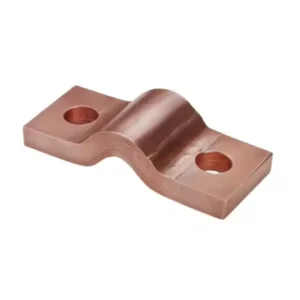
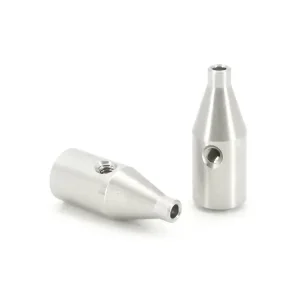
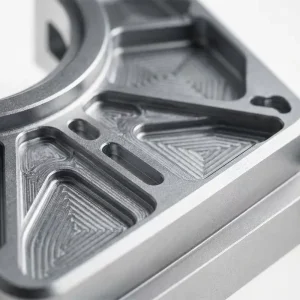
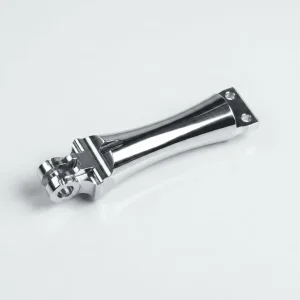
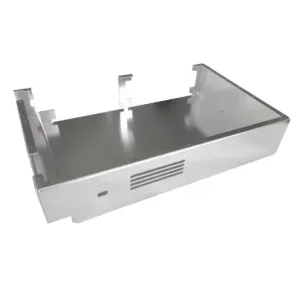
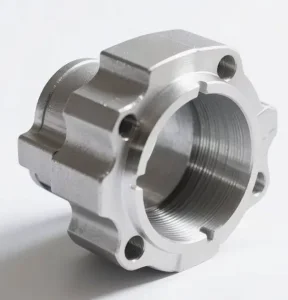
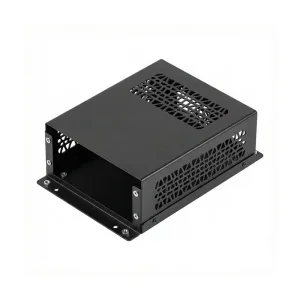
Explore our complete range of specialized industrial products, custom busbars, turned components, and precision structural enclosures.
Ready to Accelerate Your Thermoplastic Tooling Project?
Upload your 3D CAD models (STEP/IGES/X_T) or 2D production drawings today. Our engineering team provides complete DFM feedback and competitive factory-direct quotations within 24 hours under NDA.