Precision Machined Metal & Plastic Components (Part I)
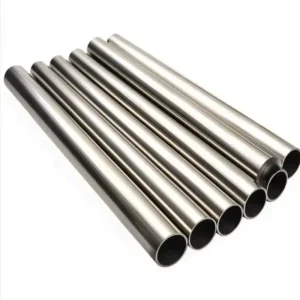
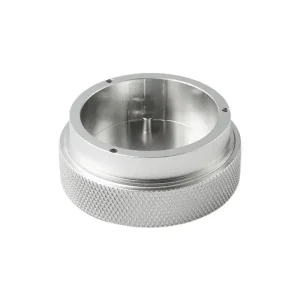
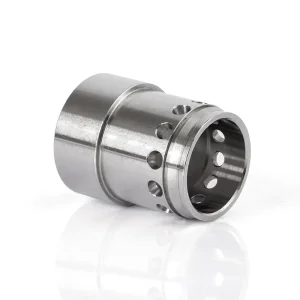
The Global Landscape of Precision Steel Machining
Strategic insights into market valuation, geopolitical manufacturing shifts, raw material supply dynamics, and procurement benchmarks.
The global precision steel machining sector represents the backbone of modern industrial infrastructure. As original equipment manufacturers (OEMs) across aerospace, defense, automotive electric powertrains, medical instruments, and heavy energy exploration push the boundaries of mechanical performance, the demand for high-reliability, close-tolerance steel components has experienced unprecedented acceleration. According to comprehensive market intelligence, the global CNC steel machining industry is expanding at a compound annual growth rate (CAGR) of 5.8%, driven by structural shifts toward automation, high-stress mechanical assembly requirements, and the transition toward decarbonized energy systems.
Sourcing precision steel components in today's volatile economic climate requires navigating complex global supply chains, fluctuating raw material indices (such as nickel, chromium, and molybdenum surcharges), and stringent international regulatory frameworks including REACH, RoHS, and Conflict Minerals compliance. For global procurement directors and chief mechanical engineers, evaluating a high-quality steel machining supplier is no longer merely a transaction based on per-part cost; it is an audit of technological capability, quality assurance infrastructure, metallurgical depth, and long-term risk mitigation.
Information Gain Advantage: Beyond Standard Machining Contracts
Traditional manufacturing contracts often suffer from misaligned tolerances, micro-cracking during secondary heat treatments, and unrecorded tool wear deviations. Elite manufacturing partners differentiate themselves by implementing closed-loop statistical process control (SPC), adaptive feed-rate algorithms during 5-axis milling, and full EN 10204 3.1 certified chemical/mechanical batch traceability.
Modern industrial facilities in premier manufacturing hubs like Shenzhen, China, have integrated advanced multi-axis CNC machine centers with automated robotic loading, offline CMM verification, and localized heat treatment capabilities. This vertical integration allows top-tier factories to drastically compress prototyping lead times from weeks to days while retaining batch-to-batch repeatability across high-volume production runs exceeding 500,000 units per year.
Selecting the Optimal Steel Alloy for Precision Machining
Comprehensive material parameter matrices, machinability ratings, and mechanical properties across Carbon, Alloy, Stainless, and Tool Steels.
Steel is not a singular material; it is a vastly diverse family of iron-carbon alloys engineered with distinct alloying elements to achieve target mechanical behaviors. Selecting the correct steel grade directly impacts part longevity, fatigue limit, corrosion resistance, thermal expansion characteristics, and total unit manufacturing cost. Below is an authoritative technical comparison matrix detailing key industrial steel alloys regularly processed in premier CNC machine facilities.
| Steel Classification | Common Alloy Grades | Machinability Index (%) | Tensile Strength (MPa) | Key Mechanical Attributes | Primary Industrial Applications |
|---|---|---|---|---|---|
| Carbon Steel | 1018, 1045, 1215, 12L14 | 78% - 136% | 440 - 625 | Excellent ductility, easy chip formation, cost-effective, responds well to case hardening. | Fasteners, hydraulic fittings, low-stress shafts, automotive brackets, general hardware. |
| Alloy Steel | 4140 (Chromoly), 4340, 8620 | 55% - 66% | 850 - 1100 (Q&T) | High toughness, superior fatigue strength, high hardenability, resists torsional stress. | Heavy-duty gears, crankshafts, aircraft landing pins, oilfield drill collars, drive axles. |
| Austenitic Stainless | AISI 304, 304L, 316, 316L | 45% - 50% | 515 - 620 | Exceptional corrosion resistance, high work-hardening rate, non-magnetic in annealed state. | Medical instruments, marine hardware, chemical processing valves, food-grade equipment. |
| Martensitic / PH Stainless | 410, 420, 17-4 PH (AISI 630) | 45% - 55% | 930 - 1310 | Precipitation hardenable, extreme yield strength, moderate corrosion resistance, wear resistant. | Aerospace structural fittings, steam turbine blades, high-pressure pump shafts, surgical tools. |
| Tool Steel | D2, H13, O1, A2, M2 | 30% - 40% | 1500 - 2200 | Extreme hardness after heat treatment, exceptional abrasive wear resistance, heat red-hardness. | Stamping dies, injection mold inserts, extrusion punches, cutting blades, heavy wear plates. |
Thermal Processing & Surface Engineering Workflows
Quenching & Tempering (Q&T)
Thermal transformation of steel microstructure into tempered martensite. Controls hardness levels from 28 HRC to 62 HRC while optimizing toughness to prevent brittle failure under impact loading.
Gas & Plasma Nitriding
Thermochemical diffusion of nitrogen into the steel surface layer (0.1mm to 0.6mm depth). Produces surface hardness up to 1100 HV without structural phase changes or geometric distortion.
Electro-PVD & DLC Coatings
Deposition of Titanium Nitride (TiN), AlTiN, or Diamond-Like Carbon (DLC) ultra-thin layers. Drastically lowers friction coefficient (µ < 0.1) and eliminates galling in sliding steel contact assemblies.
State-of-the-Art Steel Machining Technologies
Deploying 5-Axis simultaneous CNC milling, high-speed Swiss lathe turning, and AI-driven adaptive manufacturing.
5-Axis Simultaneous CNC Milling
Allows single-setup machining of complex 3D contoured steel geometries, eliminating cumulative fixture stack errors and achieving true position tolerances down to ±0.005 mm.
High-Precision Swiss Screw Turning
Ideal for long, thin steel shafts and micro-components. Sliding headstock technology supports stock directly at the cutting zone, suppressing chatter and achieving Ra 0.4 µm surface finishes.
High-Pressure Coolant (HPC) & MQL
Delivering cutting fluid at 70 to 150 bar directly into the chip-tool interface. Instantly breaks tough stainless steel stringy chips, lowers thermal shock, and extends carbide tool life by 300%.
Hard Turning replacing Grinding
Direct single-point turning of hardened steel stock (55 to 65 HRC) using Polycrystalline Cubic Boron Nitride (PCBN) tooling. Eliminates secondary cylindrical grinding stages while maintaining micro-inch precision.
Mission-Critical Industry Deployments
Tailored steel machining solutions engineered for harsh operating environments across global sectors.
Aerospace & Flight Control
Components: Actuator pins, landing gear hinges, jet engine turbine shafts, flight control linkages.
Steel Alloys: 17-4 PH, 4340 Vacuum Arc Remelted (VAR), 300M Steel.
Engineering Focus: Extreme fracture toughness, zero sub-surface damage, 100% Magnetic Particle Inspection (MPI) and Ultrasonic Testing (UT).
Automotive & EV Powertrain
Components: Electric motor drive shafts, planetary gear carriers, differential gears, high-pressure fuel rail bodies.
Steel Alloys: 8620H, 20CrMnTi, 1045 Forgings.
Engineering Focus: Case-carburized wear resistance, high-speed automated lathe output, strict pitch diameter concentricity.
Oil, Gas & Subsea Energy
Components: Subsea wellhead valves, blowout preventer (BOP) stems, downhole sensor housings, drill bit mandrels.
Steel Alloys: AISI 4130, Super Duplex Stainless (2507), Inconel-clad Carbon Steel.
Engineering Focus: NACE MR0175/ISO 15156 sour gas corrosion resistance, deep hole drilling (L/D > 30), high-pressure thread profiles.
Solving High-Difficulty Steel Machining Challenges
Addressing thermal deformation, severe tool wear, work hardening, and geometric tolerance stack-ups.
1. Overcoming Work Hardening in Austenitic Stainless Steels (304/316)
Austenitic stainless steels tend to rapidly work-harden when subject to plastic deformation during cutting. If tool dwell occurs or depth of cut falls below the work-hardened zone generated by the previous pass, cutter catastrophic failure is imminent. Solution: Execute aggressive, constant feed rates with sharp positive-rake carbide inserts coated with TiAlN, ensuring depth of cut always penetrates beneath the work-hardened skin.
2. Thermal Stress Mitigation & Distortion Control
Steel has a lower thermal conductivity than aluminum, meaning heat generated during high-speed metal removal stays concentrated in the workpiece and cutting tool. This induces localized thermal expansion, leading to bore shrinkage and dimensional drift after cooling. Solution: Utilize symmetric roughing toolpaths, stress-relief annealing prior to final finishing passes, and continuous flood/cryogenic cooling to stabilize ambient part temperature at 20°C standard inspection reference.
3. Geometric Dimensioning & Tolerancing (GD&T) Mastery
Complex mechanical steel housings require strict adherence to ASME Y14.5 standards. Achieving tight cylindricality, runout, and perpendicularity tolerances on multi-featured components necessitates dedicated modular hydraulic workholding fixtures and inline probing systems (Renishaw) integrated directly into 5-axis machining center spindles.
The Future of Intelligent Steel Manufacturing
Digital Twin integration, AI tool-wear prediction, closed-loop robotics, and green carbon-neutral steel recycling.
AI-Powered Digital Twins
Real-time physics-based digital twin models simulate cutting forces, vibration chatter, and heat distribution prior to spindle engagement. Zero trial-and-error scrap during setup.
Closed-Loop Lights-Out Cells
Unattended night-shift production combining 5-axis CNCs, vision-guided industrial robots, and automated inline CMM dimensional gate checks.
Sustainable Green Machining
100% chip briquetting and cutting fluid centrifugal reclamation systems. Reduces hazardous fluid waste by 95% while recovering high-value steel alloys for remelting.
Critical Questions Asked by Global Hardware Buyers
Direct answers from our senior engineering team regarding manufacturing parameters, lead times, quality control, and logistics.