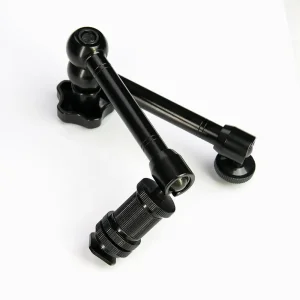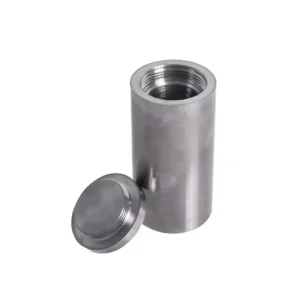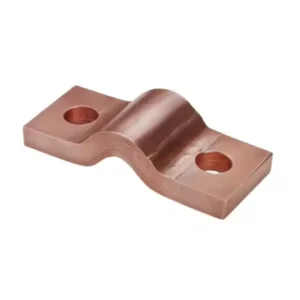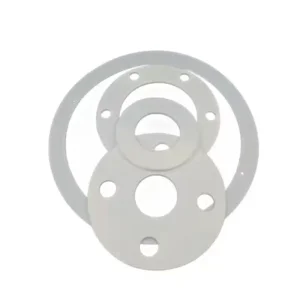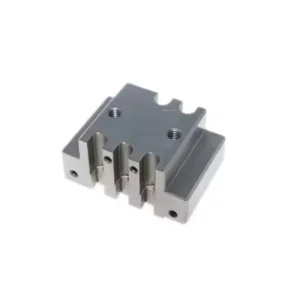
Featured Hardware & Component Engineering Solutions
Explore precision-engineered hardware components, custom enclosures, and connector solutions manufactured through advanced metal stamping and mold fabrication.
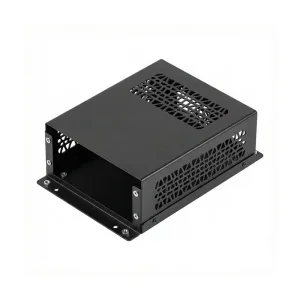
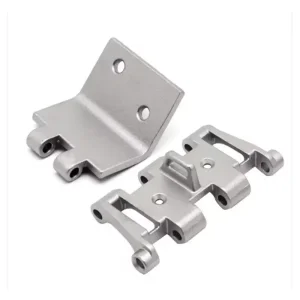
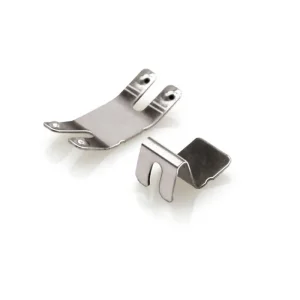
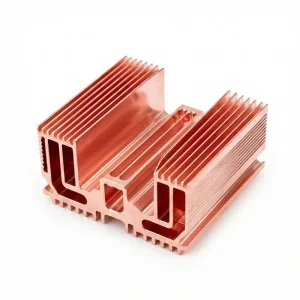
Engineering Precision: The Technical Foundations of Modern Stamping Tooling
An authoritative analysis of tool design, material metallurgy, structural stability, and sub-micron tolerance control in high-speed metal forming.
In modern industrial manufacturing, metal stamping molds (also known as press tools or dies) represent the backbone of volume hardware production. Selecting a competent High-Quality Stamping Mold Maker Supplier & Factory is no longer merely a commercial procurement task—it is a critical strategic decision that determines product quality, unit cost efficiency, structural integrity, and time-to-market across automotive, aerospace, consumer electronics, medical equipment, and renewable energy sectors.
Tool Classification & Metal Forming Architecture
Precision die tooling is categorized according to operational kinematic complexity and part geometry. Tier-1 stamping suppliers deploy three primary tool configurations depending on production throughput and geometric demands:
Progressive Dies (Continuous Strip Layout)
Designed for mass production (up to 1,200 strokes per minute). The coiled sheet metal moves through sequential workstations within a single tool holder, performing piercing, blanking, bending, coining, and deep drawing before part cut-off.
Transfer Dies (Mechanical Arm Automation)
Optimal for large-scale structural frames, deep enclosures, and complex automotive body parts. Pre-cut blanks are transferred between discrete press dies by integrated automation rails or robotic manipulators.
Fine Blanking & Compound Tooling
Delivers clean shear edges (100% burr-free shear zone) on thick-gauge functional metal components, such as gear transmission plates, brake pads, and high-load safety brackets, maintaining dimensional tolerances to ±0.002mm.
Metallurgical Selection and Tool Life Expectations
The operational lifespan of a precision mold—often targeted between 1,000,000 to over 10,000,000 press strokes—depends fundamentally on tool steel metallurgy and localized surface treatments. World-class mold makers utilize vacuum heat-treated premium grade alloys:
| Steel / Alloy Grade | Hardness (HRC) | Wear Resistance | Toughness / Fatigue | Primary Application in Stamping Molds |
|---|---|---|---|---|
| D2 / AISI / SKD11 | HRC 58 - 62 | High | Moderate | Standard punching punches, general blanking dies, medium volume dies. |
| DC53 (Cold Work Steel) | HRC 60 - 64 | Very High | Superior | High-speed progressive die punches, heavy-duty bending inserts, anti-chipping edges. |
| Sleipner / Caldie (Uddeholm) | HRC 60 - 62 | High | Exceptional | Heavy gauge metal forming, high-tensile steel (AHSS/UHSS) forming dies. |
| Tungsten Carbide (Micro-grain) | HRA 88 - 92 | Ultra-High | Brittle (Requires Shrink Fit) | Micro-electronics connector pins, motor core lamination progressive dies (5M+ cycles). |
Strategic Synergies: Sourcing Stamping Molds from China Factories
Unpacking the competitive moats, speed-to-market advantages, ecosystem integration, and cost-efficiency curves of Chinese precision mold manufacturers.
Rapid Prototype to T1 Tooling Lead Times
Chinese mold makers leverage concentrated local supply chains in the Greater Bay Area (Shenzhen, Dongguan) and Yangtze River Delta (Kunshan, Ningbo). T1 sample delivery for complex 25-station progressive dies takes 18 to 28 days, compared to 8-12 weeks in Western Europe or North America.
Advanced Machinery Capital Investment
Leading Chinese mold factories feature high-tier international CNC machining centers, including 5-axis Makino, GF Mikron, Sodick Wire EDM, and AgieCharmilles spark erosion units, maintaining temperature-controlled environments (20°C ± 0.5°C) to ensure sub-micron accuracy.
Turnkey Co-Engineering & DFM Feedback
Procurement teams do not merely buy a physical mold; they gain access to predictive metal forming analysis. Engineers conduct AutoForm strip layout simulation, springback prediction, and stress distribution modeling prior to cutting steel, reducing modification cycles.
The total cost of ownership (TCO) advantage offered by top-tier Chinese mold suppliers extends far beyond initial tool cost savings (which average 30% to 50% lower compared to European equivalents). It incorporates lifetime tool maintenance guarantees, free wear-and-tear replacement punches, modular die sets allowing rapid localized maintenance, and comprehensive logistics management including DDP (Delivered Duty Paid) shipping directly to overseas press rooms.
Industry Trends: The Next Era of Precision Stamping Tooling
How AI-driven simulation, sensor-embedded smart dies, and ultra-thin material micro-stamping are revolutionizing hardware manufacturing.
AI-Powered AutoForm Metal Simulation
Artificial intelligence algorithms simulate elastic-plastic material behavior, calculating precise springback compensation matrices for Advanced High-Strength Steel (AHSS) up to 1500 MPa.
In-Die Smart Sensing & IIoT Integration
Embedded piezoelectric pressure sensors, optical misfeed detectors, and temperature probes stream real-time telemetry from inside the die cavity to prevent catastrophic punch breakage during high-speed production.
Micro-Stamping Foil Technology (<0.05mm)
The miniaturization of AI chips, 5G RF antennas, and medical implantable sensors requires micro-stamping tool sets capable of cutting metallic foils thinner than a human hair with zero burr tolerance.
Advanced PVD & CVD Surface Coatings
Modern dies utilize specialized Physical Vapor Deposition coatings such as Titanium Carbo-Nitride (TiCN), Chromium Nitride (CrN), and DLC (Diamond-Like Carbon) to decrease surface friction coefficient below 0.1.
Macro Industry Solutions & Vertical Application Scenarios
Custom stamping tool design tailored for sector-specific engineering standards, compliance frameworks, and mechanical stresses.
Automotive & Electric Vehicles (EV)
High-volume progressive and transfer dies for EV battery pack busbars, structural chassis reinforcement brackets, seat track mechanisms, motor lamination stacks, and IATF 16949-compliant terminal pin contacts.
Consumer Electronics & Telecommunication
Precision draw dies and high-speed blanking tools for smartphone EMI/RFI shielding cans, laptop hinge mechanisms, Type-C connector shells, copper heatsinks, and internal structural frames with surface finish Ra < 0.2µm.
Medical Equipment & Industrial Automation
Biocompatible stainless steel and titanium micro-stamping dies for surgical staples, diagnostic device housings, pneumatic valve plates, actuator cylinder caps, and DIN-standard industrial retaining clips.
Global OEM Procurement Roadmap & Quality Assurance Framework
A rigorous 6-stage quality gate protocol ensuring zero-defect tool delivery, verified CPK metrics, and strict IP protection.
Stage 1: DFM & RFQ Engineering Gate
Comprehensive 2D/3D CAD review, wall thickness analysis, bend radius verification, shear edge feasibility, and material yield optimization before commercial quotation.
Stage 2: Strip Layout & Simulation Approval
Full 3D digital strip layout creation showing pitch, edge scrap, carrier design, and multi-stage AutoForm springback simulation report sign-off by the buyer.
Stage 3: Sub-Micron Precision Machining
Die plates cut via high-precision CNC and Sodick Wire EDM. Tool steel components undergo certified vacuum heat treatment with full hardness tracking reports.
Stage 4: T1 Press Trial & FAI Report
First Article Samples (T1) pressed under production-speed trial presses. 100% full-dimensional inspection performed via Zeiss CMM and optical comparator.
Stage 5: PPAP Level 3 & CPK Study
Statistically validated 300-piece continuous run measuring critical dimensions. Process capability index (CPK > 1.67) and PPAP documentation compiled.
Stage 6: Sea/Air Packaging & IP Protection
Tools disassembled, cleaned, treated with anti-rust oil, vacuum sealed, and encased in reinforced fumigated wooden crates. Non-Disclosure Agreements strictly enforced.
Frequently Asked Questions (FAQ) — Tooling Procurement
Direct technical and commercial answers to critical questions asked by procurement directors, tooling engineers, and supply chain managers.
How do top Chinese mold factories control sheet metal springback in high-strength alloys?
What standard die components and mold bases do you integrate into custom tooling?
What dimensional inspection equipment and quality documentation accompany tool shipment?
How are Engineering Change Orders (ECOs) managed during mold design and post-production?
What are the typical lead times from 3D drawing sign-off to initial T1 sample submission?
Explore Our Complete Custom Precision Components Catalog
Direct factory supply of precision turned parts, high-performance copper busbars, custom hardware accessories, and engineered industrial components.