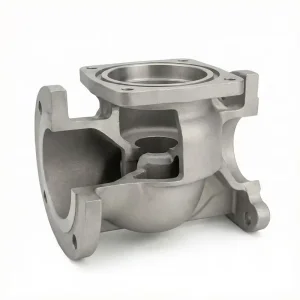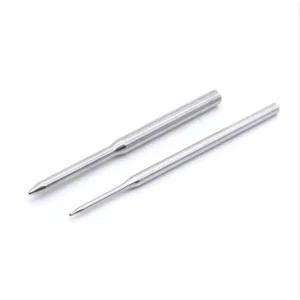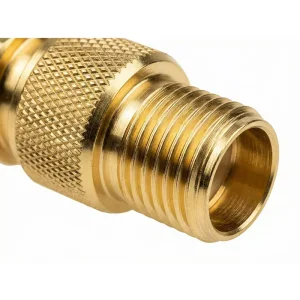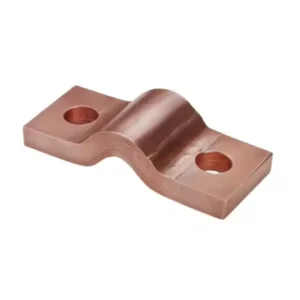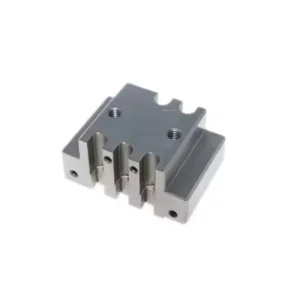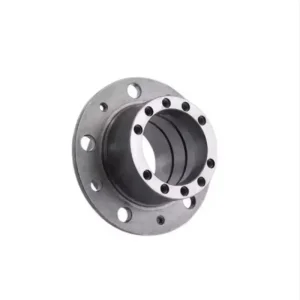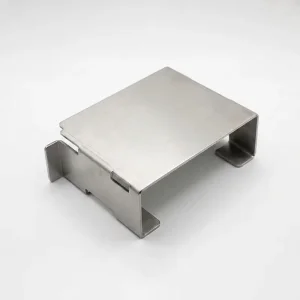
Featured Precision OEM Assemblies & Hardware
Direct factory manufacturing solutions engineered to strict geometric tolerances, material certifications, and custom application specs.
Executive Whitepaper: Modern Spline Machining Architecture
A comprehensive analysis of high-torque rotary transmission, tooth profile kinematics, and advanced manufacturing methodology for Tier-1 supply chains.
In high-performance mechanical powertrains, mechanical spline joints serve as the primary mechanism for transmitting severe torsional loads while accommodating axial displacement or maintaining fixed concentric alignment. Selecting a reliable spline machining supplier and factory requires looking far beyond standard turning capabilities. Modern power transmission demands micro-inch tooth profile accuracy, strict pitch concentricity, and metallurgically verified heat treatment to withstand cyclic fatigue, fretting corrosion, and sudden shock loads.
Whether producing internal involute splines according to DIN 5480 standards, external straight-sided splines per SAE J498b, or specialized crown splines for angular misalignment compensation, state-of-the-art factories must combine specialized multi-axis tooling, CNC gear hobbing, shaper cutters, broaching systems, and closed-loop Coordinate Measuring Machine (CMM) inspection.
Involute Splines
Utilizes pressure angles of 30°, 37.5°, or 45° with stub tooth geometry. Provides maximum tooth root strength, self-centering load distribution, and superior resistance to shear fatigue under high-torque dynamic conditions.
Parallel Key / Straight-Sided
Engineered with straight parallel sides to transmit uniform torque along the keyway faces. Available in major-diameter, minor-diameter, or side-fitting configurations for precise slide fits or fixed press fits.
Crowned & Helical Splines
Incorporates longitudinal tooth crowning to absorb up to 3° of operational angular misalignment without edge-loading, alongside helical angles for smooth acoustic dampening in high-RPM transmissions.
Global Procurement Drivers & Industrial Macro Trends
How evolving electrification, aerospace engineering, and industrial automation are redefining buyer expectations for spline component manufacturing.
EV Powertrain Electrification
Electric vehicle e-axles operate at speeds upwards of 18,000 RPM. Procurement mandates high-speed balanced spline shafts with sub-micron pitch error to minimize high-frequency NVH (Noise, Vibration, Harshness).
Aerospace Flight Actuation
Strict weight-to-torque constraints require thin-walled hollow spline shafts crafted from vacuum-melt alloys (300M, 15-5PH) featuring non-destructive NDT inspection and AS9100D full traceability.
Heavy Equipment & Mining
Extreme dynamic impulse torque requires heavy-duty carburized splines with deep effective case depths (1.5mm–2.5mm) and high-impact core toughness to prevent brittle tooth shearing.
Robotics & Precision Drives
Collaborative robots and industrial servo gearboxes demand zero-backlash spline interfaces produced via micro-broaching or wire EDM to deliver precision sub-arcminute repeat positioning.
Procurement Intelligence: Total Cost of Ownership (TCO) in Spline Sourcing
Global sourcing managers frequently encounter hidden cost multipliers resulting from tool wear inaccuracies, heat-treat distortion, and pitch runout causing premature gearbox failure. Partnering with a vertically integrated spline machining factory that maintains in-house heat treatment, gear tooth grinding, and CMM profilometry cuts post-assembly rejection rates to under 50 PPM (Parts Per Million).
Engineering Process Selection & Tooling Blueprint
A rigorous comparative analysis of spline generation methods, metallurgical heat treatment routes, and achievable geometric tolerances.
Selecting the optimal manufacturing routing depends on the part geometry (internal vs. external), production batch volume, required ISO/AGMA accuracy class, and post-hardness requirements. Below is the technical decision matrix used by our master process engineers:
| Machining Process | Suitable Geometry | Tolerance Class | Surface Roughness | Optimal Volume | Tooling Cost / Lead Time |
|---|---|---|---|---|---|
| CNC Gear Hobbing | External Involute & Parallel | DIN 6 - DIN 8 / AGMA 10-12 | Ra 0.8 - 1.6 µm | Medium to Mass Production | Moderate / Low Setup Time |
| High-Speed Broaching | Internal Involute / Blind & Thru Bores | DIN 5 - DIN 7 / AGMA 11-13 | Ra 0.4 - 0.8 µm | High Volume Mass Production | High Dedicated Tooling / Fast Cycle |
| Gear Shaping / Fellowing | Internal/External near Shoulders | DIN 7 - DIN 9 / AGMA 9-11 | Ra 1.6 - 2.5 µm | Low to Medium Batches | Moderate / Versatile Cutters |
| 5-Axis CNC Skiving / Milling | Complex External / Large Pitch | DIN 6 - DIN 8 / AGMA 10-12 | Ra 0.8 - 1.2 µm | Low Volume / Custom Prototypes | Zero Special Tooling / Quick Turn |
| Cold Roll Forming | External Involute Splines | DIN 7 - DIN 9 / AGMA 9-11 | Ra 0.2 - 0.4 µm | Automotive High-Volume (>10k) | High Die Cost / Extremely Fast |
| Precision Gear Grinding | Post-Hardened External Tooth Faces | DIN 3 - DIN 5 / AGMA 13-15 | Ra 0.2 - 0.4 µm | Critical Aerospace / EV Powertrain | High Machine Rate / Premium Quality |
Case Carburizing & Quenching
Applied to low-carbon alloy steels (20CrMnTi, 8620, 17CrNiMo6). Achieves surface hardness of 58-62 HRC while maintaining a shock-absorbent core (30-40 HRC). Requires press quenching or post-grinding to eliminate thermal distortion.
CNC Induction Hardening
Selectively hardens tooth roots and flanks of medium-carbon steels (4140, 1045) while leaving shaft cores unhardened for easy subsequent machining. Minimal total shaft warping compared to furnace quenching.
Plasma / Gas Nitriding
Low-temperature case hardening (500°C–550°C) for nitralloy grades and stainless steel. Delivers extreme surface micro-hardness (up to 70 HV) with zero phase transformation, eliminating post-heat-treat dimensional distortion.
Turnkey Macro Solutions for Demanding Industries
Custom spline manufacturing engineered to meet specialized environmental, mechanical, and regulatory criteria.
Automotive Drive Axles & Transmissions
High-torque input/output shafts, differential side gears, and transfer case splines manufactured with crowned involute teeth to optimize tooth contact patterns under heavy dynamic chassis flexing.
Hydraulic & Fluid Power Pumps
Splined drive shafts for axial piston pumps and orbital motors. Manufactured with strict pitch-to-bearing seat concentricity (<0.008mm TIR) to extend hydraulic shaft seal life under continuous fluid pressure.
Renewable Wind Energy Gearboxes
Large-diameter internal ring splines and planet carrier shafts. Precision shaped and induction hardened to absorb unpredictable wind-shear turbulence and structural vibrations over 25-year service lifespans.
E-E-A-T Quality Assurance & Global Compliance
Multi-stage metrology, material verification, and international quality framework validation for zero-defect supply security.
Gear Inspection Center (GIM)
Equipped with specialized Zeiss and Klingelnberg gear measuring systems to record continuous lead, profile, pitch alignment, and radial runout curves with sub-micron accuracy.
Material & PPAP Level 3
Every heat lot includes mill test certificates (EN 10204 3.1), chemical spectro-analysis, microstructural grain size verification, ultrasonic flaw detection, and full PPAP Documentation.
Global Logistics & Support
Provides DDP/DAP Incoterms, localized warehouse inventory buffer stocks in North America and Europe, and responsive 24-hour bilingual engineering support for direct OEM coordination.
Technology Roadmap: The Future of Spline Manufacturing (2026–2030)
Pioneering advancements in digital twin simulation, adaptive machining algorithms, and sustainable manufacturing practices.
Frequently Asked Questions (Engineering FAQ)
In-depth technical answers addressing common design, manufacturing, tolerance, and procurement inquiries.
Additional Precision Engineered Components
Explore our wider catalogue of custom hardware, turned parts, investment castings, and specialized enclosures.