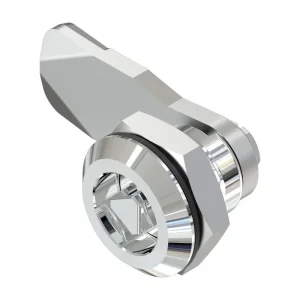
High-Precision Engineering Component Showcase (Part I)
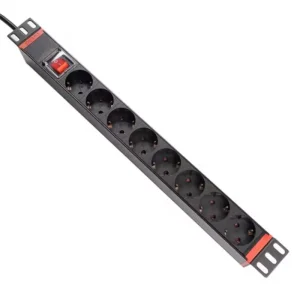
China Custom 8-Way 16A Rack-Mount PDU Power Strip - Sheet Metal Fabrication
View Product Details
OEM Custom 8-Way German Standard 16A Rack-Mount PDU Power Strip
View Product Details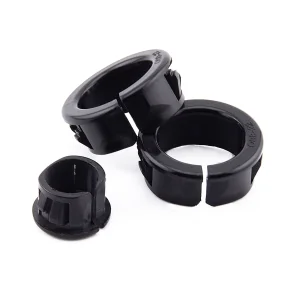
OEM Custom Open Snap Bushings (Split-Type Cable & Panel Protection)
View Product Details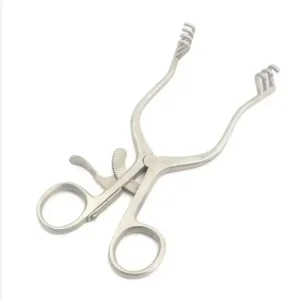
OEM High-Quality Custom Surgical Retractors (Professional Stainless Steel)
View Product Details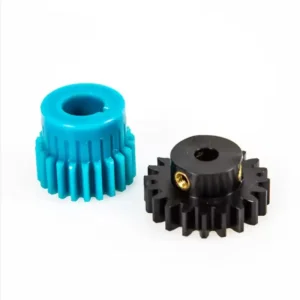
OEM High-Quality Custom POM Plastic Gears (Precision Injection Molded)
View Product Details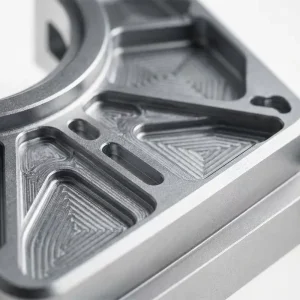
OEM Lightweight Aerospace Structural Components from China Factory
View Product Details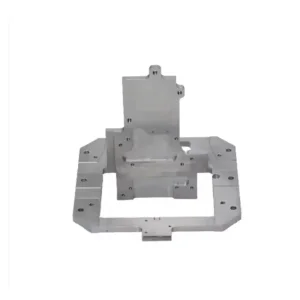
Custom Precision CNC Machined Metal Bracket & Frame (Wire EDM & Milling)
View Product Details
High-Quality Custom POM Plastic Gears (Precision Injection Molding Solution)
View Product DetailsGlobal Commercial & Industrial Landscape of Precision Engineering
The global market for precision engineering components has escalated into a pivotal cornerstone of modern industrial sovereignty, projected to reach over $650 Billion by 2030. Advanced hardware procurement teams are transitioning away from fragmented vendor models toward integrated tier-1 manufacturing hubs.
High-Mix Low-Volume (HMLV) Shifts
Modern OEM manufacturing strategies require agile setup times, dynamic tooling adaptation, and rapid prototyping workflows that seamlessly scale into volume production without altering physical geometry.
Geopolitical Supply Chain Resiliency
Precision manufacturing clusters in Shenzhen leverage end-to-end ecosystem density—integrating raw metallurgy, Swiss turning, surface plating, and metrology within a 50km radius for uncompromised delivery timelines.
Micron-Level Tolerance Demands
The convergence of Physical AI, electric vehicle powertrains, and medical robotics has driven standard engineering tolerance requirements from ±0.05mm down to micron-level ranges (±0.005mm).
Multi-Process Manufacturing Pathways: Deep Engineering Insights
Achieving optimal mechanical integrity, thermal performance, and cost efficiencies necessitates tailored cross-process selection. High-quality precision engineering factories must master five core mechanical disciplines:
| Manufacturing Process | Typical Materials | Achievable Tolerances | Surface Roughness (Ra) | Primary Industrial Use Cases |
|---|---|---|---|---|
| 5-Axis CNC Milling & Turning | AL6061-T6, AL7075, Titanium Gr5, Stainless 316L | ±0.005 mm (±5 μm) | Ra 0.4 μm - Ra 0.8 μm | Aerospace structural frames, RF sensor enclosures, optical mounts |
| Precision Die-Casting | ADC12, A380, Zamak #3, Zamak #5 | ±0.03 mm - ±0.05 mm | Ra 1.6 μm - Ra 3.2 μm | High-volume motor end-bells, LED heat sinks, cam locks |
| Polymer Injection Molding | POM (Delrin), PEEK, ABS+PC, PA66+30%GF | ±0.015 mm - ±0.025 mm | Ra 0.2 μm (SPI A2 Polish) | Precision spur gears, split snap bushings, modular DIN enclosures |
| Progressive Stamping & EDM | C1100 Copper, Beryllium Copper, SPCC, SUS304 | ±0.01 mm | Ra 0.8 μm | PDU rack-mount busbars, EMI/RFI shields, spring clips |
| High-Speed Swiss Turning | Brass C3604, Stainless 303/304, Titanium | ±0.002 mm (±2 μm) | Ra 0.2 μm | Pogo pins, medical surgical retractors, fluidic barb nozzles |
Zero-Defect Metrology & Documented Traceability
In accordance with Google E-E-A-T principles and global aerospace/medical standards, technical trust is derived from rigorous empirical validation rather than subjective marketing claims.
Coordinate Measuring Machines (CMM)
Utilizing ZEISS 3D touch-trigger probe systems in climate-controlled metrology labs (20°C ± 0.5°C) to verify complex geometric dimensioning and tolerancing (GD&T) features against original CAD models.
Spectral Metallurgy & Material Audits
Every incoming batch of raw aluminum, stainless steel, brass, or POM polymer undergoes X-ray Fluorescence (XRF) alloy verification to confirm chemical composition and RoHS/REACH compliance.
First Article Inspection (FAI) Reports
Production runs do not initiate without fully documented AS9102-compliant FAI reports, linking physical part measurements directly back to 2D drawing revisions and revision histories.
Targeted Application Scenarios & Sector Solutions
Precision parts serve as mission-critical nodes across diverse industrial verticals. Below is an engineering overview of key deployment domains:
Data Center Infrastructure & PDU Systems
Heavy-duty rack-mount PDU enclosures (8-way 16A European & German standards) require high-precision sheet metal bending, anti-static powder coatings, and flame-retardant split snap bushings to protect power distribution lines under continuous 24/7 industrial loads.
Medical Devices & Bio-Compatible Hardware
Custom surgical retractors and shielded canisters manufactured from medical-grade stainless steel (SUS316L/SUS420) undergo multi-pass electropolishing and passivity treatment to prevent fluid retention and sustain rigorous autoclave sterilization routines.
Aerospace Lightweight Structural Assemblies
Engineered 5-axis CNC structural frames and brackets utilize 7075-T6 aluminum pocketing algorithms to remove non-critical mass while maintaining exceptional torsional rigidity for high-vibration flight environments.
Robotics & Industrial Automation Enclosures
Modular DIN-rail PLC enclosures, gold-plated brass pogo pin connectors, and zinc die-cast industrial cabinet cam locks ensure tight IP-rated environmental sealing and ultra-low contact resistance across continuous automated production lines.
Technology Roadmap: The Next Decade of Precision Manufacturing
As smart factories integrate Physical AI, generative DFM software, and hybrid additive manufacturing, the paradigm of mechanical component fabrication is shifting rapidly.
Autonomous Machining Workcells (2026–2028)
Real-time closed-loop tool wear compensation powered by AI optical sensors allows CNC spindles to dynamically adjust feed rates, eliminating thermal drift errors down to sub-2-micron bands without manual intervention.
Hybrid Metal Additive + CNC Finishing (2028–2030)
Direct Energy Deposition (DED) combined with 5-axis post-milling enables the creation of internal conformal cooling channels within die-cast molds and complex aerospace housings that were previously un-machinable.
Carbon-Neutral Machining & Polymer Recycling
Implementation of 100% closed-loop aluminum chip briquetting, biodegradable cutting fluids, and zero-waste thermoplastic regrind cycles (POM/PA66) to meet strict European CBAM carbon tax mandates.
Frequently Asked Questions for Global Procurement Directors
Addressing essential technical, contractual, and quality control inquiries raised by hardware sourcing specialists:
How do precision engineering factories handle linear and geometric tolerance stack-ups on complex assemblies?
Our engineering team performs automated Design for Manufacturability (DFM) tolerance stack-up analysis using Monte Carlo simulation tools prior to cutting metal. By evaluating worst-case and statistical RSS (Root Sum Squared) distributions across mating features, we adjust nominal dimensions on 2D drawings to prevent interference while ensuring standard CNC cutting tools operate in their optimal stability zones.
What are the main engineering selection criteria between custom POM plastic injection molded gears versus CNC machined brass gears?
POM (Polyoxymethylene/Delrin) gears provide superior self-lubricating properties, lower operating noise, reduced weight, and high resistance to wear under unlubricated low-to-medium torque loads. However, for high-torque thermal applications exceeding 90°C, high-speed Swiss-turned brass (C3604) or stainless steel gears are recommended due to higher shear strength, dimensional stability, and efficient thermal dissipation.
How is Intellectual Property (IP) protected during custom OEM blueprint submissions?
We execute legally binding Non-Disclosure Agreements (NDAs) prior to receiving STEP, IGES, or 2D CAD data. All digital asset files are stored on isolated, encrypted servers with strict role-based access control. Because we are a direct factory manufacturer rather than a trading broker, your technical IP is kept strictly within our internal engineering domain.
What surface treatments can be applied to custom aluminum brackets and turned stainless steel sleeves?
We offer comprehensive in-house and audited finishing pathways, including Type II Clear/Color Anodizing, Type III Hardcoat Anodizing (MIL-A-8625), Electroless Nickel Plating, Chemical Passivation (ASTM A967), Electropolishing, Bead Blasting (Glass Bead #8 to #12), Sandblasting, and Custom Powder Coating to meet specific salt-spray corrosion resistance thresholds (up to 500 hours).
What documentation is included with international export shipments?
Standard export quality packages include raw material physical/chemical test certificates (EN 10204 3.1), CMM inspection reports, First Article Inspection (FAI) sheets, RoHS & REACH compliance statements, Certificate of Conformance (CoC), and custom protective packaging records (VCI anti-rust wrapping for ferrous metals).
What are the typical prototyping lead times versus mass production turnarounds?
Rapid CNC machined prototypes can be manufactured and inspected within 3 to 7 business days. Production tooling for plastic injection molds or die-casting dies typically requires 18 to 25 days for initial sample (T1) submission, followed by mass production runs scaled according to your delivery schedule.
High-Precision Engineering Component Showcase (Part II)
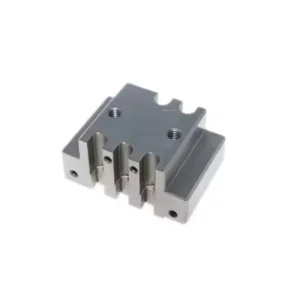
ODM OEM Precision CNC Machining Aluminum Parts & Industrial Components
View Product Details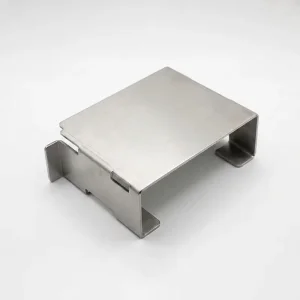
OEM Custom Stainless Steel Mounting Brackets for Industrial Machinery
View Product Details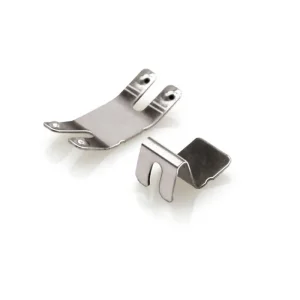
ODM Custom Precision Sheet Metal Stamping Clips & Electronic Hardware
View Product Details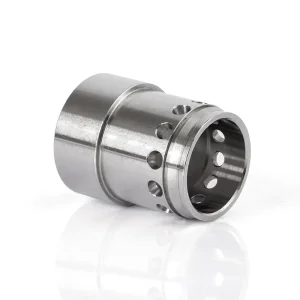
OEM Custom CNC Precision Turned Stainless Steel Filter Sleeve
View Product Details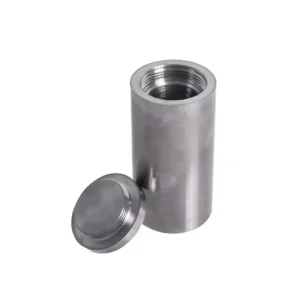
High-Quality Customized Tungsten Carbide Shielded Canister with Lid
View Product Details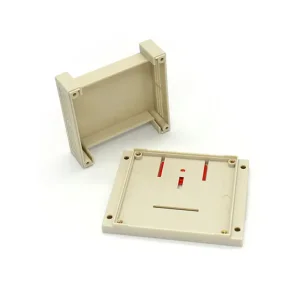
China Custom Modular DIN Rail PLC Enclosure Supplier & Exporter
View Product Details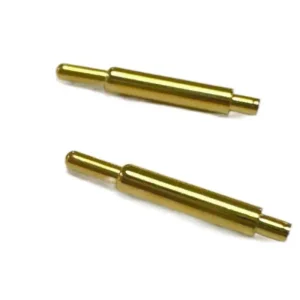
ODM High-Precision Gold-Plated Brass Pogo Pins for PCB Custom Connectors
View Product Details