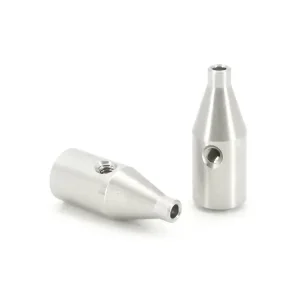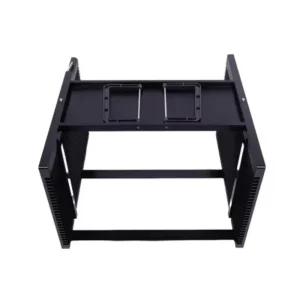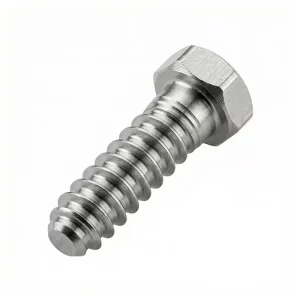
Featured Precision OEM Components & Hardware Solutions
Explore our foundational tooling and manufacturing capabilities engineered for extreme tolerance applications.
Global Market Evolution: The Strategic Imperative of High-Precision Plastic Closures
An in-depth analysis of structural shifts in global manufacturing, polymer engineering, and sustainable packaging mandates driving modern plastic caps procurement.
Macro Market Trends & Growth Vectors
The global industrial plastic caps and closures market is undergoing a rapid paradigm shift. Transitioning from commodity components to high-precision engineered fluid handling and sealing interfaces, the market is projected to reach unprecedented demand metrics by 2030. Key growth catalysts include the aggressive expansion of automated pharmaceutical filling lines, lightweighting mandates in beverage packaging, and strict zero-leakage specs in chemical and automotive fluid containment.
As a leading custom plastic caps manufacturer, our production frameworks respond to stringent international mandates requiring integrated tamper-evidence, child-resistant locking mechanisms (CRCs), and total hermetic sealing under extreme thermal variations.
Circular Economy & PCR Integration
Global regulatory pressure—such as the European Union’s Packaging and Packaging Waste Regulation (PPWR) and US State-level recycled content mandates—has elevated Post-Consumer Recycled (PCR) polymer integration from a brand preference to a strict legal obligation. Engineering high-quality plastic caps utilizing up to 100% PCR Polypropylene (PP) or High-Density Polyethylene (HDPE) requires advanced rheological profiling and adaptive tooling control.
Our facility implements real-time melt-flow index (MFI) monitoring and modified mold cavity geometry to counteract resin batch variance, ensuring zero degradation in thread mechanical strength or stress-crack resistance (ESCR).
Material Science & Precision Mold Engineering Capabilities
Deep domain expertise in thermoplastic polymer selection, cavity pressure profiling, and multi-cavity hot runner injection technology.
Polypropylene (PP) & HDPE Matrix
We process virgin and medical-grade PP (Random & Homopolymer) along with High-Density Polyethylene. PP offers exceptional flexural fatigue resistance ideal for living-hinge caps, while HDPE provides superior impact strength and low-temperature dimensional stability for chemical enclosures.
Engineering Polymers: POM, PA66 & PEEK
For high-load mechanical drive systems, valve components, and high-heat automotive fluid caps, we mold Polyoxymethylene (POM / Acetal), Polyamide 66 (PA66, glass-filled), and Polyether ether ketone (PEEK), guaranteeing thread wear resistance under heavy torque cycling.
Thermoplastic Elastomers (TPE/TPU)
Utilizing multi-shot 2K injection molding, we co-mold TPE/TPU soft-touch sealing lips directly onto rigid plastic cap substrates. This eliminates manual assembly of separate O-rings, providing permanent, leak-proof IP67/IP68 environmental seals.
| Polymer Type | Tensile Strength (MPa) | Thermal Deflection (°C @0.45MPa) | Chemical Resistance | Primary Industrial Cap Application |
|---|---|---|---|---|
| Polypropylene (PP) | 31 - 41 | 100 - 115 | High (Acids, Bases, Solvents) | Living-Hinge Snap Caps, Dispensing Closures |
| HDPE | 22 - 31 | 60 - 80 | Excellent (Alcohols, Dilute Acids) | Threaded Chemical Containers, Tamper-Evident Caps |
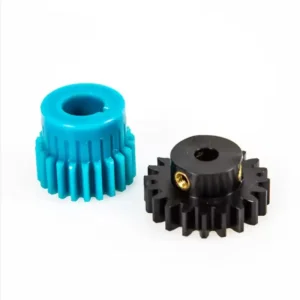
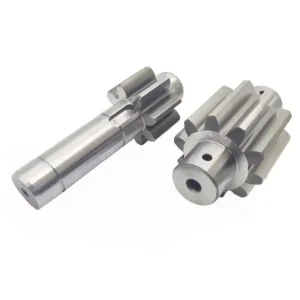
| POM (Acetal) | 65 - 70 | 110 - 160 | High (Hydrocarbons, Fuels) | Precision Internal Gearing & High-Torque Valve Caps |
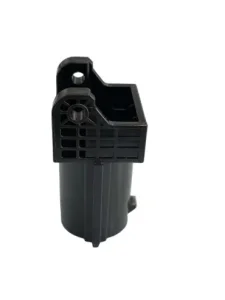
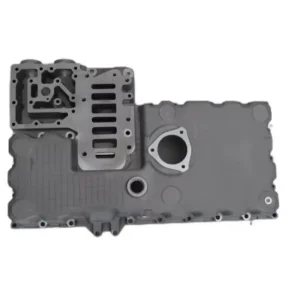
| PA66 (30% Glass Filled) | 140 - 175 | 230 - 250 | High (Oils, Automotive Fluids) | Automotive Engine Low-Pressure Oil Pan & Valve Covers |
| PEEK | 90 - 100 | 280 - 300 | Extreme (Universal Inertness) | Semiconductor Wafer Carrier Fasteners & Medical Devices |
Resolving Modern B2B Procurement Pain Points
Addressing the core technical, operational, and commercial risks faced by global supply chain directors when selecting a precision plastic parts manufacturer.
Eliminating High Scrap Rates & Dimensional Drift
The Buyer Pain Point: Sub-tier suppliers often suffer from sink marks, warpage, and pitch-diameter variation on fine cap threads due to uncalibrated cooling cycles or worn multi-cavity tooling.
Our Engineering Remedy: We deploy in-cavity pressure and temperature sensors linked to RJG eDART systems. Every single shot is validated dynamically; any cycle deviating from the master viscosity curve is automatically segregated by robotic end-of-arm tooling (EOAT).
Compressing Tooling & Sampling Time-to-Market
The Buyer Pain Point: Waiting 12 to 16 weeks for production-grade steel tooling stalls product launches and creates severe burn rates for OEM programs.
Our Engineering Remedy: By pairing high-speed 5-axis CNC machining with modular master-unit-die (MUD) bases, we yield T1 samples in as few as 15 working days. Rapid prototype tooling utilizing hardened aluminum alloys allows functional testing prior to P20 or NAK80 steel mass production tool cut.
Comprehensive Cross-Industry Plastic Cap Solutions
Custom-engineered closing systems designed to perform in extreme mechanical, thermal, and sterile operational environments.
Automotive Powertrain & Sensors
Engine oil fill caps, solenoid valve housings, coolant reservoir caps, and low-pressure cast pan interfaces designed for continuous resistance against hot oil, glycol, and engine bay vibrations.
Medical Device & Diagnostics
ISO 13485 cleanroom-molded fluidic caps, luer-lock connectors, specimen vial enclosures, and surgical instrument protective shrouds featuring biocompatible USP Class VI compliance.
Semiconductor & Cleanroom
Ultra-pure fluoropolymer (PFA/PVDF) and PEEK wafer carrier caps, chemical transport seal bung plugs, and anti-static ESD-shielded electronic component packaging enclosures.
Industrial Chemical Containment
Heavy-duty drum caps, UN-certified hazardous material closure caps with integrated pressure relief valves, and vented closure systems designed to withstand aggressive solvent vapor pressures.
Metrology, Inspection Protocols & Global Compliance
Documented, batch-traceable quality frameworks that ensure every part delivered meets your exact 2D print specifications.
Advanced Quality Control Infrastructure
Our quality control laboratory operates automated Coordinate Measuring Machines (CMM), optical video measuring systems (VMS), and high-resolution digital torque testers. We evaluate every plastic cap design across 6 primary metrics:
- Thread Pitch & Concentricity: Measured to ±0.005 mm to prevent cross-threading during automated high-speed capping.
- Seal Integrity & Pressure Decay: Vacuum bubble testing and hydrostatic burst testing up to 8 bar pressure.
- Removal Torque & Strip Torque: Balancing child resistance with ergonomic user access.
- Environmental Stress-Crack Resistance (ESCR): ASTM D1693 testing under active surfactant exposure.
Global Regulatory & Environmental Audits
We maintain active compliance files supporting frictionless global import clearance for our enterprise buyers:
ISO 9001:2015
Certified Quality System
RoHS & REACH
Zero SVHC Substances
FDA CFR 177.1520
Olefin Polymers Approved
Engineering Roadmap: Next-Gen Smart Caps & Ultra-Precision Molding
Pioneering the future of intelligent packaging, micro-molding tolerances, and sustainable digital factory integration.
Smart RFID / NFC Embedded Caps
Integrating ultra-thin NFC and passive RFID chips directly into plastic caps during the injection molding process. Enables real-time supply chain tracking, anti-counterfeiting verification, and digital tamper detection for high-value pharmaceuticals and industrial chemicals.
AI-Powered Automated Optical Inspection (AOI)
Deploying multi-camera machine vision vision inspection at 3,600 parts per minute. AI neural networks detect micro-flashes, short shots, pinhole voids, and thread malformations in real-time, enforcing zero-defect delivery standards.
Bio-Based & Bio-Degradable Polymers
Advancing tooling capability for Polyhydroxyalkanoates (PHA) and Polylactic Acid (PLA) blends. Our engineering team is refining mold thermal profiles to run compostable resin caps without sacrificing cycle times or functional rigidity.
Frequently Asked Questions (FAQ) for Plastic Caps Procurement
Clear, authoritative technical answers to assist design engineers and strategic buyers in finalizing component specs.
What is your minimum order quantity (MOQ) for custom plastic cap manufacturing?
For custom injection-molded plastic caps requiring new tooling, our production MOQ typically starts at 10,000 to 50,000 units depending on component size and material choice. However, during the initial prototype and engineering validation phase (T1-T3 samples), we supply low-volume sampling runs from 50 to 500 pieces using aluminum prototype molds or high-resolution 3D printing (SLA/DLP) to support DFM validation.
How do you ensure zero leak rates on high-pressure fluid caps?
We achieve hermetic sealing using three complementary strategies: 1) Multi-shot (2K) co-molding of integrated TPE gasket lips, eliminating separate elastomeric O-rings; 2) Precision thread geometry design (ACME, Buttress, or custom modified metric threads) utilizing Moldflow warpage prediction to ensure uniform circumferential pressure; 3) 100% automated pressure decay and vacuum bubble leak testing on production lots per ASTM F2096 standards.
Can you manufacture plastic caps using 100% Post-Consumer Recycled (PCR) material?
Yes. We have qualified multiple grades of PCR Polypropylene (rPP) and PCR High-Density Polyethylene (rHDPE). Because PCR resins exhibit wider melt-flow index variability, our molds feature dynamic hot runner temperature zoning and cavity pressure sensors that auto-adjust injection parameters cycle-by-cycle to ensure consistent cap dimensions and mechanical performance.
What dimensional tolerances can your plastic injection molding factory maintain?
Our standard manufacturing tolerances for commercial plastic caps follow DIN 16742-TG6 guidelines (±0.05 mm to ±0.10 mm). For high-precision medical, optical, or micro-fluidic cap interfaces, we routinely hold critical dimensions—such as thread pitch diameters and sealing ring sealing surfaces—to tight tolerances down to ±0.005 mm (±5 microns) using high-rigidity CNC molds and climate-controlled cleanroom molding environments.
How do you protect customer IP and proprietary mold designs?
Intellectual Property protection is governed by a legally binding Non-Disclosure Agreement (NDA) executed prior to file transfer. All 3D CAD data (STEP/IGES) is stored on encrypted, access-restricted internal servers. Furthermore, custom tooling built at our factory remains the exclusive property of the customer and is never utilized for third-party production without explicit written authorization.
What quality reports and documentation accompany each export shipment?
Every shipment is delivered with a complete Quality Assurance Dossier including: Certificate of Analysis (COA) / Material Test Report (MTR) confirming resin grade, First Article Inspection (FAI) Report per AS9102, CMM Dimensional Inspection Data, RoHS/REACH Compliance Certificates, and lot-traceable statistical process control (SPC) charts for critical dimensions.
Advanced Custom OEM Parts Catalog
Explore our full range of precision CNC turned components, high-temperature plastic housings, and specialized medical connectors.