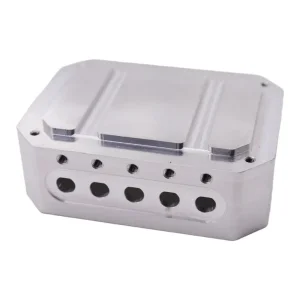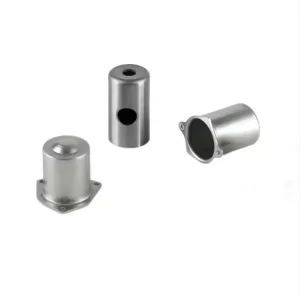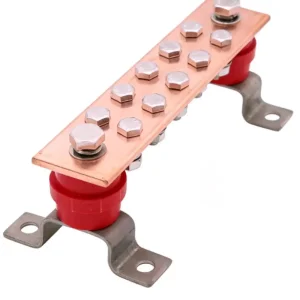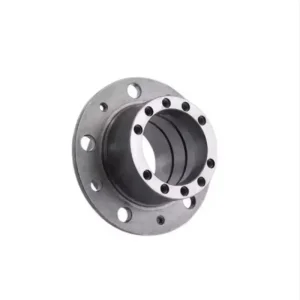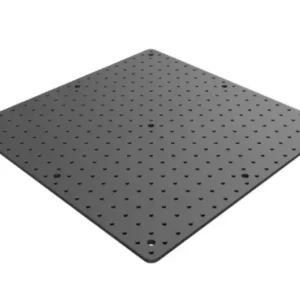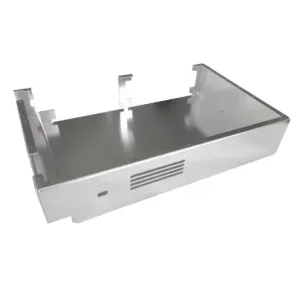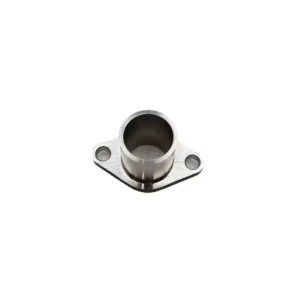
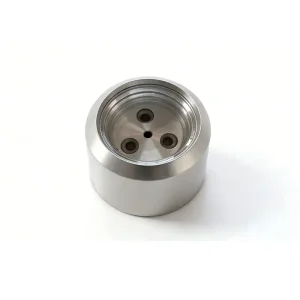
Featured Precision Components & Assemblies
Explore our factory-direct precision parts engineered across CNC machining, dielectric overmolding, casting, and advanced electronic encapsulation.
1. Global Commercial & Industrial Status of Modern Overmolding
Overmolding has transitioned from a basic cosmetic soft-grip enhancement into an indispensable manufacturing technology for mission-critical structural, electrical, and bio-compatible hardware assemblies.
The global overmolding market is undergoing a structural expansion, propelled by accelerated electrification in automotive powertrains, high-density consumer electronics, miniaturized surgical tools, and harsh-environment Industrial Internet of Things (IIoT) sensors. Overmolding—the advanced injection molding process where two or more dissimilar materials are seamlessly combined into a single unified part—eliminates secondary assembly steps, drastically reduces total part count, and enhances interfacial sealing performance under severe environmental stress.
E-Mobility & HV Architecture
High-voltage electric vehicle (EV) busbars and battery management systems (BMS) require high-dielectric polymer encapsulation over copper or aluminum conductors. Overmolding delivers continuous thermal dissipation while providing IP69K ingress protection against moisture, automotive fluids, and vibration-induced stress fatigue.
Medical & Surgical Precision
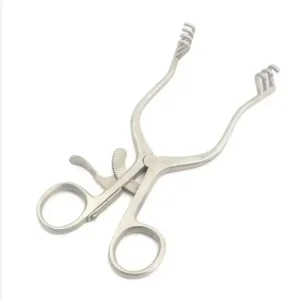
Next-generation minimally invasive surgical instruments utilize liquid silicone rubber (LSR) overmolded onto titanium or 17-4 PH stainless steel substrates. This produces autoclavable, seam-free handles that prevent bio-burden accumulation while meeting strict USP Class VI biocompatibility standards.
IIoT & Smart Sensors
Ruggedized smart sensors operating in petrochemical, aerospace, and marine environments leverage rigid polycarbonate or aluminum enclosures overmolded with thermoplastic elastomers (TPE/TPU) to absorb mechanical impacts and eliminate liquid penetration paths.
2. Engineering Trends & Overmolding Technology Roadmap
The evolutionary trajectory of overmolding focuses on atomic-level chemical bonding, in-mold sensor integration, and intelligent predictive process monitoring.
Substrate Surface Activation
Traditional mechanical interlocking (undercuts, through-holes) is now augmented with atmospheric plasma treatment, laser micro-texturing, and chemical silane primers. Laser texturing increases the effective contact surface area by up to 300%, creating micro-retention pits that elevate peel strength to match parent material failure limits.
Multi-Shot (2K/3K) Rotary Molding
Transitioning from traditional insert molding (placing a pre-fabricated substrate manually or robotically into a secondary mold) to automated 2K/3K co-injection molding. Rotary platen technology allows sequential injection of rigid substrate and flexible resin in a single thermal cycle, drastically shortening cycle times and eliminating surface oxidation.
Real-Time AI In-Mold Telemetry
Incorporating cavity pressure transducers, ultrasonic flow sensors, and infrared thermography directly within the mold steel. Machine learning models adjust injection speed profiles, pack pressures, and cooling valve rates dynamically to compensate for batch-to-batch resin viscosity fluctuations.
3. Comprehensive Polymer & Metal Material Compatibility Matrix
Achieving a cohesive structural bond between overmolded layers requires careful alignment of thermal expansion coefficients (CTE), melting temperatures, and chemical polarity matching.
The table below provides engineering guidance on interfacial adhesion characteristics between primary rigid substrates and secondary overmold resins, derived from extensive lap-shear testing (ASTM D1002 / ASTM D903).
| Rigid Substrate (Base Material) | Overmold Resin (Secondary) | Bonding Mechanism | Adhesion Rating | Engineering Recommendations |
|---|---|---|---|---|
| Aluminum 6061-T6 / Stainless 304 | TPE / TPU (Polyester-based) | Chemical Primer + Laser Micro-Texturing | Excellent (> 12 MPa) | Preheat metal insert to 80°C-100°C prior to insertion to prevent premature freeze-off. |
| Copper / Brass Alloys | PA66 + 30% GF (Glass Fiber) | Mechanical Interlock + Silane Coupling Agent | Good (8 - 11 MPa) | Must apply anti-oxidation surface passivator to prevent copper degradation at melt temps. |
| Polycarbonate (PC) / ABS Alloy | TPE (Styrenic Block Copolymer) | Direct Molecular Fusion (Melt-Match) | Excellent (> 14 MPa) | Maintain substrate mold temp above Tg (glass transition) to maximize polymer chain diffusion. |
| PBT / PET (Polyester) | TPV (EPR/PP Compound) | Mechanical Undercut Dovetails | Moderate (4 - 7 MPa) | Direct chemical bonding limited; design internal perimeter grooves (> 0.8mm depth) for mechanical keying. |
| Polyamide 66 (PA66 / Nylon) | Liquid Silicone Rubber (LSR) | Self-Adhesive LSR Resins | Excellent (> 15 MPa) | Ensure PA66 is dried to moisture levels < 0.05% to avoid hydrolytic bubble formation at interface. |
4. Macro-Level Turnkey Industrial Overmolding Solutions
Case-proven engineering methodologies for high-complexity, multi-material industrial manufacturing challenges.
High-Voltage EV Busbar Insulated Encapsulation
Problem Statement: Heavy EV battery packs experience continuous thermal fluctuations (-40°C to 125°C) and violent mechanical shocks, causing conventional shrink-sleeve insulation to crack and create dangerous high-voltage arc pathways.
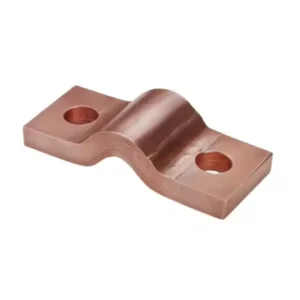
Our Engineering Solution: We deploy direct insert overmolding of flexible laminated copper busbars using a custom flame-retardant (UL94 V-0) high-flow Polyamide 66 compound. By integrating vacuum-assisted molding, air voids around narrow conductor legs are 100% eliminated, elevating dielectric breakdown strength to > 35 kV/mm.
Hermetic RF & Industrial Sensor Enclosures
Problem Statement: Remote field sensors monitoring industrial fluid lines suffered internal PCB failure due to moisture ingress along the seam line between the metal sensor body and cable strain reliefs.
Our Engineering Solution: We created an anodized aluminum internal chassis overmolded with dual TPE sealing rings in a single shot sequence. The tool utilizes shut-off surfaces machined to ±0.002 mm tolerances via Wire EDM, eliminating flash while providing IP68 submersibility down to 50 meters water depth.
Surgical Grade Ergonomic Device Handles
Problem Statement: Medical equipment handles overmolded with low-grade TPE degraded rapidly during harsh autoclave sterilization cycles (134°C high-pressure steam), leading to surface tackiness and delamination.
Our Engineering Solution: We designed a fully automated Liquid Silicone Rubber (LSR) injection cell that overmolds medical-grade silicone onto 316L stainless steel structural skeletons. The chemical bonding process survives over 500 consecutive autoclave cycles without bond degradation.
5. Localized Application Scenarios & Global Manufacturing Economics
Optimizing regional supply chains requires adapting tooling strategies, resin sourcing, and regulatory compliance to local market requirements.
Manufacturing footprint logistics and local compliance standards dictate how engineering programs transition from early-stage prototype tooling to full-scale automated mass production. Sunmy Hardware supports seamless scaling across key economic regions:
North American Market Execution
Compliance focus: FDA Class I/II/III standards, ITAR compliance, UL94 safety ratings.
Projects destined for North American distribution heavily prioritize material certification traceability (Resin Lot Certificates) and standardized tooling standards (SPI Class 101 mold specifications). Our rapid DFM turnaround guarantees full compatibility with domestic assembly lines.
European Economic Area (EEA) Execution
Compliance focus: RoHS 3, REACH SVHC, WEEE sustainability directives.
European OEMs demand high sustainability scores and life-cycle assessments. We integrate recyclable bio-based TPE resins and closed-loop runnerless hot runner molds to minimize resin waste while complying with stringent chemical substance limits.
Asia-Pacific High-Speed Mass Production
Compliance focus: ISO 9001:2015, IATF 16949 automotive standards.
Operating near high-density electronic assembly clusters in Shenzhen, our direct factory footprint offers ultra-fast tooling cycles (15-20 days for T1 mold samples) alongside fully automated robotic insert-loading cells for scalable high-volume runs.
6. Quality Assurance, Quality Control & DFMEA Engineering
Preventing delamination, flash, and voids through empirical failure mode analysis and rigorous verification equipment.
Interfacial Peel Strength (ASTM D903)
We execute 180-degree peel testing on test tab samples from every production lot to quantify adhesive strength. Minimum pass thresholds require cohesive failure (destruction of the soft resin itself) rather than adhesive failure (clean separation at the substrate surface).
CMM & 3D Laser Scanning Verification
Because soft TPE/TPU materials deform under mechanical touch probes, we utilize high-precision non-contact 3D optical profile gauges and blue-light laser scanners to inspect final overmolded dimensions against CAD surfaces to within ±0.010 mm accuracy.
Hermeticity & Leak Testing
For overmolded electronic housings, 100% of finished assemblies undergo differential air pressure decay leak testing and helium mass spectrometry to guarantee long-term IP67/IP68 environmental sealing integrity before packaging.
7. Technical Overmolding Q&A (Engineering FAQ)
Direct technical responses to common engineering challenges faced during multi-material tool design and resin selection.
Additional Custom Manufacturing Capabilities
Browse our full catalog of custom-machined metal housings, deep-drawn enclosures, optical breadboards, and casting solutions.