
Engineered OEM Metal & Optical Subassemblies
Explore custom components manufactured with integrated precision machining and specialized surface treatments.

1. Precision Metal Finishing: Technical Foundations & Information Gain
Understanding surface topography, micro-hardness engineering, corrosion thermodynamics, and dielectric integrity in mission-critical OEM manufacturing.
In high-precision manufacturing, a substrate’s mechanical properties are only as resilient as its surface interface. Metal finishing is not merely an aesthetic touch; it is a deterministic thermodynamic and chemical transformation designed to alter tribological properties, passivate reactive atomic boundaries, and mitigate stress-corrosion cracking (SCC). Whether engineering optical breadboards with low-outgassing black anodize or high-voltage copper contacts with electro-deposited silver/tin barriers, surface engineering defines overall sub-assembly lifetime.
Modern semantic search and engineering evaluation demand strict quantitative metrics rather than vague quality claims. When specifying surface finishes, engineers must balance surface roughness parameters ($R_a$, $R_z$, $R_q$), micro-hardness (Vickers HV or Rockwell C), coating adhesion strength (ASTM D3359 cross-hatch ratings), and corrosion resistance evaluated via neutral salt spray (ASTM B117) or copper-accelerated acetic acid salt spray (CASS testing, ASTM B368).
Technical Takeaway for Procurement & Systems Engineers
Choosing the correct surface finishing vendor requires evaluating bath chemistry monitoring, automatic current density modulation, micro-crack prevention during hydrogen embrittlement relief bake (ASTM F519), and post-dip sealing stoichiometry (hot deionized water vs. nickel acetate vs. trivalent chromium seals).
2. Comprehensive Metal Finishing Processes & Material Matrix
A breakdown of industry-standard surface specifications, military standards (MIL-SPEC), ASTM standards, and compatible substrate alloys.
| Finishing Process | Applicable Standards | Compatible Substrates | Typical Layer Thickness | Primary Functional Value |
|---|---|---|---|---|
| Type II Sulfuric Anodizing | MIL-A-8625 / ISO 7599 | Aluminum 6061, 7075, 5052, 6063 | 5 µm – 25 µm | Corrosion resistance, decorative color anodizing, electrical insulation. |
| Type III Hardcoat Anodizing | MIL-A-8625 Type III, Class 1/2 | Aluminum 6061-T6, 7075-T6, 2024 | 25 µm – 50 µm | Extreme wear resistance (up to 65 HRC), high dielectric breakdown strength. |
| Electroless Nickel Plating (ENP) | MIL-C-26074 / ASTM B733 | Steel, Stainless, Copper, Aluminum | 10 µm – 30 µm | Uniform thickness on complex internal cavities, wear & chemical resistance. |
| Trivalent Chromate (Chem Film) | MIL-DTL-5541 Type II Class 1A/3 | Aluminum Alloys (Cast & Wrought) | < 1 µm (Conversion) | Electrically conductive corrosion protection, paint/powder base. |
| Citric / Nitric Passivation | ASTM A967 / AMS 2700 / ASTM A380 | Stainless Steel (304, 316L, 17-4PH) | N/A (Molecular Cleanse) | Removes free iron contaminants; forms passive $Cr_2O_3$ oxide film. |
| Physical Vapor Deposition (PVD/DLC) | ISO 27874 / OEM Standards | Tool Steel, Stainless, Titanium | 1 µm – 4 µm | Ultra-low coefficient of friction (<0.1), bio-compatibility, anti-galling. |
| Tin / Silver / Gold Electroplating | ASTM B545 (Tin) / ASTM B700 (Silver) | Copper C11000, Brass C36000 | 3 µm – 15 µm | Low contact resistance, superior solderability, busbar power transfer. |
Anodizing Engineering
Anodizing converts the aluminum substrate into a porous aluminum oxide ceramic matrix ($Al_2O_3$). Controlled bath temperatures (-2°C to 20°C for hardcoat) and precise current densities ensure consistent pore diameter, optimal color dye absorption, and defect-free seal sealing.
Electroless Plating Physics
Electroless Nickel (ENP) utilizes an autocatalytic chemical reduction reaction driven by sodium hypophosphite. Unlike electroplating, ENP deposits a 100% uniform layer across blind holes, threads, and internal channels without edge build-up or dog-boning effects.
Passivation Dynamics
Stainless steel machining leaves free iron particles on the surface that invite localized pitting corrosion. Nitric or Citric acid passivation chemically dissolves free iron while preserving chromium, forming a continuous chromium oxide barrier ($Cr_2O_3$).
3. China Supply Chain Advantages in Precision Surface Finishing
Why Shenzhen and the Greater Bay Area manufacturing hub deliver unmatched agility, scalability, and technical integration for international OEMs.
Vertical Process Integration
China's Tier-1 precision manufacturing clusters combine CNC 5-axis milling, Swiss lathe turning, precision stamping, high-pressure die casting, and in-house surface finishing within a tight 15-kilometer radius. This removes transport bottlenecks, shortens project lead times, and eliminates multi-vendor finger-pointing regarding dimensional discrepancies post-surface treatment.
Economies of Scale & Chemical Sourcing
With direct access to primary metal suppliers (aluminum billet, copper sheet, titanium rods) and international chemical reagent houses, Chinese surface treatment facilities execute rapid prototype iterations (24–48 hours) and seamless scale-up to high-volume production batches (100k+ parts/month) at competitive total cost of ownership (TCO).
Advanced Automated Plating Lines
Leading Chinese factories operate fully automated, PLC-controlled hoist electroplating and anodizing lines with continuous chemical titration, auto-dosing systems, real-time temperature tracking, and zero-defect inline quality monitoring that removes human error during dip cycles.
4. Global Enterprise Procurement: Quality Control & Verification
Comprehensive quality verification protocols to ensure zero-defect incoming inspections for overseas procurement teams.
XRF Thickness & Composition Inspection
Utilizing non-destructive X-Ray Fluorescence (XRF) spectrometry to measure multi-layer electroplating thicknesses (e.g., Copper-Nickel-Gold or Tin over Copper) down to nanometer resolution while verifying substrate composition.
Environmental & Salt Spray Chambers
Conducting continuous neutral salt spray (NSS) testing per ASTM B117 standards to validate coating durability and corrosion resistance prior to mass shipment, backed by full video and photo batch logs.
Coordinate Measuring Machine (CMM)
Precision 3D CMM inspection ensures post-finishing dimensional growth (such as 50% build-up during hard anodizing) is compensated for during pre-finish CNC machining to maintain micro-inch drawing tolerances.
5. Environmental Compliance, Localized Support & Certifications
Fulfilling global regulatory directives while providing local technical communication and international logistics.
RoHS 3 & REACH Compliance
Our chemical lines operate under strict environmental oversight, guaranteeing zero Hexavalent Chromium ($Cr^{6+}$), Lead, Cadmium, or Mercury in finished surface coatings. Full REACH SVHC self-declarations and SGS chemical laboratory analysis reports are available per batch.
Localized Engineering & DDP Logistics
To eliminate friction for overseas procurement teams, our factory provides dedicated English-speaking systems engineers for 24-hour turnaround on DFM (Design for Manufacturability) inquiries, alongside flexible Incoterms including DDP, DAP, and FOB with localized buffer stock management.
Factory Certifications
Our surface finishing partner network holds ISO 9001:2015 Quality Management Systems certification, ISO 14001 Environmental Management, IATF 16949 for automotive components, and AS9100D compliance for defense and aerospace hardware production.
6. Mission-Critical Industry Applications & Performance Benchmark
How specialized metal finishing solves extreme environmental challenges across major high-tech sectors.
Semiconductor & Vacuum Systems
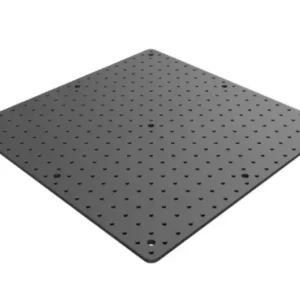
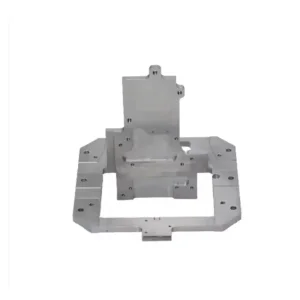
Scenario: Ultra-high vacuum (UHV) chambers and optical breadboards requiring minimal outgassing and high chemical purity.
Solution: Type II Black Anodize and Electropolished Stainless Steel (SS316L) achieving RRa < 0.2 µm with RGA (Residual Gas Analysis) verified outgassing rates.
EV Battery & High-Voltage Power Distribution
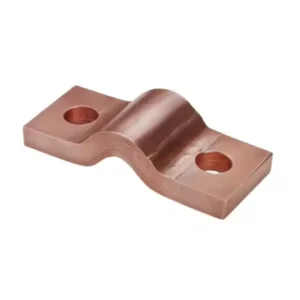
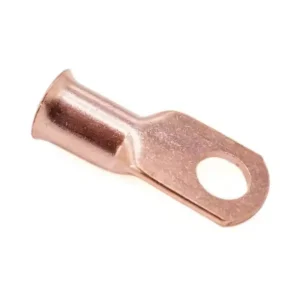
Scenario: Flexible copper busbars and battery crimp terminals subject to vibration and high current densities.
Solution: Bright tin electroplating over nickel undercoat (ASTM B545) offering low electrical contact resistance (<5 µΩ) and prevention of copper oxidation under thermal cycling.
Medical Instruments & Surgical Retractors
Scenario: Surgical instruments exposed to repeated autoclave sterilization cycles and biological fluids.
Solution: Citric acid passivation per ASTM A967 and passivated electropolishing yielding high corrosion resistance, zero bio-adhesion, and glare-free matte surface finishes.
Aerospace & Defense Structural Enclosures
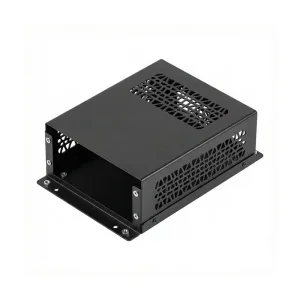
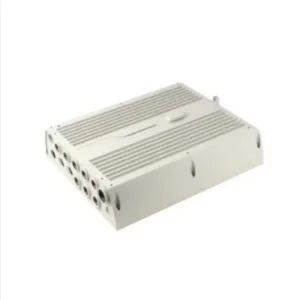
Scenario: Die-cast aluminum and 7075-T6 CNC machined avionics brackets subject to salt mist and flight vibration.
Solution: Type III Hard Anodize sealed with Trivalent Chromium Chem Film (MIL-DTL-5541) offering 1000+ hours salt spray survival and high wear resistance.
7. Emerging Trends in Metal Finishing & Surface Technology
Next-generation surface modifications defining the future of high-performance manufacturing.
Plasma Electrolytic Oxidation (PEO)
Also known as Micro-arc Oxidation (MAO), PEO utilizes high-voltage plasma discharges in aqueous electrolytes to form thick, ultra-hard ceramic coatings ($Al_2O_3$, $TiO_2$) on light alloys (Aluminum, Magnesium, Titanium) with superior thermal barrier and breakdown voltage properties.
Diamond-Like Carbon (DLC) & Nanocomposites
PVD plasma-assisted deposition of amorphous DLC films delivers extreme surface hardness (>2500 HV) and ultra-low friction coefficients (<0.05) under non-lubricated dry contact conditions, transforming medical implant and automotive valve train longevity.
Zero Liquid Discharge (ZLD) Eco-Plating
Future-focused factories integrate vacuum evaporators and ion-exchange resin systems to recycle 98%+ of process rinse water, recovering precious metals while achieving closed-loop Zero Liquid Discharge to fulfill strict international ESG standards.
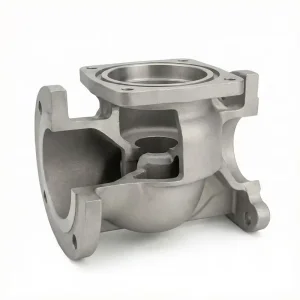
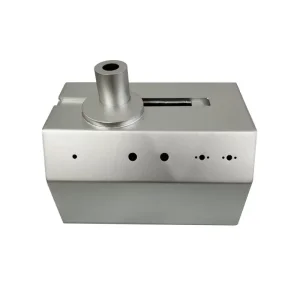
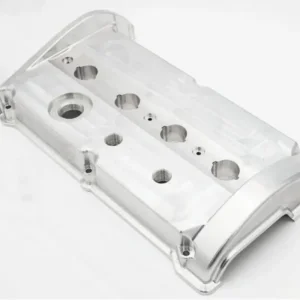
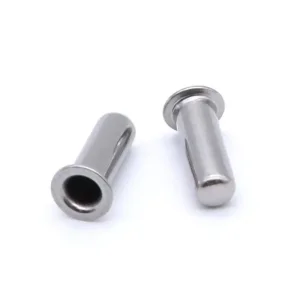
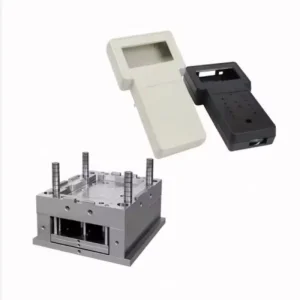
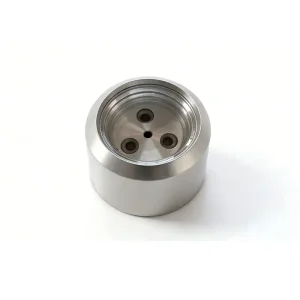
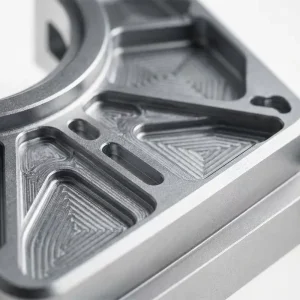
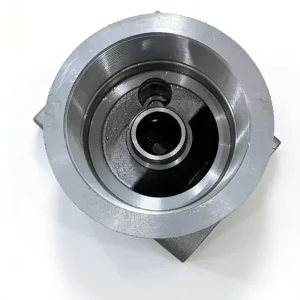
Advanced Finished OEM Assemblies & Cast Components
Explore custom metal stamping, investment casting, die casting, and sheet metal hardware options.
8. Frequently Asked Questions (FAQ) & Procurement Intent Mining
Direct engineering answers addressing critical search queries regarding metal finishing choices, lead times, dimensional tolerances, and quality verification.
How do you account for coating thickness build-up in precision CNC machining drawings?
Coating growth depends strictly on the chemical process. For Type II anodizing, 50% of the film layer penetrates the metal substrate and 50% builds up on the surface. For Type III Hardcoat anodizing (e.g., 50 µm total thickness), surface dimensions will grow by approximately 25 µm per surface (50 µm total on diameters). Our engineering team performs pre-finish DFM tolerance offset calculations on your 3D CAD models, machining critical threads and bearing bores undersized/oversized so that post-finishing parts match final print tolerances down to ±0.005 mm.
What is the difference between Type II Sulfuric Anodizing and Type III Hardcoat Anodizing?
Type II Sulfuric Anodizing is conducted at room temperature (approx. 20°C) producing coating layers between 5 to 25 µm, ideal for decorative color dyeing and general corrosion resistance. Type III Hardcoat Anodizing takes place in refrigerated acid baths (-2°C to 5°C) with high current densities, producing dense oxide films up to 50 µm thick with surface hardness up to 60-65 HRC for heavy wear, friction, and high dielectric strength applications.
How is Hydrogen Embrittlement mitigated during electroplating of high-strength steel hardware?
High-strength steels (>1000 MPa tensile strength or >31 HRC) absorb atomic hydrogen during acid pickling and electroplating, leading to sudden brittle failure under strain. Per ASTM F519 and MIL-S-5002 standards, our factory executes mandatory hydrogen embrittlement relief baking at 190°C to 220°C within 4 hours of plating for a duration of 8 to 24 hours, ensuring microstructural integrity.
Which metal finishing option offers the best electrical conductivity and corrosion resistance for battery busbars?
Electro-deposited tin plating over a nickel strike layer (or direct silver plating) applied onto C11000 copper busbars offers optimal conductivity and environmental stability. Tin prevents atmospheric oxidation of bare copper while maintaining extremely low contact resistance. For flexible laminated copper busbars, electro-tin plating allows flexing without micro-cracking or flaking.
How do you guarantee color consistency across different anodizing production batches?
Color variation in anodizing is caused by shifts in alloy composition, bath chemistry, electrolyte temperature, and current density. We control color consistency by sourcing certified single-lot aluminum billets, utilizing automated PLC bath controllers, and employing spectrophotometric color matching (Delta E < 1.0) under standardized D65 light sources.
Can you provide compliance documentation for international shipments to Europe and North America?
Yes. Every production run is dispatched with full quality documentation, including Certificate of Conformance (CoC), Material Test Reports (MTR/Mill certificates), XRF Plating Thickness Reports, Salt Spray Test Certificates (ASTM B117), and official RoHS 3 / REACH SVHC compliance letters signed by quality engineers.