
Featured Export-Grade Engineered Components
Precision metal and plastic hardware produced under ISO 9001:2015 and IATF 16949 compliant manufacturing environments
High-Performance Family Molds: Architectural Fundamentals & Rheological Precision
A comprehensive engineering guide for global procurement teams, tool designers, and industrial manufacturing directors seeking cost-efficiency without compromising dimensional tolerances.
In modern plastic injection molding engineering, the quest for optimized unit economics, reduced Non-Recurring Engineering (NRE) expenditures, and synchronized assembly delivery has placed Family Molds at the forefront of advanced tooling strategies. A Family Mold is defined as an injection tooling system designed with multiple cavities of varying geometries within the same mold frame, intended to mold a set or "kit" of mating parts (e.g., upper housing, lower base, internal battery clip, and transparent lens cover) in a single operational machine cycle.
Technical Information Gain Insight: Unlike standard multi-cavity identical tooling, family tooling introduces dynamic rheological challenges. Because cavity volumes, wall thicknesses, and flow length ratios (L/t) differ significantly across mating components, achieving balanced polymer melt front advancement requires algorithmic runner sizing, valve gate sequencing, and precise gate land balancing.
1. The Physics of Rheological Flow Balancing in Family Tooling
The primary engineering bottleneck in custom family mold fabrication is differential shear rate and uneven filling speeds. When molten resin (such as PC+ABS, PA66-GF30, or PEEK) enters a multi-cavity block containing asymmetrical geometries, the material naturally flows into the cavity with lower hydraulic resistance. Without advanced Design for Manufacturability (DFM) and numerical computer-aided engineering (CAE), this disparity leads to severe defects:
- Over-packing and Flash: Smaller, thinner cavities experience excessive cavity pressure while larger cavities are still filling, causing localized mold parting line flash, internal stress concentration, and warpage.
- Short Shots & Hesitation: High flow resistance in thick-walled sections can cause polymer melt hesitation, leading to premature freezing, visible weld lines, and void formation.
- Differential Volumetric Shrinkage: Mating components exhibit varying structural density, resulting in severe post-molding misalignment when assembling upper and lower housings.
To eliminate these defects, premier Chinese tooling exporters implement Moldflow Rheological Balancing Algorithms. By adjusting runner diameters, modifying runner choke lengths, and integrating multi-zone hot runner systems with pneumatic or servo valve gates, engineers achieve synchronized fill time (Δt < 0.05 seconds across all cavities) and uniform volumetric pack curves.
Engineering Core Competencies
How specialized family mold exporters optimize cycle times, resin yields, and dimensional stability
CAE Melt Flow Simulation
Every mold design undergoes rigorous 3D Moldflow transient thermal and flow analysis to balance runner geometry, gate locations, and cooling line thermal gradients prior to steel cutting.
Valved Hot Runner Systems
Integration of Yudo, Mold-Masters, or Synventive sequential valve gate systems allows microsecond-level melt shut-off control, eliminating gate vestige and balancing differential volume pressures.
Hardened Tool Steel Standard
Core and cavity inserts utilize certified European or Japanese steel (S136 HRC 48-52, NAK80, H13, 1.2344) ensuring mold longevity exceeding 1,000,000 continuous shot cycles.
Sub-Micron EDM & CNC Milling
Utilizing high-speed 5-axis CNC machining centers (Makino, Yasda) and wire-cut EDM (Sodick) to achieve tooling tolerances within ±0.005 mm on critical mold shut-offs and core slides.
Kit-Synchronized Production
Molding matching assemblies simultaneously completely eliminates inventory mismatches, storage overhead, and batch-to-batch polymer color variations for global OEMs.
Automated In-Mold Sensors
Implementation of Kistler cavity pressure and thermal sensors to capture real-time injection profiles, providing digitized 100% traceably inspected parts for automotive PPAP approval.
Quantifiable Efficiency & Global Supply Capacity
Data-driven performance benchmarks established across global OEM tooling exports
Strategic Tooling Selection Matrix
Comprehensive engineering evaluation: Family Molds vs. Multi-Cavity (Identical) Molds vs. Single-Cavity Tooling
| Evaluation Criterion | Family Mold System | Multi-Cavity (Identical) Mold | Single-Cavity Dedicated Mold |
|---|---|---|---|
| Primary Target Application | Complete multi-part product kits (Top + Bottom Enclosures, Clips) | High-volume single component production (e.g., millions of bottle caps) | Large structural components or rapid low-volume prototyping |
| Initial Capital NRE Cost | Low - Moderate (1 mold base for N parts) | High (Requires substantial steel mass and runner channels) | Extremely High per project (N individual mold bases required) |
| Melt Flow & Pressure Balance | Complex (Requires CAE Moldflow, individual valve gate control) | Naturally Balanced (Symmetrical runner tree design) | Simple (Direct edge, sub, or hot tip sprue gating) |
| Resin Color & Batch Consistency | Perfect 100% Match (Molded from same resin batch) | Variable across separate production runs | High risk of color/viscosity shift between separate runs |
| Inventory & Supply Chain Risk | Zero Kit Mismatch (1:1 Ratio Guaranteed) | Risk of overproducing component A while component B is short | Complex scheduling across multiple injection molding presses |
| Tooling Maintenance Flexibility | Requires shut-off inserts if 1 cavity is damaged | Can block off single damaged cavity and continue running | Complete line down if tool requires repair |
China’s High-Tech Tooling Ecosystem: Supply Chain Resilience & Manufacturing Velocity
The global precision tooling landscape has undergone a seismic shift toward intelligent automation and consolidated manufacturing hubs. China, particularly the Greater Bay Area (Shenzhen, Dongguan, Guangzhou), has evolved from high-volume standardized mold building to sophisticated, high-precision Industry 4.0 tooling centers capable of exporting turn-key family mold systems worldwide.
1. Global Procurement Shifts in Automotive, Medical, and Consumer Electronics
International procurement executives in Western Europe and North America face aggressive Time-to-Market (TTM) deadlines alongside strict ESG (Environmental, Social, and Governance) targets. Family molds naturally support eco-efficient manufacturing by reducing total electrical power consumption per molded unit, minimizing scrap resin via hot runner optimization, and streamlining freight footprints by shipping completed product sets together.
2. Industry 4.0 Automation in Chinese Toolmaking Facilities
Modern Chinese injection mold exporters leverage fully integrated, flexible manufacturing cells (FMC) that operate 24/7 with zero human intervention during cavity steel cutting. Key technological integrations include:
- Robotic Workpiece Loading: EROWA or System 3R standardized palletization systems automatically transfer mold plates between 5-axis CNC high-speed milling machines, CMM inspection stations, and sinker EDM systems.
- Real-Time Laser Scanning CMM Verification: Tool cavities are scanned directly after semi-finishing to verify steel stock allowances down to sub-micron accuracy before final heat treatment and diamond polish.
- Smart Mold Traceability & IoT Integration: Exported family molds are equipped with embedded digital shot counters, cavity pressure transducers, and RFID chips that store full CAD histories, maintenance schedules, and DFM documentation for the end user.
3. Material Sourcing & Heat Treatment Rigor
To guarantee durability during high-speed, high-pressure continuous molding cycles, reputable exporters utilize strictly certified tool steels. Chemical composition and ultrasonic flaw detection reports are provided for steels including Assab S136, Daido NAK80, Finkl H13, and Bohler M310. Vacuum heat treatment with cryogenic stress relief (-196°C) prevents micro-cracking and guarantees uniform hardness through the entire mold insert core.
Localized Engineering Application Scenarios
Tailored family tooling solutions engineered for stringent sector-specific standards
Automotive Interior & Electronics Kits
Family tooling for automotive door handle assemblies, HVAC bezel sets, and dashboard sensor brackets molded in flame-retardant PC/ABS or PA6-GF30 with molded-in metallic textures.
Medical Device Disposable Assemblies
Class 100,000 cleanroom family tooling molding syringe plungers, barrels, needle shields, and luer locks in medical-grade PP and COP resin featuring SPI A1 mirror diamond polishing.
Consumer Smart Hardware & IoT
Tooling for wireless earbud charging cases, smart home thermostat bodies, and wearable fitness trackers molding top covers, bottom housings, and internal light guides simultaneously.
Industrial Automation Enclosures
Rugged NEMA-rated junction boxes, terminal blocks, and DIN-rail mounting brackets molded in high-impact polycarbonate with overmolded TPE sealing gaskets in one integrated tool.
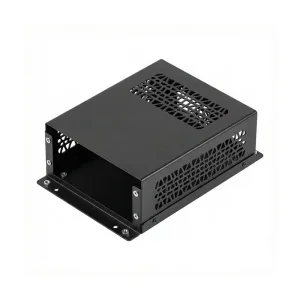
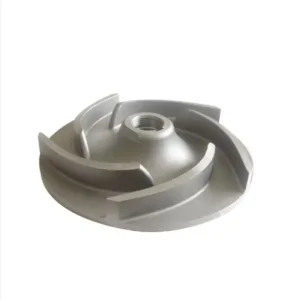
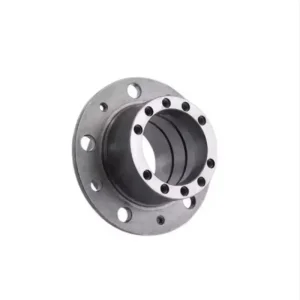
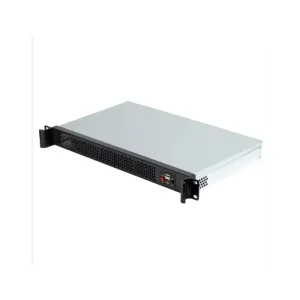
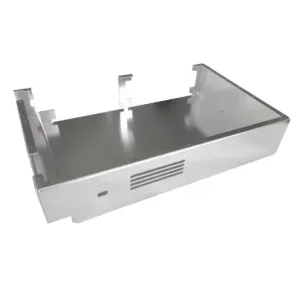
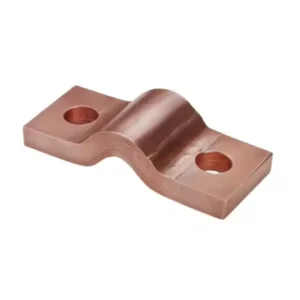
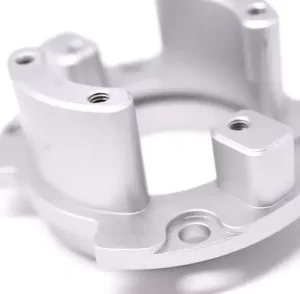
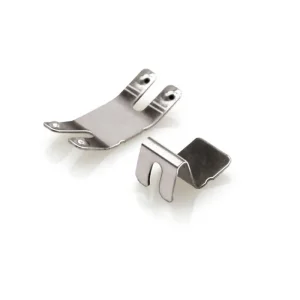
Precision OEM Parts & Export Capabilities
Explore custom CNC, stamped, cast, and molded solutions manufactured for global hardware programs
Frequently Asked Questions (FAQ)
Technical guidance and procurement answers directly from our senior tooling design team
What is a Family Mold, and how does it differ from a standard Multi-Cavity Mold?
A Family Mold is designed with different cavity shapes inside a single mold frame to produce a set of mating components (such as an upper lid, lower base, and internal bracket) in one injection stroke. A standard Multi-Cavity mold produces multiple copies of the exact same component geometry. Family molds minimize initial capital tooling costs and guarantee matching assembly production.
How do your engineers prevent warpage and flash caused by unbalanced cavity sizes?
We perform rigorous 3D Moldflow transient simulation before steel machining. By dynamically adjusting runner diameters, modifying gate lands, and utilizing individual pneumatic or hydraulic valve gates in a hot runner system, we equalize the filling pressure and melt front advancement (Δt < 0.05s) across all distinct cavities.
Can we shut off a single cavity in a family mold if one part design changes?
Yes. We design family molds with modular sub-inserts and independent hot runner valve gates or mechanical runner shut-offs. If a specific component requires modification or is paused, its corresponding cavity can be isolated without disrupting production of the remaining parts.
What tool steel grades do you recommend for high-volume family injection molds?
For high-volume export tools (>1,000,000 shots), we utilize premium hardened stainless steels such as Assab S136 or Bohler M310 (HRC 48-52). For medium production runs or abrasive engineering resins (e.g., PA66+30% Glass Fiber), we specify hardened H13 or SKD61 steel with localized DLC or Nitride surface treatments.
Are family molds suitable for components made of different polymer resins?
Generally, a single injection stroke requires all cavities in a family mold to utilize the exact same raw resin. However, if mating parts require different materials (e.g., rigid ABS housing with flexible TPE seal), we engineer multi-shot 2K/3K injection family tools or separate modular tooling systems.
What quality documentation accompanies export tooling shipments?
Every family mold exported by our facility includes a comprehensive Quality Dossier: Steel Mill Test Certificates, Heat Treatment Hardness Reports, Full CMM 3D Dimensional Inspection Logs, Moldflow DFM Records, T1 Sample Inspection Reports (FAI), and video footage of dry-run mold testing.
How are intellectual property (IP) and proprietary CAD files protected?
We execute legally binding Non-Disclosure Agreements (NDAs) prior to receiving drawing files. All CAD data is hosted on secure, air-gapped industrial servers accessible only by assigned project engineers. No third-party brokers or sub-contractors receive access to customer design files.
What lead time is typically required from DFM approval to T1 sample delivery?
Standard export-grade family molds take approximately 35 to 45 calendar days from final 3D design freeze to T1 sampling. Rapid tooling options using high-strength aluminum (7075-T6) or P20 steel can be delivered in as few as 20 business days for urgent prototype validation.